
Camponotus trajanus
- Wetenschappelijke naam
- Camponotus trajanus
- Subgenus
- Myrmamblys
- Tribus
- Camponotini
- Subfamilie
- Formicinae
- Auteur
- Forel, 1912
- Verspreiding
- Gevonden in 0 landen
Introductie
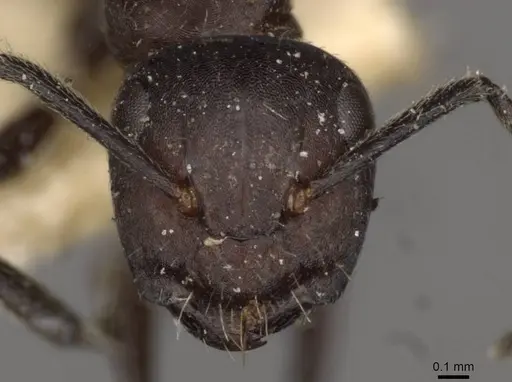
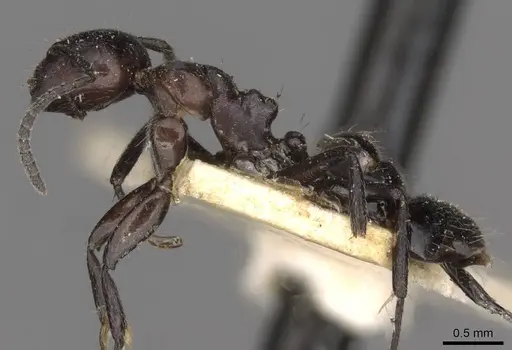
Camponotus trajanus is a medium-sized arboreal ant species native to the Indomalaya region, originally described from Sumatra, Indonesia and later documented in New Guinea rainforests. This species was previously classified under Colobopsis but has been returned to the genus Camponotus (subgenus Myrmamblys) following taxonomic revisions in 2021 . Workers are polymorphic, with major workers developing the characteristic phragmosis - a specialized, disk-like head shape used to block nest entrances like a living cork . As with other Formicinae ants, they lack a functional sting and instead use biting combined with spraying formic acid from their acidopore as defense. These ants nest exclusively in living trees within primary rainforest, suggesting they require mature, undisturbed forest habitats .
Quick Summary
- Difficulty: Medium
- Origin & Habitat: Sumatra, Indonesia and New Guinea, tropical rainforest canopy. All documented nests have been found in primary forest trees, occupying 5 different tree species across 4 plant families [2].
- Colony Type: Likely monogyne (single queen) based on typical Camponotus patterns. Colony size appears modest with only 5 nests documented in scientific literature.
- Size & Growth:
- Queen: Size data unavailable, inferred from Camponotus genus patterns to be approximately 12-16mm
- Worker: Minor workers approximately 5-7mm, major workers approximately 8-12mm with distinctive phragmotic head [2]
- Colony: Up to 500 workers based on limited field data and related species
- Growth: Moderate
- Development: Estimated 8-12 weeks at 24-28°C based on genus-level patterns for tropical Camponotus (Development time inferred from related species, direct measurements not available for this species)
- Antkeeping:
- Temperature: Keep at 24-28°C. Being from tropical Indonesia and New Guinea, they need consistent warmth.
- Humidity: High humidity required, aim for 70-85%. These rainforest canopy ants need moist conditions.
- Diapause: No, as a tropical species from near the equator, they do not require hibernation.
- Nesting: Arboreal specialists, they naturally nest in hollow twigs, branches, and tree cavities in the canopy. In captivity, they do well in Y-tong (AAC) nests, plaster nests with added moisture, or naturalistic setups with wood/branches.
- Behavior: Generally calm and non-aggressive for a Camponotus species. Major workers with their phragmotic heads serve as living door guards, they wedge their specialized heads into nest entrances to defend the colony. Foraging occurs primarily at night (nocturnal). Escape risk is moderate, major workers are too large to fit through typical gaps, but ensure all connections are secure. They lack a functional sting and primarily defend by biting and spraying formic acid.
- Common Issues: primary forest dependency, they may struggle in disturbed or secondary habitats, limited availability, this is a rarely kept species with little captive breeding history, arboreal nesting requirements differ from typical ground-nesting ants, phragmosis behavior may be misinterpreted as illness if keeper is unfamiliar with the trait, tropical humidity requirements can lead to mold problems if ventilation is inadequate
Housing and Nest Preferences
Camponotus trajanus is an arboreal species that naturally nests in tree hollows, dead branches, and twigs in the rainforest canopy. In captivity, they need setups that mimic these conditions. Y-tong (AAC) nests work well because they provide dark, enclosed chambers similar to tree cavities. Plaster nests with a water reservoir to maintain humidity are also suitable. For a naturalistic approach, you can provide pieces of rotting wood or bamboo sections. Avoid glass test tube setups, these ants are adapted to wood-based nesting and may not thrive in artificial tubes. The key requirement is having a nest material they can adopt, with chambers scaled to their size. Major workers will use their phragmotic heads to block entrances, so provide appropriately sized openings for this behavior to occur naturally. [2]
Feeding and Diet
Like most Camponotus species, C. trajanus is omnivorous with a preference for sugary liquids. In captivity, offer sugar water, honey, or diluted maple syrup as a constant carbohydrate source. For protein, provide insects such as mealworms, small crickets, or other appropriately sized arthropods. Feed protein 2-3 times per week, and ensure sugar sources are always available. These ants are nocturnal foragers, so offer food in the evening and remove any uneaten prey after 24 hours to prevent mold.
Temperature and Humidity
Being native to tropical Indonesia and New Guinea, C. trajanus requires warm, humid conditions. Maintain temperatures between 24-28°C with minimal fluctuations. A heating cable placed on one side of the nest creates a gentle gradient allowing workers to regulate their own temperature. Humidity should stay high at 70-85%, this is critical for brood development. Use a moisture reservoir in plaster nests or mist the outworld regularly. However, balance humidity with adequate ventilation to prevent mold growth, which can be fatal to ant colonies. The outworld can be slightly drier than the nest area, giving the ants options to regulate their conditions. [2]
Understanding Phragmosis
One of the most distinctive traits of C. trajanus is phragmosis, a specialized morphological adaptation where major workers have a flattened, disk-like head that functions as a living door. These door guard workers position themselves at nest entrances and wedge their heads into the opening to block access to predators and intruders. This behavior is completely normal and should not be mistaken for illness or death. When you observe a major worker with its head pressed firmly against an entrance, the colony is simply using its natural defense mechanism. In captivity, you may notice this behavior more frequently if the nest has appropriately sized openings. [2]
Colony Development and Growth
Camponotus trajanus colonies grow at a moderate pace typical of tropical arboreal Camponotus species. A newly mated queen will seal herself into a claustral chamber and raise the first brood using stored fat reserves, this founding phase typically takes 1-2 months. The first workers (nanitics) are usually smaller than mature workers and may not yet show the full phragmotic head development. As the colony grows, larger major workers with pronounced phragmosis will emerge. Based on related species in the reticulatus group, expect the colony to reach up to 500 workers at maturity. Growth is slower than ground-nesting Camponotus species, likely due to the more constrained resources in arboreal nest sites. Patience is essential, a healthy colony may take 2-3 years to reach significant numbers. [2][1]
Frequently Asked Questions
Is Camponotus trajanus a good species for beginners?
This species is not ideal for complete beginners. While not overly difficult, it has specific requirements, high humidity, arboreal nesting preferences, and limited availability, that make it better suited for keepers who already have experience with at least one other Camponotus species. The phragmosis behavior can be concerning if you are not expecting it.
What should I feed Camponotus trajanus?
Offer a constant sugar source (sugar water, honey, or maple syrup) and protein-rich foods like mealworms, small crickets, or other insects 2-3 times per week. They are nocturnal foragers, so provide food in the evening.
How long does it take for the first workers to emerge?
Based on typical Camponotus patterns, expect first workers (nanitics) to emerge 8-12 weeks after the queen lays eggs, provided temperatures are maintained at 24-28°C. This timeline is an estimate based on related species.
What type of nest is best for Camponotus trajanus?
Y-tong (AAC) nests or moist plaster nests work best. These arboreal ants prefer wood-based or similar cavity nesting materials. Avoid standard glass test tubes, they are better suited for ground-nesting species.
Do they need hibernation or diapause?
No. Being a tropical species from Indonesia and New Guinea near the equator, they do not require hibernation. Maintain consistent warm temperatures (24-28°C) year-round.
Why is my major worker acting stuck in the entrance?
This is completely normal behavior. Major workers have phragmosis, a specialized disk-like head used as a living door to block nest entrances. The ant is serving as a guard, not stuck. This is a natural defense behavior.
Can I keep multiple queens together?
This has not been documented for this species. Based on typical Camponotus behavior, it is likely monogyne (single queen). Keeping multiple unrelated queens together is not recommended.
How big do colonies get?
Based on limited field data and related species, colonies likely reach up to 500 workers at maturity. This is smaller than many ground-nesting Camponotus species.
Where does Camponotus trajanus come from?
It is native to the Indomalaya region, originally described from Sumatra, Indonesia, and also documented in New Guinea rainforests. All known nests have been found in primary (undisturbed) forest.
Why are my ants not using the nest I provided?
This species is arboreal and prefers wood-based nesting sites. If they reject a test tube or acrylic nest, try providing a piece of rotting wood, bamboo, or a Y-tong nest with appropriate chamber dimensions.
Is this species invasive anywhere?
No documented invasive populations exist. Their native range is limited to Indonesia (Sumatra) and New Guinea. As with all exotic ant species, never release them outside their native range.
Report an Issue
The current care sheet is based fully on literature. See inconsistencies, or something that's incorrect? Please , it will be resolved after review from an admin. Contributing to the blogs tab also helps providing information, to make us be able to further improve the caresheets. Thank you for your support!
References

Dit verzorgingsblad is gelicentieerd onder CC BY-SA 4.0 .
Community-blogs
CASENT0887754
Bekijk op AntWeb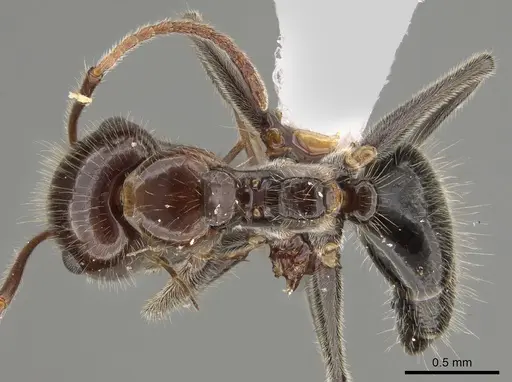
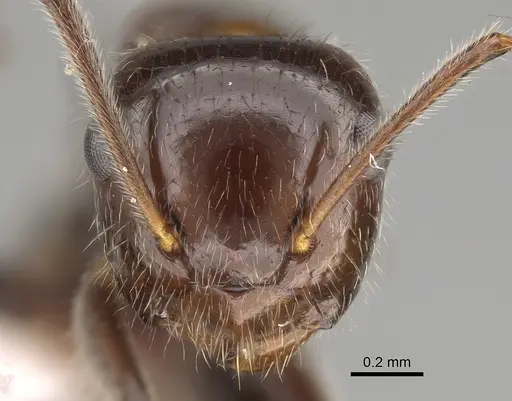
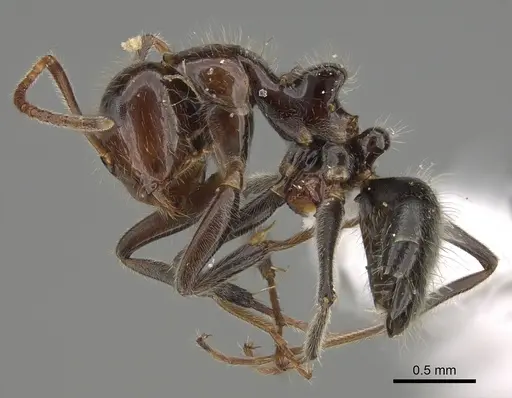
CASENT0910612
Bekijk op AntWeb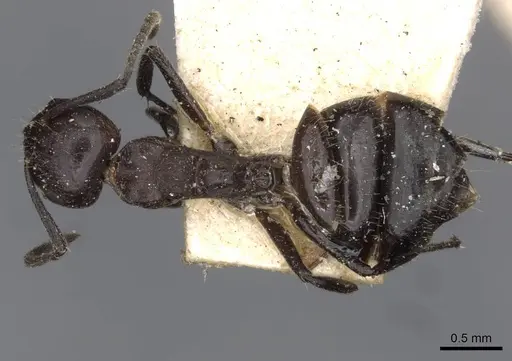
Literatuur
Verspreidingskaart laden...Producten laden...