
Camponotus platypus
- Wetenschappelijke naam
- Camponotus platypus
- Subgenus
- Myrmotarsus
- Tribus
- Camponotini
- Subfamilie
- Formicinae
- Auteur
- Roger, 1863
- Verspreiding
- Gevonden in 0 landen
Introductie
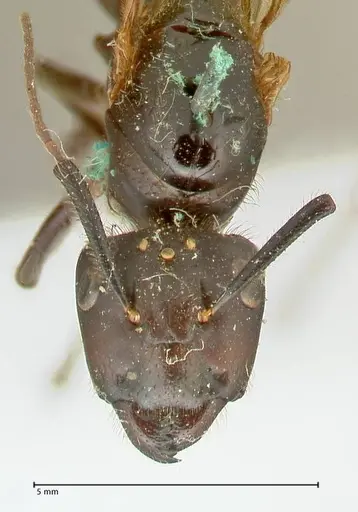
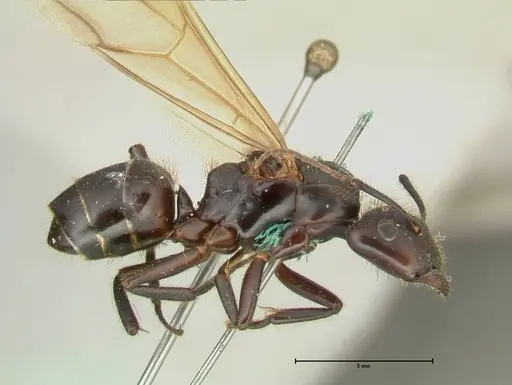
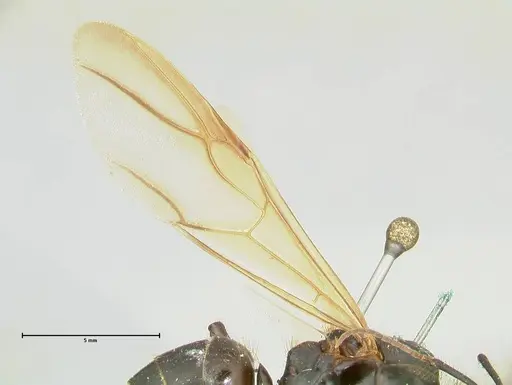
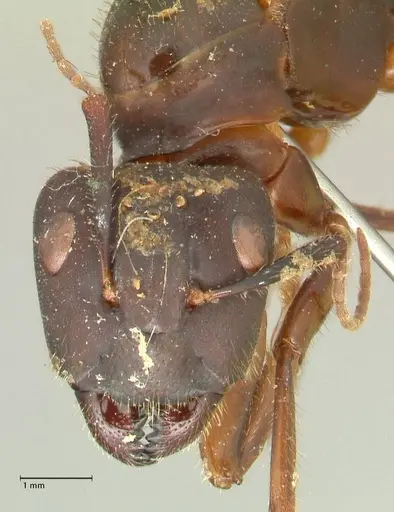
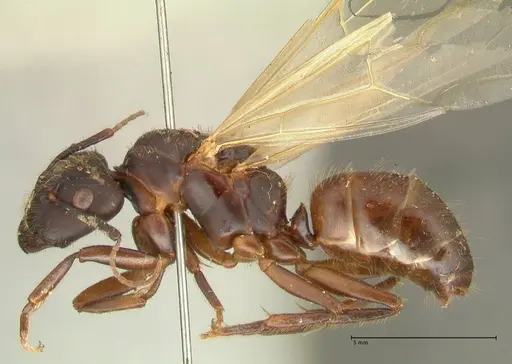
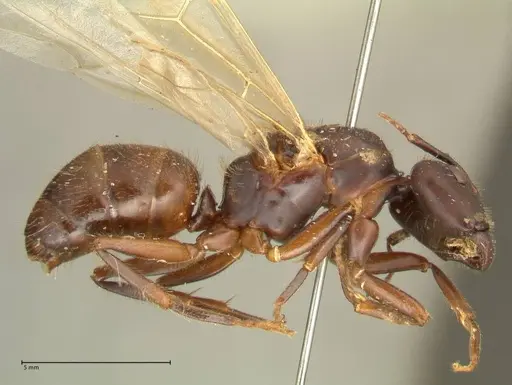
Camponotus platypus is a poorly known ant species described from the Philippines in 1863. Only queens have been found - workers have never been described in the scientific literature, which is very unusual. The species was originally collected in Manila on Luzon Island, with additional records from Mindanao . It belongs to the Formicinae subfamily (tribe Camponotini) and has been placed in the subgenera Myrmoplatypus and Myrmotarsus over time. Nothing is known about its colony structure, behavior, or nesting habits in the wild. This ant is one of the most mysterious members of its genus.
Quick Summary
- Difficulty: Unknown, data extremely limited
- Origin & Habitat: Philippines (Luzon, Manila, Mindanao), tropical climate, likely forest habitats [1][2]
- Colony Type: Unconfirmed, colony structure has never been studied, workers have never been seen
- Size & Growth:
- Queen: Size data unavailable, no measurements recorded in the original description
- Worker: Size data unavailable, workers have never been described [2]
- Colony: Unknown, no colony data exists
- Growth: Unknown
- Development: Unknown, no development data exists for this species. Based on typical tropical Camponotus patterns, a rough estimate is 6-10 weeks at warm temperatures, but this is purely speculative. (All timeline information is inferred from genus-level patterns. No direct observations have been documented.)
- Antkeeping:
- Temperature: Inferred from tropical Philippines origin: keep at warm temperatures, roughly 24-28°C (low 20s°C as a minimum). Observe colony activity and adjust if possible.
- Humidity: Inferred from tropical origin: provide moderate to high humidity. Keep nest substrate consistently moist but not waterlogged. A humidity gradient is recommended.
- Diapause: Unlikely, as a tropical species from the Philippines, year-round activity is expected. No diapause documented.
- Nesting: Natural nesting preferences unknown. Based on typical Camponotus patterns, likely nests in rotting wood or under bark in forest habitats. A Y‑tong, plaster, or soil nest with moderate humidity is a reasonable starting point.
- Behavior: Undocumented in the wild. As a Formicinae (tribe Camponotini) ant, it lacks a functional sting and instead bites and sprays formic acid into the wound. Escape risk cannot be assessed without worker size data, assume standard Camponotus prevention measures (e.g., tight lid, no gaps).
- Common Issues: no established care protocols exist, all advice is speculative based on genus patterns., workers have never been described, so identification is impossible for the worker caste., naturally rare or localized, nearly impossible to obtain for antkeeping., no captive colonies documented, keepers would be pioneering all care methods., high uncertainty: temperature, humidity, diet, and development timeline are all rough estimates.
Species Overview and Identification
Camponotus platypus is one of the least documented Camponotus species. Roger (1863) described it from queen specimens collected in Manila, but no size or detailed morphological measurements were recorded [1]. Wheeler (1909) noted that workers remain unknown [2]. The species has been placed in various subgenera (Myrmoplatypus, Myrmotarsus), reflecting taxonomic uncertainty. Only queens are known from Luzon and Mindanao islands. Without worker descriptions, even basic identification of a putative colony is impossible. This species represents a major knowledge gap in ant taxonomy.
Distribution and Habitat
Camponotus platypus is endemic to the Philippines, recorded from Manila on Luzon Island and from Mindanao Island [1][2]. The species likely inhabits tropical forest environments, but no specific habitat data exist. The Philippines has a warm, humid tropical climate with temperatures typically between 24-32°C and high rainfall. The species may be rare or locally distributed, as it has not been collected frequently. No information exists on nest site preferences or elevation range.
Care Recommendations (Highly Speculative)
Since no care protocol exists for this species, all recommendations are guessed from typical tropical Camponotus patterns. Maintain temperatures similar to its Philippine origin, roughly 24-28°C. Provide moderate to high humidity, keep the nest substrate moist but not waterlogged. Use a Y‑tong, plaster, or soil nest with a humidity gradient. Founding behavior is unknown, so do not assume claustral, observe the queen directly. Offer a varied diet: protein sources (insects) and sugar water. Escape prevention is essential, use a tight lid with ventilation holes smaller than potential workers. Because workers have never been described, even verifying that you have this species is extremely difficult. Only advanced keepers willing to contribute basic biological knowledge should attempt this.
Research Gaps and Uncertainty
Camponotus platypus is one of the most poorly known ant species. Workers have never been seen [2]. Colony size, founding, nuptial flight timing, development time, and social structure are entirely unknown. No captive colony has ever been documented. Keepers who manage to obtain a queen would be adding fundamentally new scientific knowledge. The biggest challenge is obtaining a queen, the species appears very rare in the wild and is absent from the antkeeping trade. Because no morphological data on workers exist, even confirmation of species identity may require genetic barcoding or expert examination of the queen.
Frequently Asked Questions
How do I care for Camponotus platypus ants?
No established care protocol exists. All advice is estimated from typical tropical Camponotus: keep at roughly 24-28°C, moderate to high humidity, and provide protein and sugar sources. This species is virtually unavailable in the hobby and extremely rare in the wild.
Where does Camponotus platypus live?
Only known from the Philippines: Luzon (Manila) and Mindanao islands [1][2]. Likely inhabits tropical forests.
What do Camponotus platypus workers look like?
Workers have never been described in the scientific literature, we simply do not know what they look like [2].
How big do Camponotus platypus colonies get?
Unknown, no colony size data exists. Speculation about colony size is not possible.
Do Camponotus platypus ants need hibernation?
Unlikely. As a tropical species from the Philippines, no diapause is expected. Year‑round warm conditions are probably required.
Is Camponotus platypus available in the antkeeping hobby?
Extremely unlikely, this is one of the rarest and most poorly known ant species. It has never been cultured in captivity and is essentially unknown in the hobby.
How long does it take for Camponotus platypus to develop from egg to worker?
Unknown, no development data exists. Based on typical tropical Camponotus, a rough guess is 6-10 weeks at warm temperatures, but this is entirely speculative.
Can I keep multiple Camponotus platypus queens together?
Unknown, colony structure has never been studied. No data exists on whether colonies are single‑queen or multiple‑queen.
Report an Issue
The current care sheet is based fully on literature. See inconsistencies, or something that's incorrect? Please , it will be resolved after review from an admin. Contributing to the blogs tab also helps providing information, to make us be able to further improve the caresheets. Thank you for your support!
References

Dit verzorgingsblad is gelicentieerd onder CC BY-SA 4.0 .
Community-blogs
FOCOL2331
Bekijk op AntWeb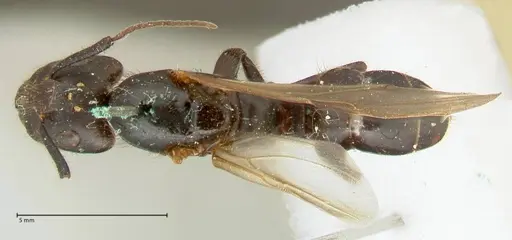
FOCOL2332
Bekijk op AntWeb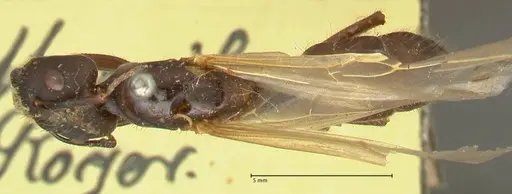
Literatuur
Verspreidingskaart laden...Producten laden...