
Camponotus maintikibo
- Wetenschappelijke naam
- Camponotus maintikibo
- Subgenus
- Mayria
- Tribus
- Camponotini
- Subfamilie
- Formicinae
- Auteur
- Rakotonirina <i>et al.</i>, 2017
- Verspreiding
- Gevonden in 1 landen
Introductie
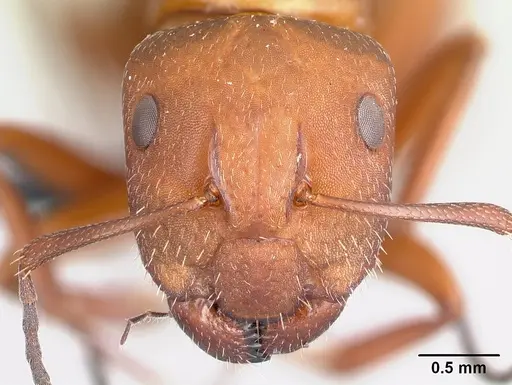
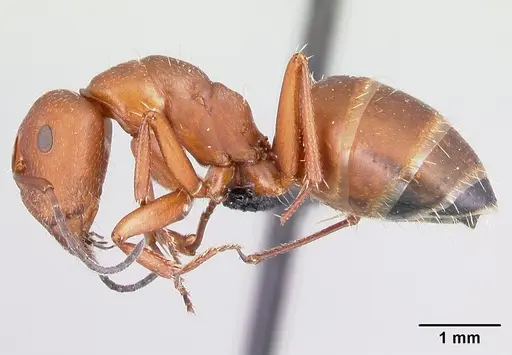
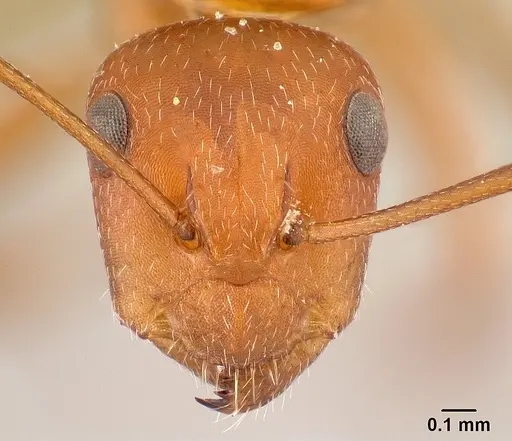
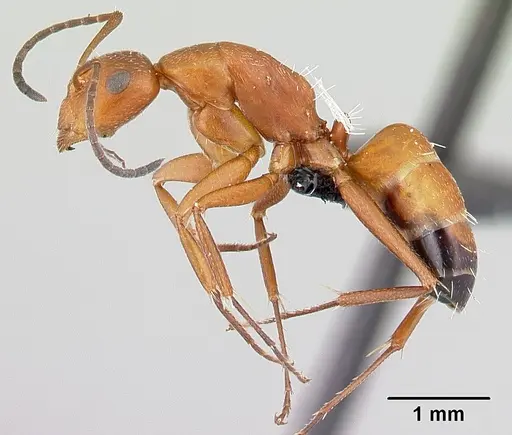
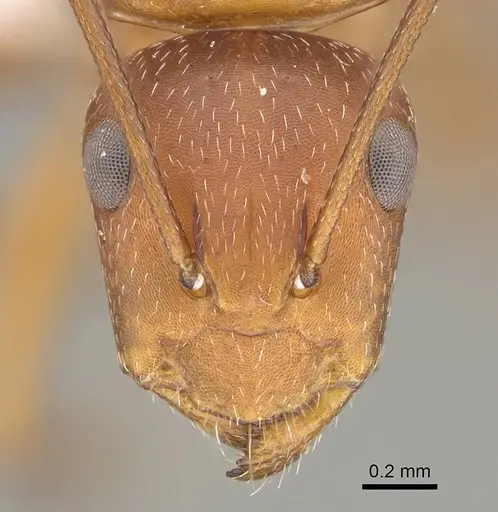
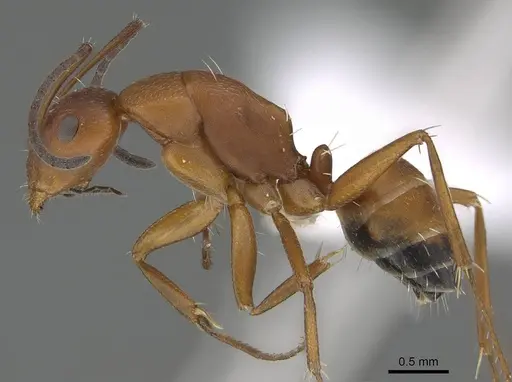
Camponotus maintikibo is a medium-sized ant native only to southern Madagascar. Workers display a striking bicolored pattern: the head, mesosoma (middle body section), and petiolar node are yellowish-orange, while the abdomen (gaster) is yellow at the front and black toward the rear . Minor workers have elongated heads with large protruding eyes, while major workers develop larger, more robust heads. The species belongs to the Camponotus ellioti species group within the subgenus Mayria. These ants inhabit the dry forests and spiny thicket forests of southern Madagascar, where they forage on the ground. They coexist with several other Camponotus species including Camponotus efitra, Camponotus grandidieri, and Camponotus voeltzkowii .
Quick Summary
- Difficulty: Medium
- Origin & Habitat: Southern Madagascar, found only in Andohahela National Park (dry forests and transitional areas) and Tsimanampetsotsa National Park (spiny forest and thicket). Workers forage on the ground in these arid southern regions [1].
- Colony Type: Colony type unconfirmed for this species. Most Camponotus species are monogyne (single-queen), but specific data for C. maintikibo is unavailable.
- Size & Growth:
- Queen: Size data unavailable, no specific measurements exist for queens of this species
- Worker: Minor workers ~4-6mm, major workers ~8-10mm (estimated from genus patterns)
- Colony: Colony size data unavailable for this species
- Growth: Moderate, typical Camponotus growth pattern
- Development: 6-10 weeks estimated based on genus-level Camponotus data (Development time varies with temperature, warmer conditions within acceptable range accelerate development)
- Antkeeping:
- Temperature: Keep at 22-26°C. Southern Madagascar experiences warm temperatures year-round, but these ants inhabit dry forests rather than extreme tropical conditions. A gentle temperature gradient allows workers to self-regulate.
- Humidity: Moderate to low humidity. Their natural habitat in dry forests and spiny thicket is relatively arid. Allow the nest to dry between water additions, avoiding constant saturation.
- Diapause: Unknown for this specific species. Many Madagascar ants reduce activity during cooler months. Consider providing a cool period (15-18°C) for 2-3 months during winter if the colony shows reduced activity.
- Nesting: Camponotus maintikibo likely nests in soil or under stones in the wild. In captivity, standard formicariums (Y-tong or plaster nests) work well. Provide a nesting chamber sized appropriately for the colony size with some substrate depth if using a naturalistic setup.
- Behavior: Workers are ground-foragers, actively searching for food on the nest surface. They are not particularly aggressive but will defend the colony if threatened. As Formicinae ants, they lack a functional sting but can bite and spray formic acid from their acidopore as a defense mechanism. Their medium size means escape prevention should be adequate but not extreme, standard barriers work well for ants this size.
- Common Issues: slow colony growth can frustrate beginners, Camponotus species take time to establish, overheating is a risk, avoid temperatures above 30°C, dry conditions can kill founding colonies, monitor humidity during claustral founding, wild-caught colonies may carry parasites that cause colony collapse in captivity, major workers may block nest entrances during stress periods, ensure chambers are appropriately sized
Housing and Nest Setup
Camponotus maintikibo adapts well to standard captive setups. A test tube colony starter works for founding queens, then transition to a small formicarium as the colony grows to 20-30 workers. Y-tong or plaster nests maintain humidity well while allowing you to observe colony development. Foraging areas should be simple and easy to clean, these ants are ground-foragers so they do not need elaborate climbing structures. Ensure the outworld (foraging area) connects to the nest with passages wide enough for major workers to pass through. A small water tube attached to the nest provides constant humidity access. [1]
Feeding and Diet
Like most Camponotus species, these ants are omnivorous. They accept sugar sources (honey, sugar water) and protein (dead insects, mealworms, crickets). In the wild, they forage on the ground for insects and likely tend aphids for honeydew. Feed protein-rich foods 2-3 times per week for growing colonies, and keep a sugar source available at all times. Remove uneaten prey after 24-48 hours to prevent mold. Major workers can tackle larger prey items, while minors handle smaller fragments. [1]
Temperature and Seasonal Care
Maintain temperatures between 22-26°C for optimal colony activity and brood development. Southern Madagascar has warm but not extreme temperatures, so avoid overheating. A heating cable on one side of the nest creates a temperature gradient, letting workers choose their preferred warmth. During winter months in temperate regions, you may notice reduced activity, a brief cool period (15-18°C for 2-3 months) may benefit colony cycling, though this species exact diapause requirements are not documented. Observe your colony behavior and adjust accordingly.
Colony Development and Growth
A newly mated queen will seal herself in a claustral chamber and lay eggs after feeding her first batch. She survives entirely on her stored fat reserves during this time, do not disturb or feed her. First workers (nanitics) emerge smaller than mature workers and help the queen expand the colony. Growth is moderate: expect 6-10 weeks from egg to first worker at optimal temperature. The colony will grow steadily over several years, eventually producing major workers with enlarged heads for defense and heavy food transport. Camponotus colonies can live for many years with a healthy queen.
Handling and Temperament
Camponotus maintikibo workers are not particularly aggressive toward keepers but will defend if provoked. As Formicinae ants, they lack a functional sting but can bite and spray formic acid from their acidopore, this is their primary defense mechanism. Major workers may block nest passages during perceived threats, this is normal defensive behavior. When observing your colony, avoid sudden vibrations or bright light that might stress the ants. For relocation or formicarium upgrades, coax workers with gentle airflow rather than shaking the nest.
Frequently Asked Questions
How long does it take for Camponotus maintikibo to raise first workers?
Expect 6-10 weeks from egg to first worker at optimal temperature (22-26°C). The queen seals herself in during claustral founding and relies on stored fat until nanitics emerge. Growth is slower than many tropical species, so patience is key.
What do Camponotus maintikibo ants eat?
They are omnivorous. Offer sugar water or honey as a constant energy source, and protein (dead insects, mealworms, small crickets) 2-3 times per week. Remove uneaten prey within 48 hours to prevent mold issues.
Can I keep multiple Camponotus maintikibo queens together?
No. Most Camponotus species are monogyne (single-queen colonies). Multiple unrelated queens will fight. Only keep one queen per colony. If you find a wild queen, isolate her immediately for founding.
What temperature is best for Camponotus maintikibo?
Keep them at 22-26°C. Southern Madagascar is warm but not extreme. A temperature gradient lets workers self-regulate. Avoid temperatures above 30°C as overheating can be fatal.
When should I move my colony to a formicarium?
Move from a test tube setup to a formicarium once the colony reaches 20-30 workers and the test tube shows signs of stress (condensation issues, space limitations). Ensure the new nest has appropriately sized chambers.
Do Camponotus maintikibo need hibernation?
Their exact diapause requirements are unknown. Many Madagascar ants reduce activity in cooler months. Consider providing a cool period (15-18°C) for 2-3 months during winter if your colony shows reduced activity, but this is optional.
How big do Camponotus maintikibo colonies get?
Based on typical Camponotus development, colonies likely reach several thousand workers over several years. Major workers appear as the colony matures, typically when the colony has several hundred workers.
Are Camponotus maintikibo good for beginners?
They are rated Medium difficulty. The main challenges are slower growth compared to faster-raising species and the need for patience during founding. They are rewarding ants once established.
Why is my colony declining?
Common causes include: stress from disturbance during founding, improper humidity (too wet or too dry), temperatures outside their range, parasites from wild-caught colonies, or queen death. Review your care conditions and make adjustments gradually.
Report an Issue
The current care sheet is based fully on literature. See inconsistencies, or something that's incorrect? Please , it will be resolved after review from an admin. Contributing to the blogs tab also helps providing information, to make us be able to further improve the caresheets. Thank you for your support!
References

Dit verzorgingsblad is gelicentieerd onder CC BY-SA 4.0 .
Community-blogs
CASENT0061925
Bekijk op AntWeb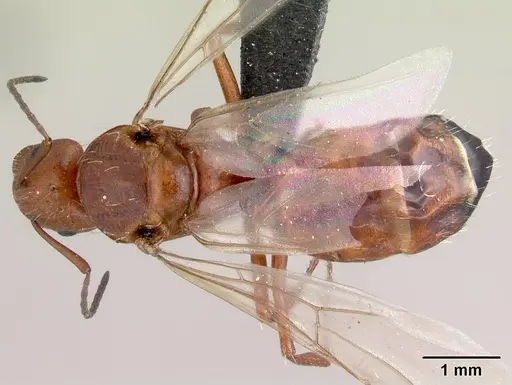
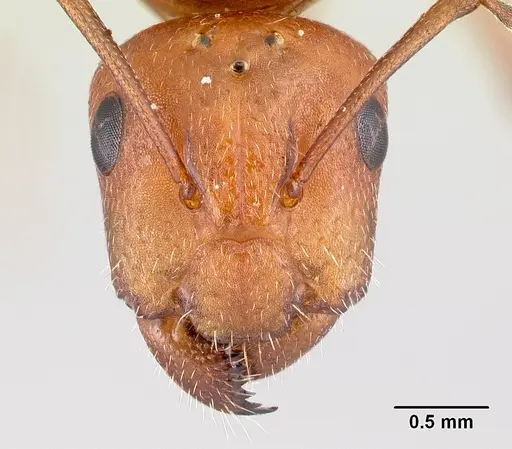
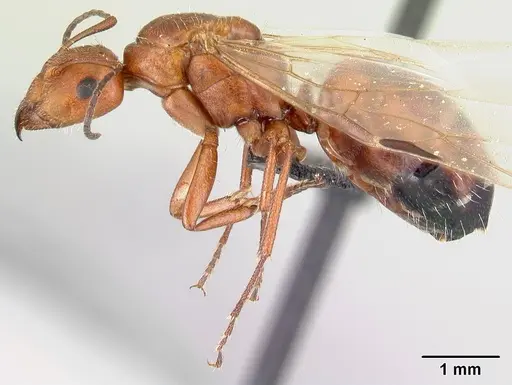
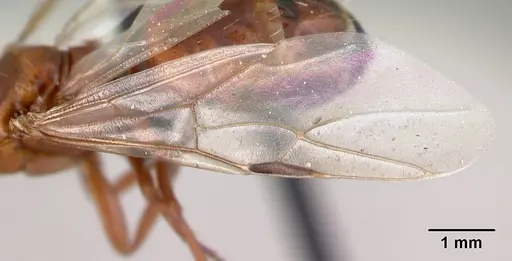
CASENT0062173
Bekijk op AntWeb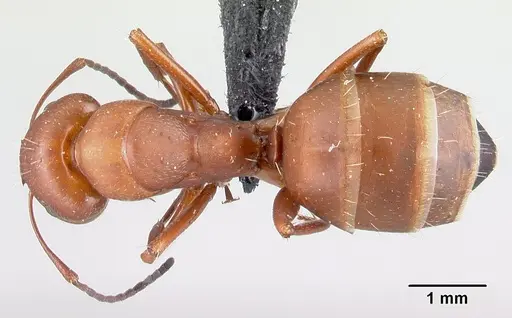
CASENT0062631
Bekijk op AntWeb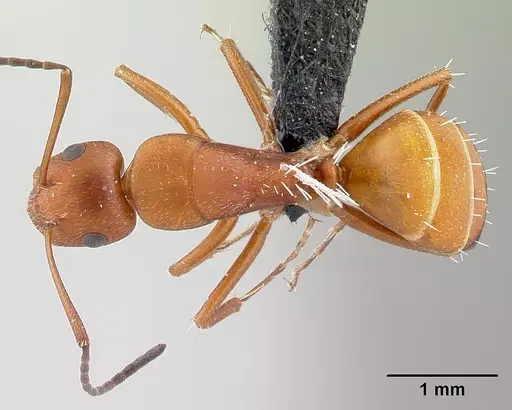
CASENT0763877
Bekijk op AntWeb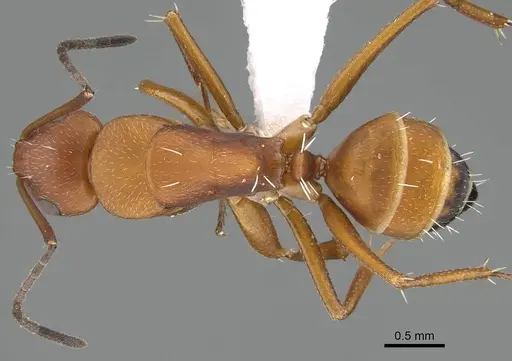
Literatuur
Verspreidingskaart laden...Producten laden...