
Camponotus eperiamorum
- Wetenschappelijke naam
- Camponotus eperiamorum
- Tribus
- Camponotini
- Subfamilie
- Formicinae
- Auteur
- Clouse, 2007
- Verspreiding
- Gevonden in 0 landen
Introductie
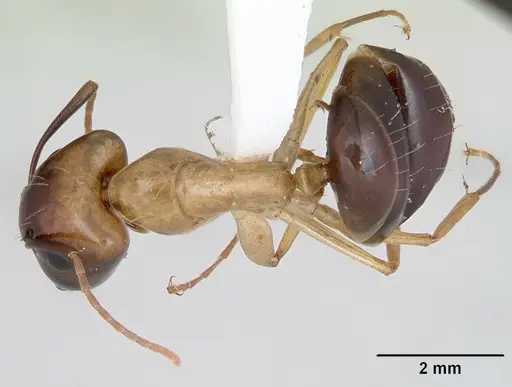
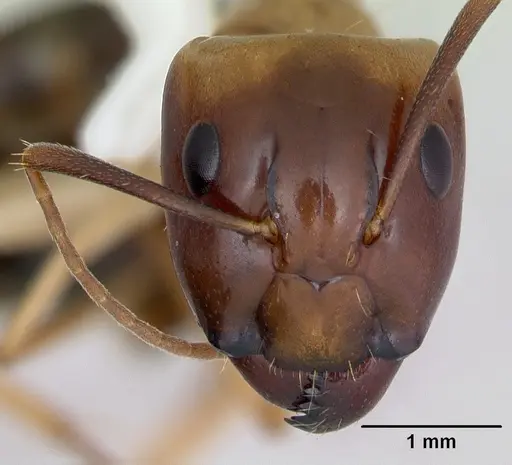
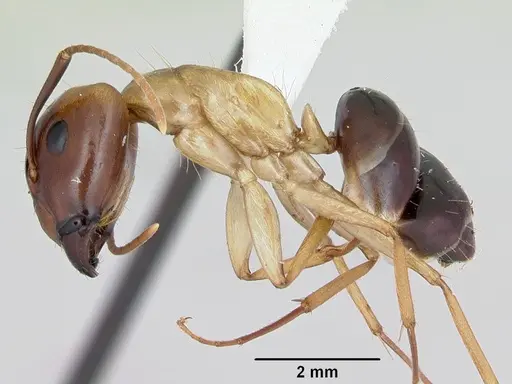
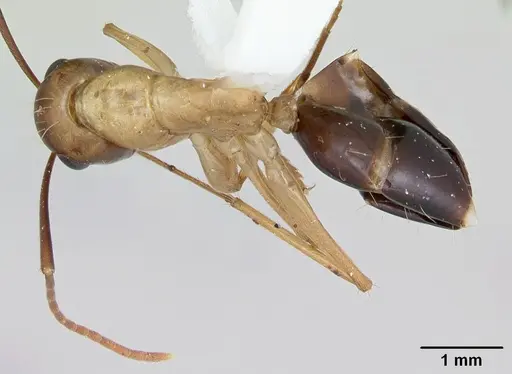
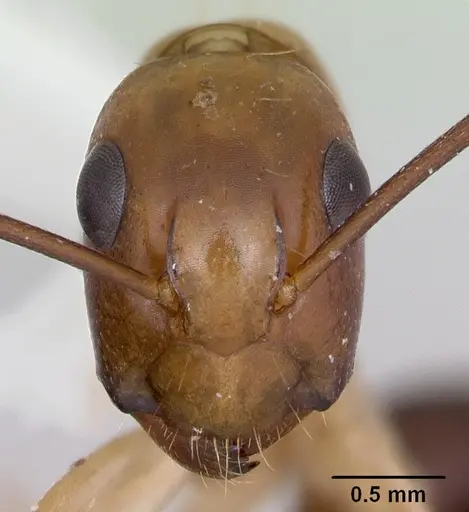
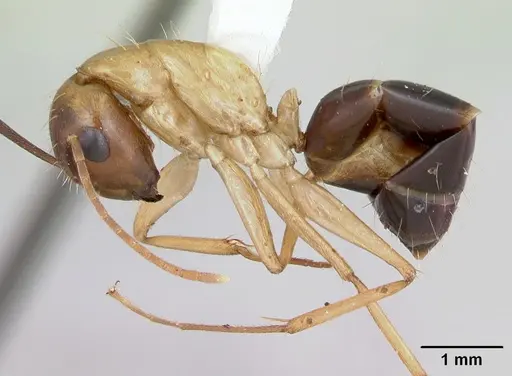
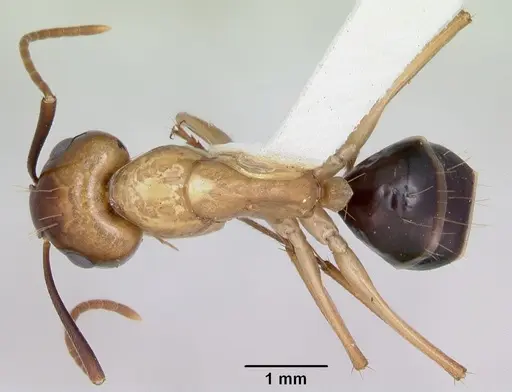
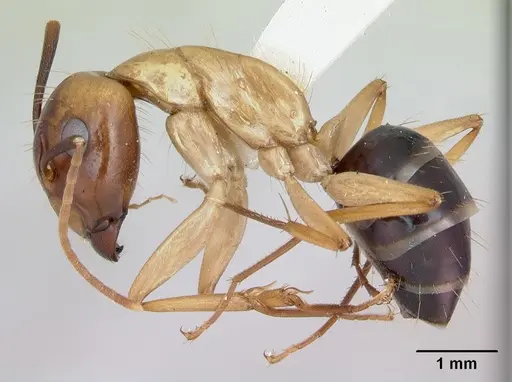
Camponotus eperiamorum is a striking carpenter ant endemic to Pohnpei Island in the Federated States of Micronesia. Workers measure 5.1-6.5 mm total length, with major workers reaching over 8.0 mm . They feature a distinctive bicoloration: a pale yellow mesosoma (middle body section), glossy black gaster (abdomen), and deep orange-brown head that makes them easy to identify in the field . This species belongs to the maculatus-group, a notoriously difficult group of Pacific carpenter ants, but C. eperiamorum stands out for its remarkably consistent coloration and lack of long hairs on the sides of the head . Found only on Pohnpei Island, these ants inhabit mid- to high-elevation native forest where they nest in dead wood such as ivory nut branches, tree fern branches, and dead logs . They are an older colonist on Pohnpei compared to related species and now survive primarily in upland forest areas, making them a rare island endemic of moderate abundance .
Quick Summary
- Difficulty: Medium
- Origin & Habitat: Pohnpei Island, Federated States of Micronesia, mid- to high-elevation native forest [1][2]
- Colony Type: Unconfirmed, likely single-queen colonies based on typical Camponotus patterns
- Size & Growth:
- Queen: 8.50-9.30 mm total length [1]
- Worker: 5.10-6.50 mm total length for minor workers, majors exceeding 8.0 mm [1][2]
- Colony: Unknown, no colony size data available
- Growth: Moderate, estimate based on genus patterns
- Development: Estimated 6-8 weeks at optimal temperature based on genus patterns (Direct development data unavailable, estimate based on typical Camponotus development at 24-26°C)
- Antkeeping:
- Temperature: Keep at 24-28°C, tropical species from warm, humid Pohnpei. A heating cable on one side creates a gradient
- Humidity: High humidity preferred. Keep nest substrate consistently moist but not waterlogged
- Diapause: Unlikely, tropical species from an island with minimal seasonal temperature variation. No diapause data available
- Nesting: Accepts dead wood cavities, Y-tong (AAC) nests, plaster nests, or naturalistic setups with wood pieces work well. Provide a water tube for humidity
- Behavior: Workers are active foragers that have been observed carrying food up trees in the wild [1]. They likely have typical carpenter ant temperament, generally calm but capable of defending the colony if threatened. Like all Camponotini, they cannot sting, instead, they bite and spray formic acid into the wound. Escape risk is moderate due to their size, standard barrier methods work well. They are likely nocturnal or crepuscular foragers like many tropical Camponotus.
- Common Issues: tropical species may struggle in cool, dry environments without heating, limited availability since this is a rare island endemic, wild collection is difficult, no published care guidelines means keepers must adapt from related species, high humidity requirements can lead to mold if ventilation is poor, slow colony growth may test keeper patience
Natural History and Distribution
Camponotus eperiamorum is a true island endemic found only on Pohnpei Island in the Federated States of Micronesia [1][2]. This species was described in 2007 by Ronald Clouse and is named in honor of the Eperiam family of Einpein Village, who provided hospitality and guidance to researchers exploring Pohnpei's interior [1].
These ants inhabit mid- to high-elevation native forest, typically at elevations between 200-350 meters and sometimes higher [1]. They are now restricted to upland areas where native forest remains intact, as lowland habitats have been altered by human activity [3][4]. The species is considered an older colonist on Pohnpei compared to its close relative Camponotus chloroticus, and molecular phylogeny places it in Clade IV along with other Pacific Camponotus species [3][4].
In the wild, colonies nest in dead wood including ivory nut branches, tree fern branches, and dead logs [1]. Workers have been observed carrying food up trees, suggesting they forage in the canopy. Alates (reproductives) have been collected at artificial lights at residences, indicating nuptial flights occur during certain seasons [1].
Appearance and Identification
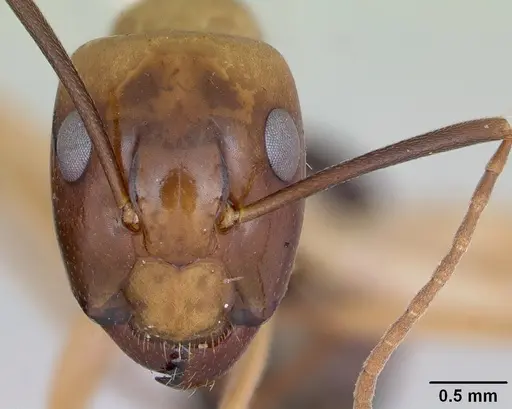
Camponotus eperiamorum workers are distinctive and relatively easy to identify in the field thanks to their striking bicoloration [1]. Minor workers measure 5.10-6.50 mm total length, while major workers can exceed 8.0 mm total length [1][2]. The mesosoma (middle body section) is an extremely light yellow to yellow-orange, which contrasts sharply with the glossy black gaster (abdomen) [1]. The head is mostly deep orange-brown, becoming the same yellow color as the mesosoma at the vertex (top of head) [1]. This abrupt color change at the vertex is a key identifying feature. Each abdominal segment has a clear strip along the posterior fifth [1].
The species lacks long standing hairs on the sides of the head, which is the primary morphological difference separating it from the similar Camponotus chloroticus [1]. The surface is smooth and shining, though not glossy [1]. Queens are larger at 8.50-9.30 mm total length and feature the same bicoloration pattern plus a large mesosoma adapted for wing muscles [1].
Housing and Nesting
In captivity, Camponotus eperiamorum should be provided with nesting options that mimic their natural dead wood habitat. Y-tong (AAC) nests work well, as do plaster nests or naturalistic setups with wood pieces. The nest should have chambers scaled to the colony size, starting with a test tube setup for founding colonies and transitioning to larger formicaria as the colony grows.
Since they come from a tropical island with high humidity, these ants need consistent moisture in their nest. Provide a water tube or hydration system that keeps the nest substrate damp but not waterlogged. Good ventilation is essential to prevent mold while maintaining moisture.
For the outworld (foraging area), provide a standard ant keeping setup with appropriate barrier methods. While not as small as some species, they can still climb glass and smooth surfaces, so fluon or other barriers are recommended.
Feeding and Diet
Like other carpenter ants (Camponotus), this species is omnivorous with a preference for protein and sugar sources. In the wild, workers have been observed carrying food up trees, suggesting they forage for both prey and sugary substances like honeydew from aphids or tree sap [1].
In captivity, offer a varied diet including: sugar water or honey as a constant energy source, and protein sources like mealworms, crickets, or other insects. Feed protein prey 2-3 times per week depending on colony size. Remove uneaten prey after 24-48 hours to prevent mold.
Carpenter ants in the genus Camponotus are known to share food through regurgitation (trophallaxis), so a well-fed colony will distribute nutrients efficiently. Major workers, with their larger size, can handle bigger prey items.
Temperature and Seasonal Care
As a tropical species from near the equator, Camponotus eperiamorum requires warm temperatures year-round. Keep the nest area at 24-28°C for optimal brood development. A slight temperature gradient allows ants to regulate their own exposure.
A heating cable placed on one side of the nest can create this gradient. Place the heating element on top of the nest rather than underneath to avoid excessive drying from evaporating water reservoirs.
Since Pohnpei lacks significant seasonal temperature variation, these ants likely do not require a diapause (winter rest) period. Maintain consistent warmth throughout the year. If your room temperature stays in the low-to-mid 20s°C range, that may be sufficient without additional heating.
Monitor colony behavior, if workers cluster near heat sources, increase temperature slightly, if they avoid heated areas, reduce heat.
Colony Development and Growth
Camponotus eperiamorum colonies likely start with a single queen who raises the first brood alone using stored fat reserves, this is typical founding behavior for Camponotus species.
The first workers (nanitics) will be smaller than normal workers but should quickly be replaced by properly fed major and minor workers as the colony grows. Development from egg to worker likely takes 6-8 weeks at optimal temperature, though this is estimated based on related species rather than directly studied.
Colony growth is moderate, faster than some slow-growing Camponotus but not as rapid as tropical species like some Pheidole. Expect the first year to focus on establishing the colony rather than rapid expansion. Mature colonies likely reach several hundred workers based on typical Camponotus colony sizes.
Frequently Asked Questions
How long does it take for Camponotus eperiamorum to produce first workers?
Based on typical Camponotus development, expect first workers (nanitics) approximately 6-8 weeks after the queen lays eggs, at optimal temperature of 24-28°C. This is an estimate since specific development data for this species is not published.
What do Camponotus eperiamorum ants eat?
They are omnivorous like other carpenter ants. Offer sugar water or honey constantly for energy, and protein prey (mealworms, crickets, other insects) 2-3 times per week. Remove uneaten prey after 24-48 hours.
What temperature do Camponotus eperiamorum ants need?
Keep them warm at 24-28°C. As a tropical species from Pohnpei Island, they require year-round warmth. A heating cable on one side of the nest creates a suitable gradient.
Are Camponotus eperiamorum good for beginners?
This species is rated Medium difficulty. While not the most challenging ant, they have specific humidity and temperature needs that require attention. Their rarity and limited availability also make them more suitable for intermediate keepers.
Do Camponotus eperiamorum need hibernation?
No, they likely do not require diapause. As a tropical island species from near the equator, they experience minimal seasonal temperature variation. Maintain warm temperatures year-round.
How big do Camponotus eperiamorum colonies get?
Exact colony size is unknown, but based on typical Camponotus patterns, mature colonies likely reach several hundred workers. Major workers can exceed 8 mm total length.
What type of nest is best for Camponotus eperiamorum?
Y-tong (AAC) nests, plaster nests, or naturalistic setups with dead wood pieces work well. They naturally nest in dead wood in the wild. Provide consistent humidity and a water source.
Can I keep multiple Camponotus eperiamorum queens together?
Not recommended without specific study. While some Camponotus can be polygynous, combining unrelated queens has not been documented for this species. Start with a single queen for best success.
Where is Camponotus eperiamorum found in the wild?
This species is endemic to Pohnpei Island in the Federated States of Micronesia. It lives in mid- to high-elevation native forest, typically above 200 meters elevation, nesting in dead wood [1][2].
Report an Issue
The current care sheet is based fully on literature. See inconsistencies, or something that's incorrect? Please , it will be resolved after review from an admin. Contributing to the blogs tab also helps providing information, to make us be able to further improve the caresheets. Thank you for your support!
References

Dit verzorgingsblad is gelicentieerd onder CC BY-SA 4.0 .
Community-blogs
Literatuur
Verspreidingskaart laden...Producten laden...