
Camponotus consectator
- Wetenschappelijke naam
- Camponotus consectator
- Subgenus
- Tanaemyrmex
- Tribus
- Camponotini
- Subfamilie
- Formicinae
- Auteur
- Smith, 1858
- Verspreiding
- Gevonden in 0 landen
Introductie
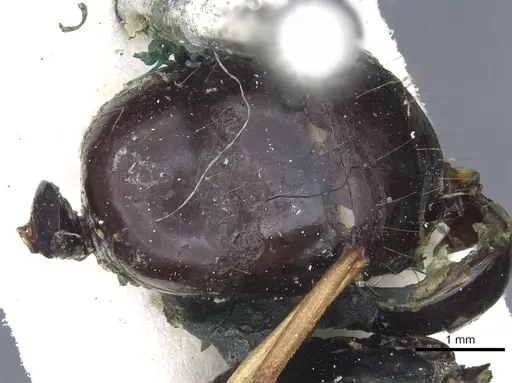
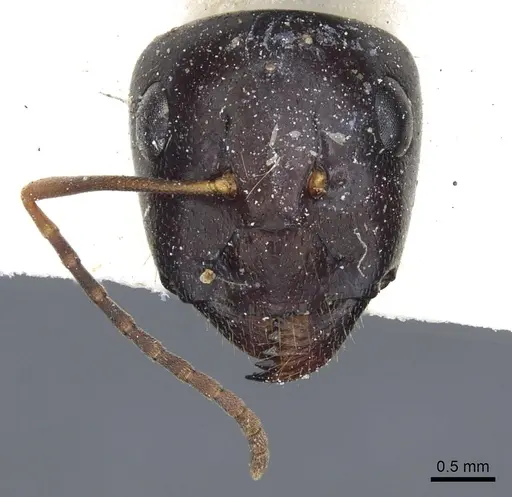
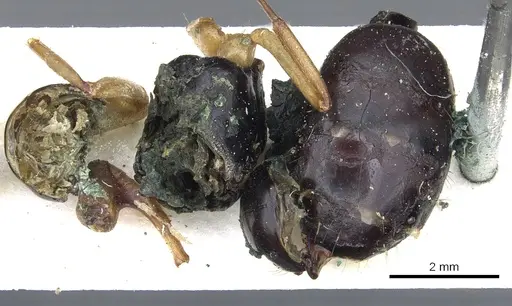
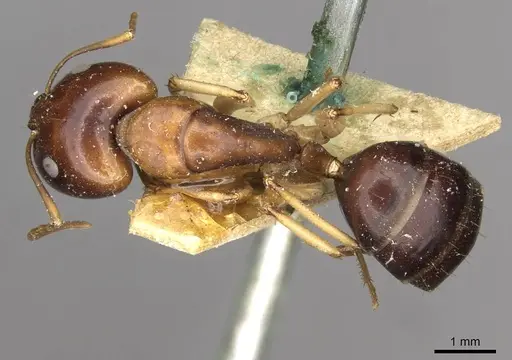
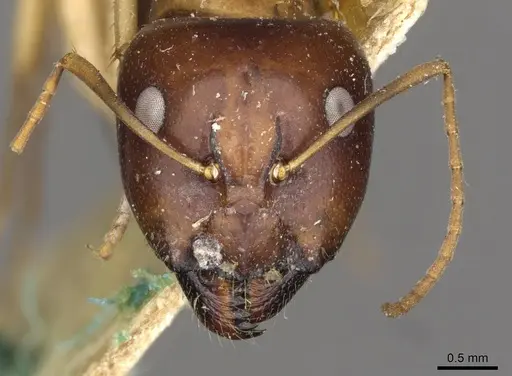
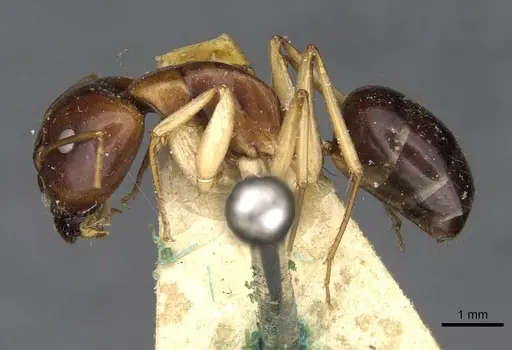
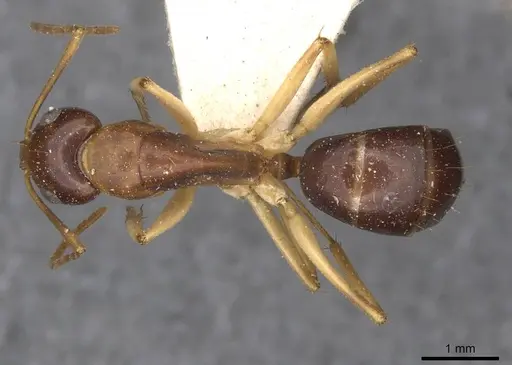
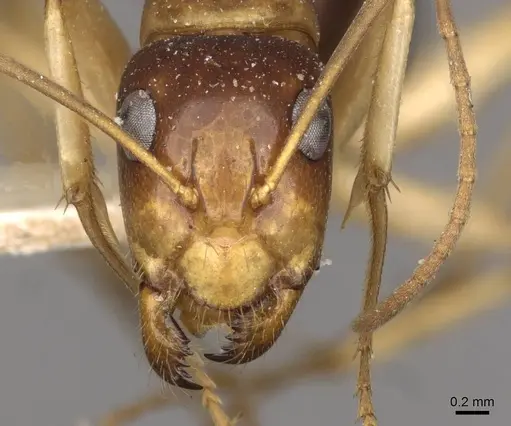
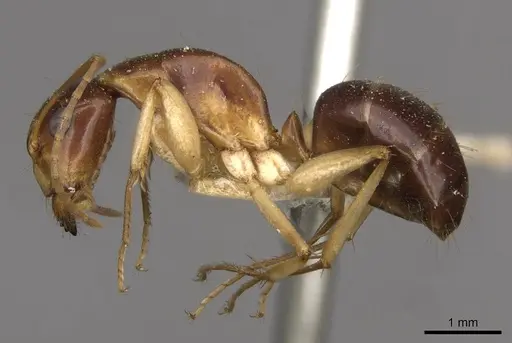
Camponotus consectator is a large carpenter ant native to Australia. Queens reach approximately 10.5mm in total length, while workers are significantly smaller. The ants are predominantly black with a smooth, shiny appearance. Their most distinctive features include erect setae on the lower genae (cheek area) and a lighter vertical stripe on the mandible. These ants were previously misidentified as 'Camponotus cowlei' in many publications, but that name actually refers to a different species (Melophorus bagoti). The species is found throughout Australia, with type localities in Western Australia including areas around Kalgoorlie, Day Dawn, and Mundaring Weir . This is a typical Australian Camponotus species that nests in soil or decaying wood. Like other carpenter ants, they do not eat wood but excavate galleries for nesting. They are generalist foragers that search for honeydew, insects, and sugary substances. Their large size makes them impressive display ants.
Quick Summary
- Difficulty: Medium
- Origin & Habitat: Australia, particularly Western Australia. These ants inhabit arid to semi-arid regions across the continent, nesting in soil or rotting wood [2][3].
- Colony Type: Likely monogyne (single-queen colonies) based on typical Camponotus patterns.
- Size & Growth:
- Queen: 10.5mm [1]
- Worker: size data unavailable, inferred from Camponotus genus patterns as approximately 4-8mm
- Colony: up to 5,000 workers (estimated based on typical Camponotus colony sizes)
- Growth: Moderate
- Development: estimated 6-10 weeks based on typical Camponotus development at optimal temperature (Development time depends on temperature. Warmer conditions accelerate development, while cooler temperatures slow it down.)
- Antkeeping:
- Temperature: Keep nest area at 24-28°C. Australian species prefer warm conditions. A heating cable on one side of the nest creates a temperature gradient allowing ants to regulate their own exposure.
- Humidity: Moderate humidity (40-60%). These ants come from relatively arid Australian regions, so avoid overly damp conditions. Provide a water tube for drinking access.
- Diapause: Yes, Australian ants experience reduced activity during cooler months. Reduce temperature to 15-18°C for 2-3 months during winter.
- Nesting: Y-tong (AAC) nests work well for their size. They also accept plaster nests or naturalistic setups with soil and rotting wood. Provide nesting chambers scaled to colony size.
- Behavior: Generally docile and non-aggressive. Workers are active foragers that search for protein (insects) and sugar sources (honeydew, sugar water). They are not known for biting or stinging aggressively. Escape risk is moderate due to their larger size, standard barrier methods (fluon, talcum powder) work well. They are primarily nocturnal or crepuscular foragers in the wild, so they may be most active during evening hours in captivity.
- Common Issues: queen death during founding is common, claustral queens sometimes fail if stressed or if eggs are disturbed too early, overheating can kill colonies, never exceed 32°C and always provide a temperature gradient, mold problems occur if nest is too humid, these ants prefer drier conditions than many tropical species, wild-caught colonies may have parasites that cause colony decline in captivity, slow initial growth causes some keepers to overfeed, leading to mold and mite problems
Nest Preferences
In the wild, Camponotus consectator nests in soil or rotting wood, commonly found in arid and semi-arid regions of Australia. They prefer nest sites that offer some protection from extreme temperatures and moderate humidity. For captive care, Y-tong (AAC) nests work excellently, the smooth walls prevent escape and the material is easy to maintain. Plaster nests are also suitable, providing good humidity control. Naturalistic setups with a soil layer and piece of rotting wood can mimic their natural environment. For founding colonies, a simple test tube setup with a water reservoir works well for the claustral queen. As the colony grows, gradually upgrade to larger formicaria with multiple chambers. [2][3]
Feeding and Diet
Camponotus consectator is a generalist feeder typical of the genus. Workers forage for honeydew from aphids and scale insects, collect nectar, and hunt small insects. In captivity, offer a varied diet: protein sources like mealworms, small crickets, or frozen insects should be provided 2-3 times per week. Sugar water, honey, or commercial ant nectar makes an excellent constant energy source. Fresh fruit (especially sweet varieties) is often accepted. Remove uneaten protein within 24 hours to prevent mold. A constant sugar source should always be available. Young colonies may ignore larger prey items, offer appropriately sized insects.
Temperature and Seasonal Care
As an Australian species, Camponotus consectator prefers warm conditions. Maintain nest temperature between 24-28°C for optimal brood development. A heating cable placed on one side of the nest creates a gradient that allows ants to thermoregulate. During the cooler months (roughly May through August in the southern hemisphere), reduce temperature to 15-18°C to simulate winter dormancy. This diapause period helps maintain colony health and triggers reproductive behavior when temperatures rise again. Do not cool suddenly, reduce temperature gradually over 1-2 weeks. Some activity may continue during winter at room temperature, but growth will slow significantly.
Behavior and Colony Dynamics
This species exhibits typical Camponotus colony structure. A single founding queen seals herself in a chamber and raises her first brood alone. The first workers (nanitics) are often smaller than normal workers but quickly begin expanding the nest and foraging. Workers are polymorphic, major workers develop larger heads for heavy tasks like nest defense and food processing, while minor workers handle foraging and brood care. The species is not particularly aggressive, but workers will spray formic acid as a defense mechanism when threatened. They are primarily nocturnal foragers in the wild, so expect most activity during evening and night hours in captivity. Colonies can live for many years with proper care, Camponotus queens can live 15-25 years.
Frequently Asked Questions
How long does it take for Camponotus consectator to have first workers?
Expect first workers (nanitics) to emerge 6-10 weeks after the queen lays eggs, assuming temperatures around 24-28°C. The exact timing depends on temperature and feeding. Some colonies may take longer if kept cooler or if the queen is disturbed.
Can I keep multiple Camponotus consectator queens together?
No. This species is monogyne (single-queen). Multiple unrelated queens will fight until only one remains. If you capture multiple queens, house them separately. In the wild, only one queen heads each colony.
What do Camponotus consectator ants eat?
They are generalist feeders. Offer protein (insects like mealworms, crickets) 2-3 times per week and keep a constant sugar source available (sugar water, honey, or commercial ant nectar). They also occasionally accept fresh fruit.
What temperature do they need?
Keep the nest at 24-28°C. Use a heating cable on one side to create a temperature gradient. Never exceed 32°C. During winter, reduce to 15-18°C for dormancy.
Are Camponotus consectator good for beginners?
They are rated Medium difficulty. They are more forgiving than some species but require proper temperature control and hibernation. Their large size makes them easier to observe than tiny ants.
How big do colonies get?
Mature colonies typically reach up to 5,000 workers. With excellent care, they can live for decades, Camponotus queens can live 15-25 years.
Do they need hibernation?
Yes. Reduce temperatures to 15-18°C for 2-3 months during winter. This mimics their natural seasonal cycle in Australia and helps maintain colony health.
When should I move them from a test tube to a formicarium?
Move to a formicarium when the colony reaches 20-30 workers and the test tube becomes crowded. Ensure the new nest has appropriately sized chambers and a water source.
Why is my queen not laying eggs?
Possible causes include: temperature too low (below 20°C), stress from disturbance, insufficient nutrition, or the queen is still settling in. Ensure proper temperature (24°C+), minimize vibrations near the nest, and wait 1-2 weeks after establishing before expecting eggs.
Report an Issue
The current care sheet is based fully on literature. See inconsistencies, or something that's incorrect? Please , it will be resolved after review from an admin. Contributing to the blogs tab also helps providing information, to make us be able to further improve the caresheets. Thank you for your support!
References

Dit verzorgingsblad is gelicentieerd onder CC BY-SA 4.0 .
Community-blogs
Literatuur
Verspreidingskaart laden...Producten laden...