
Camponotus circularis
- Wetenschappelijke naam
- Camponotus circularis
- Subgenus
- Myrmobrachys
- Tribus
- Camponotini
- Subfamilie
- Formicinae
- Auteur
- Mayr, 1870
- Verspreiding
- Gevonden in 0 landen
Introductie
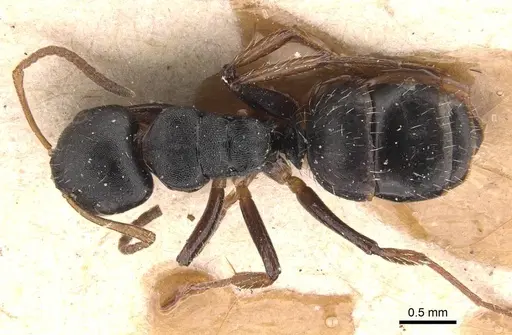
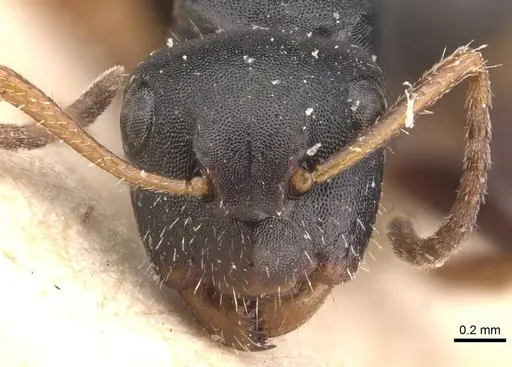
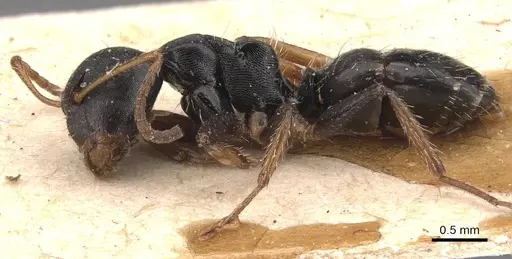
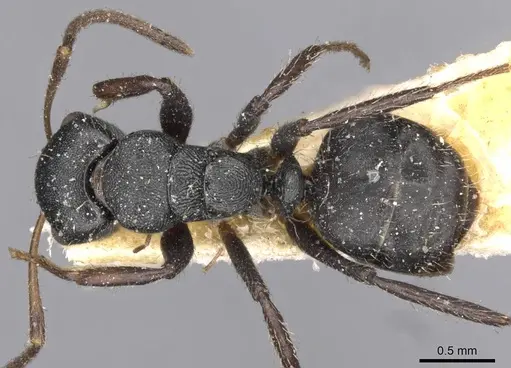
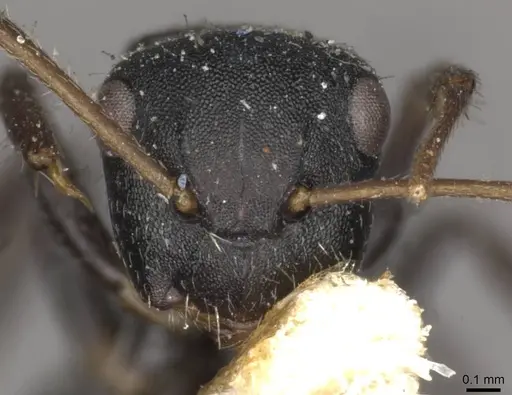
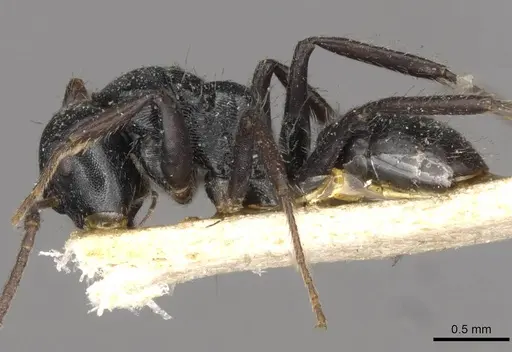
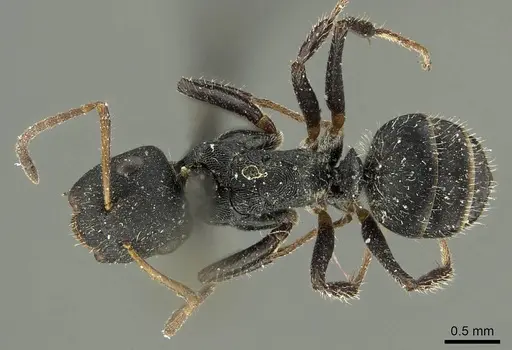
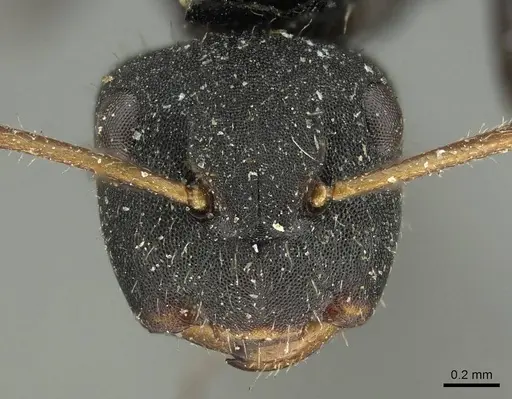
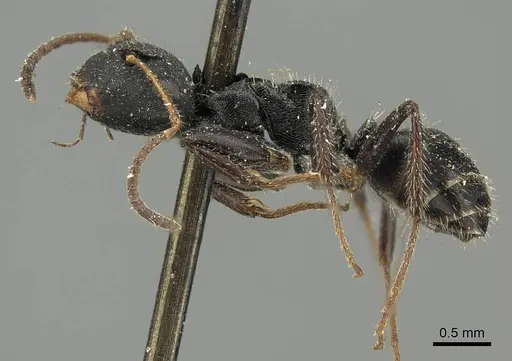
Camponotus circularis is a Neotropical carpenter ant belonging to the subgenus Myrmobrachys and the dimorphus species group. Workers measure 3.5-5mm and are primarily black in color, with major workers showing a distinctive red coloration on the anterior part of the head. The mandibles, scape, basal funicle article, and tarsi are also black. Their body is sparsely covered with whitish hairs and has a distinctive sculpture pattern including costulate mesosoma and a subquadrate petiolar node in lateral view. The species was originally described from Colombia in 1870 and is also found in Mexico and Peru [AntWiki]. This species belongs to the dimorphus group within Myrmobrachys, characterized by having two worker sizes (dimorphic) - major and minor workers. The propodeum has a straight dorsum, and the pro and mesonotum are higher than the propodeum when viewed from the side. These are typical arboreal or semi-arboreal nesting ants in their native range, often found in forest habitats [AntWiki].
Quick Summary
- Difficulty: Medium
- Origin & Habitat: Neotropical region, Colombia (type locality), Mexico, and Peru. They inhabit tropical and subtropical forest environments where they typically nest in rotting wood or under bark [1][2].
- Colony Type: Likely monogyne (single queen colonies) based on typical Camponotus patterns. The species shows dimorphic workers with major and minor castes [1].
- Size & Growth:
- Queen: Size data unavailable, estimated 10-14mm based on genus patterns for Myrmobrachys species
- Worker: 3.5-5mm [1]
- Colony: Unknown from available research data
- Growth: Moderate, typical for carpenter ants
- Development: Estimated 6-8 weeks at optimal temperature based on typical Camponotus development (Development time is estimated from related Camponotus species, actual timing may vary. Nanitics (first workers) typically emerge smaller than normal workers.)
- Antkeeping:
- Temperature: Keep at 22-26°C. As a Neotropical species, they prefer warm conditions but avoid temperatures above 30°C. A heating cable on one side of the nest can create a gentle gradient.
- Humidity: Moderate humidity around 50-70%. These ants prefer somewhat drier conditions compared to some Neotropical species. Allow the nest to dry partially between water additions.
- Diapause: Not required. As a tropical species, they do not typically undergo true hibernation. However, a slight reduction in temperature during winter months (down to around 18-20°C) may help simulate natural seasonal cycles.
- Nesting: Y-tong (AAC) nests or plaster nests work well. They prefer tight chambers and narrow passages. Avoid overly wet substrates as they are not as moisture-dependent as some other Neotropical species. Test tube setups work for founding colonies.
- Behavior: Generally calm and non-aggressive for a Camponotus species. Workers are moderately active foragers that primarily hunt for honeydew and small insects. They are not known to be particularly defensive but will bite if threatened. Major workers have a more pronounced head and mandibles for defensive duties. Escape risk is moderate, use standard barrier methods (Fluon) but they are not extreme escape artists like some tiny species. They are primarily nocturnal or crepuscular foragers in the wild.
- Common Issues: queen mortality during founding is common, claustral queens seal themselves in and may fail if disturbed or if humidity is wrong, colonies grow slowly during the first few months which can lead to beginner impatience and overfeeding, wild-caught colonies may contain parasites that can decimate the colony in captivity, test tube setups can flood if water reservoirs are overfilled, use proper founding setup with correct water-to-air ratio, they may abandon nests that become too wet or moldy, maintain balance between moisture and ventilation
Housing and Nest Setup
For founding colonies, use a standard test tube setup with a water reservoir that provides humidity but does not flood. The tube should be about one-third filled with water, with a cotton ball separating the water from the queen. Place the tube in a dark area to encourage the queen to seal herself in. Once the colony reaches 20-30 workers, you can transition to a Y-tong (AAC) nest or a plaster formicarium. These ants prefer tight-fitting chambers rather than large open spaces. Avoid overly moist conditions, they are from a drier forest habitat than many Neotropical species. Provide a shallow water foraging area in the outworld and ensure proper ventilation to prevent mold buildup.
Feeding and Diet
Camponotus circularis is omnivorous like most carpenter ants. Their diet should include sugar sources (honey water, sugar water, or sucrose solution) offered constantly as an energy source for workers. Protein should come from small insects such as fruit flies, small crickets, mealworms, or other appropriately sized prey. Feed protein 2-3 times per week, adjusting based on colony size and consumption. Remove uneaten prey after 24-48 hours to prevent mold. They may also accept small amounts of seeds or plant matter, but protein and sugar should form the core of their diet. Fresh killed insects are preferred over freeze-dried options.
Temperature and Seasonal Care
Maintain temperatures between 22-26°C for optimal brood development. As a Neotropical species from Colombia, Mexico, and Peru, they are accustomed to warm, stable conditions year-round. A slight temperature drop in winter (to around 18-20°C) is acceptable but not required, these ants do not need true hibernation. Avoid temperatures below 15°C as this can stress or kill the colony. Use a heating cable placed on top of the nest (not underneath to avoid excessive drying) to create a temperature gradient if your room temperature is below their ideal range. Monitor colony activity, workers clustering near heat indicate they need it warmer, while avoiding heat sources suggests the nest is too warm.
Behavior and Colony Dynamics
This species exhibits the typical Camponotus colony structure with one queen and dimorphic workers, major workers have larger heads and are more involved in defense, while minor workers handle foraging and brood care. Queens are claustral and seal themselves in during founding, relying on stored fat reserves until their first workers (nanitics) emerge. Colonies grow moderately fast once established, with workers living several months to a year. Workers are not particularly aggressive but will defend the nest if threatened. They are primarily nocturnal foragers in the wild, so you may see more activity during evening hours. Provide a dark enclosure or cover for the nest to simulate their natural dark nesting sites.
Frequently Asked Questions
How long does it take for Camponotus circularis to raise first workers?
Expect first workers (nanitics) to emerge in about 6-8 weeks after the queen lays eggs, assuming optimal temperature around 24°C. This is an estimate based on typical Camponotus development, actual timing may vary slightly.
What do Camponotus circularis ants eat?
They are omnivorous. Offer sugar water or honey constantly as an energy source, and feed small insects (fruit flies, small crickets, mealworms) 2-3 times per week as protein. Remove uneaten prey after a day to prevent mold.
Are Camponotus circularis good for beginners?
They are moderate difficulty, easier than some tropical species but require attention to temperature and proper founding setup. Their slower initial growth requires patience.
What temperature do Camponotus circularis need?
Keep them at 22-26°C. A heating cable on the nest can help maintain warmth. Avoid temperatures below 15°C or above 30°C.
Do Camponotus circularis need hibernation?
No, they do not require true hibernation. As a Neotropical species, they prefer year-round warmth. A slight temperature reduction in winter (to around 18-20°C) is optional but not necessary.
Can I keep multiple Camponotus circularis queens together?
No, this species is likely monogyne (single queen). Combining unrelated queens will typically result in fighting. Only keep one queen per colony.
When should I move Camponotus circularis to a formicarium?
Move them when the colony reaches around 20-30 workers. Before this, a test tube setup is sufficient and safer for the colony. Make sure the formicarium has appropriately sized chambers, these ants prefer tight spaces.
How big do Camponotus circularis colonies get?
Colony size is not well documented but likely reaches several hundred workers based on typical Camponotus patterns. Growth is moderate, expect several months to reach significant numbers.
Why is my Camponotus circularis queen not laying eggs?
Possible causes include: temperature too low (below 20°C), stress from disturbance, improper humidity, or the queen is still in founding mode. Ensure optimal conditions and minimize nest disturbances during the founding period.
Report an Issue
The current care sheet is based fully on literature. See inconsistencies, or something that's incorrect? Please , it will be resolved after review from an admin. Contributing to the blogs tab also helps providing information, to make us be able to further improve the caresheets. Thank you for your support!
References

Dit verzorgingsblad is gelicentieerd onder CC BY-SA 4.0 .
Community-blogs
Literatuur
Verspreidingskaart laden...Producten laden...