
Brachyponera jerdonii
- Wetenschappelijke naam
- Brachyponera jerdonii
- Tribus
- Ponerini
- Subfamilie
- Ponerinae
- Auteur
- Forel, 1900
- Verspreiding
- Gevonden in 1 landen
Introductie
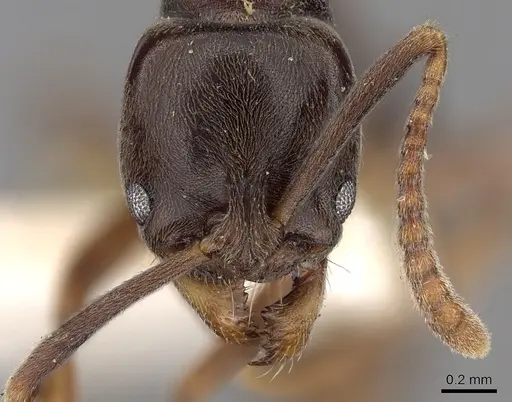
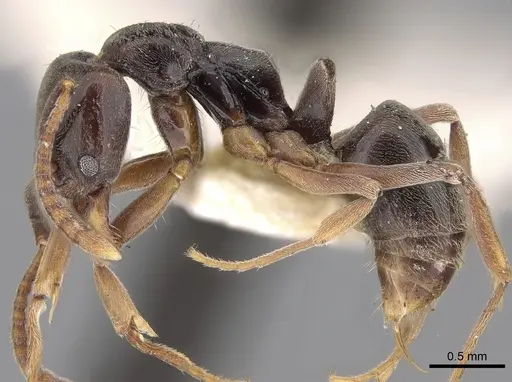
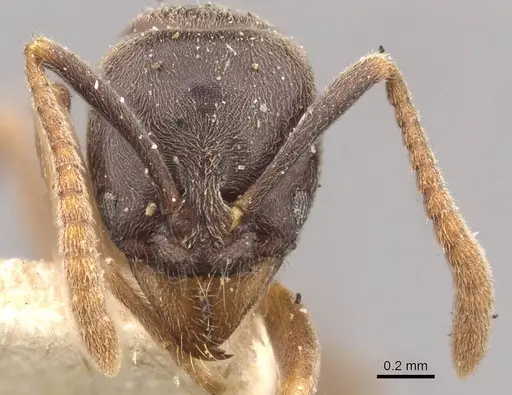
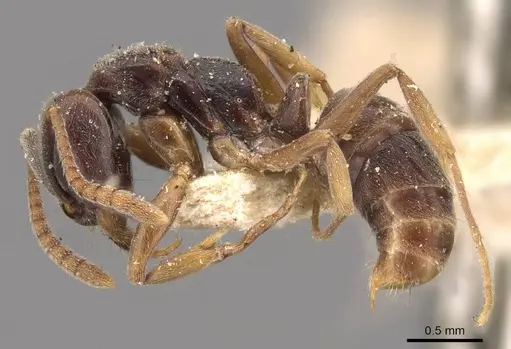
Brachyponera jerdonii is a small ponerine ant native to South and Southeast Asia, found across India, Bangladesh, Sri Lanka, and Vietnam. Workers measure 3.0-3.2 mm (up to 3.5 mm in older descriptions ) and are smaller and slighter than related species like B. luteipes. They have a short, square head, very small eyes (with about 40 facets), and a smooth, shiny body . The mandibles, antennae, and legs are lighter in color than those of similar species . Forel noted the pronotum is convex and not shouldered . This species belongs to the Ponerinae subfamily of predatory ants that typically hunt small invertebrates. They have been recorded across a wide altitudinal range in the Himalayas (700-2100 m) in warm and cool broadleaved forests, agricultural land, and even built-up areas, suggesting they adapt to various conditions .
Quick Summary
- Difficulty: Medium
- Origin & Habitat: Native to the Indomalaya region, found across India (Maharashtra, West Bengal, Kerala, Assam, and many other states [3]), Bangladesh, Sri Lanka, and Vietnam. They inhabit diverse environments from lowland wet forests to elevations between 700-2100 m in the Himalayan foothills, including warm broadleaved forests, cool broadleaved forests, agricultural land, and built-up areas [4].
- Colony Type: Colony structure is not well documented in scientific literature. Based on typical Ponerinae patterns, likely single-queen (monogyne) colonies, though this requires confirmation for this species.
- Size & Growth:
- Queen: Unconfirmed, no specific measurements found in available research
- Worker: 3.0-3.2 mm [1] (up to 3.5 mm per AntWiki [2])
- Colony: Unknown, no colony size data available
- Growth: Unknown, no development timing data available
- Development: Unconfirmed, no direct data available. Based on typical Ponerinae development patterns, expect 6-10 weeks at warm temperatures, but this is an estimate. (Development timeline has not been directly studied for this species.)
- Antkeeping:
- Temperature: Based on their wide altitudinal range (700-2100 m), they likely tolerate a broad temperature range [4]. Start around 22-26°C and observe colony activity. The Bhutan collection data from 700-2100 m elevation suggests they handle both warm and cooler conditions [4].
- Humidity: Likely prefers moderate to high humidity given their distribution in Indian and Himalayan forests. Keep nest substrate consistently moist but not waterlogged. Provide a gradient from damp to slightly drier areas for the ants to self-regulate.
- Diapause: Unknown, their wide distribution across tropical and subtropical regions suggests they may not require a strict diapause, but temperate populations at higher elevations (like those in Bhutan and northern India) may benefit from a cool period in winter.
- Nesting: Natural nesting behavior is not directly documented. Based on related Ponerinae species, they likely nest in soil, under stones, or in rotting wood. In captivity, a Y-tong (AAC) nest or plaster nest with moisture chambers works well for small ponerines. Keep the nest humid and provide a shallow water source in the outworld.
- Behavior: As a Ponerine ant, they are likely predatory on small invertebrates. They probably forage individually rather than in large groups. Workers are small (3-3.5 mm) so escape prevention should be moderate, use standard barriers but they are not tiny enough to require fine mesh. Their small size and smooth body suggest they may be agile climbers. Temperament is not well documented, but most Ponerinae can deliver a mild sting if threatened, use caution when handling.
- Common Issues: development timeline is unknown, beginners may struggle without clear growth expectations, sting risk, Ponerinae ants can sting, though pain level is typically mild for small species, humidity management is critical, too dry and brood dies, too wet and mold becomes a problem, predatory diet requirements may be challenging, they likely need live small prey like fruit flies or pinhead crickets, colony founding may be difficult, no data on whether they are claustral or semi-claustral
Housing and Nest Setup
For Brachyponera jerdonii, a small Y-tong (AAC) nest or plaster formicarium works well. These ants are small (3-3.5 mm) so ensure chambers are appropriately sized. Ponerinae generally prefer humid nests with some moisture, consider a nest with a water chamber or moisture reservoir. The outworld should be simple with a shallow water source (like a test tube with a cotton plug) for drinking. Since they are likely predatory, provide a small feeding dish for prey items. Standard escape prevention (fluon on rim edges) is sufficient given their size, they are not tiny enough to require fine mesh barriers. A small outworld (5-10 cm diameter) is adequate for a founding colony.
Feeding and Diet
Based on their classification as a Ponerine ant, Brachyponera jerdonii is likely predatory and will require live small invertebrates in captivity. Offer small prey items such as fruit flies, pinhead crickets, small mealworms, or other appropriately-sized arthropods. Frequency should be every 2-3 days for an established colony, offer prey twice weekly and remove any uneaten items after 24 hours. Sugar sources (honey or sugar water) may be accepted but are not a primary food source for predatory Ponerinae. Always ensure prey is small enough for the workers to tackle, items roughly 1/3 the worker size are ideal. A varied diet helps ensure colony health.
Temperature and Seasonal Care
This species has been recorded across a remarkable altitudinal range (700-2100 m) in the Himalayas, suggesting they can adapt to various temperatures [4]. Start around 22-26°C and monitor colony behavior, if workers are highly active and brood develops well, the temperature is appropriate. A heating cable on one side of the nest can create a gentle gradient if room temperature is below this range. For winter care, the situation is unclear, populations in tropical areas (Sri Lanka, southern India) likely do not require hibernation, while populations from northern India and Bhutan may benefit from a cool period (around 15-18°C) for 2-3 months during winter [4]. Observe your colony's behavior and adjust accordingly.
Colony Founding
Colony founding behavior for Brachyponera jerdonii has not been directly documented in scientific literature. Most Ponerinae ants are semi-claustral, meaning the queen leaves the nest periodically to hunt for food during the founding stage. However, this specific behavior needs confirmation for B. jerdonii. If you obtain a founding queen, provide her with a small hunting arena where she can access small prey items. Keep the founding setup humid and undisturbed. Expect the first workers (nanitics) to emerge in 6-10 weeks if typical Ponerinae development applies, but this is an estimate given the lack of specific data.
Behavior and Temperament
Brachyponera jerdonii workers are small (3-3.5 mm [1]) and likely forage individually for prey rather than in large groups. As a Ponerine ant, they possess a stinger and can defend themselves if threatened. While the sting of small ponerines is typically mild, you should use caution when working with the colony. They are not considered aggressive toward humans but will protect their nest. Their small size and smooth body may make them capable climbers, so ensure escape prevention is in place. They likely establish small, quiet colonies rather than the massive supercolonies seen in some Formicinae.
Frequently Asked Questions
How long does it take for Brachyponera jerdonii to produce first workers?
The exact development timeline has not been documented for this species. Based on typical Ponerinae development patterns, expect 6-10 weeks from egg to worker at warm temperatures (22-26°C). However, this is an estimate, your colony may be faster or slower.
What do Brachyponera jerdonii ants eat?
As a Ponerine ant, they are likely predatory on small invertebrates. Feed them small live prey such as fruit flies, pinhead crickets, small mealworms, or other tiny arthropods. Offer prey items roughly 1/3 the worker size. Sugar sources like honey water may be occasionally accepted but are not a primary food requirement.
What temperature do Brachyponera jerdonii ants need?
Start around 22-26°C. Their wide altitudinal range in the wild (700-2100 m in Bhutan) [4] suggests they tolerate a broad temperature range. Adjust based on colony activity, if workers are active and brood develops well, your temperature is appropriate.
Do Brachyponera jerdonii ants need hibernation?
It depends on the origin of your colony. Tropical populations from Sri Lanka and southern India likely do not require hibernation. However, populations from northern India and Bhutan (collected at 1600-2100 m elevation) [4] may benefit from a cool period in winter. If your colony slows significantly in winter, a 2-3 month cool period around 15-18°C can be provided.
How big do Brachyponera jerdonii colonies get?
The maximum colony size is not documented in available research. Based on their small worker size and typical Ponerinae patterns, colonies are likely modest, probably under a few hundred workers at most. They are not known for forming large supercolonies.
Can I keep multiple Brachyponera jerdonii queens together?
The colony structure (monogyne vs polygyne) has not been documented for this species. Based on typical Ponerinae behavior, they likely have single-queen colonies. It is not recommended to combine unrelated foundress queens as polygyny has not been confirmed for this species.
Is Brachyponera jerdonii a good ant for beginners?
This species is rated as Medium difficulty. While they are not overly demanding, the lack of specific care data (development timeline, exact humidity needs, colony structure) means you may need to experiment to find optimal conditions. Their small size and potential predatory diet requirements add some complexity. Experienced antkeepers should have success, but complete beginners may want to start with better-documented species.
What size nest do Brachyponera jerdonii ants need?
A small Y-tong (AAC) nest or plaster formicarium works well. The chambers should be appropriately sized for their small 3-3.5 mm workers, not too large. A nest with built-in humidity control (water chamber or moisture reservoir) is ideal. Start with a compact setup and expand only as the colony grows.
Where is Brachyponera jerdonii found in the wild?
They are native to the Indomalaya region, found across India [3], Bangladesh, Sri Lanka, and Vietnam. They inhabit diverse environments from lowland wet forests to elevations between 700-2100 m in the Himalayas [4].
Report an Issue
The current care sheet is based fully on literature. See inconsistencies, or something that's incorrect? Please , it will be resolved after review from an admin. Contributing to the blogs tab also helps providing information, to make us be able to further improve the caresheets. Thank you for your support!
References

Dit verzorgingsblad is gelicentieerd onder CC BY-SA 4.0 .
Community-blogs
CASENT0281896
Bekijk op AntWeb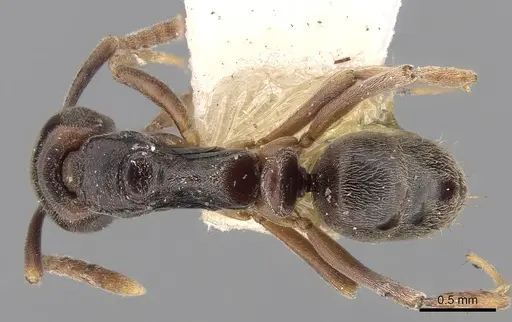
CASENT0907282
Bekijk op AntWeb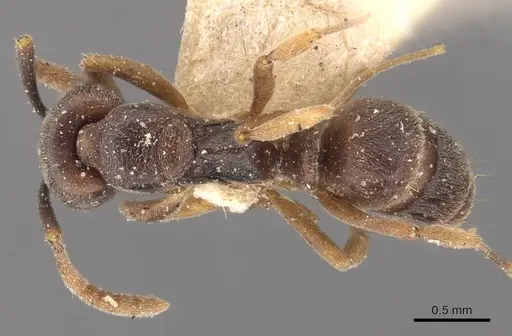
Literatuur
Verspreidingskaart laden...Producten laden...