
Bothroponera vazimba
- Wetenschappelijke naam
- Bothroponera vazimba
- Tribus
- Ponerini
- Subfamilie
- Ponerinae
- Auteur
- Rakotonirina & Fisher, 2013
- Verspreiding
- Gevonden in 1 landen
Introductie
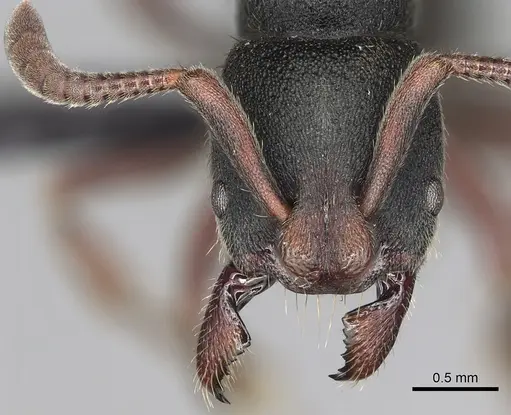
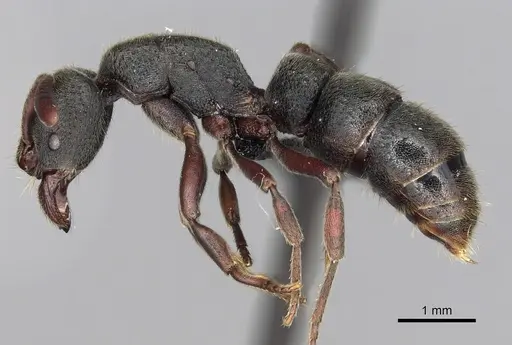
Bothroponera vazimba is a small Ponerine ant endemic to western Madagascar. Workers measure approximately 4-5mm in total length, making them one of the smaller species in their genus . They have a distinctive appearance with a dark brown to black body and reddish-orange appendages and leg joints . Their small eyes, shorter antennal scape, and shorter legs are morphological adaptations for navigating through leaf litter . This species nests in rotten logs, dead branches on the ground, and in the soil layer, with foragers most commonly found searching through leaf litter . The species was originally described as Pachycondyla vazimba in 2013 and later moved to Bothroponera . What makes B. vazimba interesting is its extremely limited distribution - found only in western Madagascar's dry forests, from Ankarafantsika in the north to Beza-Mahafaly in the south, with isolated populations in gallery forests and montane rainforest areas . This restricted range makes them a rarely kept species in captivity.
Quick Summary
- Difficulty: Medium
- Origin & Habitat: Western Madagascar, specifically in dry forest habitats of Parc National Ankarafantsika in the north through Beza-Mahafaly Forest in the south. Also found in gallery forests of Parc National Isalo, Forêt de Mite, and Fiherenana, and in the disjunct montane rainforest of Analavelona [1]. They nest in rotten logs, dead branches on the ground, and in the soil layer, foraging primarily in leaf litter [1].
- Colony Type: Colony structure is unconfirmed. No published data exists on whether they are single-queen (monogyne) or multi-queen (polygyne) colonies.
- Size & Growth:
- Queen: ~5-6mm, inferred from Bothroponera genus
- Worker: ~4-5mm, inferred from Bothroponera genus
- Colony: Unknown, no published colony size data exists for this species.
- Growth: Unknown, no development timeline studies exist.
- Development: Unconfirmed, no direct measurements exist. (Development timeline is unconfirmed for this species.)
- Antkeeping:
- Temperature: Based on their Madagascar dry forest habitat, aim for warm conditions around 24-28°C. Provide a temperature gradient so ants can self-regulate.
- Humidity: Keep nest substrate moderately humid. Their natural habitat in dry forests and leaf litter suggests they prefer damp but not waterlogged conditions. Provide a water tube for drinking water.
- Diapause: Unknown for this species. Madagascar doesn't experience harsh winters, so they likely don't require a true diapause. However, cooler temperatures during the dry season may slow activity.
- Nesting: In captivity, they do well in naturalistic setups with rotten wood pieces, dead leaves, and moist soil. A Y-tong or plaster nest with added organic materials works well. They prefer tight, enclosed spaces that mimic their natural nesting in rotting logs and soil.
- Behavior: Bothroponera vazimba is a predatory Ponerine ant that forages in leaf litter. They are likely more active during cooler parts of the day and prefer dark, humid microhabitats. Their small size and preference for confined spaces means escape prevention is important, use fine mesh and tight-fitting lids. As Ponerines, they have a functional sting. They are not aggressive toward humans but will defend their nest if threatened.
- Common Issues: lack of available colony information means starting colonies can be challenging., their small size and leaf-litter foraging habits require fine escape prevention., no published data on their exact dietary preferences makes feeding experimental., humidity control is critical, too dry and they fail, too wet and mold becomes a problem.
Natural History and Distribution
Bothroponera vazimba is endemic to western Madagascar, making it a truly special species for antkeepers who manage to find them. Their distribution spans from the dry forests of Parc National Ankarafantsika in the north down to Beza-Mahafaly Forest in the south [1]. They also inhabit gallery forests in Parc National Isalo, Forêt de Mite, and Fiherenana, as well as the montane rainforest of Analavelona [1].
This species is adapted to life in leaf litter and rotting wood. Their small eyes, shorter antennal scape, and shorter legs are all morphological adaptations that help them navigate through the dense organic matter on the forest floor [1]. They nest in rotten logs, dead branches lying on the ground, and in the soil layer itself [1]. Foragers search through leaf litter and occasionally venture onto the forest floor [1].
Their restricted distribution to western Madagascar's dry forests makes them a species you won't find in most antkeeping collections.
Identification and Appearance
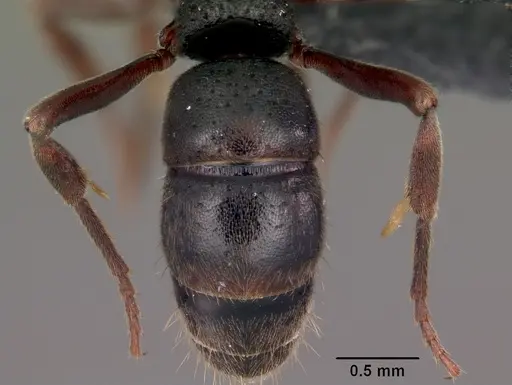
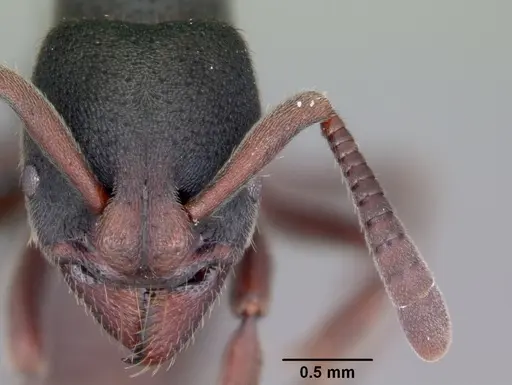
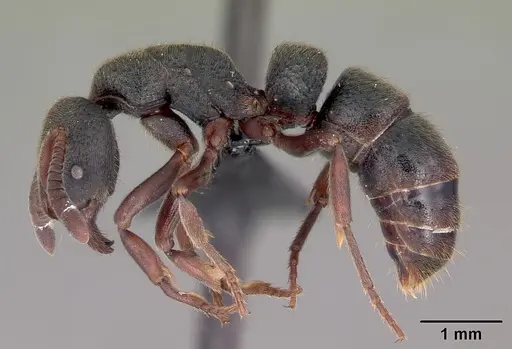
Workers of Bothroponera vazimba are relatively small for a Ponerine ant, measuring approximately 4-5mm in total length [1]. The body is dark brown to black, contrasting with reddish-orange appendages and leg joints [1]. This color pattern, combined with their modest size, makes them distinctive among Madagascar's Ponerines.
Key identification features include: antennal segments 6,7,and 8 that are nearly twice as wide as long, a petiole with a broadly concave posterior margin when viewed from above, and the absence of erect hairs on the outer surface of the hind tibia [1]. The mesopleural suture is absent or incomplete, and the junction between the propodeal dorsum and declivitous surface forms a distinct angle [1].
Queens are slightly larger than workers, measuring approximately 5-6mm in total length, and are covered in denser and more elongate pubescence [1]. The queen caste closely resembles workers in general morphology, making them only marginally larger [1].
Housing and Nest Setup
Based on their natural nesting preferences, Bothroponera vazimba does best in naturalistic setups that include rotting wood pieces, dead leaves, and moist soil. They are leaf-litter specialists that prefer dark, confined spaces that mimic their natural environment in rotting logs and soil layers [1].
A Y-tong or plaster nest with added organic materials works well, or you can create a more naturalistic setup with a soil chamber and pieces of rotting wood. The nest should have tight chambers and narrow passages scaled to their small size. Keep the nest material consistently moist but not waterlogged.
Because they are small ants, escape prevention must be excellent. Use fine mesh on any ventilation holes and ensure all connections are tight.
Feeding and Diet
As a Ponerine ant, Bothroponera vazimba is likely predatory, feeding on small invertebrates they encounter in leaf litter. In captivity, you should offer small live prey such as fruit flies, small crickets, mealworms, and other appropriately sized insects.
Based on typical Ponerine behavior, they likely accept protein-rich foods as their primary diet. You can also occasionally offer sugar water or honey as an energy source, though their main nutrition probably comes from prey. Feed them small prey items 2-3 times per week, removing any uneaten prey after 24 hours.
Since there's no published data on their specific dietary preferences, some experimentation may be needed. Start with small live prey and observe what they accept. Remove any moldy or uneaten food promptly to maintain colony health.
Temperature and Humidity Requirements
Bothroponera vazimba comes from Madagascar's dry forests, which experience warm temperatures year-round. Aim for a temperature range of 24-28°C in the nest area. You can create a gentle temperature gradient by placing a heating cable on one side of the nest, allowing the ants to move to their preferred temperature zone.
For humidity, keep the nest substrate moderately moist. Their natural habitat in rotting wood and soil suggests they prefer damp but not saturated conditions. The substrate should feel damp to the touch. Provide a water tube or small water source for drinking water.
Avoid both excessive dryness (which can kill the colony) and excessive moisture (which promotes mold). Good ventilation while maintaining humidity is key.
Colony Development and Growth
No published data exists on the development timeline of Bothroponera vazimba. Queens are slightly larger than workers and carry more pubescence, but the size difference is modest [1].
Colony growth is likely moderate rather than fast. Ponerine colonies typically don't reach the massive sizes of some Myrmicines, so don't expect thousands of workers. Focus on providing consistent care rather than rapid growth.
Frequently Asked Questions
How long does it take for Bothroponera vazimba to produce first workers?
The egg-to-worker timeline is unconfirmed for this species. No specific studies exist on their development.
What do Bothroponera vazimba ants eat?
As Ponerine ants, they are likely predatory on small invertebrates. Feed small live prey like fruit flies, small crickets, and mealworms. They may occasionally accept sugar water or honey, but protein from prey should be their primary food source.
Are Bothroponera vazimba ants aggressive?
They are not typically aggressive toward humans. As Ponerines, they have a sting but it's likely too small to penetrate human skin effectively. They will defend their nest if threatened but are not known for aggressive foraging behavior.
What temperature do Bothroponera vazimba ants need?
Keep them warm at 24-28°C. A temperature gradient is ideal so they can self-regulate. Madagascar's dry forests are warm year-round, so they don't require cool periods.
Do Bothroponera vazimba ants need hibernation?
Diapause requirements are unknown for this species. Madagascar doesn't have harsh winters, so they likely don't require a true hibernation. Cooler temperatures during the dry season may slow their activity naturally.
How big do Bothroponera vazimba colonies get?
Colony size data is not published. Based on their small worker size and Ponerine patterns, colonies likely remain moderate, probably under a few hundred workers at maturity.
Can I keep multiple Bothroponera vazimba queens together?
No data exists on their colony structure (monogyne vs polygyne). Combining unrelated queens is not recommended since we don't know their social structure. Start with a single queen for best results.
What type of nest is best for Bothroponera vazimba?
They do well in naturalistic setups with rotting wood pieces, dead leaves, and moist soil. A Y-tong or plaster nest with added organic materials works well. They prefer tight, enclosed spaces that mimic their natural nesting in rotting logs and soil.
Are Bothroponera vazimba good for beginners?
This species is rated Medium difficulty. While not the hardest ant to keep, the lack of published care information means you'll need to experiment with feeding and conditions. They're best suited for keepers who enjoy the challenge of keeping less common species.
Where is Bothroponera vazimba found in the wild?
They are endemic to western Madagascar, found only in dry forests from Parc National Ankarafantsika in the north to Beza-Mahafaly in the south. Their range also includes gallery forests and montane rainforest areas.
Report an Issue
The current care sheet is based fully on literature. See inconsistencies, or something that's incorrect? Please , it will be resolved after review from an admin. Contributing to the blogs tab also helps providing information, to make us be able to further improve the caresheets. Thank you for your support!
References

Dit verzorgingsblad is gelicentieerd onder CC BY-SA 4.0 .
Community-blogs
CASENT0034562
Bekijk op AntWeb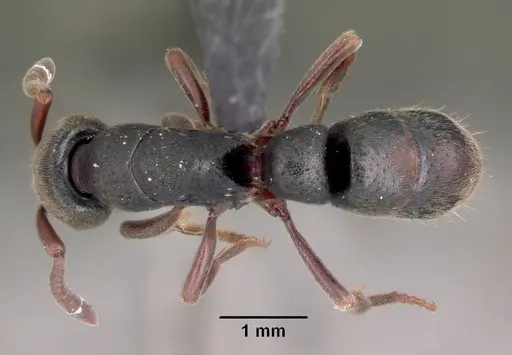
CASENT0486411
Bekijk op AntWeb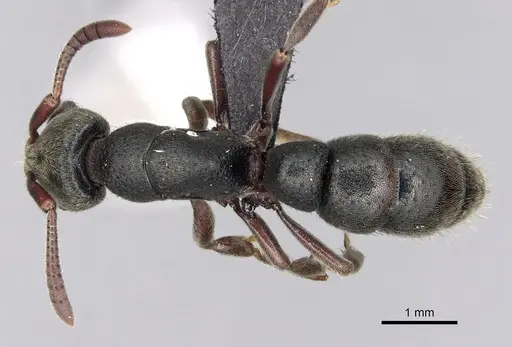
Literatuur
Verspreidingskaart laden...Producten laden...