
Apterostigma serratum
- Wetenschappelijke naam
- Apterostigma serratum
- Tribus
- Attini
- Subfamilie
- Myrmicinae
- Auteur
- Lattke, 1997
- Verspreiding
- Gevonden in 0 landen
Introductie
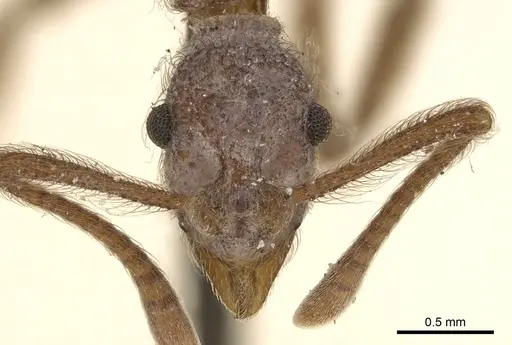
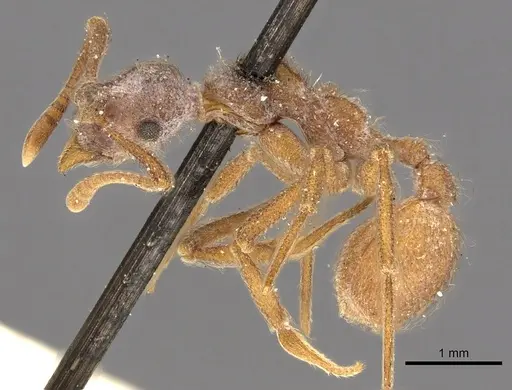
Apterostigma serratum is a small fungus-growing ant from the mountains of southeastern Brazil. The species name refers to the serrated mandibles visible on workers. They inhabit montane forests around 700 meters elevation in the states of Minas Gerais and Santa Catarina, Brazil, where they were first collected in February 1993 [AntWiki]. Like all members of the genus Apterostigma, these ants are lower attine fungus-growers. This means they cultivate gardens of fungus on insect frass and plant debris rather than cutting fresh leaves. The colony survives entirely by eating their fungus garden, making them one of the more challenging ants to keep in captivity. You are essentially farming fungus that happens to have ants living on it [AntWiki].
Quick Summary
- Difficulty: Expert
- Origin & Habitat: Montane forests of southeastern Brazil (Minas Gerais and Santa Catarina), found at approximately 700m elevation in humid mountain environments [1][2].
- Colony Type: Colony structure is unconfirmed for this species. Based on typical Apterostigma patterns, colonies are likely single-queen (monogyne).
- Size & Growth:
- Queen: Approximately 4-5mm, inferred from typical Apterostigma morphology.
- Worker: Approximately 3-4mm, inferred from typical Apterostigma morphology.
- Colony: Likely under 200 workers. Apterostigma colonies typically remain small [2].
- Growth: Slow
- Development: 8-12 weeks at 24-26°C (estimated based on related lower attine species). (Lower attine fungus-growers develop slowly compared to other ants. Nanitic workers may emerge slightly faster but still require extended care.)
- Antkeeping:
- Temperature: Keep at 22-26°C with minimal fluctuation. As a montane tropical species, they need warmth but not extreme heat, and stability is crucial for fungus garden health.
- Humidity: High humidity essential, keep nest substrate consistently moist but not waterlogged, roughly 70-80% relative humidity. The fungus garden will die if allowed to dry out.
- Diapause: No. This is a tropical species that remains active year-round.
- Nesting: Naturalistic setups with rotting wood, leaf litter, and humid cavities work best. The nest must accommodate a fungus garden, so provide space for the fungal growth.
- Behavior: Slow-moving and deliberate, spending most of their time tending the fungus garden. They are not aggressive and pose minimal sting risk to humans due to their small size. Their small size means escape prevention must be excellent [2].
- Common Issues: fungus garden collapse from incorrect humidity, too dry kills the fungus, too wet causes mold., contamination of the fungus garden by invasive molds or mites that destroy the food source., overfeeding with inappropriate substrates that poison the fungus or encourage harmful bacteria., slow growth rate leads to impatience and disturbance, which stresses the colony and garden.
Fungus Garden Care
Keeping Apterostigma serratum means maintaining a living fungus garden. The ants do not eat the insect frass or plant material you provide, they eat the fungus that grows on it. This makes fungus care your top priority.
You must provide fresh, clean insect frass (the pelletized waste from herbivorous insects like caterpillars or beetles) or small bits of sterilized plant debris. Avoid fresh leaves or rotting food that could introduce harmful molds. The fungus needs high humidity to grow but also fresh air to prevent carbon dioxide buildup and mold. If you see the fungus turning gray, fuzzy, or smelling bad, it is likely contaminated and the colony will starve.
Watch the ants' behavior to gauge garden health. Healthy workers will be constantly licking and tending the fungus. If they abandon the garden or wander listlessly, the fungus may be failing. Because the colony depends entirely on this garden, its collapse means certain death for the ants. [2]
Nest Preferences
In nature, Apterostigma serratum nests in pre-existing cavities in rotting wood and leaf litter at 700m elevation in Brazilian montane forests [1]. They need humid, enclosed spaces that protect their delicate fungus gardens from drying out.
In captivity, skip standard test tubes or acrylic nests. Instead, use a naturalistic setup with a chamber of rotting wood, cork, or plaster mixed with organic material. The nest should have a tight-fitting lid to maintain humidity but small ventilation holes to allow gas exchange. Provide a substrate of leaf litter and decaying wood that the ants can incorporate into their garden.
Keep the nest in a dim location. These ants prefer darkness and will stress if kept under bright lights.
Temperature and Humidity
Maintain temperatures between 22-26°C with minimal fluctuation. As a montane species from 700m elevation, they prefer moderate warmth rather than tropical heat, but stability matters more than the exact number. Sudden temperature drops can shock the fungus garden.
Humidity is critical. Keep the nest substrate damp to the touch, think forest floor after rain, not swamp. You can achieve this by placing the nest in a sealed container with a water reservoir, or by regular misting with distilled water. However, avoid waterlogging which causes mold. If condensation forms on the nest walls, increase ventilation slightly.
Use a heating cable on one side of the nest (never underneath) to create a gentle gradient, but ensure the entire setup stays above 20°C. [1]
Feeding and Diet
Do not offer standard ant foods like honey water or mealworms as their primary diet. These ants feed their fungus, not themselves directly.
Provide small amounts of fresh insect frass from herbivorous insects, or tiny bits of sterilized plant material like dried leaves or flower petals. Some keepers use specialized attine diets available from biological supply companies. The key is providing material that the fungus can digest, not food for the ants themselves.
You may offer a tiny drop of honey water or sugar water on a piece of foil for energy, but remove it quickly if the ants show no interest or if it attracts mold. Protein should come from the fungus, not direct feeding.
Feed small amounts frequently rather than large amounts rarely. A golf-ball sized portion of substrate every few days is plenty for a small colony. [2]
Colony Founding
Founding behavior has not been directly documented for Apterostigma serratum. Based on typical Apterostigma patterns, queens are likely claustral. This means the queen seals herself in a chamber and raises the first workers alone using stored body fat.
Crucially, the queen must bring a pellet of fungus from her parent colony to start the new garden. Without this fungal inoculation, she cannot feed her first brood. If you obtain a founding queen, ensure she has established a visible fungus garden before considering her settled.
Do not disturb founding queens. They are vulnerable to stress and garden contamination during this delicate phase. Keep them in complete darkness and resist the urge to check on them frequently. [2]
Behavior and Temperament
These are slow, deliberate ants that spend nearly all their time in or near the fungus garden. They are not active foragers in the traditional sense, workers make short trips to collect materials for the garden or remove waste, then return to tending duties.
They are peaceful and non-aggressive. They possess a stinger but due to their small size, it poses minimal risk to humans. Their primary defense is simply hiding in their nest.
Because of their small size (estimated 3-4mm), they can escape through tiny gaps. Use fine mesh or tight-fitting lids on all outworlds, and apply barrier substances like Fluon to the upper walls of any container. [2]
Frequently Asked Questions
Can I keep Apterostigma serratum in a test tube?
No, test tubes are unsuitable. These ants need space for a fungus garden and specific humidity conditions that test tubes cannot provide. Use a naturalistic setup with rotting wood or plaster and organic material instead.
How long until Apterostigma serratum gets their first workers?
Expect 8-12 weeks from egg to first worker at 24-26°C. This is an estimate based on related lower attine fungus-growing ants, as specific timing has not been documented for this species.
What do Apterostigma serratum eat?
They eat fungus that they grow on insect frass or plant debris. You must provide fresh insect frass (waste from herbivorous insects) or sterilized plant material for the fungus to grow on. They do not eat standard ant foods like honey or insects directly as their primary diet.
Do Apterostigma serratum need hibernation?
No. They come from tropical Brazil and remain active year-round. Keep them at stable temperatures between 22-26°C throughout the year.
Are Apterostigma serratum good for beginners?
No. These are expert-level ants due to their specialized fungus-growing requirements. If the fungus garden dies, the colony dies. They require precise humidity control, specialized food sources, and significant patience due to slow growth.
How big do Apterostigma serratum colonies get?
Likely under 200 workers. Apterostigma colonies typically stay small compared to other fungus-growing ants. Exact maximum size for this species is unknown.
Why is my Apterostigma serratum fungus garden turning gray?
Gray or fuzzy growth usually means mold contamination. Remove contaminated material immediately with sterile tweezers. Improve ventilation slightly while maintaining humidity, and ensure you are not overfeeding or using contaminated substrate. The garden may not recover if the contamination is severe.
Can I keep multiple Apterostigma serratum queens together?
Not recommended. Combining unrelated queens has not been documented for this species. Based on typical Apterostigma patterns, colonies are likely single-queen (monogyne), and queens will likely fight or reject each other's fungus gardens.
What is the best nest type for Apterostigma serratum?
Naturalistic nests with rotting wood, leaf litter, and humid cavities work best. Y-tong or plaster nests can work if kept very humid, but provide organic material for the fungus garden. Avoid acrylic or test tube setups.
Report an Issue
The current care sheet is based fully on literature. See inconsistencies, or something that's incorrect? Please , it will be resolved after review from an admin. Contributing to the blogs tab also helps providing information, to make us be able to further improve the caresheets. Thank you for your support!
References

Dit verzorgingsblad is gelicentieerd onder CC BY-SA 4.0 .
Community-blogs
CASENT0901688
Bekijk op AntWeb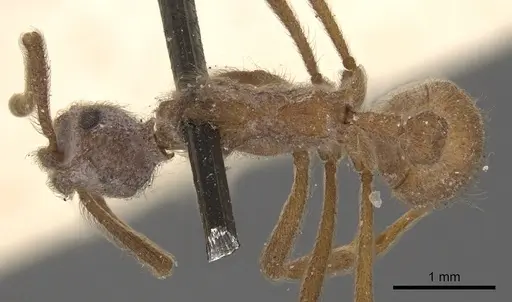
Literatuur
Verspreidingskaart laden...Producten laden...