
Aphaenogaster subcostata
- Wetenschappelijke naam
- Aphaenogaster subcostata
- Tribus
- Stenammini
- Subfamilie
- Myrmicinae
- Auteur
- Viehmeyer, 1922
- Verspreiding
- Gevonden in 0 landen
Introductie
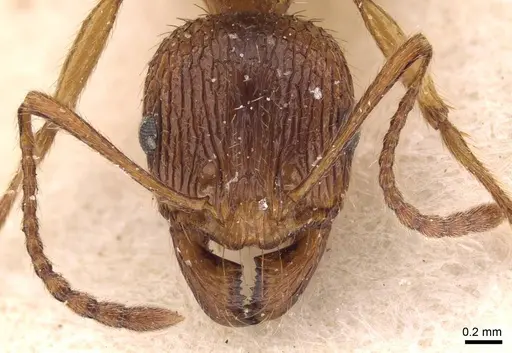
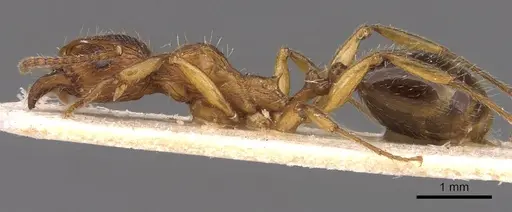
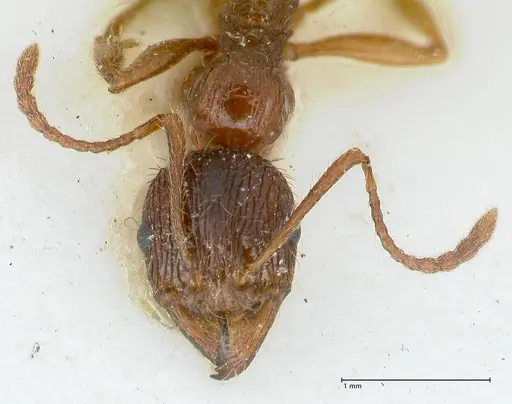
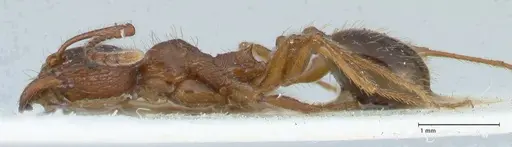
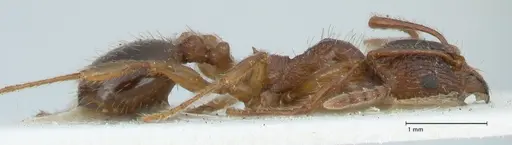
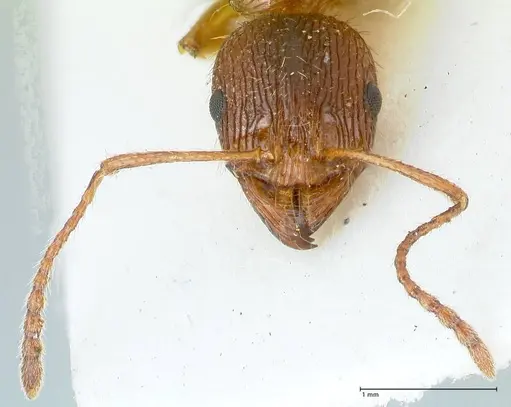
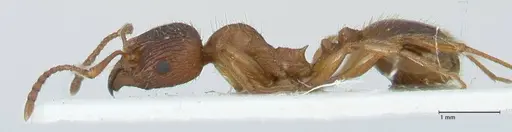
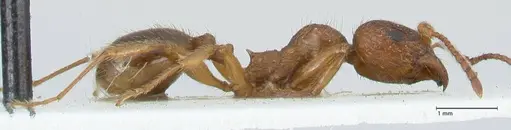
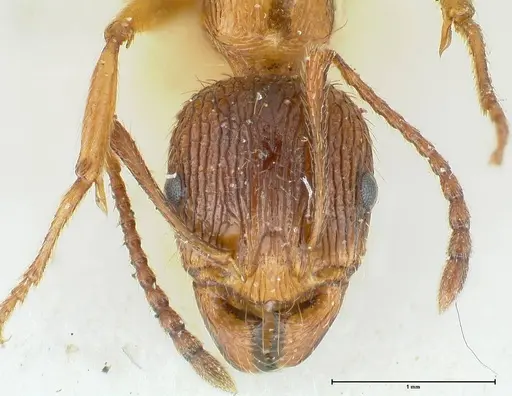
Aphaenogaster subcostata is a small, poorly known ant from the eastern Mediterranean. Workers are yellowish to bright brown with the middle body section (thorax) always noticeably paler than the head, and they carry distinctive thick, sparse ridges on the head that run lengthwise . They belong to the subterranea species group and form a complex with the similar Aphaenogaster epirotes, differing in the shape of the first antenna segment which is longer and more flattened . First collected in Turkey's Taurus Mountains in 1922, they were only recently discovered in Greece on Samos Island and the Dodecanese . Despite being found across a wide range of elevations from sea level streamsides to 670-meter mountain pastures, their biology remains mysterious - researchers have never located a nest .
Quick Summary
- Difficulty: Expert
- Origin & Habitat: Eastern Mediterranean: Greek islands (Samos, Dodecanese) and western Turkey (Taurus Mountains). Found in shady pine forests, oak woodlands near streams, and mountain pastures from 15-670m elevation [1][2].
- Colony Type: Unknown, natural colony structure has never been documented [3].
- Size & Growth:
- Queen: ~7-9 mm, inferred from Aphaenogaster genus
- Worker: ~4-5 mm, inferred from Aphaenogaster genus
- Colony: Unknown [3].
- Growth: Unknown.
- Development: Unknown, development time unconfirmed for this species. (No specific data available.)
- Antkeeping:
- Temperature: Active season: 20-25°C. Winter rest: Likely required, cool to 5-10°C for 2-3 months (inferred from temperate distribution at 39°N and alpine habitats) [4][1].
- Humidity: Moderate to high. Natural habitats include shady forests and locations near streams [1]. Keep nest substrate damp but not waterlogged.
- Diapause: Likely required, yes.
- Nesting: Unknown in the wild. In captivity, a standard soil or plaster nest with moderate humidity may work, but this is untested.
- Behavior: Unknown temperament. Likely active foragers and scavengers based on genus patterns. Escape risk is moderate, they are small but not exceptionally tiny.
- Common Issues: Lack of biological data makes care unpredictable, you will be pioneering their captive husbandry., Unknown founding type complicates initial queen care, you must watch whether she needs food during founding (semi-claustral) or seals herself in (claustral)., Rarity in collections means limited captive breeding stock and no established care guidelines., Risk of misidentification with Aphaenogaster epirotes, which requires geographic separation to distinguish reliably [1].
Identification and Appearance
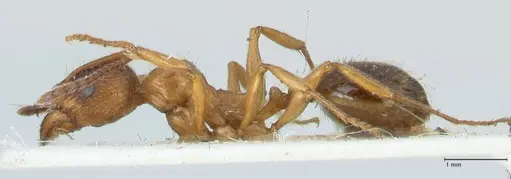
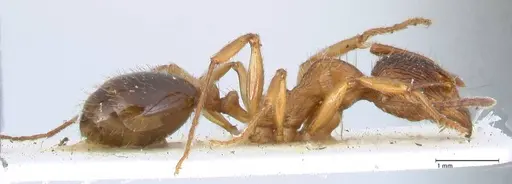
Workers of Aphaenogaster subcostata are yellowish to bright brown, with the middle body section (thorax) always distinctly paler than the head [1]. The head shows thick, sparse ridges running lengthwise with some net-like patterns between them [1]. They differ from their close relative Aphaenogaster epirotes by having the first segment of the antenna longer and strongly flattened sideways, it is 3.5 to 3.6 times as long as wide, whereas A. epirotes has a shorter segment only 2.2 times as long as wide [1]. Workers measure roughly 4-5 mm in total body length based on typical Aphaenogaster size ranges. Queens have not been formally described, but based on typical Aphaenogaster patterns, they likely measure 7-9 mm. The two species are geographically separated: A. subcostata lives in the southern Aegean islands and western Turkey, while A. epirotes inhabits the Balkans and northern Aegean [1].
Natural History and Habitat
This species occupies the eastern Mediterranean region, specifically the Greek islands of Samos and the Dodecanese, plus alpine locations in Turkey's Taurus Mountains [1][5]. They show remarkable flexibility in elevation, living from sea level oak forests near the Xerorrema stream on Samos (15m elevation), through shady pine forests at 350m, up to mountain pastures with shrubs at 670m [1][2]. They have even been found on seaside islets [1]. Despite this broad range, researchers note that the nest has never been found [3]. They belong to the subterranea species group, which typically nests in soil or rotting wood, but the specific nesting habits of A. subcostata remain a mystery [6][3].
Captive Care Challenges
This is genuinely an expert-level species due to complete gaps in our knowledge. We do not know if queens seal themselves in during founding (claustral) or need to forage (semi-claustral), what colony sizes they reach, or their exact dietary preferences [3]. If you obtain a queen, you will be conducting original research. Start with a standard test tube setup with damp cotton, but observe carefully. If she appears restless or tries to escape frequently, she may need food during founding (semi-claustral). If she settles and remains calm, she likely seals herself in (claustral). Keep detailed notes on behavior, development times, and colony growth to help future keepers.
Temperature and Seasonal Care
Coming from temperate regions at approximately 39°N latitude and including alpine populations, these ants likely experience cold winters and need a diapause period [4][1]. During the active season (spring through fall), maintain them at 20-25°C. For winter, gradually reduce temperature over several weeks to 5-10°C and maintain this for 2-3 months. This mimics the seasonal cycle of their mountain and forest habitats. After the rest period, warm them gradually and increase feeding to stimulate spring activity.
Feeding
While specific dietary requirements are unconfirmed for this species, Aphaenogaster ants are typically opportunistic scavengers and predators. Offer small live or freshly killed insects such as fruit flies, springtails, or tiny pieces of mealworm. Provide sugar water or honey water for energy. Watch carefully to see what your colony accepts. If they ignore certain foods, remove them promptly to prevent mold. Because their natural diet is unknown, offer a variety of small prey items to determine preferences through observation.
Frequently Asked Questions
Can I keep Aphaenogaster subcostata in a test tube?
Probably, but founding behavior is unconfirmed. Start with a standard test tube with damp cotton, but watch carefully to see if the queen needs food during founding (semi-claustral) or seals herself in (claustral). Be prepared to adjust your setup based on her behavior.
Do Aphaenogaster subcostata need hibernation?
Likely yes. They come from temperate regions at 39°N latitude with alpine populations, so they probably experience cold winters. Cool them to 5-10°C for 2-3 months annually.
How long until first workers for Aphaenogaster subcostata?
Unknown. Development time is unconfirmed for this species. Document your timeline if you attempt to raise them.
How big do Aphaenogaster subcostata colonies get?
Unknown. Researchers have never found a nest in the wild, so natural colony size is completely undocumented [3].
What do Aphaenogaster subcostata eat?
Unknown specifically, but likely generalist scavengers like other Aphaenogaster. Offer small insects such as fruit flies or springtails, plus sugar water. Observe what they accept and adjust accordingly.
Are Aphaenogaster subcostata good for beginners?
No. The complete lack of basic biological data makes them suitable only for experienced keepers willing to experiment and document their findings.
How do I identify Aphaenogaster subcostata?
Look for yellowish-brown workers with the thorax (middle body) always paler than the head. The first antenna segment is long and strongly flattened (3.5-3.6 times as long as wide). They differ from A. epirotes by geography, A. subcostata lives in the southern Aegean and western Turkey, while A. epirotes lives further north [1].
Where do Aphaenogaster subcostata nest in the wild?
Unknown, researchers have never found a nest despite knowing the species since 1922 [3].
Can I keep multiple Aphaenogaster subcostata queens together?
Not recommended. Whether this species accepts multiple queens (polygyne) or fights (monogyne) is unknown. Combining unrelated queens risks fighting without evidence that they naturally cohabitate.
Are Aphaenogaster subcostata invasive?
There is no evidence they are invasive. They are native to Greece and Turkey. Never release captive ants outside their native range.
Report an Issue
The current care sheet is based fully on literature. See inconsistencies, or something that's incorrect? Please , it will be resolved after review from an admin. Contributing to the blogs tab also helps providing information, to make us be able to further improve the caresheets. Thank you for your support!
References

Dit verzorgingsblad is gelicentieerd onder CC BY-SA 4.0 .
Community-blogs
CASENT0907698
Bekijk op AntWeb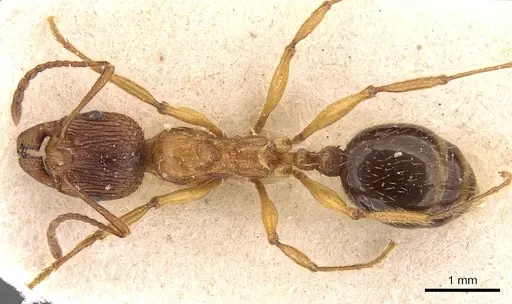
FOCOL1220
Bekijk op AntWeb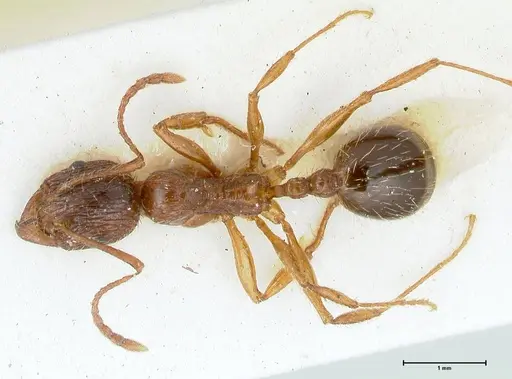
FOCOL1221
Bekijk op AntWeb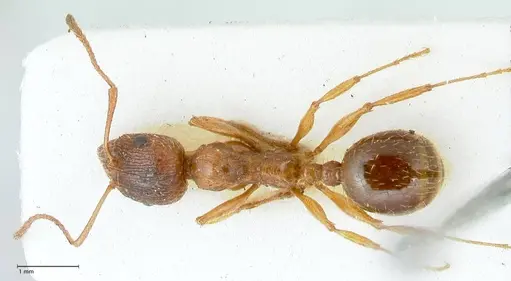
FOCOL1222
Bekijk op AntWeb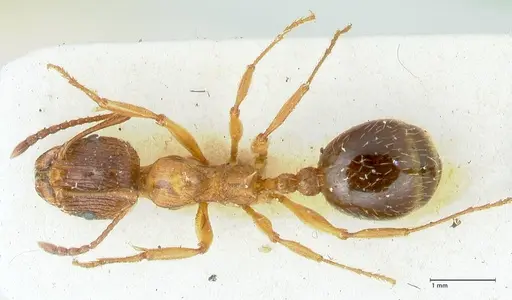
Literatuur
Verspreidingskaart laden...Producten laden...