
Aphaenogaster quadrispina
- Wetenschappelijke naam
- Aphaenogaster quadrispina
- Tribus
- Stenammini
- Subfamilie
- Myrmicinae
- Auteur
- Emery, 1911
- Verspreiding
- Gevonden in 0 landen
Introductie
Aphaenogaster quadrispina is a tropical ant species native to New Guinea, found in both Indonesia (Irian Jaya) and Papua New Guinea . This species belongs to the Deromyrma clade within the genus Aphaenogaster, a group distributed across the Australasian region . Scientists have documented very little about this species' specific biology, so most care recommendations rely on general patterns from related Aphaenogaster species and the tropical climate of their home range.
Quick Summary
- Difficulty: Medium
- Origin & Habitat: New Guinea (Indonesia and Papua New Guinea), tropical Australasian region at latitude -8.87° [1][2]
- Colony Type: Unconfirmed, colony structure has not been documented in scientific literature
- Size & Growth:
- Queen: Size data unavailable
- Worker: Size data unavailable
- Colony: Unknown
- Growth: Unknown
- Development: Unconfirmed, estimate roughly 4-8 weeks based on tropical climate, but no specific data exists (Tropical species may develop year-round without seasonal delays)
- Antkeeping:
- Temperature: Tropical species from latitude -8.87°, likely needs warm conditions around 24-28°C. Start at 25°C and adjust based on colony activity [1]
- Humidity: Moderate to high humidity expected based on tropical forest habitat. Keep nest material damp but not waterlogged [1]
- Diapause: Unlikely required, tropical species from near the equator typically remain active year-round [1]
- Nesting: Specific preferences unrecorded. Standard test tube setups likely work for founding colonies.
- Behavior: Specific behaviors unrecorded. Based on typical Aphaenogaster patterns, they likely forage actively for small prey and seeds. Workers are small and not aggressive.
- Common Issues: limited biological data makes captive care unpredictable, you will need to observe and adapt., tropical species may die if exposed to temperatures below 20°C for extended periods., unknown dietary preferences may require experimentation with different food types.
Natural History and Distribution
This species lives in New Guinea. The type specimen was collected from Etna Bay in Irian Jaya, Indonesia [2]. Voucher specimens from Papua New Guinea confirm they inhabit both western and eastern parts of the island [1]. Their latitude of -8.87° places them firmly in the tropics [1]. They belong to the Deromyrma clade, a group of Aphaenogaster ants found primarily in the Australasian region [1]. Beyond these collection records, their specific nesting habits, colony size, and behavior in the wild remain undocumented in scientific literature.
Housing and Environment
Since researchers have not studied their specific nest requirements, provide a standard tropical ant setup. Use test tubes or small formicaria with access to a foraging area. Keep the nest area warm and humid. You can use a heating cable on one side of the nest to create a temperature gradient, but place it on top rather than underneath to avoid drying out the water reservoir. Monitor your colony closely and adjust conditions based on their activity levels.
Temperature and Seasonal Care
These ants come from tropical New Guinea near the equator, so they need warm temperatures year-round [1]. Aim for roughly 24-28°C in the nest area. They do not need a winter rest period (diapause), but you can reduce temperatures slightly if the colony slows down naturally. Never let them experience cold below 20°C for long periods, as tropical species often cannot recover from chilling stress.
Feeding and Diet
No one has recorded what these ants eat in the wild. Based on typical Aphaenogaster patterns, they likely hunt small insects and collect seeds. Offer a variety of foods: small live prey like fruit flies or springtails, dead insects like mealworms or crickets, and seeds such as canary grass or dandelion seeds. Also provide sugar water or honey water as an energy source. Watch what they accept and adjust accordingly.
Colony Founding
Founding behavior is unconfirmed for this species. Most Aphaenogaster queens seal themselves in (claustral founding) and raise their first workers without food, but this is not verified for Aphaenogaster quadrispina. If you have a queen, house her in a standard test tube setup with a water reservoir and keep her warm and undisturbed. Check periodically for eggs and larvae, but do not disturb her often.
Frequently Asked Questions
How long does it take for Aphaenogaster quadrispina eggs to become workers?
The development time is unrecorded. Based on their tropical origin, estimate roughly 4-8 weeks at 25-28°C, but this is not confirmed for this species. Watch your colony to determine actual timing.
Do Aphaenogaster quadrispina need hibernation?
Probably not. They come from tropical New Guinea near the equator, so they likely remain active year-round. Keep them warm consistently.
Can I keep Aphaenogaster quadrispina in a test tube?
Yes. A standard test tube setup works well for founding colonies. Use a water reservoir and cotton plug. Founding behavior is unconfirmed for this species, but test tubes are the standard starting point for most ant species.
How big do Aphaenogaster quadrispina colonies get?
Colony size is unknown, no scientific data exists on maximum colony size. Start with a small nest and expand as the colony grows.
What do Aphaenogaster quadrispina eat?
Their specific diet is unrecorded. Based on typical Aphaenogaster behavior, offer a variety of small insects, seeds, and sugar water. Experiment to see what they accept.
Are Aphaenogaster quadrispina good for beginners?
They are medium difficulty. While Aphaenogaster species are generally hardy, the lack of specific data for this species means you will need to observe carefully and adapt your care. This is not a species for complete beginners due to the limited information available.
Do Aphaenogaster quadrispina sting?
Like most ants in their genus, they likely have a stinger but are not aggressive. Their small size means they probably cannot penetrate human skin effectively.
Can I keep multiple Aphaenogaster quadrispina queens together?
Not recommended. Combining unrelated queens is likely to cause fighting. This species may be single-queen (monogyne), but this is unconfirmed.
Report an Issue
The current care sheet is based fully on literature. See inconsistencies, or something that's incorrect? Please , it will be resolved after review from an admin. Contributing to the blogs tab also helps providing information, to make us be able to further improve the caresheets. Thank you for your support!
References

Dit verzorgingsblad is gelicentieerd onder CC BY-SA 4.0 .
Community-blogs
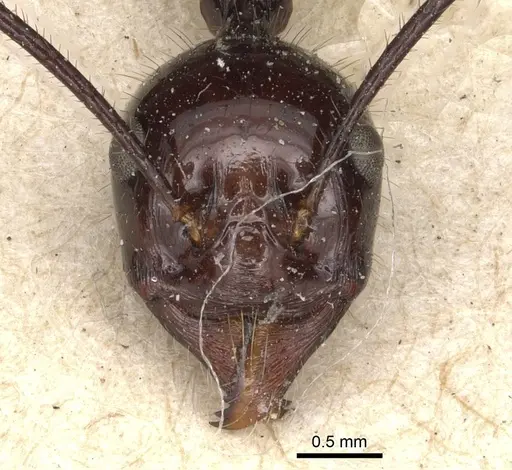
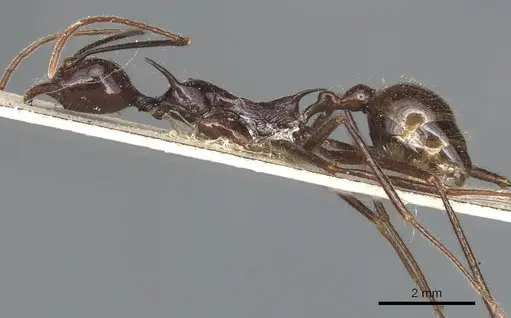
CASENT0904188
Bekijk op AntWeb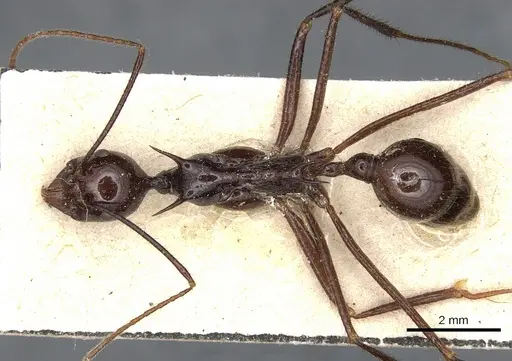
Literatuur
Verspreidingskaart laden...Producten laden...