
Aenictus shilintongae
- Wetenschappelijke naam
- Aenictus shilintongae
- Subfamilie
- Dorylinae
- Auteur
- Jaitrong & Schultz, 2016
- Verspreiding
- Gevonden in 0 landen
Introductie
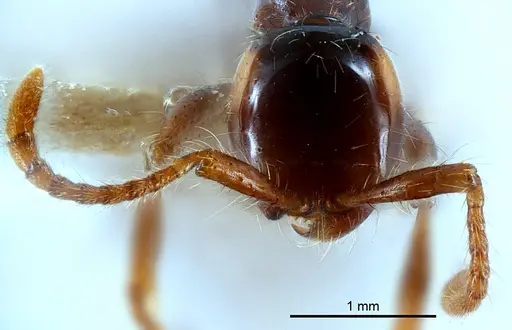
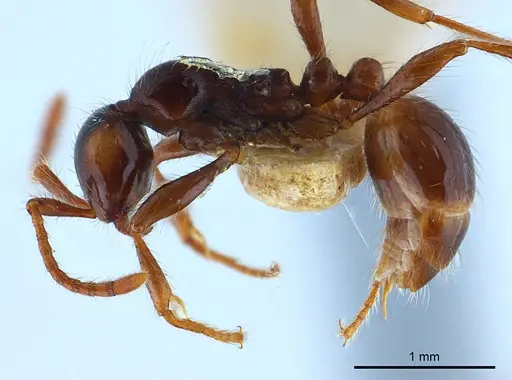
Aenictus shilintongae is an extremely rare army ant known only from five worker specimens collected in 1954 at Mokanshan in Zhejiang province, southeastern China . Workers measure 4.5-4.75 mm in total length and are dark reddish brown with smooth, shiny heads and relatively short antennae that reach only three-quarters of the head length . The species belongs to the Aenictus laeviceps group and has a stout, dome-shaped thorax covered with dense standing hairs . Scientists have never described queens or males for this species, and no one has observed living colonies since the original collection . The species name honors Her Royal Highness Princess Maha Chakri Sirindhorn of Thailand; in Thai it is called Mod Thahan Thepa (มดทหารเทพา), meaning 'army ant of the princess' . Because only museum specimens exist and no reproductive individuals are known, Aenictus shilintongae cannot be kept in captivity.
Quick Summary
- Difficulty: Expert
- Origin & Habitat: Southeastern China (Zhejiang province), collected from Mokanshan in 1954 [1]
- Colony Type: Unknown, scientists have only described workers, with no queens or males known [2]
- Size & Growth:
- Antkeeping:
- Temperature: Unknown, based on the subtropical climate of Zhejiang province, likely warm conditions around 22-28°C [1]
- Humidity: Unknown
- Diapause: Unknown, likely not required given the subtropical origin
- Nesting: Unknown, army ants typically do not build permanent nests
- Behavior: Unknown, workers are small at under 5mm, which would create extreme escape risks if kept [1]
- Common Issues: only five museum specimens exist from 1954,making acquisition impossible., no queens have ever been described, so colonies cannot be established., tiny worker size means escape prevention would be extremely difficult., army ants require massive enclosures and constant food supplies.
Extreme Rarity and Historical Context
Aenictus shilintongae represents one of the rarest ants in scientific collections. Researchers described the species in 2016 based on five worker specimens collected by W.M. Mann in 1954 at Mokanshan, China [1]. No one has collected this species since, and no living observations exist [2]. The Thai name for this species is Mod Thahan Thepa (มดทหารเทพา), meaning 'army ant of the princess' [1].
Because the species exists only as museum specimens, no biological data exists regarding their diet, nesting habits, colony size, or reproductive behavior. This extreme rarity makes the species unavailable to antkeepers and likely impossible to obtain through any trade or collection.
Morphological Identification
Workers of Aenictus shilintongae measure 4.5-4.75 mm in total length with heads that are slightly longer than broad [1]. The entire body is dark reddish brown, and the head is completely smooth and shiny [1]. The antennae are relatively short, reaching only about three-quarters of the head length, which distinguishes this species from other members of the laeviceps group [1].
The thorax is stout with a strongly convex, dome-shaped promesonotum [1]. The petiole is short and globular, slightly shorter than high, with a well-developed triangular subpetiolar process [1]. The head and thorax carry dense standing hairs, with the longest hairs on the pronotum measuring 0.23-0.27 mm [1].
Barriers to Captive Keeping
You cannot currently keep Aenictus shilintongae because no queens exist in collections or the wild [2]. Ant colonies require queens to produce workers and sustain the population. While some ant species can be kept with worker-only groups temporarily, these are typically species with gamergates (worker reproductives) or large existing colonies. Aenictus shilintongae has no described reproductive caste, and the five existing specimens are preserved in the Smithsonian Institution [1].
Additionally, army ants require massive enclosures with constant food supplies and specific humidity gradients that replicate their nomadic lifestyle. Without knowledge of their natural history, providing appropriate care would be impossible even if specimens were available.
Frequently Asked Questions
Can I keep Aenictus shilintongae in a test tube?
No. Only five worker specimens exist in museum collections, and no queens have ever been found. Without a queen, you cannot establish a colony.
How long until Aenictus shilintongae gets first workers?
Unknown. No one has ever kept this species, and scientists have never observed their development or egg-to-worker timeline.
What does Aenictus shilintongae eat?
Unknown. Scientists have never observed this species feeding in the wild or in captivity.
How big do Aenictus shilintongae colonies get?
Unknown. No colonies have ever been studied, and only five individual workers have ever been collected.
Do Aenictus shilintongae need hibernation?
Unknown. Their subtropical Chinese origin suggests they likely do not require winter rest, but this has never been confirmed.
Where can I buy Aenictus shilintongae?
You cannot buy this species. It exists only as five museum specimens collected in 1954 and is not available in the ant trade.
Are Aenictus shilintongae dangerous?
The workers are small at under 5mm. However, since the species exists only as museum specimens, they pose no danger to humans.
What is the best nest type for Aenictus shilintongae?
Unknown. No one has ever kept this species in captivity, so their nesting preferences remain unstudied.
Report an Issue
The current care sheet is based fully on literature. See inconsistencies, or something that's incorrect? Please , it will be resolved after review from an admin. Contributing to the blogs tab also helps providing information, to make us be able to further improve the caresheets. Thank you for your support!
References

Dit verzorgingsblad is gelicentieerd onder CC BY-SA 4.0 .
Community-blogs
USNMNH2069734
Bekijk op AntWeb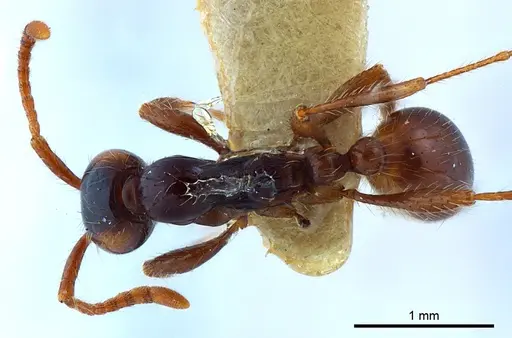
Literatuur
Verspreidingskaart laden...Producten laden...