
Aenictus guineensis
- Wetenschappelijke naam
- Aenictus guineensis
- Subfamilie
- Dorylinae
- Auteur
- Santschi, 1924
- Verspreiding
- Gevonden in 2 landen
Introductie
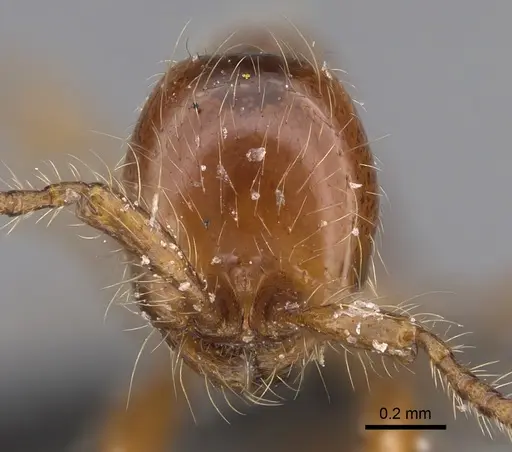
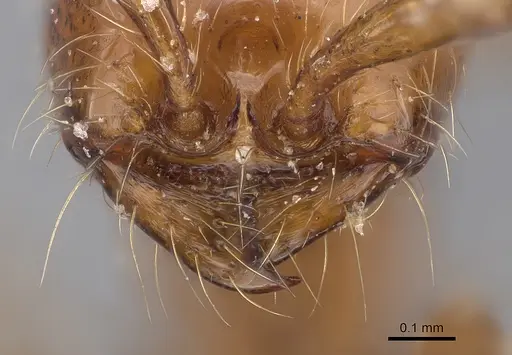
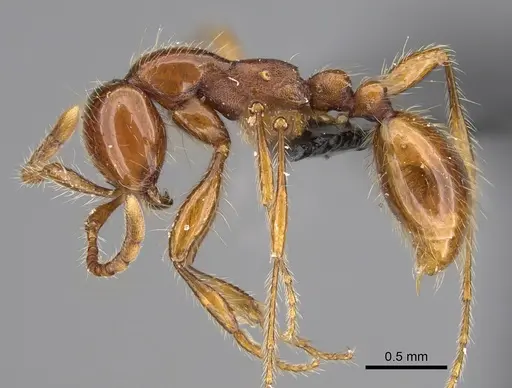
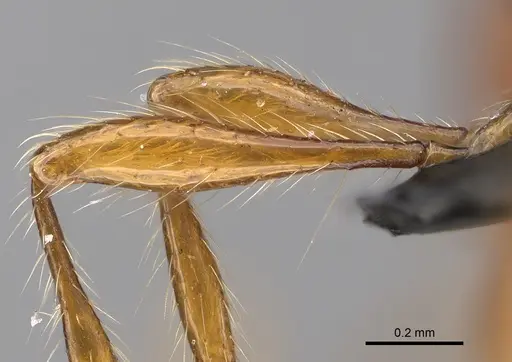
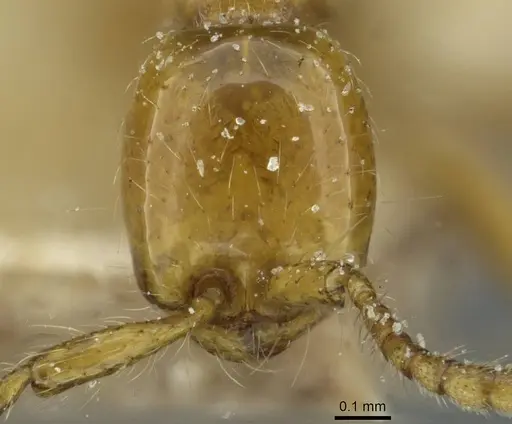
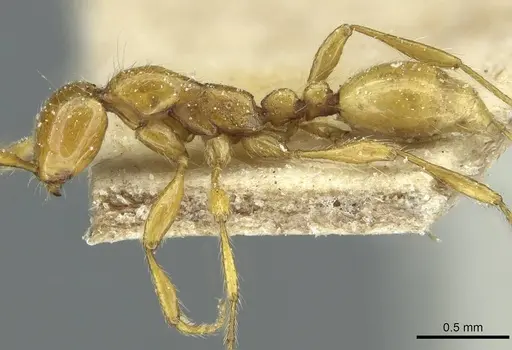
Aenictus guineensis are tiny army ants native to West African savannas. Workers measure approximately 2-3mm in total length with light brown to brown coloring, rectangular heads, and sparse erect hairs . They belong to the rotundatus species complex and are the western counterpart of the Southern and Eastern African Aenictus rotundatus . They inhabit savanna and cultivated sites from Senegal to Nigeria, foraging under stones and across the ground surface . These ants present nearly insurmountable challenges for captive keeping. As true army ants (Dorylinae), they are nomadic predators requiring constant movement and large foraging areas. Starting a colony is extremely difficult as queens are rarely documented and colonies reproduce by fission rather than claustral founding.
Quick Summary
- Difficulty: Expert
- Origin & Habitat: West African savanna and cultivated sites, found under stones and ground foraging in Benin, Gambia, Guinea, Guinea-Bissau, Ivory Coast, Kenya, Nigeria, and Senegal [2][1].
- Colony Type: Army ant, colonies reproduce by fission (splitting). Queens have not been documented in collected specimens [2].
- Size & Growth:
- Worker: ~2-3mm total length, inferred from Aenictus genus patterns [1].
- Colony: Unknown for this specific species.
- Growth: Unknown.
- Development: Unknown. (No development data available for this species.)
- Antkeeping:
- Temperature: Specific requirements unstudied. Based on West African savanna habitat, keep warm around 25-28°C and observe behavior to adjust.
- Humidity: Provide a humidity gradient, they forage under stones in savanna suggesting need for humid microclimates but not wet conditions [2].
- Diapause: No, tropical species active year-round.
- Nesting: No permanent nest required. They are nomadic and need large foraging arenas with substrate to form temporary bivouacs [2].
- Behavior: Highly active, nomadic, and aggressive. They forage constantly in raiding columns and are specialized predators of other ants and termites. Their tiny size makes escape prevention extremely difficult.
- Common Issues: queens have rarely been documented, making colony founding extremely difficult, you cannot start from a single individual., nomadic lifestyle requires massive foraging space that standard formicariums cannot provide., tiny size allows escape through the smallest gaps in mesh or barriers., specialized predatory diet requires constant supply of live ants or termites, which is impractical for most keepers., colonies reproduce by fission, meaning they will quickly outgrow any reasonable enclosure.
Army Ant Biology and Reproduction
Aenictus guineensis belongs to the army ant subfamily Dorylinae. Unlike typical ant species with distinct queen and worker castes, this species has only been documented from worker specimens [2]. The reproductive biology is not fully understood, but army ant colonies typically reproduce through fission, the colony splits into two roughly equal halves, each carrying brood and eventually producing reproductive individuals.
This means starting a colony from a single foundress is likely not possible. You would need to locate and collect an entire functioning colony in the wild, which is logistically difficult and generally not recommended.
The colony cycle alternates between nomadic phases (constant movement while raiding) and statary phases (temporary camps). This biological requirement for constant movement makes them unsuitable for standard ant-keeping setups.
Housing and Space Requirements
Traditional ant nests are inappropriate for Aenictus guineensis. In nature, they do not construct permanent nests but instead form temporary bivouacs, living structures made from the bodies of the workers themselves, often located under stones or in soil cavities [2].
Captive housing would require an enormous sealed arena, likely 100 liters or more, filled with soil or sand substrate to allow natural wandering and bivouac formation. The enclosure must be absolutely escape-proof. With workers measuring only about 2-3mm, they can squeeze through the tiniest gaps in mesh, around lid edges, or through porous materials.
Heating should create a gentle gradient across the large enclosure, allowing the colony to thermoregulate by moving. Do not use heating elements that dry out the substrate completely, as they still require some humidity.
Feeding and Diet
Aenictus species are specialized predators of other social insects, primarily ants and termites. While specific dietary studies for Aenictus guineensis are lacking, related species in the genus are obligate ant predators that typically refuse standard feeder insects.
This presents the primary obstacle to captive care. You would need to provide a constant supply of live ant colonies or termite colonies as food. They do not accept sugar water, honey, or typical prey items like fruit flies or mealworms. The sheer volume of prey required to sustain even a modest colony makes long-term captivity impractical for hobbyists.
If attempting to feed, offer small, soft-bodied ant species or termite workers and observe whether they are accepted. Remove uneaten prey promptly to prevent mold in the humid environment they require.
Frequently Asked Questions
Can I keep Aenictus guineensis in a test tube?
No. Test tubes are completely unsuitable for army ants. They need massive foraging arenas with soil substrate to express their nomadic behavior. A test tube would suffocate and starve them within days.
How do I start an Aenictus guineensis colony?
Starting a colony is extremely difficult. Queens have not been documented in collected specimens, and colonies reproduce by fission. You would need to collect an entire wild colony with thousands of workers and brood. This is not recommended.
What do Aenictus guineensis eat?
Based on typical Aenictus patterns, they prey on other ants and termites. They will not accept sugar water or standard feeder insects. Specific dietary studies for this species are lacking.
How big do Aenictus guineensis colonies get?
Exact colony sizes are unknown for this species. Army ant colonies in general can contain thousands to tens of thousands of workers.
Do Aenictus guineensis need hibernation?
No. They are tropical ants from West Africa and remain active year-round. Do not attempt to hibernate them.
Are Aenictus guineensis good for beginners?
Absolutely not. They are among the most difficult ants to keep due to their nomadic lifestyle, specialized diet, tiny size, and lack of documented queens. Only expert keepers with specialized facilities should attempt army ants, and even then success is rare.
Do Aenictus guineensis ants sting?
They are too small to penetrate human skin effectively. Their defense relies on numbers and biting rather than stinging. However, they are aggressive and will bite readily.
How long until Aenictus guineensis get their first workers?
This question does not apply to this species. Queens have not been documented, and colonies reproduce by fission rather than claustral founding. Colonies already have workers from the start.
Report an Issue
The current care sheet is based fully on literature. See inconsistencies, or something that's incorrect? Please , it will be resolved after review from an admin. Contributing to the blogs tab also helps providing information, to make us be able to further improve the caresheets. Thank you for your support!
References

Dit verzorgingsblad is gelicentieerd onder CC BY-SA 4.0 .
Community-blogs
CASENT0876634
Bekijk op AntWeb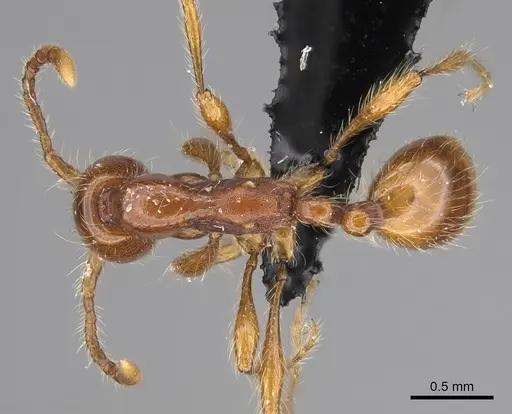
CASENT0911438
Bekijk op AntWeb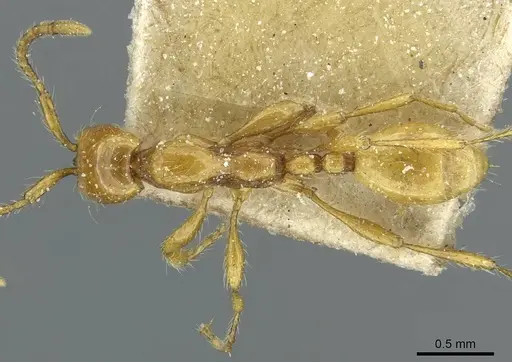
Literatuur
Verspreidingskaart laden...Producten laden...