
Aenictus glabrinotum
- Wetenschappelijke naam
- Aenictus glabrinotum
- Subfamilie
- Dorylinae
- Auteur
- Jaitrong & Yamane, 2011
- Verspreiding
- Gevonden in 0 landen
Introductie
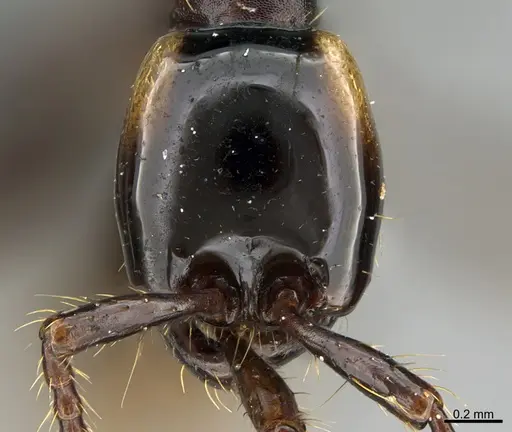
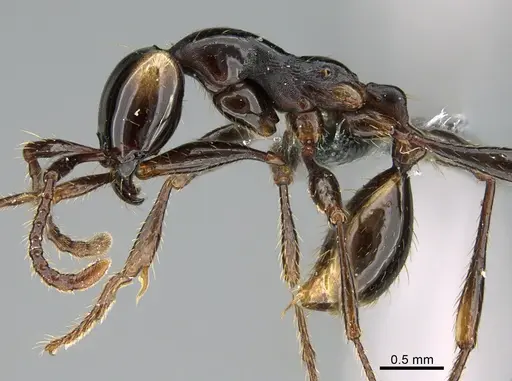
These small reddish-brown ants measure 3.10-4.05 mm long and come from the lowland rainforests of Borneo . They have smooth, shiny bodies with almost no standing hairs, and carry a distinctive pale typhlatta spot on the back corners of their heads . Only worker ants have ever been found - no queens or males have been described for this species . They belong to the Dorylinae subfamily, the true army ants, which means in nature they live a nomadic lifestyle, constantly moving through the forest floor hunting prey . Because they are army ants, they do not build permanent nests and instead form temporary bivouacs while raiding . Their colonies likely contain thousands of workers, but the exact social structure remains unknown since scientists have never found a queen . They appear to live alongside related species like Aenictus pfeifferi in the same forests .
Quick Summary
- Difficulty: Expert
- Origin & Habitat: Lowland rainforests of Borneo (Sabah, Sarawak, and East Kalimantan) [1].
- Colony Type: Unknown, army ants typically have a single permanently wingless queen per colony, but no queens have been described for this species [2].
- Size & Growth:
- Queen: Unknown, no queens have been described [2].
- Worker: 3.10-4.05 mm [1].
- Colony: Likely thousands of workers based on typical army ant biology.
- Growth: Unknown.
- Development: Unknown. (Development timing has not been studied. Army ants typically have faster development than many other ants, but specific data is unavailable.)
- Antkeeping:
- Temperature: Warm tropical conditions are likely needed, based on their lowland rainforest habitat, they probably require temperatures in the mid-to-high 20s°C range.
- Humidity: High humidity is likely required, based on their rainforest floor habitat, they probably need damp conditions.
- Diapause: No, being a tropical lowland species, they likely remain active year-round.
- Nesting: Not applicable, army ants are nomadic and do not build permanent nests.
- Behavior: Highly active, nomadic predators that hunt in groups. They specialize in attacking other social insects like ants and termites [3]. Their small size means they could escape through tiny gaps, though keeping them in captivity is not recommended.
- Common Issues: no queens have ever been described, making it impossible to start a colony from a single queen., army ants require massive space and a constant supply of live prey such as other ant colonies or termites., nomadic lifestyle means they cannot thrive in standard formicariums or test tubes., wild-caught worker groups will die without their queen and the established colony infrastructure.
Army Ant Biology and Why It Matters
Aenictus glabrinotum belongs to the Dorylinae subfamily, the true army ants [3]. This means they follow a completely different lifestyle than the ants typically kept by hobbyists. Instead of building a permanent nest in soil or wood, army ants are nomadic. They form temporary living structures called bivouacs using their own bodies, and they move frequently to new hunting grounds [3].
Army ants specialize in group predation, sending out raiding columns to overwhelm prey. They primarily attack other social insects, especially other ants and termites [3]. This diet makes them impossible to feed with standard ant keeping food like honey water and mealworms. They need living colonies of prey insects, which is impractical for most keepers.
Additionally, army ant queens are permanently wingless and rarely seen above ground. They are massive compared to workers and remain deep in the colony center. Since no queens have ever been collected for Aenictus glabrinotum, we do not even know what the queen looks like, let alone how to care for one [2].
Natural History and Ecology
These ants inhabit the lowland rainforests of Borneo, specifically in the Malaysian states of Sabah and Sarawak, as well as East Kalimantan in Indonesia [1]. They share their habitat with closely related species like Aenictus pfeifferi, and may compete with them for resources [1].
The workers are small, measuring 3.10-4.05 mm in length, with smooth shiny bodies and very few standing hairs [1]. You can recognize them by the pale typhlatta spot on the occipital corners of their heads, that is, pale patches on the back corners of the head [1]. The top of their thorax (the promesonotum) is usually completely hairless, which distinguishes them from similar species and is actually the meaning of their species name 'glabrinotum' [1].
As ground-dwelling army ants, they likely forage through leaf litter and soil, hunting prey in coordinated raids. Their dark reddish-brown coloration helps them blend into the forest floor debris.
The Reality of Captive Keeping
You cannot keep Aenictus glabrinotum like a standard pet ant colony. There is no way to acquire a queen, and a handful of workers collected from the wild will simply wander aimlessly and die without their colony structure. Even if you could obtain a colony fragment with a queen, the setup required would be enormous.
Army ants need huge foraging areas, often meters of connected tubing or large naturalistic setups, because they travel long distances while hunting. They also need a constant supply of appropriate prey. Unlike many ants that can survive on sugar water between protein feedings, army ants are obligate predators of other social insects. You would need to maintain cultures of termites or other ants to feed them, essentially running multiple colonies to support one.
For these reasons, Aenictus glabrinotum is not a species for ant keeping. They are best appreciated through observation in the wild or in scientific collections. [2]
Identification Features
If you encounter these ants in the wild or in scientific collections, look for the combination of small size (3.10-4.05 mm), smooth shiny bodies, and the distinctive pale spots on the back corners of the head [1]. The workers have short antennae that extend only slightly past the middle of the head, and their jaws have a large main tooth followed by smaller teeth and denticles [1].
The top of their thorax is notably hairless, which is actually the meaning of their species name 'glabrinotum', referring to the smooth, hairless promesonotum [1]. Most similar species have more hairs on the body, making this hairless trait a key identifier.
Frequently Asked Questions
Can I keep Aenictus glabrinotum in a test tube?
No. Army ants cannot be kept in test tubes. They are nomadic and require massive space to roam and hunt. A test tube would trap them and they would die quickly.
How do I start an Aenictus glabrinotum colony?
You cannot start a colony with current knowledge. No queens have ever been described for this species, so there is no way to acquire a founding queen. Wild-caught workers will die without their colony.
What do Aenictus glabrinotum eat?
They are specialized predators of other social insects, primarily other ants and termites. They do not eat sugar or standard feeder insects like mealworms. They require living colonies of prey ants or termites.
How big do Aenictus glabrinotum colonies get?
The exact colony size is unknown, but based on their biology as army ants, they likely contain thousands of workers. Army ants typically form much larger colonies than most ant species kept by hobbyists.
Do Aenictus glabrinotum need hibernation?
No. They come from tropical lowland rainforests and remain active year-round. They do not require a winter rest period.
Are Aenictus glabrinotum dangerous to humans?
They are very small ants (3.10-4.05 mm) and do not pose a danger to humans. They lack a functional stinger and their mandibles are too small to break human skin. However, they are voracious predators of other insects.
Can I keep Aenictus glabrinotum with other ants?
Absolutely not. They are specialized predators of other ants and will attack and kill any other ants you try to house with them, including other colonies of their own species.
Are Aenictus glabrinotum good for beginners?
No. They are not suitable for keeping at all due to their army ant biology, unknown queen status, and specialized dietary needs. Beginners should start with species like Lasius niger or Camponotus instead.
Report an Issue
The current care sheet is based fully on literature. See inconsistencies, or something that's incorrect? Please , it will be resolved after review from an admin. Contributing to the blogs tab also helps providing information, to make us be able to further improve the caresheets. Thank you for your support!
References

Dit verzorgingsblad is gelicentieerd onder CC BY-SA 4.0 .
Community-blogs
CASENT0702956
Bekijk op AntWeb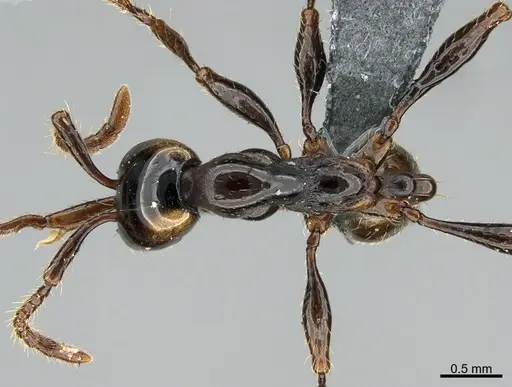
Literatuur
Verspreidingskaart laden...Producten laden...