
Aenictus doydeei
- Wetenschappelijke naam
- Aenictus doydeei
- Subfamilie
- Dorylinae
- Auteur
- Jaitrong & Yamane, 2011
- Verspreiding
- Gevonden in 0 landen
Introductie
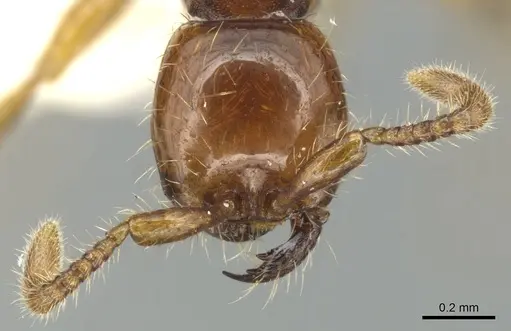
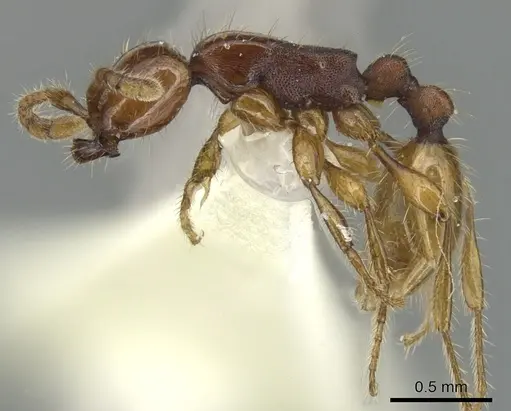
Aenictus doydeei are tiny reddish-brown army ants native to Southeast Asia. Workers measure 2.9-3.4 mm in total length with smooth, shiny heads and short antennae . They are found in Laos, Thailand, and Vietnam, where they inhabit disturbed areas like plantations at low altitude . These are true army ants (subfamily Dorylinae) that conduct organized nocturnal raids to hunt other ant species, specifically documented preying on Pheidole plagiaria . Only the worker caste has ever been documented for this species - no queen caste has been found . This makes them extremely challenging to keep, as colonies must be collected as mature units from the wild.
Quick Summary
- Difficulty: Expert
- Origin & Habitat: Southeast Asia (Laos, Thailand, Vietnam) in disturbed areas and plantations at low altitude [1][2]
- Colony Type: Unknown, only worker caste documented, no queens observed [4]
- Size & Growth:
- Queen: Unknown, no queens documented [4]
- Worker: 2.9-3.4 mm total length [1][2]
- Colony: Unknown, likely large based on typical Aenictus patterns
- Growth: Unknown
- Development: Unknown, no reproductive data available (No founding behavior has been observed. Colonies must be collected as mature units from the wild.)
- Antkeeping:
- Temperature: Keep warm and stable around 25-28°C, tropical Southeast Asian species [2][5]
- Humidity: High humidity required, keep substrate damp but not waterlogged
- Diapause: No, tropical species that remains active year-round [2]
- Nesting: Nomadic species requiring large interconnected foraging spaces rather than permanent chambers
- Behavior: Nocturnal raiders that hunt other ant colonies. Workers are very small (2.9-3.4 mm) and can escape through minute gaps in standard enclosures [1]. They are active predators that require constant movement space and cannot be kept in static nests.
- Common Issues: escape prevention is critical, at 3mm long they squeeze through gaps in standard mesh lids., starvation occurs rapidly without constant supply of live ant prey, they cannot survive on sugar water alone., stress from small enclosures, these nomadic army ants need large foraging areas to roam naturally., colony collapse due to unknown queen status, without documented reproduction, colonies may slowly die off in captivity., cannibalism if prey is insufficient, army ants will consume their own brood when hungry.
Army Ant Biology and Natural History
Aenictus doydeei are true army ants that exhibit the classic nomadic lifestyle of the subfamily Dorylinae. They are strictly nocturnal, foraging only at night in disturbed habitats such as plantations [1][3]. Their hunting strategy involves organized raids on other ant colonies, specifically documented preying on Pheidole plagiaria [1][2]. Unlike some army ants that form massive swarm raids, Aenictus species typically conduct column raids with workers moving in distinct trails. The workers are small (2.9-3.4 mm), reddish-brown with yellowish-brown gasters, and possess smooth, shiny heads with short antennae that reach only halfway along the head [1]. They have 10-segmented antennae and distinctive mandibles with three teeth used for capturing prey [1].
Housing and Setup Requirements
Because Aenictus doydeei are nomadic army ants, they cannot be kept in traditional static nest setups. They require large, interconnected foraging arenas that allow for natural raiding behavior. A setup of multiple connected containers or a large terrarium with complex terrain works best. The enclosure must have excellent escape prevention, these ants are only about 3mm long and can squeeze through the tiniest gaps in lids or mesh [1]. Use fine stainless steel mesh or glass lids with tight seals. Apply Fluon or PTFE barrier to all vertical surfaces. Maintain high humidity by keeping the substrate damp and providing water sources, but ensure adequate ventilation to prevent mold growth. Since they are nocturnal, provide dark hiding spots during the day, they will naturally cluster in these areas when not raiding.
Feeding and Prey Requirements
This is the most challenging aspect of keeping Aenictus doydeei. They are obligate predators of other ants, specifically documented hunting Pheidole plagiaria in the wild [1][3]. In captivity, you must provide live ant prey regularly, small ant species like Pheidole, Solenopsis, or Tetramorium workers and brood. They will not accept dead insects or standard ant foods like honey water as their primary diet. You will need to maintain colonies of prey ants specifically as food stock. Offer prey ants several times per week, ensuring the army ants have constant access to fresh food. Remove uneaten prey remains promptly to prevent mold. While they may occasionally accept sugar water or honey for energy, this cannot replace their protein requirement of live ant prey.
Colony Founding and Reproduction
Currently, it is impossible to start an Aenictus doydeei colony from scratch in captivity. No queen caste has ever been documented for this species, science has only collected workers [4]. This means you cannot purchase or capture a single queen and wait for workers. Instead, you must collect an entire mature colony from the wild, which must contain whatever reproductive mechanism the species uses (possibly ergatoid queens or yet-undiscovered winged queens, or perhaps reproductive workers). Wild colonies should be collected with substantial substrate and brood. Because the reproductive biology is unknown, expect that captive colonies may slowly decline over time as workers die without replacement. This species is only suitable for keepers who can regularly collect fresh wild colonies or who are researching their reproductive biology.
Temperature and Climate
As a tropical species from Laos, Thailand, and Vietnam, Aenictus doydeei require warm, stable temperatures year-round [2][5]. Keep the colony at 25-28°C with minimal fluctuation. They do not require hibernation or diapause, they remain active throughout the year. Use a heating cable or mat on one side of the enclosure to create a gentle gradient, allowing the ants to thermoregulate by moving closer or farther from the heat source. Monitor temperature with a thermometer inside the nest area. High humidity is essential, mist the enclosure regularly to maintain damp substrate, but avoid waterlogging which can drown small workers. The combination of warmth and humidity replicates their natural plantation habitat [1].
Frequently Asked Questions
Can I keep Aenictus doydeei in a test tube?
No. These are nomadic army ants that require large foraging spaces to raid. A test tube is far too small and will stress the colony. They need interconnected containers or a large terrarium to exhibit natural behavior.
What do Aenictus doydeei eat?
They are specialist predators of other ants. In nature they prey on Pheidole plagiaria [1][3]. In captivity, you must feed them live ants such as small Pheidole, Solenopsis, or Tetramorium workers. They cannot survive on sugar water or dead insects alone.
How do I start an Aenictus doydeei colony?
You cannot start from a single queen. No queens have ever been found for this species, only workers are known [4]. You must collect an entire mature colony from the wild, including brood and any hidden reproductive individuals.
How long until Aenictus doydeei get their first workers?
This is unknown. Since no founding behavior or queens have been observed, there is no data on egg-to-worker development time. Colonies must be collected as established units.
What temperature do Aenictus doydeei need?
Keep them warm at 25-28°C year-round. They are tropical ants from Southeast Asia and do not tolerate cold or hibernation.
Are Aenictus doydeei good for beginners?
No. They are expert-level ants due to their specialized diet (requiring live ant prey), unknown reproductive biology, nomadic behavior requiring large setups, and tiny size making escapes likely.
Do Aenictus doydeei need hibernation?
No. They are tropical ants from Laos, Thailand, and Vietnam where temperatures remain warm year-round. They remain active continuously without a winter rest period.
Why are my Aenictus doydeei dying?
Common causes include: starvation (not enough live ant prey), dehydration (they need high humidity), or old age (since you cannot replace workers without wild collection). Check that they have constant access to prey ants and damp substrate.
Report an Issue
The current care sheet is based fully on literature. See inconsistencies, or something that's incorrect? Please , it will be resolved after review from an admin. Contributing to the blogs tab also helps providing information, to make us be able to further improve the caresheets. Thank you for your support!
References

Dit verzorgingsblad is gelicentieerd onder CC BY-SA 4.0 .
Community-blogs
CASENT0903680
Bekijk op AntWeb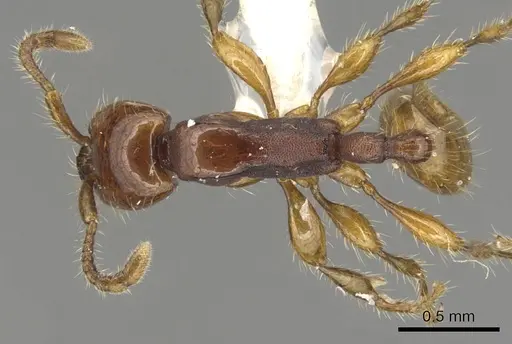
Literatuur
Verspreidingskaart laden...Producten laden...