
Yunodorylus doryloides
- 学名
- Yunodorylus doryloides
- 亜科
- Dorylinae
- 命名者
- Borowiec, 2009
- 分布
- 0 か国で発見
紹介
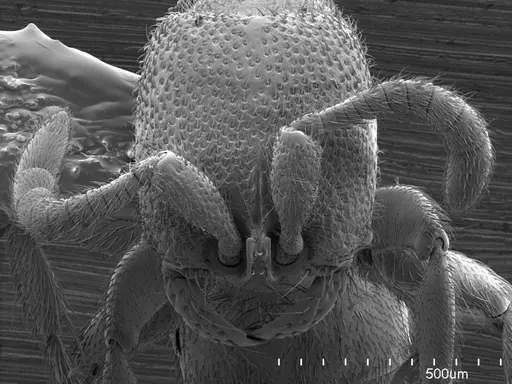
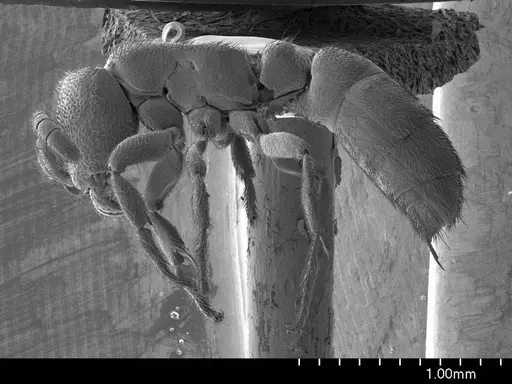
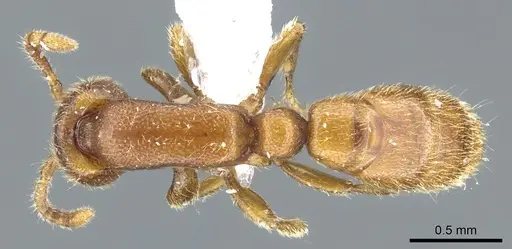
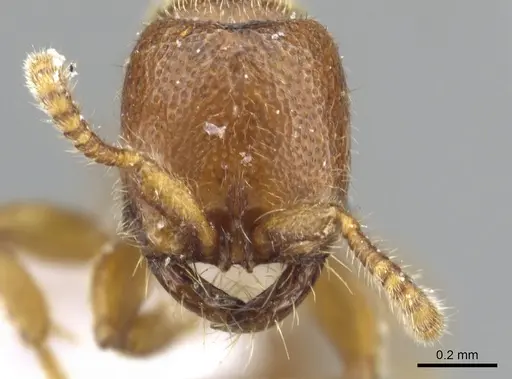
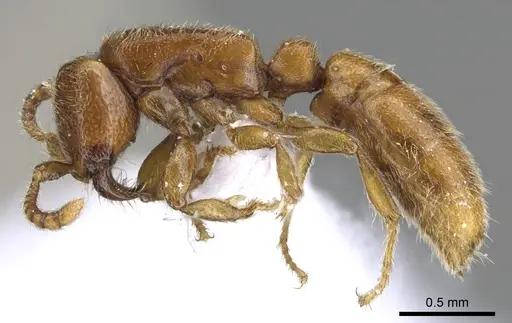
Yunodorylus doryloides is a rare, small ant from the Dorylinae subfamily, originally described from Borneo . Workers are very small; exact total length is not recorded in the literature, but head measurements indicate a tiny species . Their most striking feature is the falcate (curved, sickle-shaped) mandibles, which resemble those of army ants in the genus Dorylus . The body is yellowish-orange with brownish mandibles and genal areas, and workers have 12-segmented antennae . Only the worker caste is known - the queen and male have never been described. Specimens come from rainforest soil cores in Borneo, making this one of the most mysterious Doryline ants .
Quick Summary
- Difficulty: Expert
- Origin & Habitat: Borneo, specifically Sarawak, Malaysia (Bako National Park near Kuching) and Indonesia. Collected from rainforest soil cores and underground oil baits, indicating a fully subterranean lifestyle [1][2].
- Colony Type: Unknown, only workers have been collected, the queen caste has never been documented. No data to infer colony structure.
- Size & Growth:
- Queen: Unknown, queen caste has not been described [1]
- Worker: Size data unavailable, no total length measurements are recorded. Head and mesosoma measurements exist, but these are not body size [1]
- Colony: Unknown, no colony collections have been reported
- Growth: Unknown
- Development: Unknown, no developmental data exists for this species. (No direct data available.)
- Antkeeping:
- Temperature: Unconfirmed, as a Borneo rainforest species, it likely needs warm, stable conditions (around 24-28°C). Start in the mid-20s and observe colony activity [1][2].
- Humidity: Unconfirmed, rainforest origin suggests high humidity. Keep the nest substrate consistently moist but not waterlogged [1][2].
- Diapause: Unknown, no seasonal data. As a tropical species, it probably does not require formal hibernation, but may have reduced activity periods.
- Nesting: Soil-nesting species collected from soil cores. Likely prefers deep, moist substrate in naturalistic setups. Y‑tong or plaster nests with damp soil chambers may work.
- Behavior: Behavior is unstudied. The falcate mandibles suggest specialized predatory habits, possibly hunting micro‑arthropods like springtails or mites in the soil. Related Dorylinae are typically cryptic and subterranean. Escape risk is moderate given their small size, use standard barriers.
- Common Issues: queen caste unknown, no documented queen for captive breeding, extremely rare in the hobby with no established keeping protocols, specific dietary requirements unknown, may refuse standard ant foods, no documented colony sizes or growth patterns to guide expectations, wild-caught workers may carry diseases or parasites with no known treatment
Species Identification and Morphology
Yunodorylus doryloides is easily recognized by its unique falcate mandibles, long, curved blades that leave a wide gap when closed, a feature seen in army ants (Dorylus) but rare among non-army Dorylinae [1]. Workers are very small (exact total length unrecorded), with a yellowish-orange body and brownish mandibles [1]. The pygidial area has four small teeth on each side, and the metatibial gland (a whitish patch on the hind tibia) is present [1]. Only the worker caste has been described, the queen and male remain unknown.
Distribution and Habitat
So far, this species is known only from Borneo: the type locality is Bako National Park near Kuching, Sarawak (Malaysia), and it has also been recorded from Indonesia [1][2]. The type specimen was taken from a rainforest soil core in April 1978,and another worker was collected at an underground oil bait [1]. These records confirm a fully subterranean lifestyle, likely staying deep in moist soil layers.
Keeping Considerations
This species is not for beginners. Yunodorylus doryloides is one of the rarest ants in the hobby, only a few specimens have ever been collected, and no captive care protocols exist. Since the queen has never been found, starting a captive colony may be impossible without a wild colony. If you do obtain workers, replicate their natural soil environment: use a deep, moist substrate in a naturalistic setup. Temperature should be warm (24-28°C) based on tropical rainforest origin. Feeding is speculative, the falcate mandibles suggest they are predators of small soil arthropods (springtails, mites). Offer live prey and observe acceptance. [1]
Related Species and Research
Yunodorylus was formerly placed in Cerapachys before being elevated to genus level [1]. The genus includes several similar Southeast Asian species. The queen of Yunodorylus doryloides has never been found, which fits a pattern seen in some Dorylinae where queens are ergatoid (worker-like in appearance) and live underground, making them extremely hard to detect. Related species may show complex social structures, but directly applicable data for Y. doryloides is absent.
Legal and Ethical Considerations
This species should never be released if kept. As a native Southeast Asian ant, releasing it outside its natural range could risk establishing invasive populations. Given its extreme rarity, every specimen has scientific value. If you manage to maintain this species, consider contacting researchers, your observations could greatly improve our limited knowledge of this mysterious ant.
Frequently Asked Questions
Can I keep Yunodorylus doryloides as a pet ant?
This species is not recommended for antkeeping. It is extremely rare, only a handful of specimens have ever been collected from Borneo. The queen has never been documented, so captive breeding may be impossible. There are no established care protocols, and obtaining specimens would be exceptionally difficult.
What do Yunodorylus doryloides ants eat?
Diet is unconfirmed. The species' unusual falcate mandibles suggest specialized predatory behavior, likely hunting micro-arthropods like springtails or soil mites. Related Dorylinae are generally predatory, but specific prey preferences are unknown.
How big do Yunodorylus doryloides colonies get?
Unknown, no colony has ever been documented. We don't know maximum colony size, growth rate, or typical colony structure. This is one of the most poorly known ant species in existence.
Do Yunodorylus doryloides ants sting?
Dorylinae ants have functional stingers, but stinging behavior in this specific species is unstudied. Given their small size and subterranean lifestyle, they likely use their stinger defensively if threatened rather than actively hunting.
What temperature do Yunodorylus doryloides need?
Not confirmed, but as a Borneo rainforest species, they likely require warm, humid conditions. Based on their origin, aim for temperatures around 24-28°C with high humidity (keep substrate moist). This is an estimate since no direct temperature data exists.
Where is Yunodorylus doryloides found?
Only from Borneo, specifically Sarawak in Malaysia (Bako National Park near Kuching) and Indonesia. They live in rainforest soil, collected from soil cores and underground baits, indicating a fully subterranean lifestyle.
Why is the queen unknown for Yunodorylus doryloides?
The queen caste has never been collected or described. This is unusual but occurs in some Dorylinae species where queens are ergatoid (worker-like in appearance) and live underground, making them nearly impossible to find. Related species in the Dorylinae subfamily have ergatoid queens.
Is Yunodorylus doryloides good for beginners?
No, this is an expert-only species, if it can be kept at all. There are no care protocols, the queen is unknown, specimens are essentially unavailable, and everything about their biology is unstudied. Beginners should start with well-established species like Lasius, Camponotus, or Messor.
Do Yunodorylus doryloides need hibernation?
Unknown, no seasonal data exists. As a tropical Borneo species, they likely do not require formal hibernation. They may have reduced activity periods during less favorable conditions, but this has not been studied.
What makes Yunodorylus doryloides special?
Their most distinctive feature is their falcate mandibles, long, curved mandibles unlike any other non-army ant. This gives them an army-ant appearance despite not being an army ant species. They are also one of the rarest ant species known, with almost no specimens collected since their discovery in 2009.
Report an Issue
The current care sheet is based fully on literature. See inconsistencies, or something that's incorrect? Please , it will be resolved after review from an admin. Contributing to the blogs tab also helps providing information, to make us be able to further improve the caresheets. Thank you for your support!
References

この飼育シートのライセンスは: CC BY-SA 4.0 .
コミュニティブログ
文献
分布マップを読み込み中...製品情報を読み込み中...