
Tetramorium schoutedeni
- 学名
- Tetramorium schoutedeni
- 族
- Crematogastrini
- 亜科
- Myrmicinae
- 命名者
- Santschi, 1924
- 分布
- 0 か国で発見
紹介
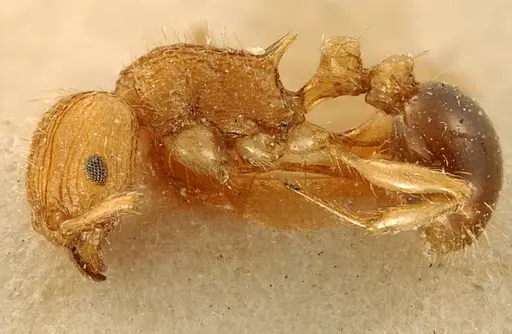
Tetramorium schoutedeni is a tiny African ant, with workers measuring only about 3.7 mm in total length . It belongs to the Tetramorium weitzeckeri species group and is known from just a single worker specimen, collected in what is now the Democratic Republic of the Congo in 1921 . The species has a distinctive bicolored appearance: its head, mesosoma, petiole, and postpetiole are orange‑brown, while the gaster is a noticeably darker brown . It has small eyes, long propodeal spines, and the entire upper body is covered with abundant, long, erect hairs - a trait shared with related species in the edouardi complex . This ant is endemic to the D.R. Congo, specifically recorded from the Mai‑Ndombe area . Because only a single specimen has ever been found, almost nothing is documented about its behavior, nesting, or colony structure in the wild. All care recommendations below are based on typical Tetramorium genus patterns and not on species‑specific research.
Quick Summary
- Difficulty: Unknown, likely Medium if based on genus patterns, but this species is essentially unavailable
- Origin & Habitat: Democratic Republic of Congo (Kunungu, Mai‑Ndombe region). The specific habitat at the type locality is not documented, but D.R. Congo generally has tropical forest and savanna environments.
- Colony Type: Unknown, no colony or queen has ever been documented. Based on genus patterns, likely single‑queen (monogyne) colonies, as is typical for most Tetramorium species.
- Size & Growth:
- Queen: Unknown, queen has never been described. Based on the worker size (3.7 mm total length), queens would probably be larger, perhaps 6-9 mm, but this is only a rough guess.
- Worker: 3.7 mm total length [1].
- Colony: Unknown, no colony data exists. Similar Tetramorium species often reach several hundred to a few thousand workers.
- Growth: Unknown, no development data exists. Based on genus patterns, development from egg to worker likely takes 4-8 weeks at warm temperatures.
- Development: Estimated 4-8 weeks at 24-26 °C, based on related Tetramorium species. (No species‑specific data exists. Development time is inferred from genus‑level patterns for tropical Tetramorium species.)
- Antkeeping:
- Temperature: Estimated 22-26 °C, based on its Afrotropical origin. Provide a temperature gradient so ants can self‑regulate.
- Humidity: Likely prefers moderate to high humidity (60-80 %), typical of central African forest ants. Keep the substrate consistently moist but not waterlogged.
- Diapause: Not clearly required, D.R. Congo has minimal seasonal temperature variation, so a winter rest period may not be needed. Monitor colony activity and adjust if there is a clear slowdown.
- Nesting: Unknown, no natural nesting data exists. Most Tetramorium species nest in soil or under stones. Start with a test tube setup for a founding colony, then move to a Y‑tong (AAC) or plaster nest with moist substrate.
- Behavior: Not documented. Based on genus patterns, these ants are probably generalist foragers that hunt small insects and tend aphids for honeydew. Like most myrmicines they have a functional stinger, but no data on aggressiveness exists. Escape risk is moderate because of the small size, use standard barriers. All care advice is purely speculative.
- Common Issues: no species‑specific data means all care is based on genus inference, results may vary significantly., very limited availability, this species is rarely, if ever, available in the antkeeping hobby., unknown queen type means founding behavior is uncertain., no documented diet acceptance, start with standard ant foods and observe., wild‑caught colonies may be impossible to obtain given the species’ rarity.
Species Overview and Identification
Tetramorium schoutedeni is one of the rarest ants known, it’s only been recorded from a single worker specimen collected in 1921 in the Democratic Republic of Congo [2]. The species was described by Santschi in 1924 and later placed in the Tetramorium weitzeckeri species group by Bolton in 1980 [1]. It’s part of the edouardi species complex, which contains several similar‑looking African ants [4].
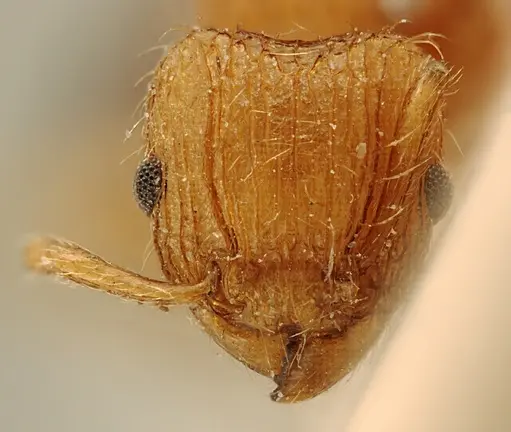
To identify this species you need to look at its distinctive features: small eyes, a bicolored body (orange‑brown head, mesosoma, and waist segments, with a darker gaster), smooth, unsculptured mandibles, and abundant long, erect hairs on all upper surfaces [2]. The workers are tiny, about 3.7 mm total length [1].
Because only one specimen exists, we know almost nothing about the queen, males, or colony structure. Any attempt to keep this ant in captivity is entirely experimental.
Natural History and Distribution
Tetramorium schoutedeni is endemic to the Democratic Republic of Congo, specifically known from the Kunungu area in the Mai‑Ndombe region [2][3]. The type specimen was collected on April 6,1921,by H. Schouteden (the species is named after him) [2].
The exact habitat at the type locality is not documented, but D.R. Congo spans tropical rainforests, savanna, and mountainous regions. Without more specific collection data, you can’t determine whether this species prefers forest undergrowth, savanna clearings, or another microhabitat.
This species has never been recorded again since the original collection in 1921,suggesting it may be very rare, locally distributed, or easily confused with related species in the complex [2].
Inferred Care Requirements
Since no biological data exists for this species, all care recommendations are based on typical Tetramorium genus behavior and the known preferences of related African ants.
Temperature: Keep the nest at 22-26 °C, matching the warm tropical conditions of central Africa. A temperature gradient allows the colony to self‑regulate. Avoid temperatures below 20 °C or above 30 °C.
Humidity: Maintain moderate to high humidity in the nest. Keep the substrate consistently moist but not waterlogged. Mist occasionally and ensure good ventilation to prevent mold.
Nesting: Start with a standard test tube setup for a founding colony. Once established, transfer to a Y‑tong (AAC) or plaster nest with moist soil‑like substrate. Most Tetramorium species prefer ground‑nesting setups.
Feeding: Based on genus patterns, offer standard ant foods: sugar water or honey as an energy source, and small protein sources such as fruit flies, pinhead crickets, or mealworms. They likely also accept honeydew if offered.
Diapause: Not clearly required. D.R. Congo has minimal seasonal temperature variation, so these ants may not need a winter rest period. Monitor colony activity, if they slow down significantly, a brief cool period (around 18-20 °C for 2-3 months) may help, but this is guesswork.
Challenges and Limitations
The biggest challenge with Tetramorium schoutedeni is that this species is essentially unavailable in the antkeeping hobby and may never have been kept in captivity. The last known specimen was collected in 1921,and the species has not been rediscovered despite subsequent ant surveys in the region [2].
If you somehow obtained a colony, all care would be speculative. There’s no data on: what foods they accept, how queens found colonies, what temperatures they prefer, whether they need diapause, or how large colonies grow. You would essentially be conducting original research with every observation.
Additionally, there is a taxonomic uncertainty, researchers have noted that T. schoutedeni is very similar to T. philippwagneri and may actually be the same species. The only distinguishing feature is that T. schoutedeni has smooth mandibles while T. philippwagneri has longitudinally rugose (ridged) mandibles [2]. This means any wild‑caught specimens would need expert verification.
For these reasons, this species is not recommended for antkeepers unless obtained through scientific collaboration with researchers studying African ants.
Frequently Asked Questions
Can I keep Tetramorium schoutedeni as a pet ant?
Almost certainly not. This species is only known from a single worker collected in 1921 and has never been rediscovered. It’s not available in the antkeeping hobby and may not exist in sufficient numbers to collect. No one has ever kept this species in captivity.
What does Tetramorium schoutedeni look like?
Workers are tiny at about 3.7 mm total length. They have a distinctive bicolored appearance, the head, mesosoma, petiole, and postpetiole are orange‑brown, while the gaster is darker brown. They have small eyes, long propodeal spines, and are covered in abundant long erect hairs [2][1].
Where does Tetramorium schoutedeni live?
It is only known from the Democratic Republic of Congo, specifically the Kunungu area in the Mai‑Ndombe region [2][3]. The exact habitat preferences are unknown.
How do I care for Tetramorium schoutedeni?
No one knows, there is no documented care information for this species. All recommendations would be inferred from typical Tetramorium genus behavior (22-26 °C, moderate humidity, ground nesting, generalist diet). Keeping this species would require experimental care.
Are Tetramorium schoutedeni ants available to buy?
No. This species is extremely rare and has only been documented from a single specimen collected in 1921. It is not known to exist in any ant colony, making it unavailable in the hobby.
Do Tetramorium schoutedeni ants sting?
Tetramorium belongs to the Myrmicinae subfamily, which has functional stingers. However, no specific stinging behavior has been documented for this species. Based on genus patterns, they likely can sting but are not particularly aggressive.
How big do Tetramorium schoutedeni colonies get?
Unknown, no colony has ever been documented. Based on similar Tetramorium species, colonies likely reach several hundred to a few thousand workers. The maximum size is entirely speculative.
Is Tetramorium schoutedeni related to other Tetramorium species?
Yes, it is a member of the Tetramorium weitzeckeri species group, specifically the edouardi species complex [4]. It is very similar to T. pinnipilum and T. philippwagneri, so similar that researchers think T. schoutedeni and T. philippwagneri might actually be the same species [2].
What do Tetramorium schoutedeni eat?
Not documented. Based on typical Tetramorium behavior, they likely eat small insects and arthropods, plus honeydew from aphids. In captivity, you would need to experiment with standard ant foods like sugar water, honey, fruit flies, and small crickets.
Why is Tetramorium schoutedeni so rare?
We don’t know. It may genuinely have a very restricted distribution, be difficult to distinguish from related species, or exist in low numbers. The original specimen was collected in 1921 and no one has found another since, despite extensive ant surveys in central Africa [2].
Report an Issue
The current care sheet is based fully on literature. See inconsistencies, or something that's incorrect? Please , it will be resolved after review from an admin. Contributing to the blogs tab also helps providing information, to make us be able to further improve the caresheets. Thank you for your support!
References

この飼育シートのライセンスは: CC BY-SA 4.0 .
コミュニティブログ
ZFMKHYM20096177
AntWebで見る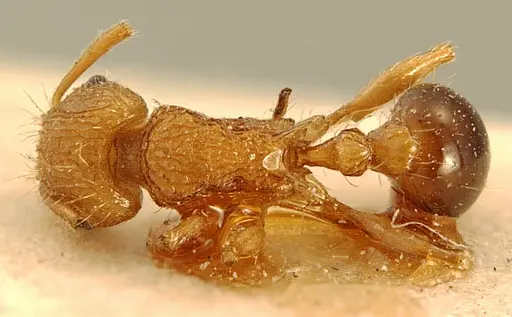
文献
分布マップを読み込み中...製品情報を読み込み中...