
Tetramorium nefassitense
- 学名
- Tetramorium nefassitense
- 族
- Crematogastrini
- 亜科
- Myrmicinae
- 命名者
- Forel, 1910
- 分布
- 0 か国で発見
紹介
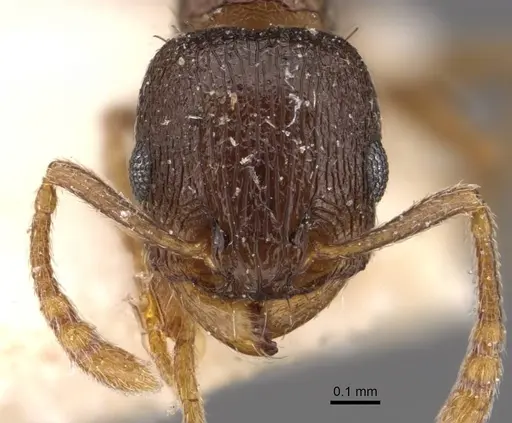
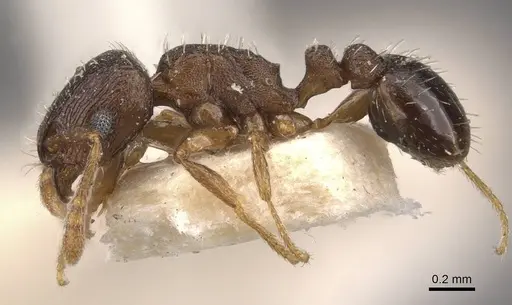
Tetramorium nefassitense is a tiny ant species with workers measuring just 2.0-2.1mm in total length . Workers are mid to dark brown with pale brown appendages, featuring a strongly developed median clypeal carina and well-developed eyes . This species belongs to the Tetramorium simillimum group and is closely related to Tetramorium ghindanum, from which it can be distinguished by the absence of projecting hairs on the sides of the head behind the eyes and its larger eyes . The species was described from specimens collected in Nefassit, Ethiopia over a century ago and remains known only from the original type collection . As a member of the Crematogastrini tribe, it uses a smear defense mechanism, applying venom with a flattened stinger rather than stinging. What makes this species interesting is how little we know about it, described for over 100 years but virtually nothing has been documented about its biology, colony structure, or behavior in the wild. This makes it a species for experienced keepers who enjoy working with data-poor species and can adapt care based on colony observations.
Quick Summary
- Difficulty: Hard
- Origin & Habitat: Native to the Afrotropical region, specifically documented from Ethiopia (type locality: Nefassit) and Eritrea [1][2]. The original specimens were collected from what appears to be a highland area in Ethiopia. Based on related species in the simillimum group, these ants likely inhabit dry savanna or rocky outcrop areas typical of the Ethiopian highlands.
- Colony Type: Unknown, colony structure has not been documented. Most Tetramorium species are monogyne (single queen colonies), but this has not been confirmed for T. nefassitense. Based on genus patterns, expect single-queen colonies.
- Size & Growth:
- Queen: Not described, queens have never been documented
- Worker: 2.0-2.1mm total length [1]
- Colony: Unknown, no colony data exists. Based on related species, likely reaches several hundred workers.
- Growth: Unknown, estimate moderate growth based on genus patterns
- Development: Unknown, estimate 6-8 weeks based on typical Tetramorium patterns at optimal temperature (No direct data exists. Related species in the simillimum group typically develop from egg to worker in 6-8 weeks at warm temperatures. This is an estimate based on genus-level patterns.)
- Antkeeping:
- Temperature: Based on Ethiopian highland origin (around 2000m elevation), this species likely tolerates moderate temperatures. Start around 22-26°C and observe colony activity. Related Tetramorium species do well at room temperature (20-24°C).
- Humidity: Moderate humidity preferred, typical for small Myrmicinae. Keep nest substrate lightly moist but allow some drying between waterings. The species likely encounters seasonal variation in its native habitat.
- Diapause: Unknown, no data on overwintering requirements. Ethiopian highlands experience mild winters, so a reduced activity period at 15-18°C for 2-3 months may be beneficial.
- Nesting: Based on related species, likely nests in soil under stones or in small cavities in the ground. A Y-tong (AAC) nest or test tube setup works well for these tiny ants. Keep chambers appropriately scaled to their 2mm worker size.
- Behavior: No specific behavioral data exists for this species. Based on genus patterns, expect typical Tetramorium behavior: moderate foraging activity, likely granivorous or omnivorous diet, and moderate colony aggression. Their tiny size (2mm) means escape prevention must be excellent, they can squeeze through remarkably small gaps. Handle with care as they may bite if threatened, though being so small, the bite is barely noticeable.
- Common Issues: lack of documented care information makes this a challenging species for beginners, tiny size means excellent escape prevention is essential, use fine mesh and tight-fitting lids, no data on founding behavior means you will need to observe your queen's approach, colony may be slow to develop given lack of known optimal conditions, no information on acceptable foods, start with standard ant diet and observe preferences
Housing and Nest Setup
For these tiny 2mm ants, pay close attention to escape prevention. A Y-tong (AAC) nest with appropriately sized chambers works well, or use a test tube setup with a cotton barrier. Make sure all connections and barriers are truly escape-proof, these small ants can squeeze through gaps you would never expect. A naturalistic setup with a shallow layer of substrate and flat stones or pieces of bark can also work well, mimicking their likely natural habitat of ground-level nesting. Provide a gradient of humidity within the nest so the ants can self-regulate by moving between moister and drier areas.
Feeding and Diet
No specific dietary data exists for T. nefassitense, so experiment based on what related Tetramorium species accept. Start with standard ant foods: a protein source (small insects like fruit flies, pinhead crickets, or mealworm pieces) offered 2-3 times per week, and a sugar source (honey water or sugar water) always available. Given their tiny size, prey items should be appropriately small, even springtails may be too large for them to tackle. Observe your colony's preferences and adjust accordingly. Some Tetramorium species also eat seeds, so try tiny seed offerings once the colony is established.
Temperature and Seasonal Care
Since this species comes from the Ethiopian highlands around Nefassit (elevated area with moderate climate), aim for temperatures in the 22-26°C range. Room temperature (around 20-24°C) is likely suitable. Unlike tropical ants that need constant warmth, this species may benefit from a slight cooling period during winter months, think low-to-mid 60s Fahrenheit (15-20°C) for 2-3 months. This mimics the mild seasonal variation in their native habitat. Watch your colony's activity levels: if they become less active in winter, that's normal. Don't panic if growth slows during this period, it's expected.
Colony Establishment
Founding behavior has never been documented for this species, so observe your queen carefully. Most Tetramorium are claustral, the queen seals herself in a chamber and raises the first workers on stored body fat without leaving to forage. Provide her with a small, dark, humid chamber (like a test tube setup) and leave her alone for 4-8 weeks before checking. Once workers emerge, introduce tiny food items and monitor acceptance. The first workers (nanitics) will be very small, this is normal. Be patient: without specific development data, growth may be slower than species with well-documented care requirements.
Working with Data-Poor Species
T. nefassitense represents both a challenge and an opportunity. The challenge is obvious: virtually no documented care information exists, so you are pioneering husbandry for this species. The opportunity is that your observations could contribute to our knowledge base. Keep detailed notes on your colony's behavior, food preferences, temperature tolerance, and development timeline. Document what works and what doesn't. This species is best suited for keepers who enjoy experimentation and observation rather than following established care sheets. If your colony thrives, consider sharing your findings with the antkeeping community.
Frequently Asked Questions
How long does it take for Tetramorium nefassitense to raise first workers?
This is unknown, no development data exists for this species. Based on typical Tetramorium patterns, expect 6-10 weeks from egg to worker at optimal temperature. Your colony may be faster or slower depending on conditions.
Can I keep Tetramorium nefassitense in a test tube setup?
Yes, a test tube setup works well for these tiny ants. Ensure the cotton barrier is packed tightly and use a fine mesh on any air holes to prevent escapes. The small chamber size is appropriate for their 2mm worker size [1].
What do Tetramorium nefassitense ants eat?
No specific dietary data exists. Based on related species, offer small protein sources (fruit flies, tiny insects) and a constant sugar source (honey water or sugar water). Experiment to find what your colony accepts.
Are Tetramorium nefassitense good for beginners?
No, this is not a beginner species. The complete lack of documented care information means you will need to experiment and adapt. Beginners should start with species like Tetramorium bicarinatum or other well-documented ants.
Do Tetramorium nefassitense ants sting?
As a Myrmicinae member, they have a stinger, but at 2mm in size, any sting would be negligible to humans. They may bite if threatened, but being so small, the effect is minimal.
How big do Tetramorium nefassitense colonies get?
Unknown, no colony size data exists. Based on related species in the simillimum group, colonies likely reach several hundred workers over time.
Do Tetramorium nefassitense need hibernation?
Not confirmed, but likely beneficial. The Ethiopian highlands experience mild seasonal variation, so a 2-3 month period at 15-18°C may support natural cycles. Monitor colony activity, if they slow down significantly in winter, this suggests they would benefit from a cool period.
Why is so little known about Tetramorium nefassitense?
This species was described in 1910 from a small collection of workers in Ethiopia and has rarely been observed since. It is a data-deficient species in every sense, no ecological studies, no biological observations, and no additional specimens have been documented. This makes it one of the more mysterious ant species in the hobby [1].
When should I move Tetramorium nefassitense to a formicarium?
Wait until the colony has at least 20-30 workers before considering a move. For these tiny ants, a test tube setup can actually support quite large colonies, so there is no rush. Only move if the tube is becoming contaminated or the colony has outgrown the space.
Can I keep multiple Tetramorium nefassitense queens together?
Unknown, no data exists on colony founding or queen relationships for this species. Most Tetramorium are monogyne (single queen), but this has not been confirmed for T. nefassitense. It is not recommended to combine unrelated queens without data.
Report an Issue
The current care sheet is based fully on literature. See inconsistencies, or something that's incorrect? Please , it will be resolved after review from an admin. Contributing to the blogs tab also helps providing information, to make us be able to further improve the caresheets. Thank you for your support!
References

この飼育シートのライセンスは: CC BY-SA 4.0 .
コミュニティブログ
CASENT0909147
AntWebで見る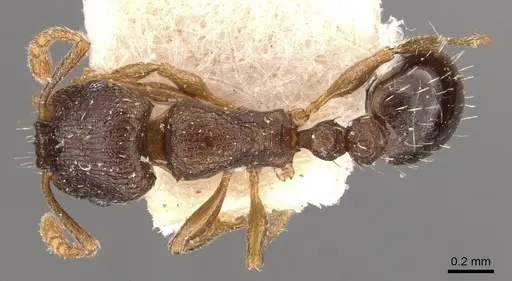
文献
分布マップを読み込み中...製品情報を読み込み中...