
Tetramorium lucyae
- 学名
- Tetramorium lucyae
- 族
- Crematogastrini
- 亜科
- Myrmicinae
- 命名者
- Sorger, 2011
- 分布
- 0 か国で発見
紹介
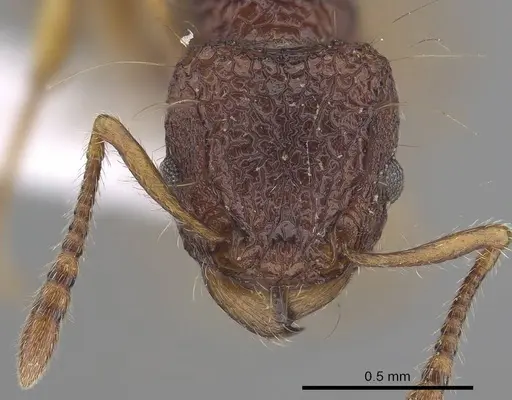
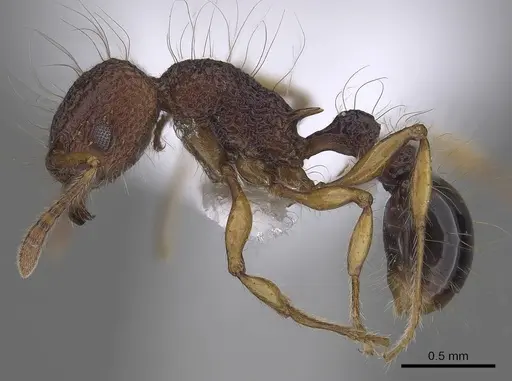
Tetramorium lucyae is a small ant species from the mountains of Borneo, first described in 2011. Workers are 3.6–3.8 mm long with a reddish-brown head, mesosoma, and petiole, a dark brown gaster, and yellowish-brown legs . They are covered in extremely long, curved, whitish-yellow hairs – some of the longest seen in any Tetramorium species . Queens are slightly larger (4.3 mm), with bigger eyes and three ocelli . This species is only known from the upper montane forest of Gunung Murud in Sarawak, Malaysia, at around 2076 m elevation. The type nest contained 203 workers and two queens, so colonies are polygynous (multiple queens) . Because it comes from a cool, humid mountain habitat, it has very specific care needs compared to lowland tropical ants.
Quick Summary
- Difficulty: Hard
- Origin & Habitat: Upper montane forest of Borneo (Gunung Murud, Sarawak, Malaysia) at approximately 2076 m elevation. Nests in the ground [1].
- Colony Type: Polygynous – multiple queens live together in a single colony, as seen in the type nest (2 gynes with 203 workers) [1].
- Size & Growth:
- Queen: ~4.3 mm (total length) [1]
- Worker: 3.6–3.8 mm (mean 3.73 mm) [1]
- Colony: At least 203 workers in the wild, likely larger established colonies exist [1]
- Growth: Moderate – estimated based on typical Tetramorium patterns
- Development: 6–10 weeks at optimal temperature (estimated, not directly studied) [1] (No species-specific data. The estimate comes from related Tetramorium species kept under stable conditions.)
- Antkeeping:
- Temperature: Keep at 20–24°C, with 20–22°C ideal. The high-altitude origin means they prefer cooler conditions than most tropical ants. Avoid temperatures above 28°C [1].
- Humidity: High humidity required – think damp mountain forest floor. Keep the nest substrate consistently moist but not waterlogged, and provide a moisture gradient so ants can choose their preferred microclimate [1].
- Diapause: Unlikely. Being a tropical mountain species from near the equator, they do not need a winter dormancy. Some seasonal slowdown may occur naturally [1].
- Nesting: Ground-nesting. Use a naturalistic setup with moist soil, a Y‑tong/plaster nest, or a 3D‑printed nest that retains moisture. Provide a humidity gradient and avoid air‑conditioned spots [1].
- Behavior: Calm and not particularly aggressive. Workers are medium‑sized (3.6–4.3 mm) and can sting, but the sting is mild (typical of Tetramorium). They forage on the ground and likely collect honeydew and small prey. The extremely long hairs may have a sensory or defensive function. Colonies are polygynous, so queens coexist peacefully [1].
- Common Issues: very rare in captivity – almost no captive breeding records, so you may have to work with a wild‑caught colony [1], high humidity needs can cause mold if ventilation is poor – balance moisture with airflow, cold sensitivity – avoid temperatures below 18°C, and do not place near air conditioning vents [1], no established feeding protocol – start with standard Tetramorium fare (sugar water, small insects) and observe preferences, wild‑caught colonies may carry parasites or diseases from their native habitat – quarantine new colonies
Housing and Nest Setup
Tetramorium lucyae is a ground‑nester from cool, humid mountain forests. In captivity, use a nest that holds moisture well: a soil setup, Y‑tong (AAC) block, or plaster nest. Create a humidity gradient – keep one part of the nest quite damp and another part slightly drier so the ants can self‑regulate [1]. A test tube works for a founding colony, but upgrade to a larger formicarium once the colony grows beyond 30–50 workers. Place the nest in a spot that stays around 20–22°C, away from air conditioning or direct sunlight. Provide good ventilation to prevent mold without drying out the nest. A shallow water dish in the outworld is useful [1].
Feeding and Diet
In the wild, Tetramorium species forage for honeydew, small insects, and other protein sources. Offer your colony a varied diet: sugar water or honey for energy, and protein from small crickets, mealworms, or fruit flies. Since captive data for this species is almost nonexistent, start with standard Tetramorium fare and watch what they prefer. Remove uneaten prey after 24–48 hours to avoid mold. Always provide a clean water source. Being from a cooler mountain habitat, they may be less active at high temperatures, so consider offering food in the cooler part of the day [1].
Temperature and Seasonal Care
This species lives at about 2076 m elevation in Borneo, so it prefers cooler conditions than typical tropical ants. Keep the nest at 20–24°C, with 20–22°C being ideal. Do not let it go above 28°C or below 18°C for long periods [1]. Unlike temperate ants, they do not need a winter diapause. However, you may notice slightly reduced activity during the cooler months – this is natural, so just cut back on feeding and avoid disturbing them. If your home is climate‑controlled, keep the enclosure away from vents that could cause sudden temperature swings [1].
Colony Structure and Multi‑Queen Care
Wild colonies of Tetramorium lucyae are polygynous – the type nest contained 203 workers and 2 queens (gynes) together [1]. This means multiple queens can coexist peacefully in captivity. Do not try to separate them, they will work together and make the colony more resilient if one dies. Because the colony can grow large, plan ahead with a spacious formicarium. If you obtain a single queen, the colony may remain monogyne unless extra queens are introduced, but this is uncharted territory. Overall, the natural multi‑queen structure is a key advantage for keeping this species [1].
Handling and Temperament
These ants are calm and not aggressive. Workers are 3.6–3.8 mm long and have a functional stinger (like all Myrmicinae), but the sting is mild – comparable to a tiny pinch. They prefer to retreat than fight. The most striking feature is the incredibly long, curved whitish hairs covering the whole body – these make the species easy to identify and are a treat to observe up close [1]. For escape prevention, use standard barriers (fluon or PTFE) and make sure gaps are under 1 mm. While they are not notorious escape artists, their small size means any gap is a potential exit [1].
Frequently Asked Questions
Is Tetramorium lucyae a good species for beginners?
No, this is not a beginner species. It is rarely kept, has very little captive breeding history, and requires specific cool, humid conditions that can be hard to maintain. Beginners should start with more established Tetramorium species like Tetramorium caespitum [1].
How long does it take for Tetramorium lucyae to raise first workers?
Exact development time is unknown. Based on related Tetramorium species, expect about 6–10 weeks from egg to worker at 22°C. The first workers (nanitics) will likely be smaller than later ones. Be patient – the queen may take a while to start laying [1].
Can I keep multiple queens together in one colony?
Yes. This species is naturally polygynous – the type nest had 2 queens together [1]. They should coexist without fighting. Keeping multiple queens makes the colony more resilient. If you obtain a single queen, she will likely accept additional unrelated queens if introduced carefully, but this has not been tested [1].
What temperature range does Tetramorium lucyae need?
Keep the nest at 20–24°C, with 20–22°C ideal. Avoid temperatures above 28°C or below 18°C. Their mountain habitat means they prefer cooler conditions than most tropical ants [1].
Do Tetramorium lucyae ants sting?
Yes, they can sting, as members of the Myrmicinae subfamily. However, the sting is mild – comparable to a very minor bee sting. There is no need for excessive worry, just handle with normal ant‑keeping precautions [1].
How big do Tetramorium lucyae colonies get?
The type series contained 203 workers, but that was probably not a fully mature colony. Based on related polygynous Tetramorium, mature colonies likely reach several hundred to over a thousand workers. Plan for a large formicarium [1].
What do Tetramorium lucyae eat?
Offer standard Tetramorium fare: sugar water or honey for energy, and protein from small insects (fruit flies, pinhead crickets, mealworms). Remove leftover prey after 24 hours to prevent mold. Fresh fruit may also be accepted. Observe what your colony prefers and adjust accordingly [1].
Does Tetramorium lucyae need hibernation?
No, they likely do not need a winter dormancy period. Being a tropical mountain species from near the equator, they are not adapted to seasonal cold. You may see reduced activity during cooler months, but that is a natural slowdown, not true diapause. Keep conditions stable year‑round [1].
Why are my Tetramorium lucyae dying?
Common problems: temperatures too high (above 28°C) or too low (below 18°C), humidity too low (nest drying out), mold from poor ventilation combined with high moisture, stress from excessive handling, or poor diet. Since this species is rarely kept, also consider that wild‑caught colonies may carry parasites. Double‑check that your setup matches their mountain forest needs – cool, humid, and stable [1].
When should I move my colony to a formicarium?
Move from a test tube to a proper formicarium when the colony reaches about 30–50 workers, or when the test tube starts degrading (water depleted, mold, or space is getting tight). Provide a naturalistic nest with moist soil or a plaster/Y‑tong setup that retains humidity but allows some ventilation [1].
Report an Issue
The current care sheet is based fully on literature. See inconsistencies, or something that's incorrect? Please , it will be resolved after review from an admin. Contributing to the blogs tab also helps providing information, to make us be able to further improve the caresheets. Thank you for your support!
References

この飼育シートのライセンスは: CC BY-SA 4.0 .
コミュニティブログ
CASENT0919652
AntWebで見る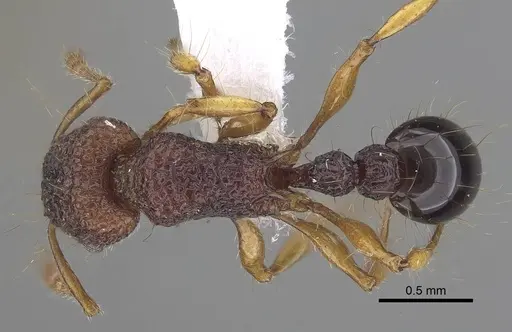
文献
分布マップを読み込み中...製品情報を読み込み中...