
Tetramorium dogieli
- 学名
- Tetramorium dogieli
- 族
- Crematogastrini
- 亜科
- Myrmicinae
- 命名者
- Karavaiev, 1931
- 分布
- 0 か国で発見
紹介
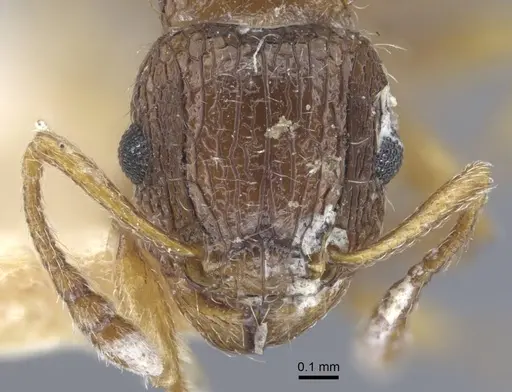
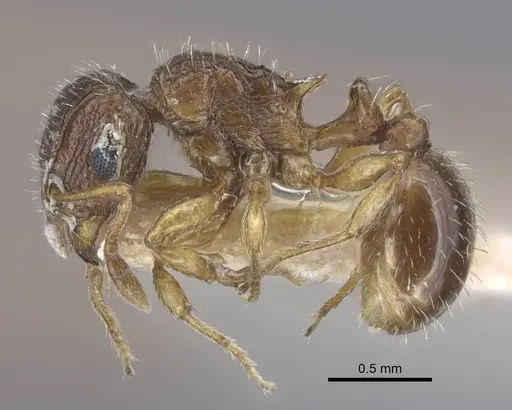
Tetramorium dogieli is a tiny ant species from East Africa, known only from Kenya and possibly Tanzania . Workers measure about 2.5 mm in total length, making this one of the smaller members of the genus . The species was described from a single worker collected near Naivasha, Kenya, but the holotype specimen has been lost . It belongs to the subfamily Myrmicinae, tribe Crematogastrini, so its primary defense is a modified stinger used to smear venom onto enemies instead of piercing them. Almost nothing is known about its biology, no queens, colonies, or behavior have been recorded. It may be synonymous with Tetramorium nube, but that can't be confirmed without the type specimen . Specimens have been found at elevations around 800-900 m in Cameroon, suggesting a montane habitat preference .
Quick Summary
- Difficulty: Unknown
- Origin & Habitat: Kenya and Tanzania (Afrotropical region). Recorded at 800-900 m elevation in highland areas near Naivasha [2][1].
- Colony Type: Unknown, no colony or queen specimens have ever been documented
- Size & Growth:
- Antkeeping:
- Temperature: No species-specific data. Based on highland origin, start around 20-24°C and adjust as needed. Room temperature is likely fine, but monitor carefully.
- Humidity: Unknown, keep the nest substrate slightly moist but not waterlogged. Provide a humidity gradient so the ants can choose.
- Diapause: Unknown, likely not required given the tropical highland origin, but no data supports this.
- Nesting: Unknown, presumably ground-nesting. A simple test tube setup or a small soil nest should work for starting out.
- Behavior: Behavior is completely unstudied. As a Myrmicinae (Crematogastrini), defense is by smearing a venom with a modified stinger. Workers are tiny, so escape prevention is critical, they can slip through gaps smaller than 1 mm. Use fine mesh and seal all connections.
- Common Issues: no biological data exists, all care is guesswork, colony may fail without warning., tiny size (2.5 mm) makes escape prevention extremely difficult, use ultra-fine mesh and absolutely tight seals., lack of known founding behavior means you might not even get a queen to lay eggs., unknown dietary needs, you'll have to experiment with different prey sizes and carbohydrate sources., if the species ever gets established outside its native range it could become invasive (see warning below).
Background and Identification
Tetramorium dogieli was described by Karavaiev in 1931 based on a single worker from Naivasha, Kenya [1]. That type specimen has since been lost, making it hard to confirm identity. Bolton (1980) placed it in the squaminode-group and noted it may actually be the same species as Tetramorium nube, separated only by slight differences in head sculpture and size (worker TL 2.5 mm) [1]. Because the antennae were not clearly described, even the number of antennal segments (12 vs 11) is uncertain [1]. The species is known from only that one specimen and a few later records in Cameroon [2].
Distribution and Habitat
The only confirmed native range is Kenya and possibly Tanzania [1]. Additional specimens have been collected at 800-900 m elevation in Cameroon, suggesting a patchy highland distribution across central Africa [2]. The type locality, Naivasha, is a highland area in the Kenyan Rift Valley. Nothing is known about its specific nest sites or microhabitat, but related Tetramorium in the region nest in soil, under stones, or in leaf litter.
Care Recommendations (All Inferred)
Because no biological data exists for this species, every care suggestion is a guess based on general Tetramorium husbandry. Keep the nest at room temperature (20-24°C) and provide a substrate that stays slightly moist but not wet. A test tube setup is the safest way to start a colony. For escape prevention, use the finest mesh you can find (at least 0.5 mm openings) and seal every joint with silicone or PTFE tape. These ants are tiny enough to slip through standard cotton plugs.
Feed small prey: fruit flies, springtails, or pinhead crickets. Offer sugar water or honey for carbohydrates. Start with tiny amounts and increase only as the colony grows. Be prepared for failure, this species has never been kept in captivity.
Growth and Development
Absolutely no developmental data exists for Tetramorium dogieli. The egg-to-worker time, growth rate, and colony size are all completely unknown. Do not expect a smooth, predictable colony founding. If you do succeed, consider documenting and sharing your observations, any information would be valuable to myrmecology.
Frequently Asked Questions
How long does it take for Tetramorium dogieli to produce first workers?
No data exists. For related Tetramorium species, development is roughly 6-8 weeks at 24-26°C, but this is pure speculation for T. dogieli. Do not assume any timeline.
What do Tetramorium dogieli ants eat?
Unknown, no dietary studies exist. Based on related species, they likely accept sugar water and small protein sources (fruit flies, springtails). Offer a varied diet and observe.
Can I keep Tetramorium dogieli in a test tube?
A test tube setup is a good starting point for any unknown species because it provides humidity control and easy monitoring. Just make sure the cotton is packed extremely tightly, these ants are tiny.
Do Tetramorium dogieli ants sting?
Tetramorium dogieli is in the subfamily Myrmicinae, tribe Crematogastrini, which has a modified stinger used to smear venom rather than inject it. The sting is not dangerous to humans, but the venom can cause mild irritation if smeared on skin.
What temperature do Tetramorium dogieli ants need?
No species-specific data. Based on records from 800-900 m elevation in the tropics, room temperature (20-24°C) is a reasonable starting point. Avoid overheating, they probably prefer cooler conditions than lowland tropical ants.
How big do Tetramorium dogieli colonies get?
Colony size is completely unknown. The worker size (2.5 mm) suggests modest colonies, but there is no evidence either way.
Are Tetramorium dogieli good for beginners?
No, this species is not recommended for anyone. There is no reliable care data, and the lack of known founding behavior makes colony establishment uncertain. Start with a well-studied species.
Do Tetramorium dogieli need hibernation?
Diapause requirements are unknown. Given its highland equatorial origin, it likely does not need a cold winter period, but activity may drop during cooler months. Observe and adjust.
Why is so little known about Tetramorium dogieli?
The species is known from a single lost holotype and a handful of elevation records [2][1]. No queens, males, or colony data have ever been published. It has effectively been ignored since 1931.
Is Tetramorium dogieli the same as Tetramorium nube?
Bolton (1980) suggested they might be the same species, separated only by minor differences in head sculpture. Confirmation requires rediscovering the type specimen [1].
Report an Issue
The current care sheet is based fully on literature. See inconsistencies, or something that's incorrect? Please , it will be resolved after review from an admin. Contributing to the blogs tab also helps providing information, to make us be able to further improve the caresheets. Thank you for your support!
References

この飼育シートのライセンスは: CC BY-SA 4.0 .
コミュニティブログ
CASENT0917057
AntWebで見る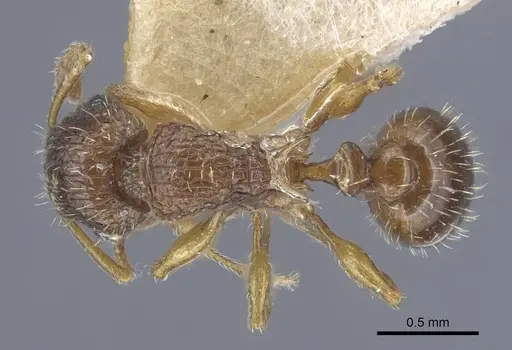
文献
分布マップを読み込み中...製品情報を読み込み中...