
Tetramorium diomandei
- 学名
- Tetramorium diomandei
- 族
- Crematogastrini
- 亜科
- Myrmicinae
- 命名者
- Bolton, 1980
- 分布
- 0 か国で発見
紹介
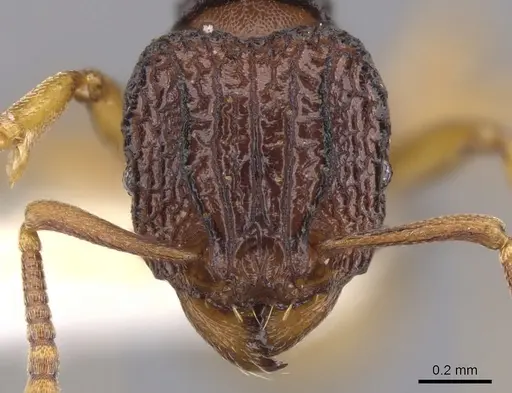
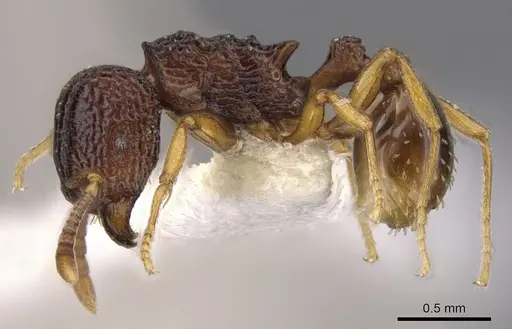
Tetramorium diomandei is a small African ant species measuring 3.1-3.5mm in total length, belonging to the Myrmicinae subfamily . Workers have a distinctive appearance with very small eyes (only 4 ommatidia), short antennae, and a highly irregular dorsal outline of the alitrunk (middle body section) . The species features bizarre scale-like or leaf-like flattened hairs on the first gastral tergite and coarse longitudinal carinae on the head . Body color is uniform brown with lighter appendages . This species belongs to the shilohense-group and is closely related to Tetramorium somniculosum, with both sharing unusual pilosity and irregular alitrunk shape . The distribution covers the Afrotropical region, specifically documented in Cameroon and Ivory Coast . Unfortunately, nothing is known about the specific biology, colony structure, or captive care requirements for this species .
Quick Summary
- Difficulty: Unknown, this is a rarely kept species with no documented captive care information
- Origin & Habitat: Afrotropical region, documented in Cameroon and Ivory Coast, specifically collected in the Tai Forest of Ivory Coast [1]. Based on collection data, they appear in lowland rainforest environments in southeast Cameroon [2].
- Colony Type: Unknown, colony structure (single-queen or multi-queen) has not been documented for this species
- Size & Growth:
- Queen: Not documented in available literature, related Tetramorium species typically have queens 6-9mm
- Worker: 3.1-3.5mm total length (TL 3.1-3.5mm) [1]
- Colony: Unknown, no colony size data available
- Growth: Unknown, no development data exists for this species
- Development: Unknown, no direct measurements available. Based on typical Tetramorium genus patterns, expect 6-10 weeks at warm tropical temperatures. (This is an estimate based on related Tetramorium species. No species-specific data exists.)
- Antkeeping:
- Temperature: Likely 24-28°C based on origin (tropical West Africa). Start in the mid-range and observe colony activity.
- Humidity: Likely requires moderate to high humidity (60-80%) given the rainforest habitat in Cameroon and Ivory Coast. Keep substrate consistently moist but not waterlogged.
- Diapause: Unknown, tropical species may not require formal hibernation but may have reduced activity periods
- Nesting: No specific nesting data exists. Based on typical Tetramorium behavior, they likely nest in soil or under stones in forested areas. A naturalistic setup with moist substrate or a Y-tong/plaster nest would be appropriate starting points.
- Behavior: Behavior is unstudied in captivity. Based on genus patterns and subfamily (Myrmicinae, tribe Crematogastrini), workers have a modified stinger used for smearing venom onto enemies rather than piercing, so they are not aggressive stingers but may use chemical defense. Small size (under 4mm) means escape prevention is critical, use fine mesh barriers. They will likely accept small live prey and sugar sources, but this is speculative.
- Common Issues: no captive care information exists, all advice is based on genus-level inference, escape prevention is critical due to tiny worker size (3-4mm), humidity management may be challenging without species-specific data, growth rate is unknown making it difficult to plan colony development, diet acceptance is unconfirmed, may be picky eaters like some Tetramorium species
Species Identification and Appearance
Tetramorium diomandei workers are small ants measuring 3.1-3.5mm in total length, making them one of the smaller Tetramorium species [1]. They have a highly distinctive appearance that sets them apart from most other Tetramorium. The most notable feature is the bizarre pilosity, they have thick, minute, stud-like or scale-like hairs thinly distributed across their body surfaces, most visible on the head and postpetiole [1]. The first gastral tergite (front of the abdomen) has numerous subdecumbent to decumbent flattened scale-like or leaf-like hairs [1]. Their eyes are very small, containing only 4 ommatidia across the greatest diameter, making them nearly blind compared to many ants [1]. The dorsal outline of the alitrunk is highly irregular, folded into prominences and depressions, and the pronotum has a strong transverse crest [1]. The scapes (first antennal segments) are short [1]. Body color is uniform brown with lighter colored appendages [1].
Distribution and Habitat
This species is known from the Afrotropical region, specifically documented in Cameroon and Ivory Coast [1]. The type specimen was collected from the Tai Forest in Ivory Coast in August 1975 [1]. More recent sampling in southeast Cameroon recorded this species in a lowland rainforest location (NPF) [2]. The Ivory Coast collection occurred in August, suggesting the species is active during the wet season in West Africa. Based on these records, they appear to inhabit tropical lowland rainforest environments. The species is part of the shilohense-group, which appears to be restricted to West African forests [1].
Known Biology and Research Gaps
It must be emphasized that absolutely nothing is known about the biology of Tetramorium diomandei [1]. This is one of the least studied ant species in the hobby and scientific community. We have no information on: colony founding behavior, queen number (monogyne vs polygyne), nuptial flight timing, development timeline, diet preferences, temperature and humidity requirements, overwintering behavior, or any aspect of their captive care. The only biological data available comes from morphological descriptions of the worker caste [1]. This species is not currently kept in captivity by any known antkeepers and no care guides exist. Any advice provided here is based entirely on inference from related Tetramorium species and general genus patterns.
Housing and Nesting (Inferred)
Since we have no species-specific data, housing recommendations must be based on typical Tetramorium preferences and the known habitat. Given their collection from lowland rainforest in Cameroon and Ivory Coast, they likely prefer warm, humid conditions. A naturalistic setup with moist substrate would be a reasonable starting point, use a soil-based mixture that holds moisture well. Alternatively, a Y-tong (AAC) or plaster nest would allow you to control humidity more precisely. Keep the nest substrate consistently moist but not waterlogged. Given their tiny size (under 4mm), escape prevention is absolutely critical, use fine mesh barriers and ensure all openings are sealed. The nest should have small chambers appropriate for a small-bodied ant species.
Feeding and Diet (Inferred)
No specific diet information exists for this species. However, based on typical Tetramorium behavior, they likely are omnivorous with a preference for small live prey and sugar sources. In captivity, you could offer small live prey items like fruit flies, pinhead crickets, and small mealworms. Sugar water, honey, or sucrose solutions would likely be accepted. Start with small amounts and observe acceptance. Given their tiny worker size (3-4mm), prey items must be appropriately sized, very small arthropods only. Do not overfeed as this can lead to mold issues in a humid nest setup.
Temperature and Seasonal Care
No specific temperature data exists for this species. Based on their origin in tropical West Africa (Ivory Coast, Cameroon), they likely require warm conditions, probably in the range of 24-28°C. Room temperature may be insufficient if your home is below this range. A heating cable or mat on one side of the nest can create a temperature gradient. Since they come from a region near the equator, they likely do not require a true hibernation period. However, they may have seasonal activity patterns tied to wet and dry seasons in their native habitat. Monitor colony activity and adjust conditions accordingly. If workers become less active, this may indicate they prefer cooler conditions or have entered a rest period.
Frequently Asked Questions
How do I care for Tetramorium diomandei ants?
Unfortunately, no captive care information exists for this species. All advice is based on inference from related Tetramorium species. Start with a naturalistic setup at 24-28°C with moderate to high humidity (60-80%). Offer small live prey and sugar sources. This species is not currently kept in captivity, so you would be pioneering its care.
What do Tetramorium diomandei ants eat?
Diet is unconfirmed for this species. Based on typical Tetramorium behavior, they likely accept small live prey (fruit flies, tiny crickets) and sugar sources (honey water). Start with small offerings and observe acceptance. Their tiny worker size (3-4mm) means prey must be very small.
How big do Tetramorium diomandei colonies get?
Colony size is unknown, no colony data exists for this species. Related Tetramorium species typically reach several hundred to a few thousand workers. You should expect moderate colony growth over multiple years.
What is the egg to worker timeline for Tetramorium diomandei?
This is completely unstudied. Based on typical Tetramorium genus patterns, expect 6-10 weeks from egg to first worker at warm tropical temperatures (around 25-28°C). This is a rough estimate only.
Do Tetramorium diomandei ants sting?
Myrmicinae ants generally have functional stingers, but this species belongs to tribe Crematogastrini, which uses a modified stinger to smear venom onto enemies rather than piercing. The sting is not used for injection, but they can still apply venom topically. Given their tiny size (3-4mm), any venom application is very mild and not considered dangerous to humans.
Can I keep multiple Tetramorium diomandei queens together?
Colony structure is unconfirmed, we don't know if they are monogyne (single queen) or polygyne (multiple queens). Do not attempt combining unrelated queens until more is known about their natural colony structure.
What temperature do Tetramorium diomandei ants need?
Temperature requirements are unstudied. Based on their origin in tropical West Africa, aim for 24-28°C. A heating cable on one side of the nest can provide warmth if room temperature is lower.
Are Tetramorium diomandei good for beginners?
No, this species is not recommended for beginners. There is zero documented captive care information, making it an extreme challenge even for experienced antkeepers. You would essentially be experimenting with every aspect of their care.
Where is Tetramorium diomandei found?
This species is documented in the Afrotropical region, specifically Cameroon and Ivory Coast. The type location is the Tai Forest in Ivory Coast. They inhabit lowland rainforest environments [2][1].
Why is there no information about Tetramorium diomandei care?
This species is extremely poorly studied. The AntWiki explicitly states 'Nothing is known about the biology of this species.' It has only been collected a few times in scientific surveys and is not currently kept in the antkeeping hobby.
Report an Issue
The current care sheet is based fully on literature. See inconsistencies, or something that's incorrect? Please , it will be resolved after review from an admin. Contributing to the blogs tab also helps providing information, to make us be able to further improve the caresheets. Thank you for your support!
References

この飼育シートのライセンスは: CC BY-SA 4.0 .
コミュニティブログ
CASENT0901166
AntWebで見る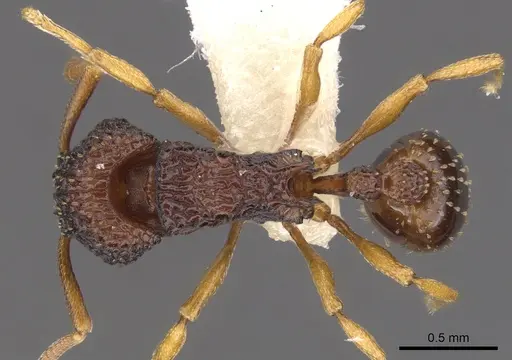
文献
分布マップを読み込み中...製品情報を読み込み中...