
Tetramorium christiei
- 学名
- Tetramorium christiei
- 族
- Crematogastrini
- 亜科
- Myrmicinae
- 命名者
- Forel, 1902
- 分布
- 0 か国で発見
紹介
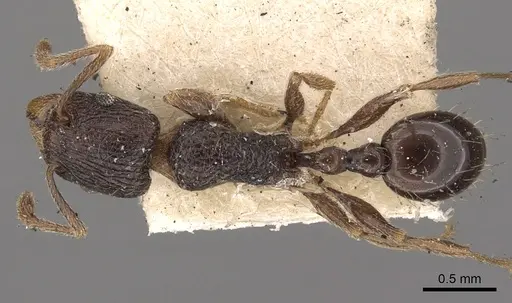
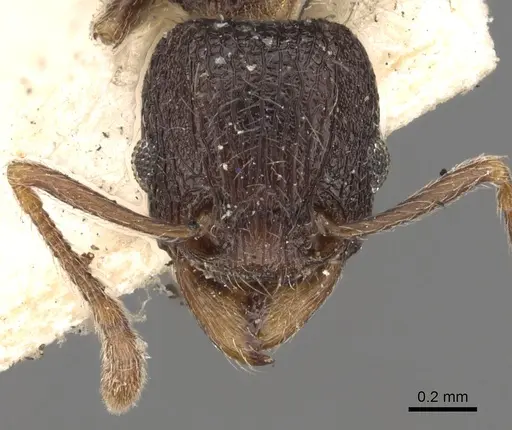
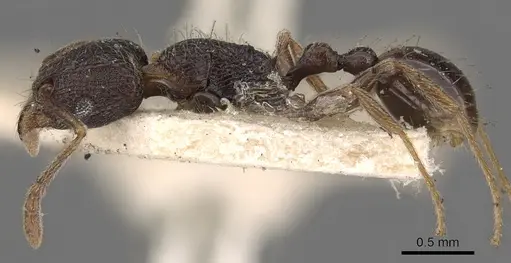
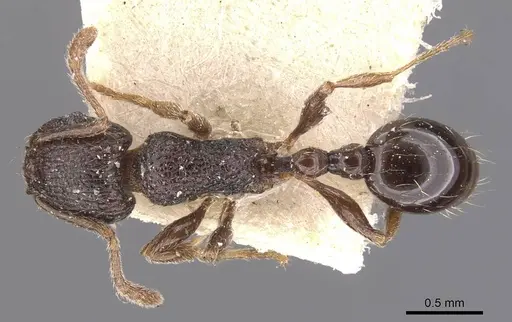
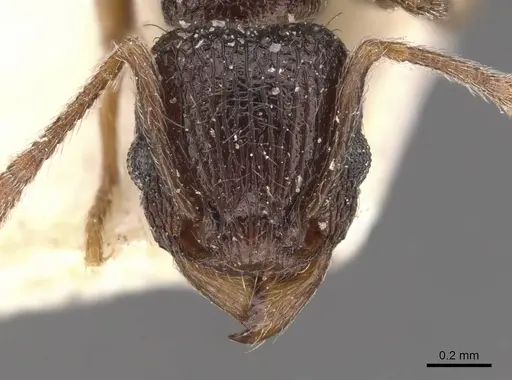
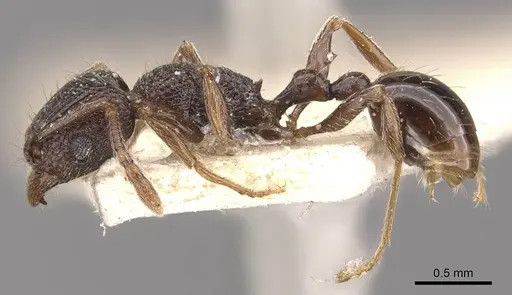
Tetramorium christiei is a small, dark ant species native to the Himalayan region of India and Bhutan. Workers measure 3-3.5 mm and are uniformly black or blackish brown . They belong to the Tetramorium tonganum species group and can be identified by their relatively long antennal scapes and the distinctive head sculpture - longitudinal rugulation that becomes reticulate on the occiput . The propodeal spines are short and dentiform, typically shorter than the triangular metapleural lobes. This species is found at elevations between 1200-2200 meters in the Himalayas, in montane forest habitats . Records exist from Meghalaya, Sikkim, West Bengal (India) and Bhutan . As a member of the Crematogastrini tribe, their main defense is to smear venom using a flattened stinger rather than piercing. Almost nothing is known about their biology in the wild - colony structure, founding behavior, and diet are undocumented . This makes them a challenging species to keep, since we must rely on general Tetramorium patterns and careful observation.
Quick Summary
- Difficulty: Hard
- Origin & Habitat: Himalayan mountains of India (Meghalaya, Sikkim, West Bengal, Darjeeling) and Bhutan at 1200-2200 m elevation [3][1][4]. They live in montane forest with cooler, humid conditions typical of high altitudes.
- Colony Type: Unknown, colony structure has not been documented for this species. Most Tetramorium species are monogyne (single queen), but this cannot be confirmed for T. christiei.
- Size & Growth:
- Queen: Undescribed in scientific literature, no queen measurements available.
- Worker: 3-3.5 mm [1]
- Colony: Unknown, likely under a few hundred workers based on related Tetramorium species, but unconfirmed.
- Growth: Unknown
- Development: Estimated 6-8 weeks based on typical Tetramorium development at warm temperatures (around 20°C). No species-specific data exists. (All timelines are educated guesses, observe your colony to refine.)
- Antkeeping:
- Temperature: Keep cooler than most tropical ants, aim for 18-22°C, inferred from their high-elevation origin [3]. They likely tolerate down to 15°C. Avoid overheating above 25°C. Create a gradient if using heat.
- Humidity: Moderate to high humidity, typical of mountain forests. Keep the nest substrate consistently moist but not waterlogged. Provide a humidity gradient so the ants can choose.
- Diapause: Likely required, based on their Himalayan distribution, a winter dormancy of 2-3 months at 10-15°C is probable. This is inferred, so observe colony health if skip is attempted.
- Nesting: In nature they probably nest in soil or under stones on the forest floor. For captivity, a Y-tong/plaster nest or soil substrate with good moisture retention works well. Avoid large open chambers, small, tight spaces are preferred.
- Behavior: Workers are small (3-3.5 mm) and likely forage on the forest floor. As a Myrmicinae in the tribe Crematogastrini, their defense mechanism is to smear venom rather than sting, using a modified flattened stinger. They are probably non-aggressive but will defend their nest. Prevent escape with fine mesh, they can squeeze through tiny gaps. Generalist foragers based on genus patterns.
- Common Issues: no documented biology, all care is estimated from related species, expect experimentation and potential setbacks, himalayan origin means they likely need cooler temperatures than typical ants, overheating is a major risk, winter dormancy is probably required but timing and duration are unknown, skipping may cause long-term stress, small size makes escape prevention critical, they can slip through gaps smaller than 1 mm, colony growth may be slow or fail entirely if conditions aren't right, patience is essential
Temperature and Cooling Requirements
This is the most critical aspect of keeping Tetramorium christiei. Being a Himalayan mountain species found at 1200-2200 m elevation, they are adapted to cooler temperatures than most captive ants [3]. Keep them in the 18-22°C range, much cooler than the 24-28°C that suits many other Myrmicinae. Room temperature is often ideal if your home stays in this range. If you need gentle warmth, use a very low‑output heat mat on one side only to create a gradient. Never let the nest exceed 25°C. In winter, a true dormancy period at 10-15°C for 2-3 months is likely necessary. This cool requirement makes them unsuitable for keepers who run a warm ant room for other species.
Housing and Nest Setup
Use a naturalistic setup with a soil‑based substrate or a Y‑tong/plaster nest that holds moisture well. The key is maintaining humidity while allowing good ventilation, avoid stagnant air (causes mold) and excessive airflow (dries out). Because they come from forest floor habitats in the Himalayas, they probably prefer dim light. Keep the nest out of direct sunlight. Chambers should be appropriately sized for their small workers, tight spaces are better than large open ones. A small water reservoir connected to the nest helps maintain humidity without constant misting. Escape prevention is essential: use tight‑fitting lids and fine mesh (less than 0.5 mm gaps). [1]
Feeding and Diet
No dietary studies exist for this species, so we infer from Tetramorium genus patterns. They are likely generalist foragers that accept both protein (small insects, aphids, honeydew) and sugar sources (nectar, honeydew, sugar water). Offer small live prey like fruit flies, springtails, or tiny crickets, nothing larger than their own body size. For sugar, provide diluted honey or sugar water occasionally. Feed small amounts every 2-3 days and remove uneaten food to prevent mold. Since their biology is unconfirmed, watch carefully which foods they accept and adjust accordingly. Water must always be available via a test tube or water source, not just from food.
Colony Founding and Early Growth
Founding behavior of Tetramorium christiei has not been documented. Based on typical Tetramorium patterns, some keepers assume claustral founding (the queen seals herself in and raises first workers on stored reserves), but this is speculation. For captive founding, provide a standard claustral setup: a test tube or small vial with a water reservoir, kept dark and undisturbed. Do not feed the queen during founding, she has enough energy if she is claustral. Once the first workers emerge (estimated 6-8 weeks based on genus patterns), begin offering tiny food items. Early colonies are fragile, avoid temperature swings and ensure stable humidity. Note that if the queen is actually semi‑claustral, she will need feeding, observe if she leaves the tube.
Winter Dormancy and Seasonal Care
Given their origin in the Himalayan mountains where winters are cold, this species almost certainly requires a winter dormancy period. Plan for 2-3 months (roughly November to February in the Northern Hemisphere) at 10-15°C [3]. Achieve this by moving the colony to an unheated garage, basement, or refrigerator (if the temperature stays above freezing). Do not feed during dormancy. Activity will drop and the queen may stop laying eggs, this is normal. Come spring, warm them gradually over several days back to active range. Skipping dormancy may stress the colony and cause long‑term health problems, but since this is inferred, monitor carefully.
Understanding the Challenge
To be honest: this is one of the most challenging species to keep because virtually nothing has been published about its biology [6]. Everything we know about their care is inferred from their habitat (Himalayan mountains), their genus (Tetramorium), and related species. That means you will essentially be experimenting. Document your observations carefully, what temperatures they tolerate, what foods they accept, how quickly their colony grows. Your experiences could contribute valuable knowledge to the antkeeping community. This species is best suited for experienced keepers who enjoy the challenge of working with poorly documented species and who have the patience to figure out optimal conditions through trial and error.
Frequently Asked Questions
How long does it take for Tetramorium christiei to raise their first workers?
The exact timeline is unknown since no one has documented their development. Based on typical Tetramorium patterns, estimate 6-8 weeks from egg to first worker at optimal temperatures (around 20°C). This is an informed guess, your actual results may vary.
What temperature do Tetramorium christiei ants need?
Keep them cooler than most ants, aim for 18-22°C. This is a Himalayan mountain species found at 1200-2200 m elevation, so they are adapted to cooler conditions [3]. Room temperature is often ideal. Avoid overheating above 25°C.
Do Tetramorium christiei ants need hibernation?
Yes, likely required. Based on their Himalayan mountain origin, they probably need a 2-3 month winter dormancy at 10-15°C [3]. This mimics their natural seasonal cycle. Skipping dormancy may cause long‑term health issues.
How big do Tetramorium christiei colonies get?
The maximum colony size is unknown. Based on typical Tetramorium patterns and their small worker size (3-3.5 mm), colonies likely reach a few hundred workers at most. They are not among the large colony‑forming Myrmicinae.
What do Tetramorium christiei ants eat?
No species‑specific data exists. Based on genus patterns, they likely accept small live prey (fruit flies, springtails) as protein and sugar sources (honey, sugar water). Start with tiny prey items appropriately sized for their small workers.
Can I keep multiple Tetramorium christiei queens together?
We don't know their colony structure. Most Tetramorium species are single‑queen (monogyne), but this hasn't been documented for T. christiei. Until we have data, keep only one queen per setup to be safe.
Are Tetramorium christiei ants good for beginners?
No, this is not a beginner species. Almost nothing is known about their biology, meaning you will be experimenting with care from scratch. They also have specific temperature requirements (cool, not warm) that differ from most commonly kept species. This species is for experienced keepers who enjoy the challenge of working with poorly documented species.
How do I set up a founding Tetramorium christiei queen?
Use a standard claustral setup, a test tube or small vial with a water reservoir, kept dark and undisturbed. The queen will likely seal herself in and raise first workers on stored fat reserves if she is claustral. Do not feed during founding. Once workers emerge (estimate 6-8 weeks), begin offering tiny food items. Since the founding method is unconfirmed, observe if the queen leaves to forage, if so, she may need feeding.
Do Tetramorium christiei ants sting?
As a Myrmicinae ant, they have a functional stinger, but their tribe Crematogastrini primarily uses a smear defense, they wipe venom onto enemies rather than piercing with the stinger. They can still sting if provoked, but it's negligible to humans. They are not dangerous.
Why are my Tetramorium christiei ants dying?
Common causes include: overheating (keep below 25°C), improper humidity (too dry or too wet), stress from too much disturbance during founding, or lack of winter dormancy. Since their biology is unconfirmed, trial and error may be needed. Document your conditions and adjust gradually.
Report an Issue
The current care sheet is based fully on literature. See inconsistencies, or something that's incorrect? Please , it will be resolved after review from an admin. Contributing to the blogs tab also helps providing information, to make us be able to further improve the caresheets. Thank you for your support!
References

この飼育シートのライセンスは: CC BY-SA 4.0 .
コミュニティブログ
文献
分布マップを読み込み中...製品情報を読み込み中...