
Temnothorax tamriensis
- 学名
- Temnothorax tamriensis
- 族
- Crematogastrini
- 亜科
- Myrmicinae
- 命名者
- Ajerrar <i>et al.</i>, 2018
- 分布
- 0 か国で発見
紹介
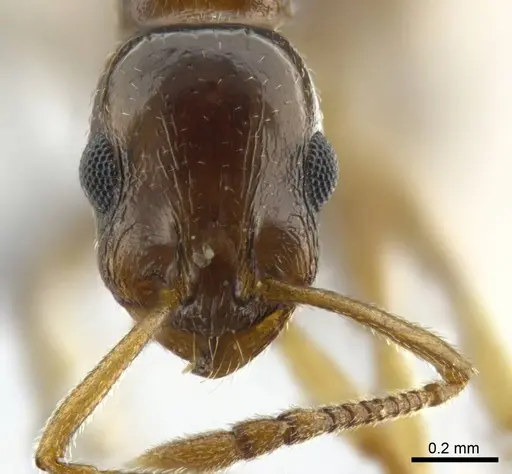
Temnothorax tamriensis is a tiny, recently described ant species from Morocco, measuring just 2.7-3.4mm for workers and 3.8mm for queens . Workers have a distinctive two-tone look: a dark reddish-brown head and gaster, a yellowish-brown middle section (mesosoma), and bright yellow legs and antennae . It belongs to the laurae group, which is known for having unusually large oval eyes that take up about a quarter of their head length - an adaptation that helps them see in dim light while foraging at night . The species was discovered in 2018 near the village of Tamri, in the Arganeraie forest of the western High Atlas mountains. It's one of the rarest and most localized Moroccan ants known, and may even be a bioindicator of the health of the Argan tree ecosystem . Their home is a semiarid landscape with hot winters and only 250-400mm of rain per year, where they nest in small fissures under limestone stones .
Quick Summary
- Difficulty: Medium
- Origin & Habitat: Western High Atlas mountains near Tamri, Morocco (30°42 N, 9°50 W), at 86m altitude in the Arganeraie forest. The habitat is semiarid with hot winters, flat and sunny, on loamy brown-red stony limestone soil [1][2].
- Colony Type: Likely monogyne (single-queen colonies). Two dewinged queens were each found alone in separate nests under limestone stones in November 2017 [1]. Founding behavior is unconfirmed.
- Size & Growth:
- Queen: 3.8 mm [1][2]
- Worker: 2.7-3.4 mm [1][2]
- Colony: Unknown, this species is rare in the wild and no mature colony counts exist.
- Growth: Moderate, based on typical Temnothorax development patterns [3].
- Development: Estimated 6-10 weeks at optimal temperature [3]. (Direct data for this species does not exist. Warmer conditions speed up development, cooler temps slow it down.)
- Antkeeping:
- Temperature: Keep the nest area at 20-24°C. This species comes from a semiarid region with hot winters, so they prefer warm conditions. A gentle temperature gradient across the nest lets workers choose their comfort zone [1].
- Humidity: Keep the nest substrate lightly moist in one area but allow most of the nest to be on the drier side, reflecting their semiarid habitat. Avoid both waterlogging and complete drying [1][2].
- Diapause: Likely a period of reduced activity. Field data shows strong worker activity in spring and summer, low activity at end of winter, and no activity in autumn (the dry season). This suggests they enter a rest period during the driest/coolest months. Provide a cool, dry period (around 15-18°C) for 2-3 months during winter. However, since their inactive period coincides with the dry season, ensuring a dry nest area may be more important than cold temperatures [1].
- Nesting: In nature they nest in small fissures under limestone stones [1]. In captivity, a small Y-tong (AAC) nest or test tube setup with tight chambers works well. The species is tiny and prefers dark, quiet locations. Avoid large open spaces, scale chambers to their 3mm size [1].
- Behavior: Likely nocturnal, their large eyes suggest they hunt and forage in low light. Workers are small but active, probably hunting tiny prey and collecting honeydew. They are not aggressive and pose no threat to keepers. Escape prevention is critical: at 2.7-3.4mm, they can slip through tiny gaps. Use fine mesh and tight-fitting barriers [1][2].
- Common Issues: escape prevention is critical, their tiny size means they can slip through standard barrier gaps, this is a newly described species with limited captive breeding information, be prepared to experiment and document, colonies may be slow to establish due to the small number of workers found in wild nests, avoid disturbing founding queens, they need quiet, dark conditions, the dry autumn season in their natural range suggests they may need a dry period in captivity
Housing and Nest Setup
Because Temnothorax tamriensis is so small, you need appropriately scaled housing. A small Y-tong (AAC) formicarium with narrow chambers or a well-organized test tube setup works best. The chambers should be tight enough that workers can touch both walls, these ants feel exposed in large open spaces. Keep the nest in a dark, quiet location since they are probably nocturnal [1][2]. Connect a small outworld for feeding and waste removal. Escape prevention is absolutely essential: use fine mesh on any openings and fluon on test tube rims. These ants are only 2.7-3.4mm long and can squeeze through the tiniest gaps [1].
Feeding and Diet
Like most Temnothorax, these ants are probably omnivorous with a taste for small live prey. Offer fruit flies, pinhead crickets, or springtails as protein sources. They will also take sugar water or honey for energy. In the wild they forage in the Arganeraie ecosystem, likely collecting honeydew from aphids and tending scale insects. Feed small prey 2-3 times per week for established colonies, and provide a constant sugar source. Remove uneaten prey after 24 hours to prevent mold [1][2].
Temperature and Seasonal Care
Keep the nest at 20-24°C, which matches their semiarid Moroccan home. This area has hot winters (by ant standards) and only 250-400mm of rain per year. Adding a heating cable to one side of the nest creates a temperature gradient, letting workers regulate their own temperature. Based on their wild activity pattern, strong in spring and summer, low at end of winter, none in autumn, they probably enter a short rest period during the driest and coolest months. Consider giving them a cool period (15-18°C) for 2-3 months during winter, and allow the nest to become drier during this time [1].
Behavior and Observation
This species is notable for its large eyes, which measure about a quarter of the head length, an adaptation for nocturnal or crepuscular foraging in the dim light of their ground fissure nests [1]. Workers are small but active, zipping around their territory. They are not aggressive and will flee rather than fight. The species is considered rare and localized in the wild, so captive colonies are valuable for observation and study. Their tiny size and nocturnal habits make them fascinating to watch, especially at feeding time when workers become most active [1][2].
Colony Establishment
Temnothorax tamriensis was only described in 2018,so captive breeding information is almost nonexistent. Be prepared to experiment and keep careful notes. Queens have been found nesting alone under limestone stones in November [1], which suggests they may start colonies in late summer or autumn. Founding behavior is unconfirmed, whether the queen feeds during this period or fasts (claustral) is unknown. Provide a founding queen with a small, dark, humid chamber and do not disturb her until the first workers appear [1].
Frequently Asked Questions
How long does it take for Temnothorax tamriensis to produce first workers?
Direct development data does not exist for this newly described species [1]. Based on typical Temnothorax patterns, expect 6-10 weeks from egg to first worker at temperatures around 22°C. The first workers (nanitics) will be smaller than mature workers [3].
What do Temnothorax tamriensis ants eat?
They likely accept small live prey such as fruit flies, springtails, and pinhead crickets, plus sugar sources like honey water or sugar water. This matches their position in the Arganeraie food web, where they would forage for small insects and collect honeydew [1][2].
Can I keep Temnothorax tamriensis in a test tube?
Yes. A test tube works well for this tiny species. Use a small water reservoir and keep the tube in a dark location. Because these ants are only 2.7-3.4mm, tight spaces help them feel secure. Once the colony reaches about 20-30 workers you can move them to a small formicarium with appropriately sized chambers [1].
Do Temnothorax tamriensis ants sting?
Temnothorax belongs to the Myrmicinae subfamily, whose members often have a sting, but these tiny ants are not known to sting or pose any danger to keepers. When threatened they simply flee.
Do Temnothorax tamriensis need hibernation?
They likely need a period of reduced activity. Field data shows strong worker activity in spring and summer, low activity at end of winter, and no activity in autumn (the dry season) [1]. Provide a cool, dry period around 15-18°C for 2-3 months during winter to mimic their natural cycle.
Are Temnothorax tamriensis good for beginners?
This species is rated Medium difficulty. While their basic care is straightforward, the main challenge is their tiny size, you need fine mesh barriers and careful attention to prevent escapes. Their newly described status also means less hobbyist experience is available to consult.
How big do Temnothorax tamriensis colonies get?
Colony size data is not available for this rare species [1]. Based on related Temnothorax species, colonies likely reach up to a few hundred workers, but this is unconfirmed.
When do Temnothorax tamriensis nuptial flights occur?
Nuptial flight timing is unconfirmed for this species. Based on their seasonal activity pattern (strong in spring and summer, none in autumn), flights likely occur in late spring to early summer. The Arganeraie region has distinct wet winters and dry summers, which influences ant reproductive cycles [1].
Why are my Temnothorax tamriensis dying?
Common causes include escape through tiny gaps (use fine mesh), disturbance during founding (queens need quiet), improper humidity (too wet or too dry), and temperature stress. As a newly described species, ensure your founding queen was ethically collected and not from a stressed wild colony. Also check for mold in the nest area.
Report an Issue
The current care sheet is based fully on literature. See inconsistencies, or something that's incorrect? Please , it will be resolved after review from an admin. Contributing to the blogs tab also helps providing information, to make us be able to further improve the caresheets. Thank you for your support!
References

この飼育シートのライセンスは: CC BY-SA 4.0 .
コミュニティブログ
CASENT0790328
AntWebで見る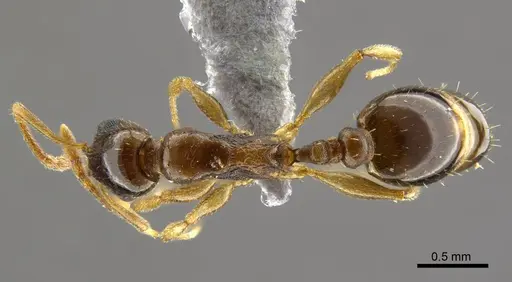
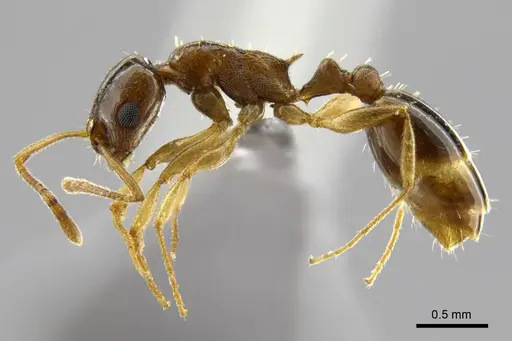
文献
分布マップを読み込み中...製品情報を読み込み中...