
Temnothorax evagorae
- 学名
- Temnothorax evagorae
- 族
- Crematogastrini
- 亜科
- Myrmicinae
- 命名者
- Salata <i>et al.</i>, 2024
- 分布
- 0 か国で発見
紹介
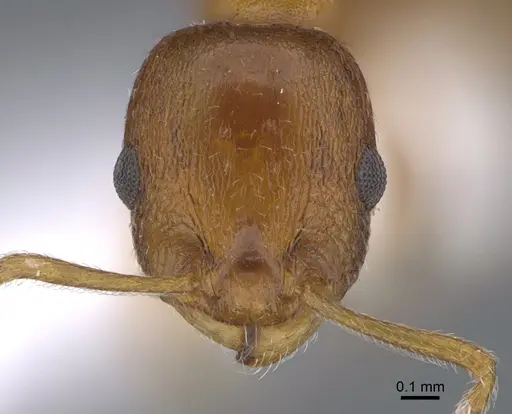
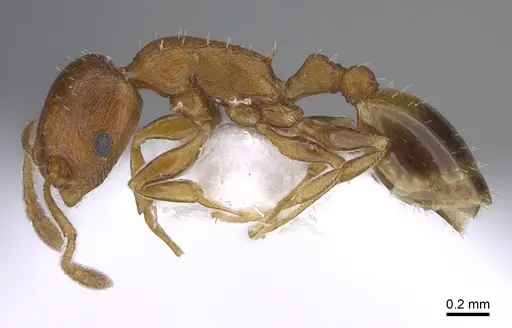
Temnothorax evagorae is a tiny yellow ant found only on the island of Cyprus, where it is the most widespread and common species of its genus . Workers are very small (about 2.5-4 mm, based on related species), with an almost entirely yellow body and a dark band covering more than a third of the back of their abdomen. Their antennae are uniformly yellow or have a slightly darker club, and the legs often have a brownish tint in the middle . This species was only described in 2024 and belongs to the T. graecus group, showing noticeable variation in size and color across different populations . What makes this ant special is its adaptability - it lives from sunny coastal beaches all the way up to shady mountain valleys at 838 m elevation, and it can be found on bushes, small trees, in pine forests, and even on the edges of dam lakes . Despite being such a common Cypriot ant, almost nothing is known about its colony life in the wild, so keeping it means you are exploring new ground.
Quick Summary
- Difficulty: Easy
- Origin & Habitat: Endemic to Cyprus, found across the island from sea level to 838 m elevation. They are frequently beaten off bushes and small trees growing near streams, roadsides, and in pine forests, and have also been collected in shady mountain valleys and along the edges of dam lakes [1][2][3].
- Colony Type: Single-queen colonies (monogyne), assumed based on typical genus patterns, but not yet confirmed for this species.
- Size & Growth:
- Queen: Size data unavailable, no total length measurement is recorded for the queen [1][2].
- Worker: Very small, about 2.5-4 mm, inferred from the genus (no direct total length available) [1].
- Colony: Unknown, likely up to a few hundred workers, based on typical Temnothorax patterns.
- Growth: Moderate, based on related species
- Development: Estimated 6-10 weeks at around 22 °C (inferred from other Temnothorax) (No specific data for this species, timing may vary with temperature.)
- Antkeeping:
- Temperature: Room temperature (20-24 °C) is likely ideal. They occur in both warm coastal areas and cooler mountain valleys, so a broad range is tolerated. Avoid sudden swings [1][2].
- Humidity: Moderate, keep the nest substrate slightly moist but not waterlogged. Provide a dry area in the outworld, since they also occupy sunny spots [1][2][3].
- Diapause: Unknown, Cyprus has mild winters, but some reduction in activity during cooler months might be natural. If you want to mimic the Mediterranean winter, a cooler period (15-18 °C) for 2-3 months could be offered, but it is not proven necessary.
- Nesting: In the wild, one nest was found under moss on a rocky wall, and they are thought to nest inside dry stems of shrubs and large herbs [3]. In captivity, a small Y-tong (AAC) nest or test tube with tight chambers works well, their tiny size means they need narrow, cozy spaces.
- Behavior: Generally peaceful and non‑aggressive. Workers actively forage on vegetation and are often seen moving on bushes. They have a modified stinger that smears venom rather than piercing, harmless to humans. Because they are so small (under 4 mm), fine mesh or a barrier is needed to prevent escapes.
- Common Issues: tiny size means escapes are possible without fine mesh or a tight fluon barrier, limited research, most care advice is inferred from genus patterns, outcomes may vary, wild‑caught colonies could carry parasites or pathogens from Cypriot populations, quarantine new colonies
Housing and Nest Setup
Because Temnothorax evagorae is so tiny (under 4 mm), you need to match the scale. A small Y-tong (AAC) nest with narrow chambers is ideal, these ants feel secure in tight, cozy spaces. A test tube setup with a water reservoir and cotton plug also works well. The connections between nest and outworld must be narrow, or use a barrier like fluon, to stop escapes. A small outworld is sufficient since colonies stay modest. Keep the nest in a quiet spot away from direct sunlight and strong vibrations [1][2][3].
Feeding and Diet
These ants are omnivorous, like most Temnothorax. Give them a constant source of sugar water or honey for energy. For protein, offer small insects such as fruit flies, pinhead crickets, or tiny moth flies. They also accept small seeds or plant matter. Feed small portions that can be eaten in a day or two, and remove leftovers to prevent mold. In the wild they forage on vegetation, so placing food on a raised platform or leaf may encourage natural behavior [3].
Temperature and Seasonal Care
Temnothorax evagorae comes from Cyprus, where summers are warm and winters are mild. They tolerate a range from about 15 °C to 30 °C, but thrive in the 20-24 °C range, typical room temperature is perfect [1][2]. During winter, they may slow down but probably don't need true hibernation. If you want to simulate the Mediterranean cool season, a few months at 15-18 °C is safe and may support long‑term health. Avoid sudden temperature swings.
Colony Establishment
If you get a founding queen, she will likely seal herself in a small chamber and raise her first brood alone, this is the typical claustral method for the genus, though it is not confirmed for this species. She uses stored body reserves until the first workers emerge. These first workers (nanitics) will be even smaller than normal. Do not disturb the founding chamber, interference can cause the queen to abandon or eat the brood. Once a few workers appear, you can offer tiny drops of sugar water and fruit flies. Colony growth is moderate: expect a few months to reach a dozen workers, and a year or more to reach 100+ [3].
Behavior and Observation
This ant is peaceful and rarely tries to bite. Workers are active foragers and will explore their outworld regularly. They are often seen on bushes and trees in the wild, so they enjoy climbing surfaces, a few twigs or a mesh in the outworld can make them feel at home [1][2][3]. They have a modified stinger that smears venom rather than piercing, it is harmless to humans. Because colonies stay small, you can observe the entire life cycle up close. Their names are tiny, so use a magnifying lens to appreciate their details.
Frequently Asked Questions
How long does it take for Temnothorax evagorae to raise first workers?
Based on typical Temnothorax development, expect 6-10 weeks from egg to first worker at around 22 °C. The exact timing for this species is not known, but it should fall within that range.
What do Temnothorax evagorae ants eat?
They are omnivorous. Offer sugar water or honey for energy, and tiny insects like fruit flies or pinhead crickets for protein. They will also accept small seeds.
Do Temnothorax evagorae ants sting?
They have a modified, flattened stinger that smears venom onto enemies rather than piercing skin. To humans they are completely harmless, you will not feel a sting.
What size colony do Temnothorax evagorae reach?
The maximum colony size is unknown. Based on other Temnothorax species, they probably reach a few hundred workers.
Can I keep multiple Temnothorax evagorae queens together?
This species is thought to be monogyne (single queen). Combining unrelated queens is not recommended, they would likely fight to the death.
Do Temnothorax evagorae need hibernation?
Their native Cyprus has mild winters, so true hibernation is probably not required. However, a cooler period (15-18 °C) for 2-3 months may benefit colony health. Watch for natural slowing down.
What is the best nest type for Temnothorax evagorae?
A small Y‑tong (AAC) nest with tight chambers or a test tube setup works best. They need narrow, cozy spaces because they are very small. Avoid large open nests until the colony is well‑established.
Are Temnothorax evagorae good for beginners?
Yes, they are easy to keep. They are peaceful, tolerate a wide temperature range, and eat small insects and sugar water. The main challenge is their tiny size, which requires careful escape‑proofing.
Where is Temnothorax evagorae found?
It is endemic to Cyprus, found from sea level up to 838 m elevation across the island. It is the most common Temnothorax species there [1][2].
Why are my Temnothorax evagorae dying?
Common causes: enclosures too large (causes stress), humidity too high or low, temperature extremes, escape through fine gaps, or uneaten food molding. Keep the nest small, stable, and clean.
Report an Issue
The current care sheet is based fully on literature. See inconsistencies, or something that's incorrect? Please , it will be resolved after review from an admin. Contributing to the blogs tab also helps providing information, to make us be able to further improve the caresheets. Thank you for your support!
References

この飼育シートのライセンスは: CC BY-SA 4.0 .
コミュニティブログ
CASENT0923705
AntWebで見る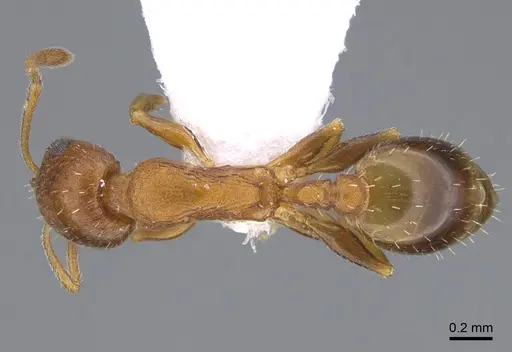
文献
分布マップを読み込み中...製品情報を読み込み中...