
Tapinoma annandalei
- 学名
- Tapinoma annandalei
- 族
- Tapinomini
- 亜科
- Dolichoderinae
- 命名者
- Wheeler, 1928
- 分布
- 0 か国で発見
紹介
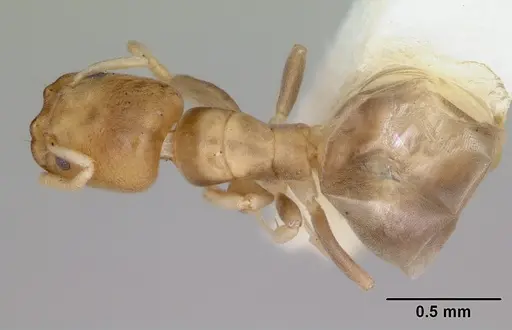
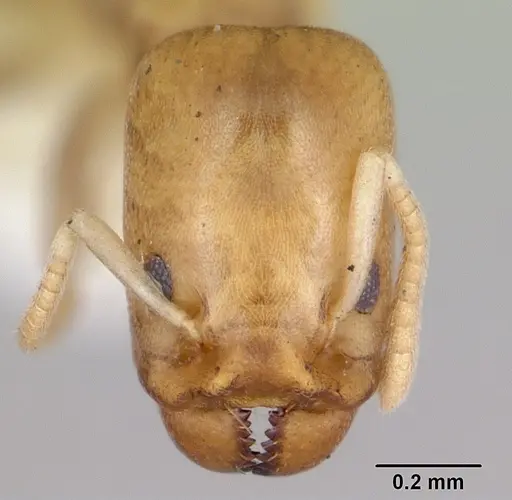
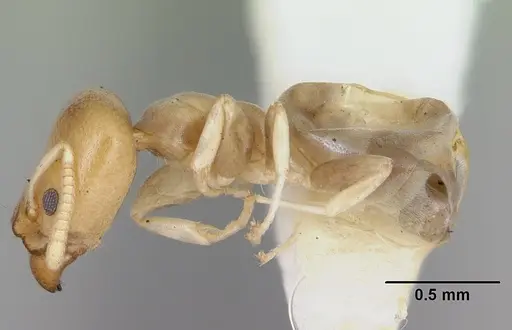
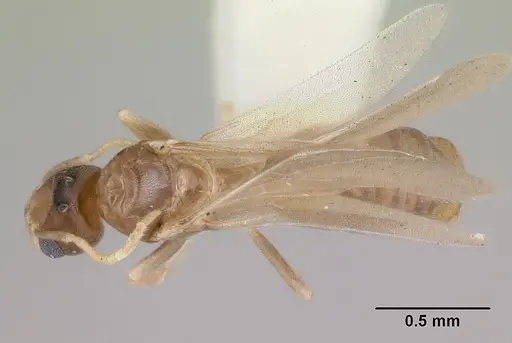
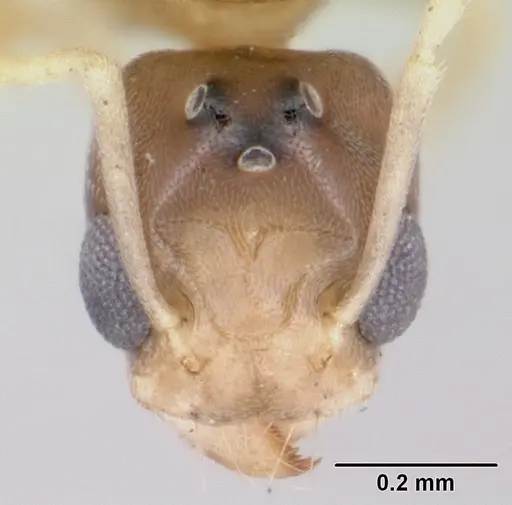
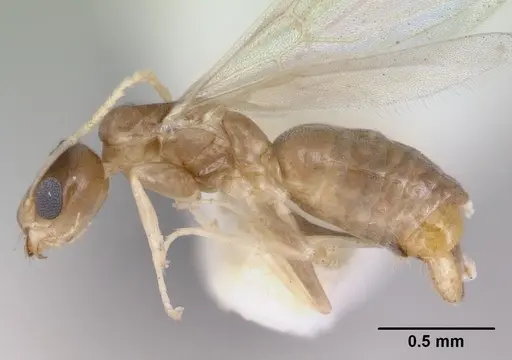
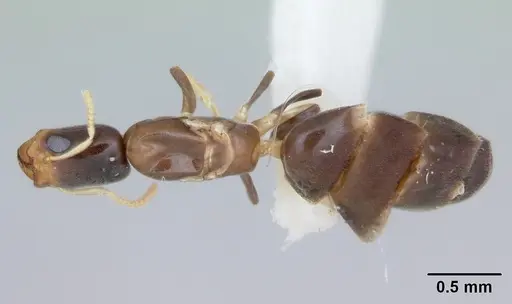
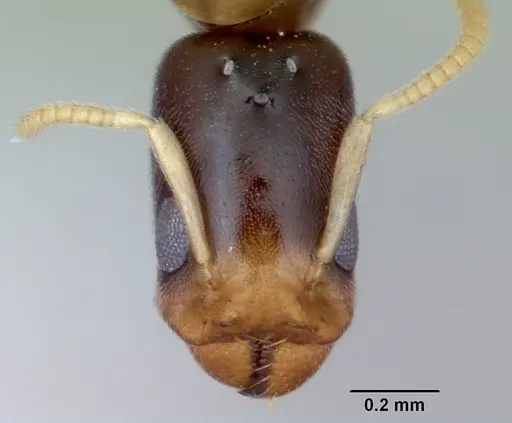
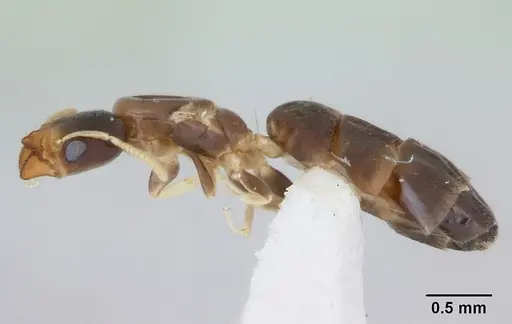
Tapinoma annandalei is a small, pale yellowish ant belonging to the Dolichoderinae subfamily. Workers come in two sizes: minor workers at 1.3-1.5 mm and major workers (soldiers) at 2.8-3 mm. The species was originally found on Barkuda Island, Orissa, India, nesting in dead branches of Pongamia trees. Both workers and soldiers carry brood - the soldiers may actually function as reproductive queens. Their tiny eyes, very pale color, and thin skin point to a concealed, likely nocturnal lifestyle; they probably leave the nest only at night . This ant is known from India (Orissa) and Sri Lanka in the Indomalaya region. Nests have been found in dead wood, sometimes with termites. Several minute Pselaphid beetles have also been recorded living alongside them in the same nests . Their exact behavior and ecology are still poorly known.
Quick Summary
- Difficulty: Medium
- Origin & Habitat: India (Orissa) and Sri Lanka, Indomalaya region. Nests in dead branches of Pongamia trees, often in tree hollows or rotting wood [1].
- Colony Type: Likely polygynous, several females (soldiers) have been observed in colonies, and these soldiers may be fertile and act as replacement reproductives [1].
- Size & Growth:
- Queen: Unconfirmed, related Tapinoma species typically around 4-6 mm.
- Worker: Minor workers 1.3-1.5 mm, major workers (soldiers) 2.8-3 mm [1].
- Colony: Likely under 500 workers, based on typical Tapinoma colony sizes.
- Growth: Moderate, estimate based on related species.
- Development: Estimated 6-8 weeks at optimal temperature. (Development time is estimated from related Tapinoma species, specific data for Tapinoma annandalei is not available.)
- Antkeeping:
- Temperature: Keep at 24-28°C. This is a tropical species from India/Sri Lanka that prefers warm conditions.
- Humidity: Moderate to high, they nest in rotting wood which suggests damp but not waterlogged conditions. Aim for 60-80% relative humidity with good ventilation.
- Diapause: Unlikely, being a tropical species from India, they probably do not require a true diapause. However, they may show reduced activity during cooler months.
- Nesting: Best kept in naturalistic setups with rotting wood, cork, or a Y-tong/plaster nest with small chambers. Their small size and preference for concealed nesting mean they do well with dark, quiet setups.
- Behavior: These ants are cryptic and likely nocturnal or crepuscular. They are fast-moving like other Tapinoma species and use chemical defense, they release a foul-smelling anal gland secretion (smear defense) rather than formic acid. They are not aggressive but may be skittish. Their small size (1.3-3 mm) means escape prevention is important, use fine mesh and tight-fitting barriers. Colonies are relatively quiet and do not tend to be aggressive foragers.
Housing and Nest Setup
Tapinoma annandalei is a small, cryptic species that prefers dark, quiet nesting locations [1]. In captivity, they do well in Y-tong (AAC) nests, plaster nests, or naturalistic setups with cork and rotting wood. Their small size (max 3 mm for soldiers) means you should use narrow chambers and passages scaled to their body size. Avoid tall, open spaces that might stress them. Keep the nest area relatively dark, these ants naturally live concealed lives and prefer minimal light exposure [1]. A small outworld connected to the nest allows for feeding space without disturbing the colony.
Feeding and Diet
Like other Tapinoma species, Tapinoma annandalei likely has an omnivorous diet. In nature, they probably feed on honeydew from aphids and scale insects, plus small insects and arthropods. In captivity, offer sugar water or honey regularly, along with small protein sources like fruit flies, small mealworms, or other tiny insects. Given their small size, prey items should be appropriately sized, avoid large crickets that could harm the ants. They may be shy feeders, so place food quietly in the outworld and give them time to discover it. Remove uneaten prey after 24-48 hours to prevent mold.
Temperature and Care
As a tropical species from India and Sri Lanka, Tapinoma annandalei needs warm temperatures. Keep the nest area at 24-28°C for optimal brood development. A heating cable on one side of the nest can create a gentle gradient, but avoid direct heat that could dry out the nest. Room temperature in the low-to-mid 20s°C may be acceptable if your home is naturally warm. Monitor colony activity, if workers seem sluggish, slightly increase temperature. They do not require hibernation like temperate species, but may show reduced activity during cooler periods.
Humidity and Water
These ants nest in rotting wood in nature [1], which suggests they prefer moderately damp conditions. Keep the nest substrate consistently moist but not waterlogged, the material should feel damp to the touch. Allow some variation so ants can choose their preferred humidity zone. Good ventilation is important to prevent mold buildup while maintaining humidity. A water tube or small water reservoir in the outworld ensures constant access to fresh water. Mist the nest occasionally if the substrate dries out, but avoid over-misting.
Behavior and Temperament
Tapinoma annandalei is a cryptic, likely nocturnal species. Their small eyes and pale coloration indicate they evolved to live concealed within wood and rarely venture out in daylight [1]. In captivity, they may be shy and quick to retreat when disturbed. Like other Dolichoderinae, they can release a foul-smelling anal gland secretion as a defense (smear defense), though this is a minor nuisance rather than dangerous to keepers. Colonies contain both minor workers and major workers (soldiers). They are not aggressive and pose no danger to humans. Their small size means they can escape through tiny gaps, use fine mesh and excellent escape prevention.
Colony Structure
Natural colonies of Tapinoma annandalei contain multiple soldiers that may be fertile and act as replacement queens. Both workers and these soldiers have been observed carrying brood [1]. This suggests a polygynous (multi-queen) colony structure, though the exact social organization is not fully understood. Colonies include distinct minor workers (1.3-1.5 mm) and major workers or soldiers (2.8-3 mm). The large gasters of soldiers hint that they may be fertile and potentially replace or supplement the primary queen(s). Do not combine unrelated colonies, as this has not been studied and may result in aggression [1].
Frequently Asked Questions
How long does it take for Tapinoma annandalei to produce first workers?
Based on typical Tapinoma development, expect first workers (nanitics) approximately 6-8 weeks after the queen lays eggs, assuming temperatures around 24-28°C. Development may be slower at cooler temperatures. Specific development data for this species is not available.
Can I keep Tapinoma annandalei in a test tube?
Yes, test tubes work well for founding colonies. Use a small test tube with a cotton water reservoir. Since they are small (1.3-3 mm), ensure the tube is appropriately sized and keep it dark and quiet. Once the colony grows beyond 20-30 workers, consider moving to a proper nest setup with more space.
Are Tapinoma annandalei good for beginners?
This species is rated as Medium difficulty. While not the easiest species, it is manageable for keepers with some experience. Their cryptic nature and specific humidity needs require attention, but they are not aggressive and don't require special diets. Beginners may find their small size and nocturnal habits challenging to observe.
How big do Tapinoma annandalei colonies get?
Based on typical Tapinoma colony sizes, expect colonies to reach a few hundred workers at maturity. The exact maximum is unknown for this species, but it is likely smaller than some of the more common Tapinoma species. Colonies contain both minor workers and major workers (soldiers).
What do Tapinoma annandalei eat?
They are omnivorous. Offer sugar water or honey as a constant energy source, plus small protein sources like fruit flies, tiny mealworms, or other small insects. Their small size means prey should be appropriately sized. They may be shy feeders that prefer to forage in low light.
Do Tapinoma annandalei need hibernation?
No, they likely do not require hibernation. Being a tropical species from India and Sri Lanka, they are adapted to year-round warm conditions. They may show reduced activity during cooler months, but a true diapause is not necessary. Keep them at consistent warm temperatures year-round.
Why are my Tapinoma annandalei hiding all the time?
This is normal behavior. Tapinoma annandalei is a cryptic, likely nocturnal species that naturally lives concealed within wood. They probably only emerge at night in the wild. A quiet, dark location for the nest and patient observation during low-light periods will help you see more of their activity.
Can I keep multiple queens together?
Natural colonies already contain several soldiers that may be fertile and function as replacement queens, suggesting a polygynous structure. However, combining unrelated founding queens has not been studied for this species and is not recommended. If you already have a colony with multiple potential reproductives, they will likely coexist peacefully.
When should I move my colony to a formicarium?
Move them when the colony reaches around 30-50 workers and the test tube is becoming crowded. They do well in naturalistic setups with cork or rotting wood, Y-tong nests, or plaster nests. Ensure the new setup maintains appropriate humidity and has chambers scaled to their small body size.
Report an Issue
The current care sheet is based fully on literature. See inconsistencies, or something that's incorrect? Please , it will be resolved after review from an admin. Contributing to the blogs tab also helps providing information, to make us be able to further improve the caresheets. Thank you for your support!
References

この飼育シートのライセンスは: CC BY-SA 4.0 .
コミュニティブログ
文献
分布マップを読み込み中...製品情報を読み込み中...