
Strumigenys macgowni
- 学名
- Strumigenys macgowni
- 族
- Attini
- 亜科
- Myrmicinae
- 命名者
- Booher, 2021
- 分布
- 0 か国で発見
紹介
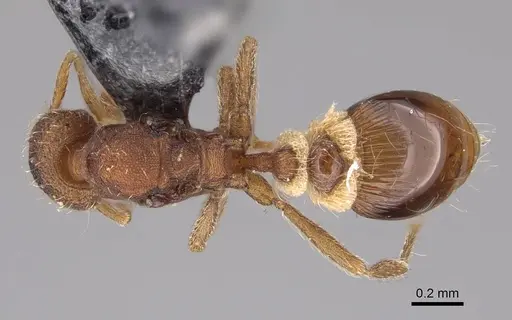
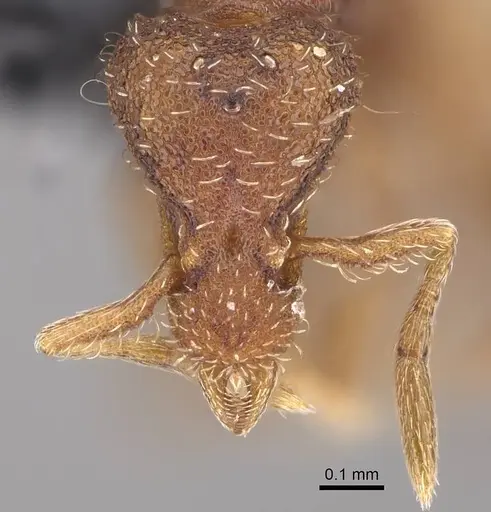
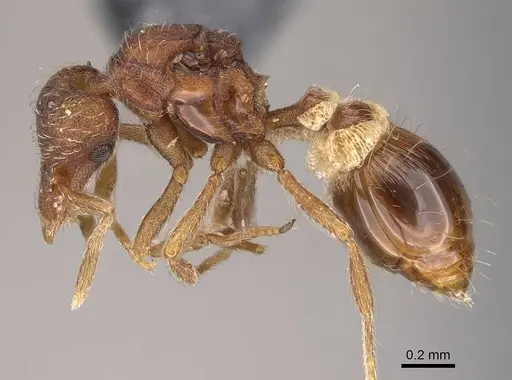
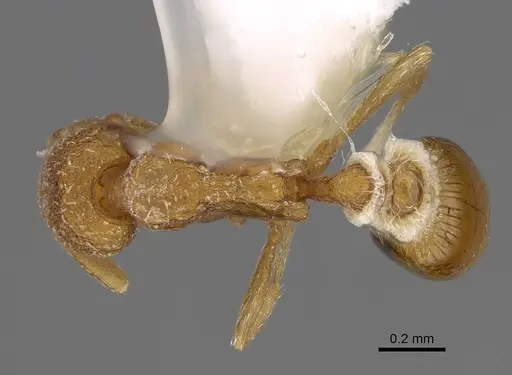
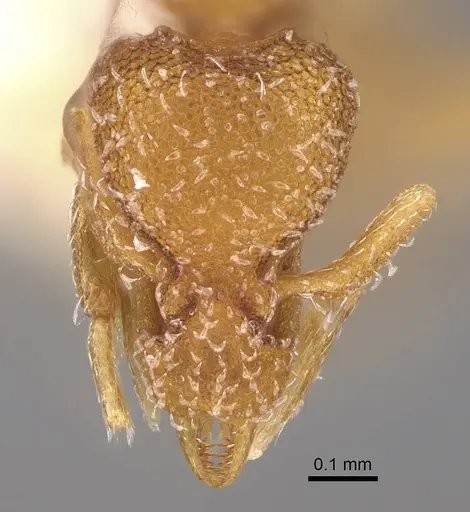
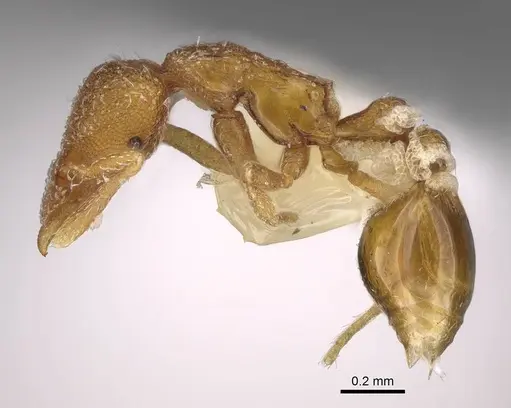
Strumigenys macgowni is a recently described ant species known from only a handful of specimens in eastern Texas and Louisiana . It was identified and named in 2021 based on distinct spoon-shaped hairs on the clypeus that set it apart from similar ants like Strumigenys talpa . These ants live in densely forested areas with thick leaf litter, where they hunt for tiny soil creatures. Because it was only recognized as a new species recently, many specimens likely sit misidentified in museum collections, and we still have a lot to learn about its biology in the wild and in captivity.
Quick Summary
- Difficulty: Hard
- Origin & Habitat: Eastern Texas and Louisiana, USA, found in densely forested hardwood and pine areas with moist leaf litter [1][2]
- Colony Type: Unconfirmed, colony structure has not been documented for this species
- Size & Growth:
- Queen: size data unavailable
- Worker: size data unavailable
- Colony: Unknown
- Growth: Unknown, likely slow based on related Strumigenys species
- Development: Unknown, not studied for this species (Development timeline has not been documented, estimates are unavailable.)
- Antkeeping:
- Temperature: Based on its forest floor habitat in East Texas and Louisiana, keep temperatures moderate (20-24°C). Avoid extremes [2]
- Humidity: High humidity, keep substrate consistently moist but not waterlogged. This matches the damp forest floor environment [2]
- Diapause: Unknown. Given its southern distribution, a winter rest period may not be necessary. If attempted, reduce temperature slightly for 2-3 months in winter.
- Nesting: Naturalistic setup with moist substrate, leaf litter, and hiding places. Provide high humidity and deep soil layers for hunting [2]
- Behavior: Very small, secretive ants that spend most of their time hunting in substrate and leaf litter. They are not aggressive and rarely come into the open. Escape prevention is critical because of their tiny size. Based on related species, they likely hunt small arthropods (e.g., springtails).
- Common Issues: escape prevention is critical due to their extremely small size, use fine mesh barriers and tight-fitting lids, slow growth means colonies can appear stagnant for months, leading keepers to overfeed or disturb them, they require live prey (springtails) as a primary food source, sugar water alone will not sustain them, high humidity needs can lead to mold problems if ventilation is inadequate
Housing and Setup
Strumigenys macgowni's natural habitat is forest floor with deep leaf litter [2]. Recreate this with a naturalistic terrarium: 5-10 cm of moist substrate (soil-sand mix), leaf litter, moss, and small pieces of rotting wood. Keep the substrate damp but not waterlogged. Because these ants are extremely small, seal the enclosure tightly and cover ventilation holes with fine mesh. A shallow water reservoir connected to the substrate can help maintain humidity. Avoid direct sunlight and strong air currents.
Feeding and Diet
Diet is unconfirmed for this species. Based on related Strumigenys, they likely prey on tiny soil arthropods like springtails (Collembola). Provide live springtails as the staple food. You may also offer other micro‑arthropods, fruit fly larvae, or tiny beetles. They do not usually accept dead insects or sugar sources. Offer prey every few days and remove uneaten food after 24 hours to prevent mold.
Temperature and Seasonal Care
Based on its forest floor habitat in East Texas and Louisiana, keep the colony at moderate temperatures (20-24°C). Avoid temperatures above 28°C. A slight gradient in the setup allows workers to choose their preferred spot. Diapause requirements are unknown. If you choose to provide a winter rest period, reduce temperature to 15-18°C for 2-3 months (November-February). Reduce feeding during this time and keep substrate slightly drier. Return to normal conditions gradually in spring. [2]
Behavior and Observation
Behavior of Strumigenys macgowni has not been studied. Based on its habitat and related species, it is likely a secretive, slow‑moving ant that hunts alone in the substrate and leaf litter. Workers move slowly, using their antennae to detect prey. They do not form large foraging trails. Colonies grow slowly and are easily stressed by disturbance. Observe without opening the enclosure often. The queen may live for several years.
Frequently Asked Questions
How long does it take for Strumigenys macgowni to produce first workers?
Unknown, development timeline has not been studied for this species.
Can I keep Strumigenys macgowni in a test tube setup?
Test tubes are not ideal. A naturalistic setup with deep, moist substrate and leaf litter matches their natural habitat better. If you use a formicarium, choose one with fine chambers and ample foraging area.
What do Strumigenys macgowni eat?
Diet is unknown. Based on related species, they likely require live springtails or other tiny arthropods. They do not accept sugar water or dead insects readily.
Are Strumigenys macgowni good for beginners?
No, this species is not recommended for beginners because very little is known about its care, and its tiny size and high humidity needs make it challenging.
How big do Strumigenys macgowni colonies get?
Unknown, colony size has not been documented.
Do Strumigenys macgowni need hibernation?
Unknown. Given its southern distribution, a winter rest may not be necessary. If you choose to provide one, reduce temperature slightly for 2-3 months.
Why are my Strumigenys macgowni dying?
Common causes include escapes (check for tiny gaps), mold from overwatering or poor ventilation, lack of live springtail prey, and temperature stress. These ants are sensitive to improper humidity and food availability.
When should I move my colony to a formicarium?
Unknown, colony size data is unavailable. In general, wait until the colony is actively foraging before moving.
Report an Issue
The current care sheet is based fully on literature. See inconsistencies, or something that's incorrect? Please , it will be resolved after review from an admin. Contributing to the blogs tab also helps providing information, to make us be able to further improve the caresheets. Thank you for your support!
References

この飼育シートのライセンスは: CC BY-SA 4.0 .
コミュニティブログ
文献
分布マップを読み込み中...製品情報を読み込み中...