
Strumigenys kempfi
- 学名
- Strumigenys kempfi
- 族
- Attini
- 亜科
- Myrmicinae
- 命名者
- Taylor & Brown, 1978
- 分布
- 0 か国で発見
紹介
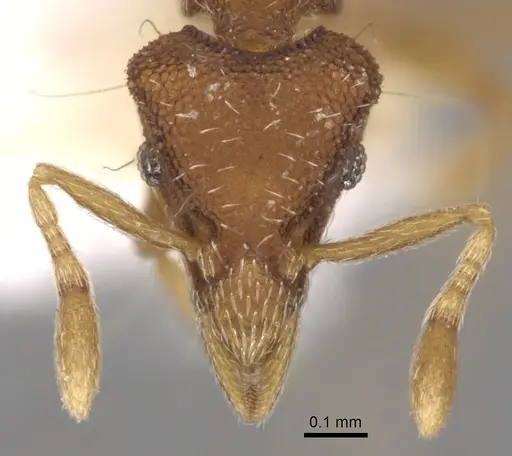
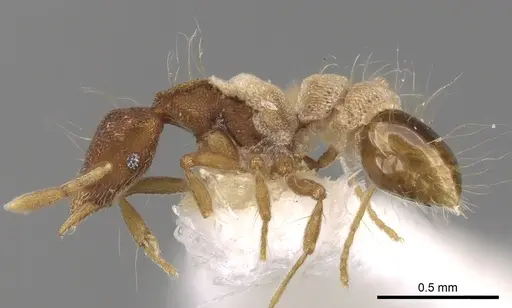
Strumigenys kempfi is one of the most unusual ant species in the world. Workers measure just 1.9-2.1 mm, but they stand out due to massively enlarged spongiform lobes on the waist segments and extensive spongiform tissue on the alitrunk (the middle body section). These fleshy, sponge-like structures are unique to this species . The mandibles have specializations that are quite different from other Strumigenys, though the exact hunting mechanism hasn't been studied . This species is known only from rainforest litter samples in the Indomalaya region - specifically Borneo, Brunei, Indonesia, and Malaysia . The type specimen was collected in Semengoh Forest Reserve (Sarawak, Malaysia) from rainforest leaf litter . Almost nothing is known about their biology in the wild. Like other Strumigenys, they probably hunt tiny soil animals like springtails using their specialized mandibles. This species belongs to subfamily Myrmicinae and tribe Attini - it has a functional stinger, but it's too small to harm humans.
Quick Summary
- Difficulty: Expert
- Origin & Habitat: Rainforests of Borneo, Brunei, Indonesia, and Malaysia, found in leaf litter in primary rainforest [1]
- Colony Type: Unknown, only a few specimens have been collected. Likely single-queen based on typical Strumigenys patterns, but unconfirmed.
- Size & Growth:
- Queen: Not documented in scientific literature, size data unavailable [1]
- Worker: 1.9-2.1 mm total length [1]
- Colony: Unknown, Strumigenys colonies are typically small, often under 100 workers, but no data exists for this species
- Growth: Unknown, likely slow to moderate based on typical Strumigenys development
- Development: Unconfirmed, likely 6-10 weeks based on related Strumigenys at optimal temperatures (No direct development data exists for this species. Estimates based on genus patterns for small tropical myrmicines.)
- Antkeeping:
- Temperature: Keep at 24-28°C, these are tropical rainforest ants that need warm, stable conditions. A gentle gradient with a cooler area around 22°C is recommended.
- Humidity: Very high humidity required, think damp rainforest floor. Keep the substrate consistently moist but not waterlogged. Provide a water tube and ensure the nest area stays humid.
- Diapause: Unlikely, as a tropical species from near-equatorial rainforests, they probably do not need a diapause period. Maintain warm conditions year-round.
- Nesting: A naturalistic setup with moist substrate works best. They nest in leaf litter and rotting wood in nature, so a soil-based formicarium or plaster nest with small chambers is ideal. Because they are so tiny, use tight-fitting connections and excellent escape prevention. DO NOT use acrylic nests, they don't hold humidity well.
- Behavior: These ants are predators with specialized mandibles. They probably hunt tiny arthropods like springtails and mites in the leaf litter [1]. They are not aggressive toward keepers and rarely sting (their stingers are too small to hurt). Their tiny size makes them nearly invisible, escape prevention is critical because they can slip through tiny gaps. They likely forage at night or during humid periods.
- Common Issues: escape prevention is critical due to their 2 mm size, they can squeeze through gaps that seem impossible, humidity management is challenging, too wet causes mold, too dry kills them quickly, specialized diet means they may refuse standard ant foods, live micro-prey is likely essential, very little is known about their actual requirements, wild-caught colonies are fragile, wild-caught specimens may have parasites or be stressed from collection, leading to colony failure
Housing and Setup
Strumigenys kempfi needs a setup that mimics their rainforest floor habitat. Because they are tiny (2 mm), the enclosure must be escape-proof with very small gaps. A naturalistic setup with moist soil substrate works well, they nest in leaf litter and rotting wood in the wild [1]. A plaster or 3D-printed nest with small, tight chambers is also suitable. The key is maintaining high humidity without waterlogging. Use a water tube attached to the nest and mist the substrate occasionally, but avoid pooling water. Scale the nest chambers to their tiny size, large chambers will make them feel exposed. Place the setup in a warm area (24-28°C) or use a gentle heating mat on one side to create a temperature gradient. Do not use acrylic nests, they dry out too fast.
Feeding and Diet
This is probably a specialized predator like other Strumigenys. In the wild, they likely hunt springtails (collembola), tiny mites, and other micro-arthropods using their specialized mandibles [1]. In captivity, offer live small prey such as springtails, fruit flies, and tiny mosquito larvae. They will likely refuse sugar water or honey, Strumigenys are not sugar feeders. Some keepers report success with tiny pieces of mealworm or bloodworm, but live prey is likely essential. Feed small portions every 2-3 days and remove uneaten prey quickly to prevent mold. Overfeeding is more dangerous than underfeeding.
Temperature and Care
As a tropical rainforest species from Borneo and Malaysia, Strumigenys kempfi needs warm, stable temperatures in the 24-28°C range. Avoid rapid temperature drops, they can be fatal. Room temperature may be sufficient if your home is warm, otherwise use a heating cable on one side of the nest to create a gradient. Place the heating on top of the nest, not underneath, to avoid drying out the substrate too fast. They do not need hibernation, maintain tropical conditions year-round. Watch condensation levels as a humidity indicator: if condensation disappears quickly, the nest is too dry, if water pools, it's too wet. [1]
Behavior and Temperament
Strumigenys kempfi is a predator with highly specialized mandibles. The exact hunting mechanism is not documented, but related species use rapid mandible snaps to catch tiny prey [1]. They are not aggressive toward keepers, their main defense is hiding because of their tiny size. They likely forage at night or in humid conditions, searching the substrate for small arthropods. Colonies are probably small (under 100 workers). They are not territorial toward other colonies.
Colony Establishment
The queen was described alongside workers, but colony founding behavior has not been documented [1]. Do not assume any specific founding method, it is unconfirmed. The first workers (nanitics) will likely be smaller than normal workers. Growth is probably slow. Patience is essential, do not disturb the queen during founding more than necessary.
Frequently Asked Questions
How long does it take for Strumigenys kempfi to produce first workers?
Unknown, no development data exists for this species. Based on typical Strumigenys in tropical conditions, it might take 6-10 weeks from egg to worker at around 26°C, but this is an estimate.
Can I keep Strumigenys kempfi in a test tube?
Test tubes are challenging because of their tiny size and high humidity needs. A naturalistic setup with moist substrate or a plaster nest with small chambers works better. If you use a test tube, choose a very small diameter and seal all connections with cotton, they can escape through any gap.
What do Strumigenys kempfi ants eat?
They are likely specialized predators on micro-arthropods. Offer live springtails, tiny fruit flies, and other small live prey. Sugar sources are probably not accepted. Remove uneaten prey promptly to prevent mold.
Are Strumigenys kempfi good for beginners?
No, this is an expert-level species. We know very little about their care, they need very high humidity, a specialized live prey diet, and excellent escape prevention. They are not recommended for anyone without experience with difficult tropical species.
How big do Strumigenys kempfi colonies get?
Unknown, no colony size data exists. Based on typical Strumigenys patterns, colonies are likely small, probably under 100 workers at maturity.
Do Strumigenys kempfi need hibernation?
No, they are tropical rainforest ants from near-equatorial regions. Maintain warm, humid conditions year-round without cooling.
Why are my Strumigenys kempfi dying?
Common causes include: too low humidity (they need constant moisture), wrong temperature (too cold is fatal), starvation (they need live prey, not just sugar), escape (they are tiny and will find any gap), and stress from wild-caught origins. Check that your setup matches rainforest floor conditions.
Can I keep multiple queens together?
Not documented for this species. Strumigenys colony structure is poorly known. Do not attempt combining unrelated queens, there is no data on whether they accept multiple queens or will fight.
When should I move them to a formicarium?
Wait until the colony has at least 10-20 workers and is actively foraging. Moving too early can cause stress. A naturalistic setup with moist soil is preferred over dry formicaria.
Report an Issue
The current care sheet is based fully on literature. See inconsistencies, or something that's incorrect? Please , it will be resolved after review from an admin. Contributing to the blogs tab also helps providing information, to make us be able to further improve the caresheets. Thank you for your support!
References

この飼育シートのライセンスは: CC BY-SA 4.0 .
コミュニティブログ
CASENT0280712
AntWebで見る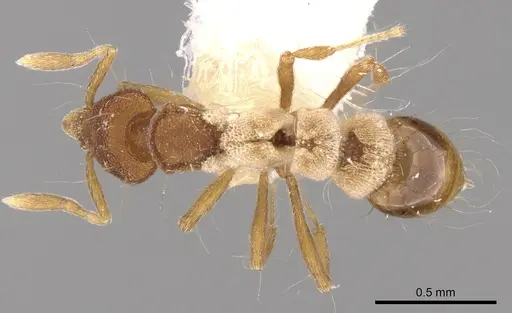
文献
分布マップを読み込み中...製品情報を読み込み中...