
Strumigenys hoplites
- 学名
- Strumigenys hoplites
- 族
- Attini
- 亜科
- Myrmicinae
- 命名者
- Brown, 1973
- 分布
- 0 か国で発見
紹介
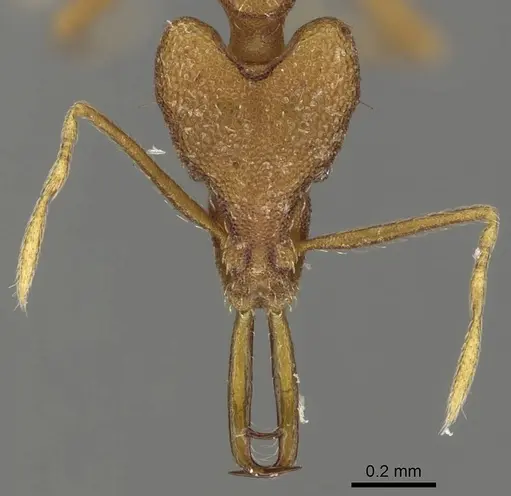
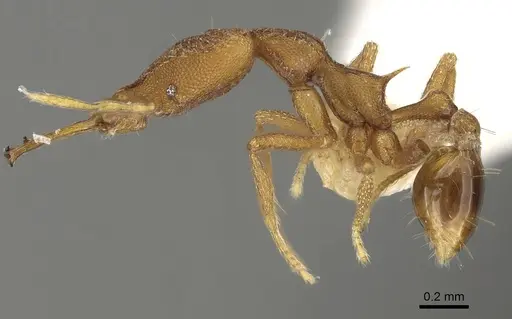
Strumigenys hoplites is a tiny predatory ant from the rainforests of Papua New Guinea. Workers measure 2.5-3.0 mm and have a bright yellowish-ferruginous coloration . Like most Strumigenys, they use trap-jaw mandibles to snap up small prey. This species belongs to the mayri group and was first described in 1973 from workers collected in a rotten log near Sogeri . Although Strumigenys is in the tribe Attini (fungus-growing ants), this species is a predator, not a fungus farmer. Their long propodeal spines and specialized hunting gear make them interesting, but they're challenging to keep because of their tiny size, specialised diet, and lack of documented care info.
Quick Summary
- Difficulty: Expert
- Origin & Habitat: Papua New Guinea, specifically Bisianumu near Sogeri at about 500 m elevation, in rainforest. The only known collection came from a rotten log [1].
- Colony Type: Unknown. No colony data has been published for this species.
- Size & Growth:
- Queen: Size data unavailable, no queen has been described in the literature.
- Worker: 2.5-3.0 mm [1][2]
- Colony: Unknown, likely under 100 workers based on typical Strumigenys colony sizes.
- Growth: Unknown, likely slow, based on genus patterns.
- Development: Unknown, no data available for this species. (Any timeline would be purely speculative. Related dacetine ants often develop slowly, but nothing is confirmed for Strumigenys hoplites.)
- Antkeeping:
- Temperature: Keep around 24-26 °C, mimicking their warm rainforest origin [1]. A gentle gradient is fine, but avoid extremes.
- Humidity: High humidity, think damp forest floor. Keep the nest substrate consistently moist but not waterlogged.
- Diapause: Unknown, as a tropical species, a true diapause is unlikely. They may slow down in cooler periods, but don't force hibernation.
- Nesting: In the wild they nest in rotten logs [1]. In captivity use Y‑tong (AAC) or plaster nests that hold humidity well, with tight, small chambers scaled to their tiny size.
- Behavior: Strumigenys hoplites is a specialised predator. It hunts by ambush, using its trap‑jaw mandibles to catch tiny arthropods like springtails. They are not aggressive to humans and their sting is too small to be felt. Because they are only 2.5-3 mm, escape prevention is critical, use fine mesh and seal all gaps. Colonies are likely small and slow‑growing.
- Common Issues: specialised diet, they need live springtails or other micro‑arthropods, which can be hard to maintain., tiny size makes escape prevention difficult, even pin‑sized gaps must be sealed., very little published care info exists, most advice is inferred from related species., slow growth and small colony size make them vulnerable to stress or mistakes., balancing high humidity with good ventilation to avoid mold is tricky.
Housing and Nest Preferences
In the wild, Strumigenys hoplites nests in rotten logs in rainforest [1]. For captivity, a naturalistic setup with moist substrate works well, or a Y‑tong (AAC) or plaster nest that retains humidity. The key is to provide tight, small chambers scaled to the workers' 2.5-3 mm size, they don't need large spaces. Use a substrate that stays moist without being waterlogged. A small water reservoir linked to the nest helps keep humidity up. Because they're so tiny, even a test tube setup can work if the cotton is packed well to block escapes. Avoid large open areas where they could get lost.
Feeding and Diet
Strumigenys hoplites is a specialised predator. Like most Strumigenys, it hunts tiny live prey, mainly springtails (Collembola). In captivity you must provide live springtails as the staple food. Other small prey like booklice, dust mites, or fruit‑fly larvae might be taken, but springtails are the safest choice. Do not offer sugar, seeds, or protein gels, these ants are obligate predators. Feed small prey every few days, adjusting to colony size. A steady springtail culture is essential before getting this species.
Temperature and Care
As a tropical rainforest ant from Papua New Guinea, Strumigenys hoplites needs warm, stable temperatures, aim for 24-26 °C based on its natural habitat [1]. Avoid prolonged temperatures below 22 °C or above 28 °C. A heating cable on one side can create a gentle gradient, but make sure it doesn't dry out the substrate. Room temperature within that range is fine. Humidity must be high: the substrate should feel damp, but not soaked. Good ventilation prevents mold without losing too much moisture. Stagnant air can cause fungal problems that easily kill tiny colonies.
Behavior and Temperament
Strumigenys hoplites is shy and non‑aggressive. Workers are tiny and their mandibles, though fast for hunting, pose no threat to humans. Colonies are likely small (under 100 workers) and grow slowly. Instead of actively foraging, they ambush prey that comes near the nest or along trails. They aren't escape artists in terms of climbing, but because they are so small they can squeeze through gaps that seem impossible. Use fine mesh on all openings, tight lids, and consider barrier tape. Observe them through the nest rather than handling them.
Colony Founding and Development
No colony founding has been documented for Strumigenys hoplites. Based on typical Strumigenys patterns, founding is likely claustral, the queen seals herself in a small chamber and lives off body reserves until the first workers appear. But this is unconfirmed. There is no info on multiple queens, ergatoid reproductives, or pleometrosis. Until data emerges, assume standard single‑queen founding and do not try to combine unrelated queens.
Frequently Asked Questions
How long does it take for Strumigenys hoplites to get first workers?
Unknown for this species. There's no published data. Any estimate would be guesswork.
What do Strumigenys hoplites eat?
They are specialised predators that need live tiny prey. The main food is live springtails. Other tiny arthropods like booklice, dust mites, or fruit fly larvae might be accepted. They do not eat sugar, seeds, or protein gels.
Can I keep Strumigenys hoplites in a test tube?
Yes, a test tube setup can work, but escape prevention is critical. At 2.5-3 mm, they can escape through the tiniest gaps. Pack cotton firmly and consider fine mesh over any openings.
Are Strumigenys hoplites good for beginners?
No. This is an expert‑level species because of their specialised live‑prey diet, very small size, and the lack of documented care info. They are not recommended for beginners.
How big do Strumigenys hoplites colonies get?
Colony size is unknown, but likely stays small, probably under 100 workers based on typical Strumigenys colonies.
Do Strumigenys hoplites need hibernation?
No. As a tropical species from Papua New Guinea, they do not require hibernation. Keep them at warm, stable temperatures year‑round.
Why are my Strumigenys hoplites dying?
Common causes: starvation (they need live springtails, not dead food), humidity problems (too dry or too wet/moldy), temperature stress (outside 22-28 °C range), or escapes through tiny gaps. Their specialised needs make them sensitive to husbandry errors.
Can I keep multiple queens together?
This has not been documented. Do not attempt to combine unrelated queens, the risks of aggression and colony failure are high when care is not understood.
What temperature is best for Strumigenys hoplites?
Keep them at 24-26 °C, which mimics their natural rainforest habitat [1]. Avoid fluctuations and extremes.
Report an Issue
The current care sheet is based fully on literature. See inconsistencies, or something that's incorrect? Please , it will be resolved after review from an admin. Contributing to the blogs tab also helps providing information, to make us be able to further improve the caresheets. Thank you for your support!
References

この飼育シートのライセンスは: CC BY-SA 4.0 .
コミュニティブログ
CASENT0280750
AntWebで見る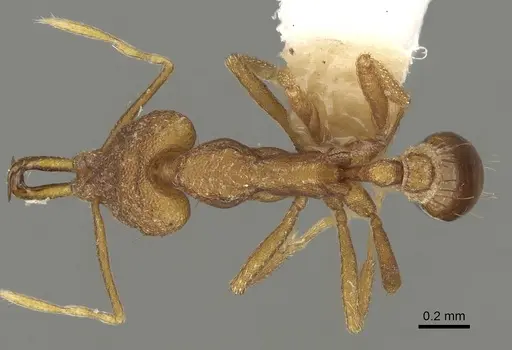
文献
分布マップを読み込み中...製品情報を読み込み中...