
Solenopsis pilosula
- 学名
- Solenopsis pilosula
- 族
- Solenopsidini
- 亜科
- Myrmicinae
- 命名者
- Wheeler, 1908
- 分布
- 0 か国で発見
紹介
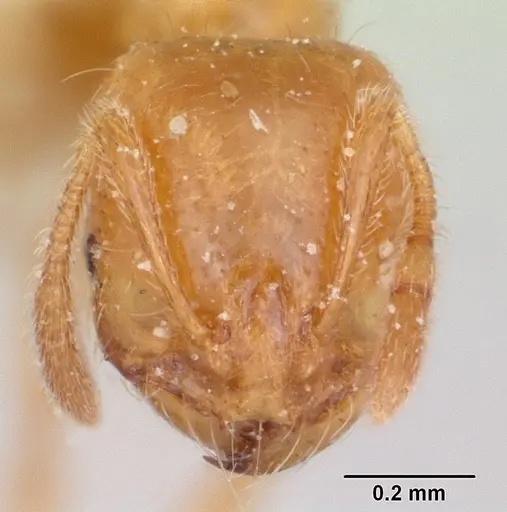
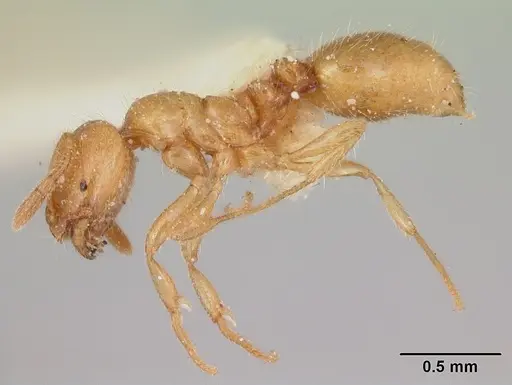
Solenopsis pilosula is a thief ant from the Solenopsis fugax complex. It lives in the southern United States (Texas) and Mexico . Workers are small,2.16-2.52 mm, and dark yellow with a longer-than-wide head covered in coarse punctures . The queen is large for the genus at 6.36 mm, nearly hairless, with blunt clypeal teeth and small eyes . They nest in soil and have a mating season in July . The name 'thief ant' comes from their habit of raiding nearby ant colonies for food and brood.
Quick Summary
- Difficulty: Medium
- Origin & Habitat: Southern United States (Texas) and northern Mexico. Nests in soil in warm, semi‑arid to moderately damp areas [1][2].
- Colony Type: Unconfirmed, the social structure has not been formally described. Most Solenopsis thief ants are monogyne, but no data exists for this species.
- Size & Growth:
- Antkeeping:
- Temperature: Likely prefer warm conditions (24-28°C) based on their southern US/Mexican range. Provide a gradient with a heating cable.
- Humidity: Provide a dry nest substrate with a small damp area, these ants come from semi‑arid regions and do not need constant moisture.
- Diapause: Unknown, their temperate/subtropical range suggests a mild winter rest may not be required, but a slight temperature drop (18-20°C) in winter is safe if you want to try.
- Nesting: Soil‑nesting species, use a deep soil layer in the formicarium so they can dig chambers. A Y‑tong or plaster nest with a soil chamber also works.
- Behavior: Thief ants, they nest near other ant species and raid their brood and food. Workers are small but active and aggressive toward other ants. Because of their tiny size (2-3 mm), escape prevention must be top‑notch: use fine mesh (≤0.5 mm) and fluon barriers. Like other Myrmicinae, they possess a sting, but its effect on humans is mild. Founding behavior is unconfirmed.
- Common Issues: escape prevention is critical, workers can squeeze through any gap larger than 0.5 mm, unknown founding requirements, queens may be difficult to start without specific conditions, may raid other ant colonies kept nearby, causing stress or food competition, wild‑collected colonies can carry mites or other parasites common in soil‑nesters, slow colony growth if conditions are not ideal, patience is needed
Housing and Nest Setup
Solenopsis pilosula is a soil‑nester, so a nest with a deep soil layer is best. You can use a Y‑tong, plaster, or a 3D‑printed container with soil. The most important thing is escape prevention: workers are only 2-3 mm long and can slip through standard mesh. Use mesh with openings no larger than 0.5 mm, and apply fluon to the rim of the outworld. Provide a water tube with a cotton plug and keep most of the substrate dry, with just one damp corner. A small outworld with some sand or debris lets them forage naturally [2].
Feeding and Diet
These thief ants are omnivorous but lean toward protein. Feed them small insects like fruit flies, pinhead crickets, or pieces of mealworm 2-3 times a week. They also accept sugar water or honey. Leave a sugar source available all the time, but remove uneaten prey after 24-48 hours to stop mold. Because they are tiny, even small prey items are filling [2].
Temperature and Seasonal Care
Keep your colony warm, around 24-28°C, to match their natural range in the southern US and Mexico. Use a heating cable on one side of the nest to create a gradient. Avoid letting the nest get below 20°C for long periods. Whether they need a winter rest is unknown. If you want to try, you can drop the temperature to 18-20°C for a couple of months in winter, but this is not confirmed to be necessary [1].
Colony Founding
How queens establish colonies is unknown. It's not confirmed if they are claustral (seal themselves in) or semi‑claustral (leave to forage). Based on related Solenopsis species, they may be claustral, but there is no data for S. pilosula. If you catch a queen after the July mating flights, place her in a test tube with a small amount of damp soil and keep her in a dark, warm place. Do not disturb her for at least 8 weeks. The first workers may appear after that, but this is guesswork [1][2].
Behavior and Defense
As a member of the Myrmicinae subfamily and Solenopsidini tribe, S. pilosula has a sting that injects piperidine alkaloids to hunt and defend itself. However, its sting is mild to humans, not like aggressive fire ants. Their tiny size makes them excellent infiltrators of other ant nests. In captivity, they are active foragers and will explore their outworld. Keep them away from other ant colonies because they will raid them. They are not aggressive to keepers but will flee or hide.
Frequently Asked Questions
How long does it take for Solenopsis pilosula to get their first workers?
This is unknown because the founding biology hasn't been studied. Based on related Solenopsis species, the first workers might appear in 5-8 weeks under warm conditions, but that is just an estimate [2].
What do Solenopsis pilosula ants eat?
They eat a mix of protein and sugar. Feed them small insects (fruit flies, tiny crickets) 2-3 times per week and always provide a sugar source like honey water. Remove uneaten food after 1-2 days [2].
What temperature do Solenopsis pilosula need?
Keep them warm, around 24-28°C. They come from Texas and Mexico, so they thrive in heat. A heating cable on one side of the nest creates a good gradient. Avoid temperatures below 20°C for long periods [1].
Do Solenopsis pilosula need hibernation?
It's unknown. Their range is warm (Texas, Mexico), so they may not need a true hibernation. Some keepers give them a mild rest at 18-20°C for 2 months, but this is not proven necessary.
How big do Solenopsis pilosula colonies get?
Colony size is not documented. Related Solenopsis thief ants can have hundreds of workers, but there is no specific data for this species. Growth rate is also unknown.
Can I keep multiple Solenopsis pilosula queens together?
There is no information on polygyny in this species. Assume they are monogyne (single queen) and do not attempt to keep multiple queens together unless you are experimenting and prepared for fighting.
Why are my Solenopsis pilosula escaping?
Workers are only 2-3 mm long. They can squeeze through gaps as small as 0.5 mm. Use fine mesh (0.5 mm or smaller), apply fluon to the rim, and seal all connections between nest and outworld. Check around water tubes and ventilation.
Is Solenopsis pilosula good for beginners?
They are medium difficulty. The main challenges are stopping escapes (because they are tiny) and the lack of published care information. Their natural raiding behavior is interesting to watch, but beginners should be ready for uncertainty. Not recommended for absolute beginners.
When do Solenopsis pilosula have nuptial flights?
Collection data from Texas shows mating season in July [1]. If you have a mature colony, winged reproductives may appear in early summer. After mating, new queens likely dig nests in soil.
Report an Issue
The current care sheet is based fully on literature. See inconsistencies, or something that's incorrect? Please , it will be resolved after review from an admin. Contributing to the blogs tab also helps providing information, to make us be able to further improve the caresheets. Thank you for your support!
References

この飼育シートのライセンスは: CC BY-SA 4.0 .
コミュニティブログ
CASENT0172923
AntWebで見る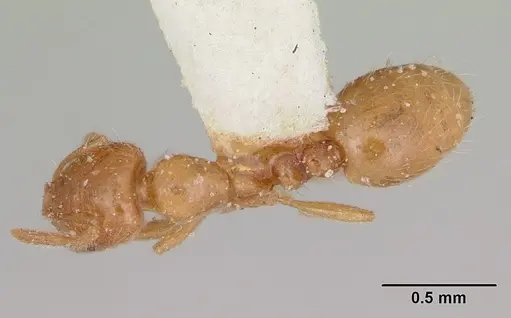
文献
分布マップを読み込み中...製品情報を読み込み中...