
Simopone amana
- 学名
- Simopone amana
- 亜科
- Dorylinae
- 命名者
- Bolton & Fisher, 2012
- 分布
- 0 か国で発見
紹介
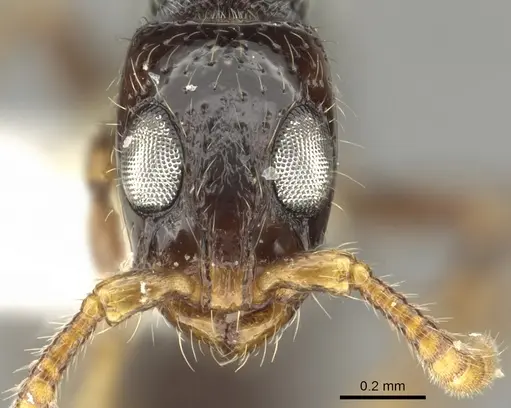
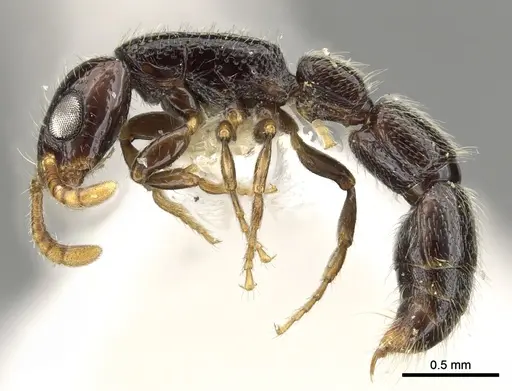
Simopone amana is a tiny, dark ant species known only from Gabon in Central Africa. Workers have a blackish-brown to black body, with light brown antennae and brown legs . The species belongs to the schoutedeni group within the genus Simopone (subfamily Dorylinae). Its known distribution is limited to the Forêt des Abeilles in Gabon, where the single type specimen was collected in early 1999 . Nothing is known about the biology of this species. Because no colonies, queens, or behavioral observations have been documented, any care advice must be completely experimental. Keepers should treat this as a high-risk species and carefully record all observations.
Quick Summary
- Difficulty: Expert
- Origin & Habitat: Gabon, Central Africa, specifically the Forêt des Abeilles (Forest of the Bees) region [1]. The habitat is likely tropical rainforest, but this is inferred from the collection location.
- Colony Type: Unknown, colony structure (single-queen or multi-queen) has not been documented.
- Size & Growth:
- Queen: Undescribed, the queen caste has never been documented.
- Worker: Size data unavailable. The worker head length is 0.78 mm [1], but total body length is not recorded.
- Colony: Unknown, no colony size data exists.
- Growth: Unknown
- Development: Unknown, no development data exists for this species. (All development times are unconfirmed. Keepers must observe and record their own data.)
- Antkeeping:
- Temperature: Unknown, no thermal studies exist. Based on Gabon's tropical climate, start at 24-28 °C and adjust based on colony response.
- Humidity: Unknown, no humidity data exists. As a starting point, aim for 60-80% relative humidity with moist substrate, typical of tropical forests.
- Diapause: Unknown, no seasonal data available. Gabon has minimal seasonal variation, so diapause may not be needed. Maintain stable conditions year-round unless the colony shows signs of slowing.
- Nesting: Unknown, no natural nesting observations documented. Given the tiny worker size (head length ~0.78 mm), a small test tube setup or a Y-tong (AAC) nest with narrow chambers is a reasonable starting point.
- Behavior: Undocumented. As a Dorylinae ant, workers likely have a functional stinger and are predatory on small invertebrates. Assume they can sting if threatened, but effects would be negligible for humans. Escape prevention must be excellent, workers can fit through very small gaps.
- Common Issues: completely unstudied biology means all care is experimental, no information on founding behavior or colony development, dietary requirements unknown, must be determined through experimentation, escape risk is high due to tiny worker size, no guidance on diapause or seasonal care
Appearance and Identification
Simopone amana workers are tiny. The only described specimen (the holotype) has a head length of 0.78 mm and a head width of 0.53 mm [1]. The body is blackish‑brown to black, with lighter brown antennae (scapes and funiculi) and brown legs. Key identification features: the eyes almost reach the head margins in full‑face view, the mesosoma is narrow, the abdomen has large, shallow punctures that are crowded on the third abdominal segment (AIII), with puncture diameters larger than the spaces between them. The petiole (AII) is slightly longer than broad. These details come from the original taxonomic description [1].
Distribution and Habitat
Simopone amana is known from a single collection in Gabon, Central Africa. The type locality is La Makandé, Forêt des Abeilles, collected in January-February 1999 [1]. No other records exist, so the full geographic range and habitat preferences are unknown. The area is within the equatorial rainforest belt, making tropical rainforest the most likely natural habitat.
Taxonomy and Classification
Simopone amana belongs to the schoutedeni species group within the genus Simopone, subfamily Dorylinae. The species was formally described in 2012 by Bolton and Fisher [1]. Dorylinae ants are typically predatory, but specific behavior for this species is unknown.
Experimental Care Guidelines
Because absolutely no biological data exists for Simopone amana, all care recommendations are experimental. Start with conditions that mimic a tropical rainforest: temperatures around 24-28 °C, humidity 60-80%, and a moist but not waterlogged substrate. Use a small test tube setup or a Y‑tong nest with very narrow chambers, workers are tiny and can escape through standard gaps. For feeding, begin with small live prey such as springtails, fruit flies, or tiny crickets. Offer sugar water as well. Monitor colony behavior closely and adjust conditions based on activity and brood development. Keep detailed notes to contribute to the knowledge of this species.
Related Species Considerations
While no specific biology is known for S. amana, the genus Simopone consists of predatory ants that hunt small invertebrates. Related species in the schoutedeni group likely share similar care needs. Dorylinae ants typically have functional stingers and are active foragers. Until direct observations are made, treat this species as a fast-moving, stinging predator that requires regular small prey items. These are inferences only, live colonies are needed to confirm any behavioral patterns.
Frequently Asked Questions
How do I care for Simopone amana ants?
Care is entirely experimental since no biological data exists. Start with tropical conditions: 24-28 °C,60-80% humidity, and moist substrate. Housing should be scaled to their tiny size, small test tubes or Y‑tong nests with narrow chambers work well. Begin feeding with small live prey like springtails or fruit flies, and offer sugar water. Document your observations carefully, as this species has never been kept in captivity.
What do Simopone amana ants eat?
Diet is unconfirmed. As a Dorylinae ant, they likely prey on small invertebrates. Start with small live prey: springtails, fruit flies, tiny crickets, or other micro‑arthropods. Sugar water may also be accepted. Offer small prey items regularly and remove uneaten food. Adjust based on what your colony accepts.
Are Simopone amana ants dangerous?
As members of Dorylinae, they likely have functional stingers. However, their tiny size means any sting would be minimal. Exercise normal caution, assume they can sting if threatened, but the effect is negligible for humans. No specific danger data exists.
How big do Simopone amana colonies get?
Colony size is completely unknown. No colony data has been documented. Related Simopone species may form colonies from dozens to a few hundred workers, but this is speculative. Expect experimental results and adjust expectations based on actual colony development.
Do Simopone amana ants need hibernation?
Diapause requirements are unknown. Gabon has minimal seasonal temperature variation, so hibernation may not be necessary. Maintain stable tropical temperatures year‑round unless the colony shows slowing behavior. More observation is needed.
Can beginners keep Simopone amana?
No, this species is not recommended for beginners. The complete lack of biological data means all care is experimental, and standard antkeeping assumptions may not apply. Only experienced keepers willing to experiment and document results should attempt it.
What temperature do Simopone amana ants need?
Temperature requirements are unconfirmed. Based on Gabon’s tropical climate, start at 24-28 °C. Monitor colony activity, if workers cluster near heat sources, increase slightly, if they avoid heated areas, reduce. Determine optimal range through observation.
How long does it take for Simopone amana to develop from egg to worker?
Development timeline is completely unknown. No brood development data exists for this species. Related Dorylinae may take several weeks to months, but specific numbers are unavailable. Expect to document this yourself.
What type of nest should I use for Simopone amana?
Nest type is unconfirmed. Given the tiny worker size (head length ~0.78 mm), use small‑scaled chambers with narrow passages. A Y‑tong (AAC) nest with fine chambers or a small test tube setup would be appropriate. Ensure escape prevention is excellent, they can squeeze through tiny gaps.
Where is Simopone amana found in the wild?
Simopone amana is known only from Gabon, Central Africa, specifically from the Forêt des Abeilles (Forest of the Bees) near La Makandé. Only a single worker specimen has been collected, so the full range and habitat preferences are unknown [1].
Report an Issue
The current care sheet is based fully on literature. See inconsistencies, or something that's incorrect? Please , it will be resolved after review from an admin. Contributing to the blogs tab also helps providing information, to make us be able to further improve the caresheets. Thank you for your support!
References

この飼育シートのライセンスは: CC BY-SA 4.0 .
コミュニティブログ
CASENT0902701
AntWebで見る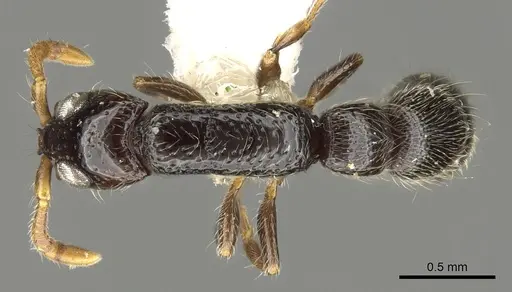
文献
分布マップを読み込み中...製品情報を読み込み中...