
Pseudomyrmex rubiginosus
- 学名
- Pseudomyrmex rubiginosus
- 族
- Pseudomyrmecini
- 亜科
- Pseudomyrmecinae
- 命名者
- Stitz, 1913
- 分布
- 0 か国で発見
紹介
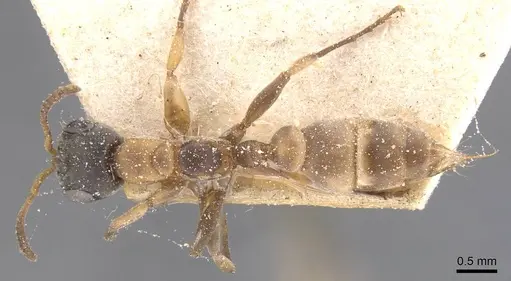
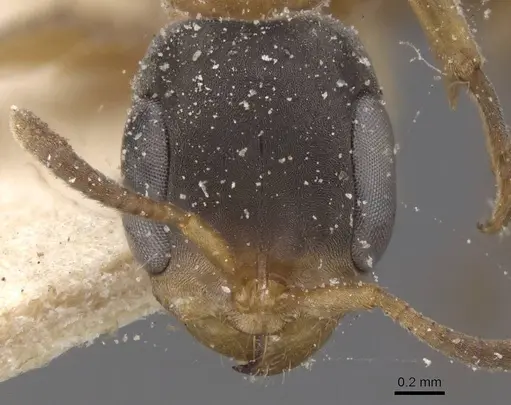
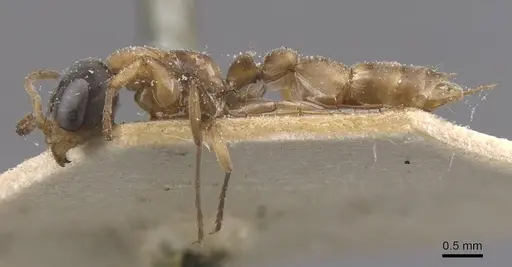
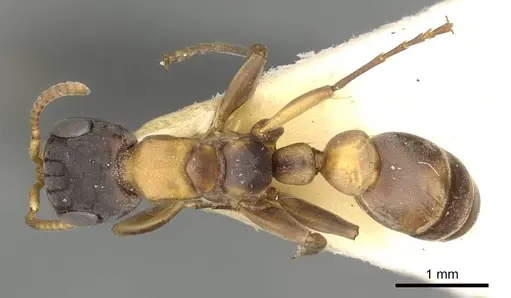
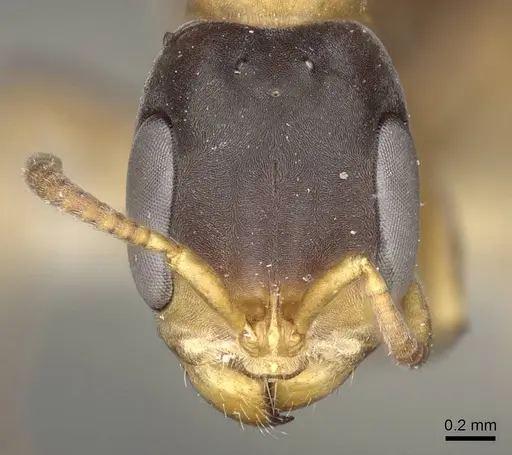
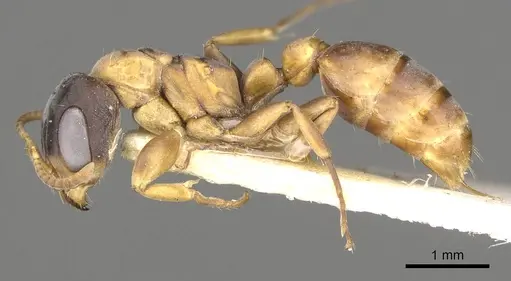
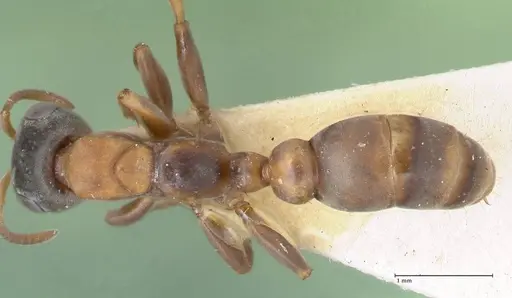
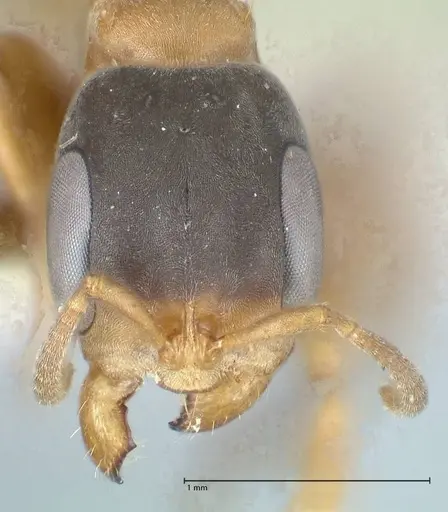
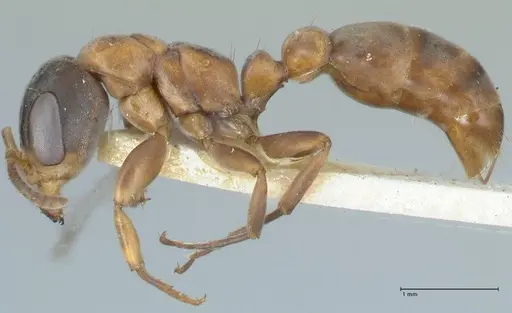
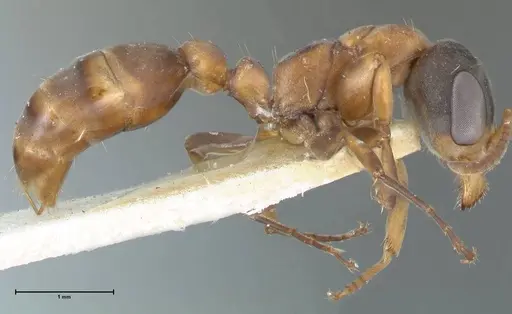
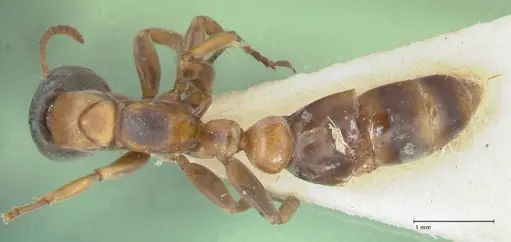
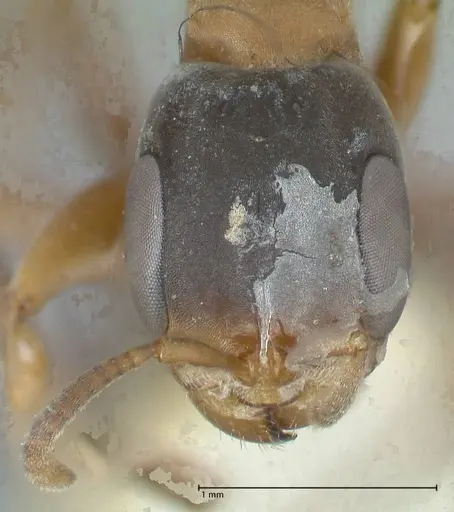
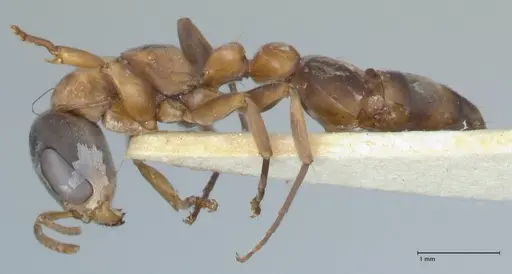
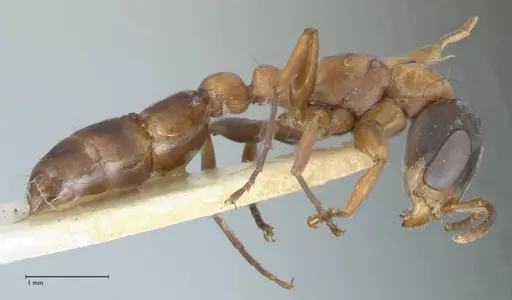
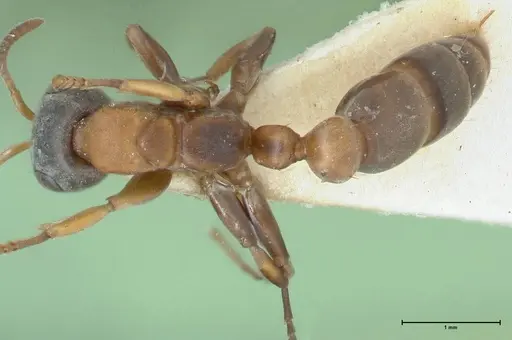
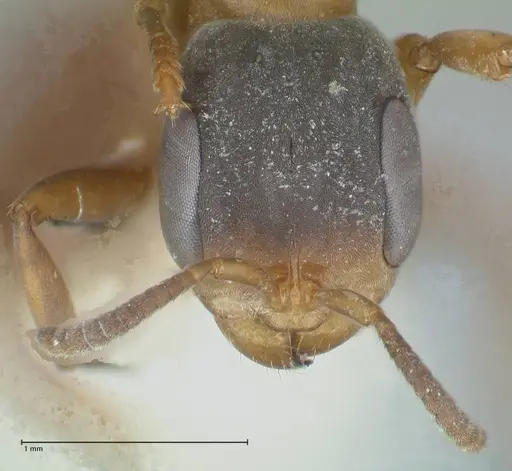
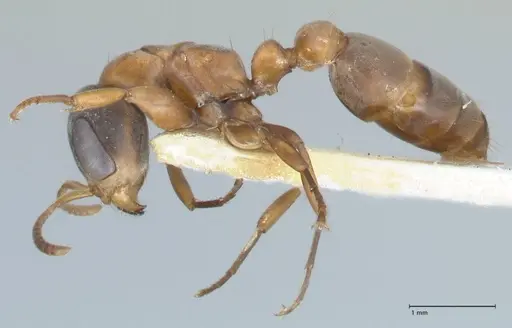
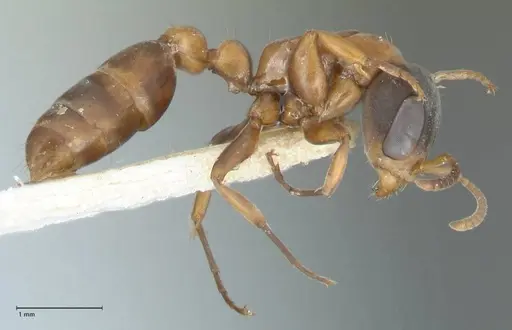
Pseudomyrmex rubiginosus is a slender, wasp-like ant from the Pseudomyrmecinae subfamily. Workers have a distinctive bicolored body: the head is dark grey-brown, the gaster medium-brown, and the rest of the body is a dusky yellow-orange . This species is an obligate plant-ant that nests exclusively inside living plants with specialized hollow structures called domatia. It is a generalist among plant-ants, able to live in multiple plant genera including Triplaris, Tachigali, Pleurothyrium, Gustavia, and Ocotea . In fact, it is the only Pseudomyrmex plant-ant known to inhabit both Triplaris and Tachigali . These ants are found in Colombia, Peru, and western Brazil . Like other Pseudomyrmex, they defend their host plants aggressively with a functional sting.
Quick Summary
- Difficulty: Medium
- Origin & Habitat: Tropical rainforests of Colombia, Peru, and western Brazil. This species is an obligate plant-ant that lives inside domatia-bearing trees and shrubs like Triplaris, Tachigali, Pleurothyrium, Gustavia, and Ocotea [1][2].
- Colony Type: Likely single-queen (monogyne) colonies based on genus patterns, but this is not confirmed for this species. As a plant-ant, colonies typically inhabit individual plant cavities.
- Size & Growth:
- Queen: Size data unavailable, total length not recorded in literature. Inferred from related Pseudomyrmex species to be around 5-7 mm.
- Worker: Size data unavailable, total length not recorded in literature. Inferred from the Pseudomyrmex genus to be around 3-5 mm.
- Colony: Unknown, based on similar plant-ant species, colonies likely reach up to a few hundred workers at most.
- Growth: Moderate
- Development: Estimated 6-8 weeks at warm tropical temperatures (24-28°C), consistent with related species. (Development is likely continuous year-round due to tropical origin. First workers (nanitics) will be smaller than mature workers.)
- Antkeeping:
- Temperature: Maintain 24-28°C consistently. These are tropical ants that need warmth year-round, temperatures below 20°C can be fatal. Use a heating cable on one side of the nest to create a gradient.
- Humidity: Keep the nest substrate consistently moist but not waterlogged. Simulate the humid interior of a living plant, test tubes or wet sponges can help. Ensure good ventilation to prevent mold.
- Diapause: No, this tropical species does not require hibernation. Keep warm year-round.
- Nesting: Y-tong (AAC) or plaster nests work well. Since these ants are small, provide narrow chambers. A naturalistic setup with hollow stems or a moist substrate can also work. Avoid dry conditions.
- Behavior: Pseudomyrmex rubiginosus workers are fast, alert foragers that hunt individually. They have a well-developed sting and will defend their nest vigorously. Not aggressive toward humans unless provoked, but their sting can be painful. Their small size (under 5 mm) means escape prevention is critical, use fine mesh or PTFE barriers.
- Common Issues: tropical species dies if temperatures drop below 24°C, keep warm year-round, small size makes escape prevention essential, use fine mesh barriers, requires live prey (e.g., fruit flies, small crickets) for brood development, cannot thrive on sugar alone, high humidity needs can cause mold if ventilation is poor, balance moisture with airflow, plant-ant origins may make conventional dry formicaria unsuitable, provide moisture-retaining nest materials
Housing and Nest Setup
Pseudomyrmex rubiginosus does well in Y-tong (AAC) or plaster nests that hold moisture. Since these are small ants, chambers should be narrow, large spaces may make the colony feel insecure. A naturalistic setup with hollow twigs or a moist substrate can mimic their plant-dwelling lifestyle, but this is optional. Test tubes work for founding but may dry out quickly, monitor moisture levels. Always cover the nest to provide darkness, as these ants naturally nest in dark interior cavities [1].
Feeding and Diet
These ants are predatory and need live food for brood development. Offer small live insects like fruit flies, pinhead crickets, or small mealworms 2-3 times per week. They will also take sugar water or honey for energy, but protein is essential. Remove uneaten prey after 24 hours to avoid mold. A varied diet with different small arthropods is beneficial. Unlike some ants that survive on sugars alone, Pseudomyrmex require regular protein [1].
Temperature and Seasonal Care
Keep the colony at 24-28°C year-round. As a tropical species, they do not tolerate cool conditions. Use a heating cable on one side of the nest to create a warm zone. Room temperature alone may be too low, especially in winter or air-conditioned rooms. No hibernation is needed, these ants are active year-round. Avoid temperature fluctuations and drafts. Consistent warmth is essential for health and growth.
Behavior and Defense
Pseudomyrmex rubiginosus workers are fast, alert foragers that move quickly. They are defensive of their nest and will attack intruders. Like all Pseudomyrmecinae, they have a functional sting and can deliver a painful sting if threatened. They are not aggressive toward humans but will defend when disturbed. Workers forage individually, hunting small prey rather than recruiting in groups. Their relatively good vision helps them navigate plant environments.
Humidity and Water
High humidity (70-85%) is important, these ants come from humid rainforest interiors. Keep the nest substrate moist but not flooded. Rehydrate when the surface starts drying rather than on a fixed schedule. Good ventilation prevents mold, but avoid excessive airflow that dries things out. A water test tube connected to the nest can maintain humidity through evaporation. Watch for condensation, some is good, but pooling water may cause issues.
Frequently Asked Questions
Can I keep Pseudomyrmex rubiginosus in a test tube?
Test tubes can work for founding but need careful moisture management, they can dry out quickly. For established colonies, a Y-tong or plaster nest holds moisture better. If using a test tube, choose a small diameter and monitor water levels regularly.
How long does it take for the first workers to emerge?
Based on related tropical Pseudomyrmex species, first workers (nanitics) likely emerge in about 6-8 weeks at 24-28°C. The queen raises the first brood without leaving the nest chamber. Once workers appear, colony growth accelerates as they take over foraging.
Do Pseudomyrmex rubiginosus ants sting?
Yes, they have a functional sting and can deliver a painful sting if threatened. They are not aggressive toward humans but will defend their nest if disturbed. Handle with care and avoid provoking them. The sting is their primary defense mechanism.
What do Pseudomyrmex rubiginosus eat?
They need a diet of live small insects (fruit flies, pinhead crickets, small mealworms) for protein, plus sugar water or honey for energy. They are predatory by nature and need live prey for proper brood development. Offer protein 2-3 times per week and keep sugar water available constantly.
Are Pseudomyrmex rubiginosus good for beginners?
This species is intermediate in difficulty. They require consistent warmth and humidity, plus live prey, which makes them more demanding than some beginner species. If you have some experience with tropical ants and can maintain proper conditions, they are manageable. Beginners might struggle with temperature and humidity control.
Do these ants need hibernation?
No, they do not need hibernation. This is a tropical species from Colombia, Peru, and Brazil where temperatures stay warm year-round. Keep them at 24-28°C consistently without seasonal cooling. Attempting to hibernate them could kill them.
How big do Pseudomyrmex rubiginosus colonies get?
Exact maximum colony size is unknown. Based on similar plant-ant species of the Pseudomyrmex sericeus group, colonies likely reach up to a few hundred workers at most. They are smaller than many ground-nesting ants because they live inside plant stems.
Why are my Pseudomyrmex rubiginosus dying?
The most common causes are: temperatures dropping below 24°C (tropical species die in cool conditions), low humidity causing desiccation, lack of live protein food, or escape due to their small size. Check your temperature first, use a thermometer to verify warmth. Ensure humidity is high and they have regular live prey. Review escape prevention measures.
When should I move my colony to a formicarium?
Move to a larger nest when the test tube becomes crowded, usually when the colony reaches about 20-30 workers. For Pseudomyrmex, a Y-tong or plaster nest works well. They prefer snug chambers, so don't upgrade to too large a space too quickly.
Can I keep multiple Pseudomyrmex rubiginosus queens together?
This species is likely monogyne (single queen) based on genus patterns. Combining unrelated queens is not recommended and could result in fighting. In their natural plant-ant lifestyle, each colony occupies its own plant cavity. If you have multiple founding queens, house them separately.
Report an Issue
The current care sheet is based fully on literature. See inconsistencies, or something that's incorrect? Please , it will be resolved after review from an admin. Contributing to the blogs tab also helps providing information, to make us be able to further improve the caresheets. Thank you for your support!
References

この飼育シートのライセンスは: CC BY-SA 4.0 .
コミュニティブログ
文献
分布マップを読み込み中...製品情報を読み込み中...