
Probolomyrmex newguinensis
- 学名
- Probolomyrmex newguinensis
- 族
- Probolomyrmecini
- 亜科
- Proceratiinae
- 命名者
- Shattuck <i>et al.</i>, 2012
- 分布
- 0 か国で発見
紹介
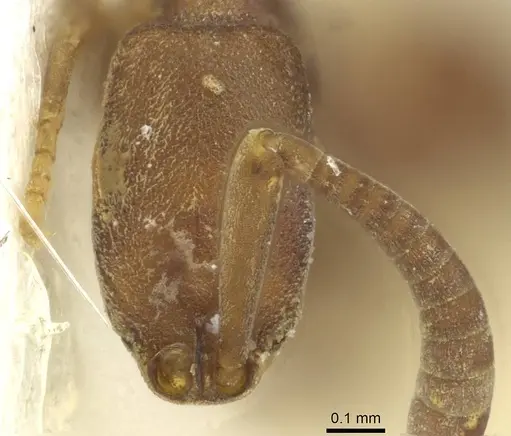
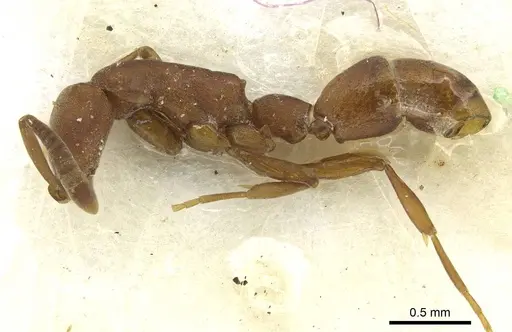
Probolomyrmex newguinensis is a rare subterranean ant from Papua New Guinea. Workers have a dark ferruginous brown body and completely absent eyes, adapted to underground life. The petiolar node is long and narrow, giving a distinctive appearance. This species has been documented only once, from a nest under a rock in regenerated rainforest soil . The genus Probolomyrmex belongs to the subfamily Proceratiinae, which includes other cryptic, soil-dwelling ants .
Quick Summary
- Difficulty: Expert
- Origin & Habitat: Papua New Guinea (Bulolo, Morobe District). Found in regenerated rainforest and bamboo habitat, nesting under a small mossy rock in jet black soil [1][2].
- Colony Type: Unknown colony structure, only one colony has been documented, and its social structure is unconfirmed [1].
- Size & Growth:
- Queen: Size data unavailable, no queens have been described for this species
- Worker: Size data unavailable, no total length measurements exist [1]
- Colony: Up to 8 workers observed in the single known colony [1]
- Growth: Unknown
- Development: Unconfirmed (No development data exists for this species. Related Proceratiinae genera typically develop slowly, but specific timelines are unknown.)
- Antkeeping:
- Temperature: Based on their tropical rainforest habitat, temperatures around 24-28°C are likely suitable [1]. Use a heating cable to create a gentle gradient.
- Humidity: Keep the nest substrate consistently moist but not waterlogged, based on their discovery in damp black soil [1].
- Diapause: Unknown, Papua New Guinea is tropical with no true winter, so diapause is unlikely, but no specific data exists.
- Nesting: Natural nesting is under rocks in soil. In captivity, use small, moist nests with tight chambers scaled to their tiny size [1].
- Behavior: Nothing is known about their behavior in captivity. Based on related Proceratiinae, they are likely slow-moving, cryptic predators [2]. Escape prevention is critical due to their tiny size.
- Common Issues: lack of captive care data requires experimental husbandry, tiny size makes escape likely without fine mesh barriers, no established protocols exist, monitoring colony response is essential, wild-caught colonies may have unique requirements we cannot anticipate, cryptic behavior makes observing development difficult
Why This Species Is Challenging
Probolomyrmex newguinensis is one of the least-studied ant species in the hobby. It has been collected only once, from a single nest in Papua New Guinea, and no scientific papers exist on its behavior, colony structure, or captive care [1]. This means every aspect of keeping them requires educated guesswork based on related Proceratiinae ants. They are not recommended for beginners, if you acquire this species, you are essentially conducting pioneering husbandry work. Expect to experiment and adapt your setup based on colony response. The complete absence of eyes indicates they are highly specialized for subterranean life, so their care requirements will differ significantly from surface-dwelling ants.
Housing and Setup
Given their natural habitat under rocks in damp rainforest soil, replicate those conditions in captivity. A small test tube setup with moist cotton works well for founding colonies, or a small Y-tong or plaster nest with tight chambers scaled to their tiny size [1][2]. The key is maintaining high humidity without flooding, these ants breathe through their cuticle and need damp conditions. Use a substrate layer of fine, moist soil or plaster that stays consistently damp. Because they are so small, escape prevention must be excellent, use fine mesh on any ventilation holes and ensure all connections are sealed. A small outworld area allows for feeding, but keep it minimal to prevent escapes.
Feeding and Diet
Diet is speculative but based on Proceratiinae biology, they are likely predators or omnivorous scavengers that forage in soil. Offer tiny live prey appropriate to their size: springtails, micro-arthropods, or freshly killed insects cut into microscopic pieces. Sugar sources may or may not be accepted, offer occasionally but do not rely on them [2]. Feed small amounts every few days and remove uneaten prey to prevent mold. Given how little we know, observe carefully what they actually consume and adjust accordingly.
Temperature and Humidity
Papua New Guinea is tropical with year-round warmth and high humidity. Aim for temperatures in the 24-28°C range with a gentle gradient so the ants can choose their preferred zone [1]. A heating cable on one side of the nest helps maintain stable temperatures. Humidity should be high, the black, moist soil they were found in indicates they thrive in damp conditions. Keep the nest substrate consistently moist but never allow standing water. Monitor condensation levels, some moisture is good but excessive condensation can drown tiny colonies.
Observing Colony Development
Because so little is known about this species, your observations could be scientifically valuable. Keep detailed notes on: when eggs appear, how long until larvae and pupae develop, worker emergence timing, colony size over time, behavioral observations, and what foods they accept. Take photos regularly to document morphology and development. This species may have unique behaviors or requirements that differ from related ants. If your colony thrives, consider sharing your findings with the antkeeping community, documented captive colonies of rare species are extremely valuable for understanding their biology. [2]
Frequently Asked Questions
How hard is Probolomyrmex newguinensis to keep?
This is an expert-level species. It has been kept by almost no one in captivity, with almost no scientific data on its care [1]. You will be pioneering husbandry with no established protocols. Only experienced antkeepers willing to experiment should attempt this species.
What do Probolomyrmex newguinensis ants eat?
We don't know for certain, but based on related Proceratiinae ants, they likely eat tiny live prey. Offer springtails, micro-arthropods, or very small insect pieces [2]. Sugar sources may be accepted but are not reliable. Experiment to see what your colony actually consumes.
What size are Probolomyrmex newguinensis workers?
Size data is unavailable, no total length measurements exist for this species [1]. They are among the smallest ants, requiring excellent escape prevention.
Do Probolomyrmex newguinensis ants have eyes?
No, they have completely absent eyes, which is common for subterranean ants that live their entire lives underground in darkness [1].
Where is Probolomyrmex newguinensis found?
Only from Papua New Guinea, specifically the Bulolo area in Morobe District. They were found nesting under a rock in regenerated rainforest with bamboo, in damp black soil [1].
How big do Probolomyrmex newguinensis colonies get?
Unknown, but up to 8 workers were observed in the single known colony [1]. Related Proceratiinae species typically have small colonies, but we have no data for this specific species.
Do Probolomyrmex newguinensis need hibernation?
No, they come from tropical Papua New Guinea which has no winter. They likely do best with year-round warm, stable conditions around 24-28°C [1].
What temperature should I keep Probolomyrmex newguinensis at?
Aim for 24-28°C based on their tropical rainforest habitat [1]. Use a heating cable on one side of the nest to create a gentle gradient. Avoid temperature extremes in either direction.
What humidity do Probolomyrmex newguinensis need?
High humidity, they were found in damp, black rainforest soil [1]. Keep the nest substrate consistently moist but not waterlogged. Some condensation is acceptable, just avoid flooding.
Can beginners keep Probolomyrmex newguinensis?
No. This species is not suitable for beginners due to the complete lack of captive care data, their extremely small size, and the specialized conditions they likely require [1]. Only experienced antkeepers should attempt this species.
How long until first workers in Probolomyrmex newguinensis?
Unknown, no development data exists for this species. Related Proceratiinae ants typically develop slowly, but specific timelines have not been documented [2]. Expect a wait of several months to over a year based on similar species.
What nest type is best for Probolomyrmex newguinensis?
Small, tight chambers scaled to their tiny size. A moist test tube setup or small Y-tong or plaster nest works well [1][2]. The key is maintaining high humidity while preventing escapes through tiny gaps.
Report an Issue
The current care sheet is based fully on literature. See inconsistencies, or something that's incorrect? Please , it will be resolved after review from an admin. Contributing to the blogs tab also helps providing information, to make us be able to further improve the caresheets. Thank you for your support!
References

この飼育シートのライセンスは: CC BY-SA 4.0 .
コミュニティブログ
CASENT0913727
AntWebで見る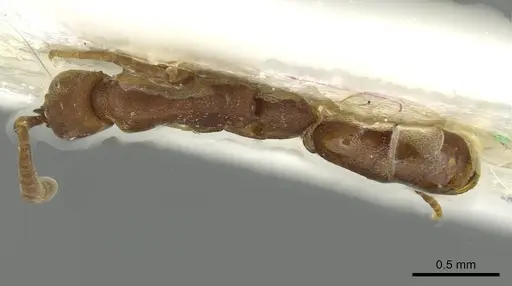
文献
分布マップを読み込み中...製品情報を読み込み中...