
Poneracantha semiferox
- 学名
- Poneracantha semiferox
- 族
- Ectatommini
- 亜科
- Ectatomminae
- 命名者
- Brown, 1958
- 分布
- 0 か国で発見
紹介
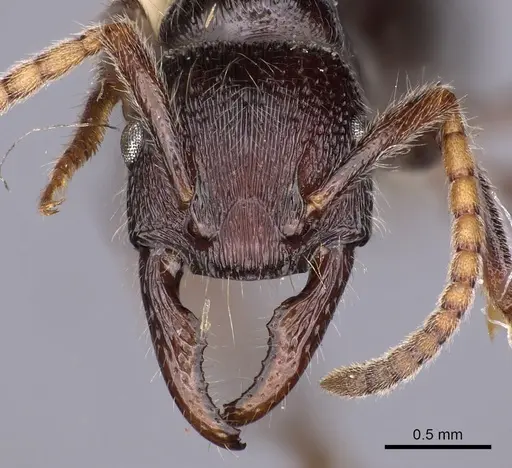
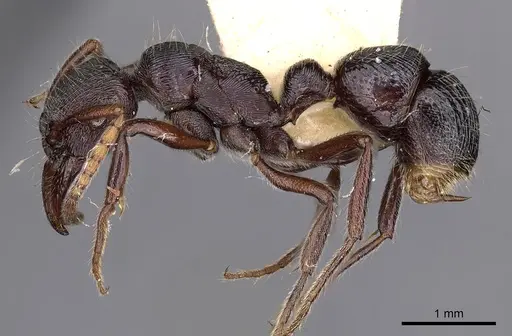
Poneracantha semiferox is a rare predatory ant endemic to the Dominican Republic on Hispaniola Island . Workers have a total length of approximately 7.0 mm, with a deep piceous body and reddish-brown appendages . The species is distinguished by shorter, thicker mandibles with about six denticles, and a propodeal dorsal surface with vermiculate longitudinal costulae . This species is known only from three workers collected in 1938,making it one of the rarest ants in the Caribbean . It preys on millipedes (Diplopoda), indicating specialized predatory behavior .
Quick Summary
- Difficulty: Expert
- Origin & Habitat: Endemic to the Dominican Republic on Hispaniola Island. Known only from montane rain forest at elevations between 914-1,219 meters, where small palms were prominent at the time of collection [1][2].
- Colony Type: Unknown. Colony structure has not been documented for this species.
- Size & Growth:
- Queen: Unknown, queen caste has never been described
- Worker: ~7.0 mm [3]
- Colony: Unknown, only three workers have ever been collected
- Growth: Unknown
- Development: Unconfirmed (Development timeline has not been documented. Based on typical Poneracantha patterns, expect 2-4 months from egg to worker at optimal temperature.)
- Antkeeping:
- Temperature: Estimated based on montane rainforest origin at 914-1219 m elevation, aim for warm conditions around 22-26°C [1].
- Humidity: Keep nest substrate consistently moist but not waterlogged, reflecting their rainforest habitat [1].
- Diapause: Unknown, as a tropical Caribbean species, diapause is unlikely, but no specific data exists.
- Nesting: In nature, likely nest in rotting wood or under stones, in captivity, use moist substrate setups inferred from related Poneracantha species.
- Behavior: Poneracantha ants are typically predatory, using their mandibles to capture prey. This species includes millipedes in its diet. Workers are likely solitary foragers. The genus is generally not aggressive toward humans but will defend the nest. As part of the Ectatomminae subfamily, workers can sting, but no specific studies on this species' defense exist. Escape risk is moderate given worker size around 7 mm, standard containment measures should suffice.
- Common Issues: extreme rarity in captivity, this species is virtually unavailable to hobbyists., no captive breeding records exist, wild colonies have never been observed., specialized diet may be difficult to replicate, millipedes are not common ant food., very limited natural history data makes proper care difficult to determine., the single known collection location may no longer exist due to agricultural clearing.
Species Overview and Rarity
Poneracantha semiferox is one of the rarest ant species in the world, known only from three worker specimens collected in 1938. The species was originally described as Poneracantha semiferox in 1958 by Brown and was recently transferred to the genus Poneracantha through phylogenetic research. The type locality was Mount Diego de Ocampo in the Dominican Republic, at an elevation of 914-1,219 meters. The original collector, P.J. Darlington, noted that the area was primarily rain forest with small palms, though the land was already being cleared for agriculture at the time. This species represents a significant knowledge gap in ant biology, virtually nothing is known about its colony structure, queen biology, nuptial flights, or captive care requirements. [1][2][4]
Identification and Distinguishing Features
Workers measure approximately 7 mm total length, making them medium-sized among Poneracantha species. The body is deep piceous (dark brownish-black) appearing black to the naked eye, with reddish-brown appendages. The species can be identified by its shorter, thicker mandibles with about six denticles, and the propodeal dorsal surface featuring distinctive vermiculate longitudinal costulae or ridges. The propodeal declivity is rounded without teeth or denticles, and the hind coxae lack dorsal armament. The head and pronotum have coarse punctation, and the overall sculpture is finer and less uniform than related species like Poneracantha banksi. [4][1]
Feeding and Predatory Behavior
Based on limited dietary data, Poneracantha semiferox preys on millipedes (Diplopoda), making it a specialized predator. In captivity, replicating this specialized diet would be challenging. Related Poneracantha species accept small arthropods like springtails, small beetles, and other leaf-litter invertebrates. If you were to keep this species, offering a variety of small live prey would be essential. Sugar sources are not typically accepted by predatory Poneracantha, so protein prey should form the primary diet. [5][6][7]
Natural History and Distribution
This species is endemic to Hispaniola, specifically known only from the Dominican Republic. The entire known range consists of a single collection event at Mount Diego de Ocampo at 914-1,219 meters elevation. The original habitat was described as rain forest with prominent small palms. Notably, the collection occurred in July 1938,and the area was already being converted to agricultural land at that time. The current status of the habitat at this location is unknown, it may no longer support viable populations. [1][2][4]
Taxonomy and Nomenclature
Poneracantha semiferox was originally described by W.L. Brown Jr. in 1958 under the name Poneracantha semiferox. The species was recently transferred to the genus Poneracantha following phylogenetic analysis. The species belongs to the semiferox complex within the banksi subgroup of the rastrata species group. The holotype and two paratype workers are deposited in the Museum of Comparative Zoology at Harvard (MCZC), with paratypes also at the Museu de Zoologia da Universidade de São Paulo (MZSP). [4]
Keeping Related Species - Inferences
Since Poneracantha semiferox has never been kept in captivity, care recommendations must be inferred from related Poneracantha species and general genus patterns. Related species are typically predatory, preferring humid tropical conditions with access to diverse small arthropod prey. They generally do well in naturalistic setups with moist substrate. Founding behavior is unconfirmed. Temperature requirements are estimated at 22-26°C based on the Caribbean montane origin, but these are educated guesses with low confidence.
Frequently Asked Questions
Can I keep Poneracantha semiferox as a pet ant?
This species is virtually unavailable to antkeepers. Only three workers have ever been collected, all in 1938,and the species may be extinct or extremely rare in the wild. There are no known captive colonies, and the original collection location may no longer exist due to agricultural development. Unless you are a professional researcher with access to field collection in the Dominican Republic, you will not be able to keep this species.
What does Poneracantha semiferox eat?
Based on limited dietary data, this species preys specifically on millipedes (Diplopoda), making it more specialized than many related Poneracantha species. In captivity, related species accept various small arthropods including springtails, small beetles, and other leaf-litter invertebrates. Replicating the specialized millipede diet would be challenging, so offering a variety of small live prey would be essential.
How big do Poneracantha semiferox colonies get?
The maximum colony size is unknown. Only three workers have ever been collected, and no colony has ever been observed. Related Poneracantha species typically form colonies of several hundred workers, but colony size for this species remains entirely speculative.
Where does Poneracantha semiferox live?
This species is endemic to the Dominican Republic on Hispaniola Island in the Caribbean. It is known only from a single collection at Mount Diego de Ocampo, at elevations between 914-1,219 meters. The original habitat was montane rain forest with small palms.
Do Poneracantha semiferox ants sting?
Poneracantha belongs to the subfamily Ectatomminae, which includes ants capable of stinging. While this specific species has not been studied for defensive behavior, related Poneracantha species can deliver painful stings. However, given the extreme rarity of this species, no one has documented its defensive capabilities.
What temperature and humidity does Poneracantha semiferox need?
Based on the montane rainforest origin in the Caribbean at 900-1200m elevation, this species likely requires warm, humid conditions. Estimate temperature around 22-26°C with high humidity. The elevation suggests they experience cooler conditions than lowland tropical ants but still need warmth. These are estimates based on habitat data, as no captive observations exist.
Is Poneracantha semiferox a good species for beginners?
No, this species is not only extremely difficult or impossible to obtain, but it would also be considered an expert-level species even if available. There is no captive care information, no breeding records exist, and the species may be extinct in the wild. For these reasons, this ant would be completely unsuitable for beginners and even experienced antkeepers would have no guidance for keeping it.
How long does it take for Poneracantha semiferox to develop from egg to worker?
The development timeline has not been documented for this species. Based on typical Poneracantha patterns, expect approximately 2-4 months from egg to first worker at optimal temperature. However, this is a rough estimate with low confidence, as no direct observations exist for this species.
Why is Poneracantha semiferox so rare?
This species is known only from three workers collected in 1938, it has never been found again in over 80 years of subsequent collecting. Several factors may explain this: the original habitat at Mount Diego de Ocampo was already being cleared for agriculture in 1938,the species may have extremely localized distribution, or it may be genuinely rare. The montane rain forest habitat in the Dominican Republic has been significantly reduced by deforestation, potentially threatening whatever populations may exist.
Report an Issue
The current care sheet is based fully on literature. See inconsistencies, or something that's incorrect? Please , it will be resolved after review from an admin. Contributing to the blogs tab also helps providing information, to make us be able to further improve the caresheets. Thank you for your support!
References

この飼育シートのライセンスは: CC BY-SA 4.0 .
コミュニティブログ
CASENT0900545
AntWebで見る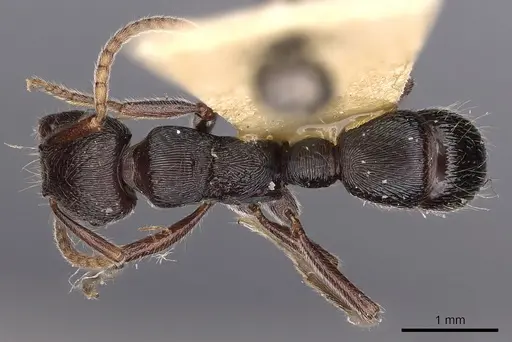
文献
分布マップを読み込み中...製品情報を読み込み中...