
Polyrhachis setosa
- 学名
- Polyrhachis setosa
- 亜属
- Cyrtomyrma
- 族
- Camponotini
- 亜科
- Formicinae
- 命名者
- Kohout, 2006
- 分布
- 0 か国で発見
紹介
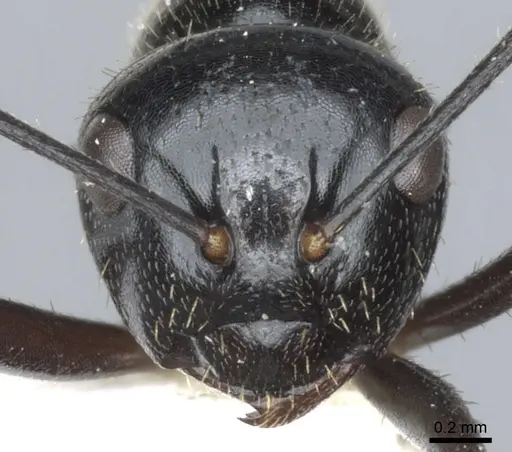
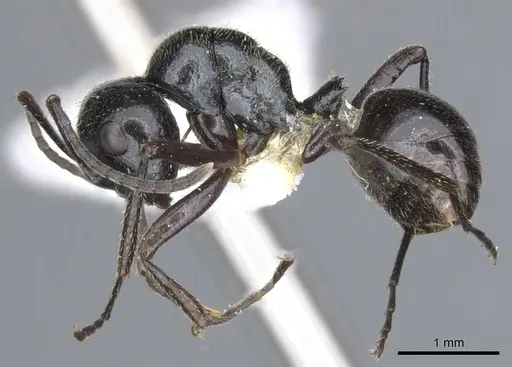
Polyrhachis setosa is a small ant native to the Solomon Islands, first described in 2006. Workers have a total length of 4.89 to 5.09 millimeters, and queens reach about 5.90 millimeters . The species has erect, bristle-like hairs covering the body, a black color with reddish-brown highlights on mandibles and legs, and a petiole armed with four short spines . It is endemic to the Solomon Islands, recorded from Guadalcanal and Makira . Little is known about the biology of Polyrhachis setosa, as only type specimens have been collected, making care based on inference from related species and its tropical habitat .
Quick Summary
- Difficulty: Medium
- Origin & Habitat: Endemic to the Solomon Islands, found on Guadalcanal and Makira, inhabiting forest environments in a warm, humid climate [2].
- Colony Type: Unknown, colony structure has not been documented for this species.
- Size & Growth:
- Antkeeping:
- Temperature: Keep warm, roughly 24-28°C, based on tropical habitat inference.
- Humidity: Keep nest substrate consistently moist but not waterlogged, based on tropical climate inference.
- Diapause: No, tropical species do not require hibernation, based on inference from habitat.
- Nesting: Prefer naturalistic or semi-arboreal setups, use Y-tong or plaster nests with narrow chambers, inferred from genus patterns.
- Behavior: Polyrhachis ants are generally less aggressive than many other ant genera. They defend by spraying formic acid, as all Formicinae do. Workers are moderately active and escape risk is moderate due to small size.
- Common Issues: very limited natural history data means care is based on genus-level inference rather than species-specific studies., tropical humidity requirements can lead to mold problems if ventilation is inadequate., warm temperature needs year-round mean higher energy costs for heating., wild-caught colonies may be difficult to obtain since the species is only known from limited specimens., colony size and growth rate are unknown, making it hard to plan for future housing needs.
Appearance and Identification
Polyrhachis setosa workers are small ants with a total length of 4.89 to 5.09 millimeters, and queens reach about 5.90 millimeters [1]. The most distinctive feature is the dense covering of erect, bristle-like hairs throughout the body, this is where the name 'setosa' (meaning bristly) comes from [1]. The body is primarily black with reddish-brown highlights on the mandibles, antennae tips, trochanters, and legs [1]. The petiole has four short spines: two on top that are more tooth-like, and two on the sides that are more slender [1]. The eyes are positioned very close to the sides of the head, barely breaking the outline when viewed from the front [1].
Natural History and Distribution
Polyrhachis setosa is endemic to the Solomon Islands, meaning it is found nowhere else on Earth. It has been recorded from Guadalcanal (including the type locality at Mt Austen) and Makira Island [2]. The species was first described in 2006,and specimens were collected as early as 1965-1966 [2][1]. The Solomon Islands have a tropical climate with high year-round temperatures and humidity, which informs care requirements in captivity [2].
Housing and Nesting
In captivity, Polyrhachis setosa can be kept in naturalistic or semi-arboreal setups. A Y-tong (AAC) nest or plaster nest with appropriately scaled chambers works well. Because they come from a humid tropical environment, the nest material should retain moisture without becoming waterlogged. The outworld should include climbing structures since these ants may forage vertically. Ensure excellent escape prevention due to their small size.
Temperature and Humidity
As a tropical species from the Solomon Islands, Polyrhachis setosa requires warm and humid conditions. Keep the nest area at roughly 24-28°C consistently, based on inference from its habitat. Humidity should be maintained by keeping the nest substrate consistently moist but not waterlogged. These ants do not require diapause or winter cooling period, maintain tropical conditions year-round.
Feeding and Diet
The specific diet of Polyrhachis setosa has not been documented, but Polyrhachis species are generally omnivorous, feeding on honeydew, nectar, and small insects. In captivity, offer sugar water or honey as an energy source, and protein sources such as small insects like fruit flies or mealworms. Feed protein 2-3 times per week and keep sugar available constantly.
Defense and Behavior
Like all ants in the Formicinae subfamily, Polyrhachis setosa does not have a functional stinger. Instead, they defend themselves by spraying formic acid, a chemical irritant. This makes them less dangerous than stinging ants, though the spray can still be irritating. Polyrhachis ants are generally less aggressive and more docile than ground-nesting species. Workers are moderately active and will forage both on the ground and on vegetation.
Frequently Asked Questions
How long does it take for Polyrhachis setosa to produce first workers?
The development timeline for this species is unknown, no studies have documented their egg-to-worker time. Based on typical Polyrhachis patterns at tropical temperatures, expect roughly 6-10 weeks from egg to first worker, but this is an estimate only.
What do Polyrhachis setosa ants eat?
While not specifically studied, Polyrhachis species are generally omnivorous. Offer sugar water or honey as an energy source, and small insects like fruit flies or tiny crickets for protein. Feed protein 2-3 times per week and keep sugar available constantly.
Can I keep multiple Polyrhachis setosa queens together?
The colony structure of this species is unconfirmed. Most Polyrhachis species appear to be single-queen colonies, but this hasn't been documented for P. setosa. It is not recommended to combine unrelated foundress queens without evidence that they can coexist.
What temperature should I keep Polyrhachis setosa at?
Keep them at roughly 24-28°C. As a tropical species from the Solomon Islands, they require warm conditions year-round with no hibernation period, based on inference from their habitat.
Is Polyrhachis setosa a good species for beginners?
This species is rated as Medium difficulty. While not the most challenging ant, the lack of species-specific care data means you may need to adapt based on colony behavior. The warm, humid requirements are standard for tropical species but require attention to heating and humidity control.
How big do Polyrhachis setosa colonies get?
The maximum colony size is unknown, this species is only known from a handful of specimens collected in the 1960s [2]. Related Polyrhachis species typically reach several hundred to a few thousand workers.
Do Polyrhachis setosa need hibernation?
No, being a tropical species from the Solomon Islands, they do not require hibernation or any cooling period. Maintain warm temperatures year-round, based on inference.
What type of nest is best for Polyrhachis setosa?
Naturalistic or semi-arboreal setups work best for this genus. A Y-tong (AAC) nest or plaster nest with appropriately scaled chambers works well. Include some vertical space and climbing structures since they may be semi-arboreal in nature.
Where is Polyrhachis setosa found naturally?
Polyrhachis setosa is endemic to the Solomon Islands, found only on Guadalcanal and Makira islands. It was first described in 2006 though specimens were collected as early as 1965-1966 [2][1].
Why is so little known about this ant species?
Polyrhachis setosa is known only from a small number of specimens collected in the 1960s. The species was formally described in 2006,and no detailed biological studies have been conducted on wild or captive colonies [2][1].
Are Polyrhachis setosa ants aggressive?
Polyrhachis ants are generally considered less aggressive than many other ant genera. They are typically more docile and less likely to attack than ground-nesting species. They defend with formic acid spray rather than stinging.
Report an Issue
The current care sheet is based fully on literature. See inconsistencies, or something that's incorrect? Please , it will be resolved after review from an admin. Contributing to the blogs tab also helps providing information, to make us be able to further improve the caresheets. Thank you for your support!
References

この飼育シートのライセンスは: CC BY-SA 4.0 .
コミュニティブログ
CASENT0903400
AntWebで見る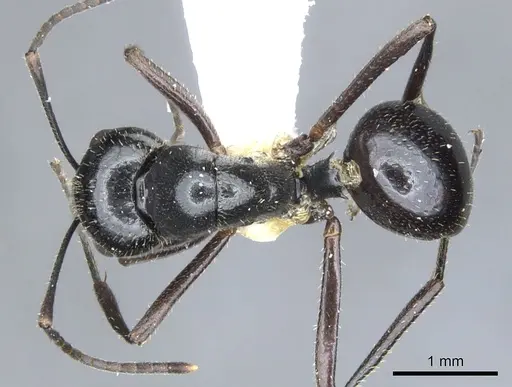
文献
分布マップを読み込み中...製品情報を読み込み中...