
Philidris laevigata
- 学名
- Philidris laevigata
- 族
- Leptomyrmecini
- 亜科
- Dolichoderinae
- 命名者
- Emery, 1895
- 分布
- 0 か国で発見
紹介
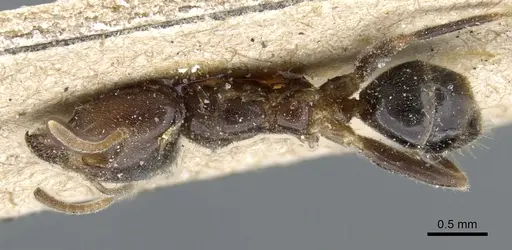
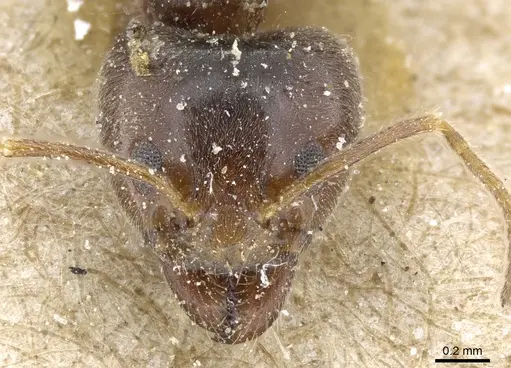
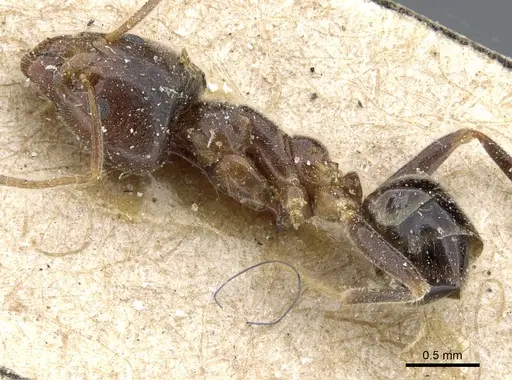
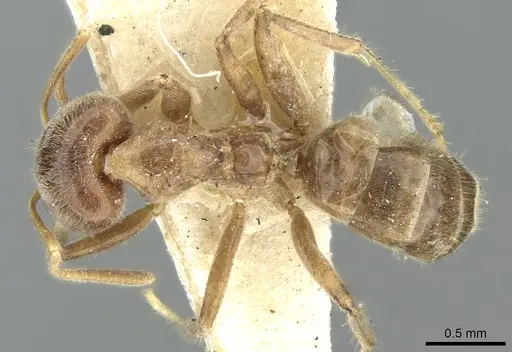
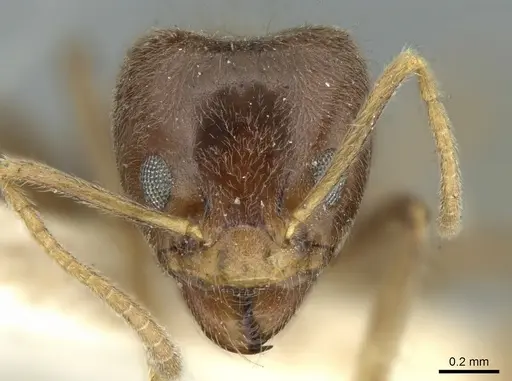
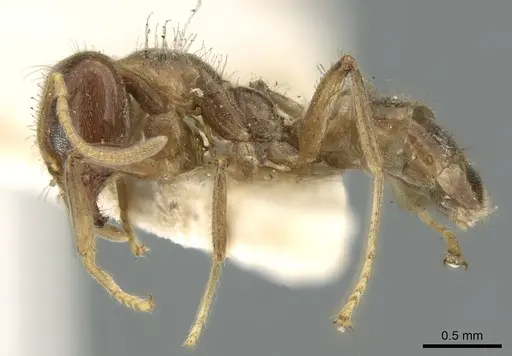
Philidris laevigata is a small dolichoderine ant native to South and Southeast Asia. Workers measure 3-3.5 mm and have a fuscous brown coloration with pale antennae, legs, and underside, covered in short hairs and fine pubescence . They are found across the Indomalaya region, including India, Myanmar, Singapore, Bhutan, southern China (Yunnan), and Vietnam, at elevations up to 900 m . This species belongs to the Leptomyrmecini tribe and lacks a functional sting, relying on chemical defenses instead [Dolichoderinae/Leptomyrmecini default].
Quick Summary
- Difficulty: Medium
- Origin & Habitat: Native to South and Southeast Asia, including India, Myanmar, Singapore, Bhutan, southern China (Yunnan), and Vietnam. Found in built-up areas and underground surveys, suggesting adaptability to various habitats [2][3][4][5].
- Colony Type: Colony structure is unconfirmed. Based on typical Dolichoderinae patterns, likely single-queen (monogyne) colonies.
- Size & Growth:
- Queen: Size data unavailable, no specific measurements found in research.
- Worker: 3-3.5 mm [1]
- Colony: Maximum colony size is unconfirmed, estimated up to several hundred workers based on related species.
- Growth: Unknown, likely moderate based on genus patterns.
- Development: Unconfirmed, estimated 6-8 weeks at 24-28°C based on typical Dolichoderinae development. (Development timeline has not been directly studied, estimates are based on related genera.)
- Antkeeping:
- Temperature: Based on tropical/subtropical distribution, keep warm at 24-28°C. Can tolerate room temperature (22-26°C).
- Humidity: Keep nest substrate consistently moist but not waterlogged, with some drier areas available, based on underground foraging observations [5].
- Diapause: Unknown, likely no true diapause given tropical distribution, but colonies in cooler areas may slow activity in winter.
- Nesting: Natural habits unconfirmed, likely nest in soil or under objects. In captivity, use Y-tong (AAC), plaster, or soil nests with moisture chambers.
- Behavior: Temperament is not specifically documented, but most Philidris species are relatively docile. They are generalist foragers and likely tend aphids for honeydew. Their small size (3-3.5 mm) means escape prevention is important, use standard barriers. They are active foragers that explore outworlds regularly.
- Common Issues: limited species-specific information makes precise care difficult, adjust conditions based on colony behavior, small colony size means vulnerability to stress, avoid disturbing founding colonies unnecessarily, humidity control is critical, too dry may cause brood failure, too wet may cause mold, wild-caught colonies may have parasites or diseases that can cause failure in captivity, tropical origin means they may not tolerate cool temperatures, keep away from drafts and air conditioning
Housing and Nest Setup
Philidris laevigata is small at 3-3.5 mm, so nest chambers should be appropriately sized. Use Y-tong (AAC), plaster, or soil nests with moisture chambers. A test tube setup works for founding colonies. Provide an outworld connected to the nest for foraging, with escape prevention like fluon on rims [1].
Feeding and Diet
They are likely generalist foragers, feeding on honeydew and small insects in the wild. In captivity, offer sugar water or honey as a constant energy source, and protein like fruit flies or small mealworms.
Temperature and Seasonal Care
Keep temperatures at 24-28°C based on their tropical distribution. In cooler climates, use a heating cable for a gradient. Avoid temperatures below 18°C for extended periods. Colonies in northern parts of their range may slow down in winter [2][4].
Colony Founding and Growth
Founding behavior is unconfirmed. Queens may seal themselves in a chamber and raise first brood alone, but this is not documented. Development to first workers is estimated at 6-8 weeks at optimal temperature. Be patient and minimize disturbance during founding.
Behavior and Observation
Workers are small and relatively docile, active foragers that explore their environment. They lack a sting and use chemical defenses typical of Dolichoderinae. Their fuzzy appearance is distinctive, and they are good for observation if escape prevention is adequate.
Frequently Asked Questions
How long does it take for Philidris laevigata to produce first workers?
Unconfirmed, but estimated 6-8 weeks from egg to worker at 24-28°C based on typical Dolichoderinae development.
What do Philidris laevigata ants eat?
They are generalist foragers. Offer sugar water or honey for energy, and protein like fruit flies or small mealworms.
What temperature do Philidris laevigata ants need?
Keep them warm at 24-28°C based on their tropical distribution.
Are Philidris laevigata ants good for beginners?
This species is understudied, so experience with small dolichoderines is helpful. Their docile nature makes them manageable, but precise care guidance is limited.
How big do Philidris laevigata colonies get?
Maximum size is unconfirmed, but estimated up to several hundred workers based on related species.
Do Philidris laevigata ants need hibernation?
Unlikely to require true hibernation due to tropical distribution, but colonies in cooler areas may slow activity in winter.
What size nest do I need for Philidris laevigata?
Use a small nest appropriate for 3-3.5 mm ants, such as Y-tong (AAC) or plaster nests with moisture chambers.
Can I keep multiple Philidris laevigata queens together?
Colony structure is unconfirmed, but likely single-queen based on typical Dolichoderinae patterns. Combining queens is not recommended without evidence.
Where is Philidris laevigata found in the wild?
Native to South and Southeast Asia, including India, Myanmar, Singapore, Bhutan, southern China (Yunnan), and Vietnam [2][3][4][5].
Report an Issue
The current care sheet is based fully on literature. See inconsistencies, or something that's incorrect? Please , it will be resolved after review from an admin. Contributing to the blogs tab also helps providing information, to make us be able to further improve the caresheets. Thank you for your support!
References

この飼育シートのライセンスは: CC BY-SA 4.0 .
コミュニティブログ
文献
分布マップを読み込み中...製品情報を読み込み中...