
Pheidole mainty
- 学名
- Pheidole mainty
- 族
- Attini
- 亜科
- Myrmicinae
- 命名者
- Salata & Fisher, 2020
- 分布
- 0 か国で発見
紹介
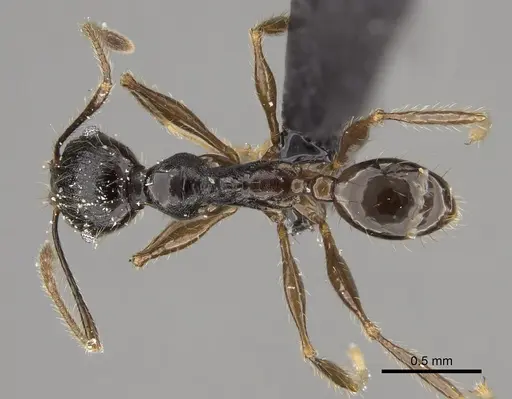
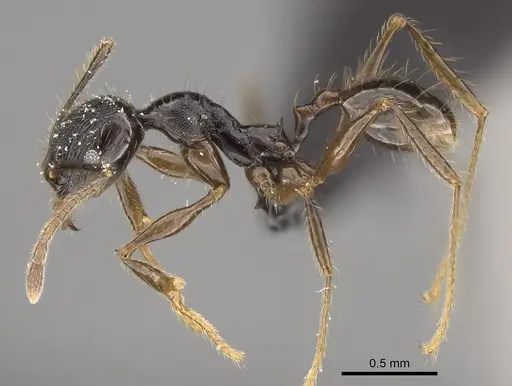
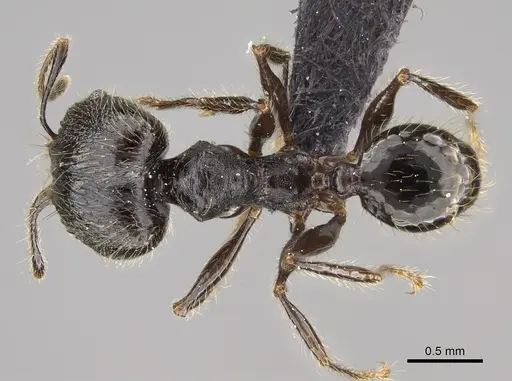
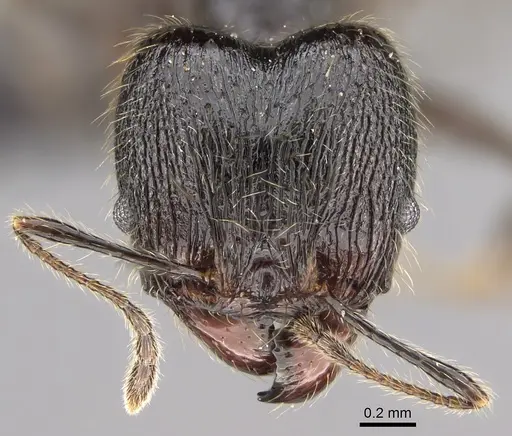
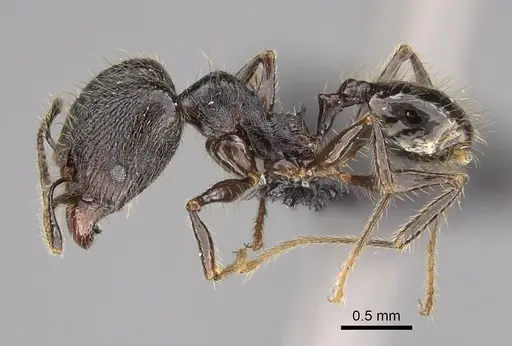
Pheidole mainty is a moderately large ant species from northern Madagascar, belonging to the Pheidole sikorae species group. Major workers have a distinctive black body, while minor workers have a black head and mesosoma with yellowish-brown gaster, legs, and antennae. The species was discovered at 2100m elevation in montane shrubland in Parc National de Marojejy, where they nest under rootmats on stones . Body size data is unavailable, as only head lengths are provided in the research. This species is part of a group characterized by dark coloration, with three known species all restricted to the northernmost parts of Madagascar. It was recently described in 2020,making it a new addition to antkeeping with no established captive care data.
Quick Summary
- Difficulty: Hard
- Origin & Habitat: Northern Madagascar (Antsiranana prefecture), specifically Parc National de Marojejy at 2100m elevation in montane shrubland. Nests found under rootmats on stones [1].
- Colony Type: Unconfirmed, colony structure has not been documented in scientific literature
- Size & Growth:
- Queen: Size data unavailable, no total length measurements provided. Inferred from Pheidole genus as approximately 8-10mm
- Worker: Size data unavailable, no total length measurements provided. Inferred from Pheidole genus: major workers ~2-3mm, minor workers ~1-2mm
- Colony: Unknown, no colony size data available
- Growth: Unknown, no development data available
- Development: Unknown, no direct measurements. Based on typical Pheidole patterns, estimate 6-10 weeks at optimal temperature (Development timeline is unconfirmed, estimates based on genus-level data for related species)
- Antkeeping:
- Temperature: Based on high-elevation montane habitat (2100m), prefer cooler conditions. Start around 20-24°C and observe colony activity [1]. Avoid overheating.
- Humidity: Based on montane shrubland habitat with rootmat nesting, aim for moderate humidity with some drier areas available. Keep substrate consistently moist but not waterlogged [1].
- Diapause: Unknown, no data on seasonal requirements. The high-elevation habitat may experience cooler temperatures year-round, but captive colonies should be observed for natural slowdowns.
- Nesting: In nature they nest under rootmats on stones, suggesting they prefer enclosed, humid nest sites. In captivity, a test tube setup or Y-tong/plaster nest works well. Provide damp substrate and minimal ventilation to prevent drying [1].
- Behavior: Behavior is unstudied in captivity. Based on typical Pheidole patterns, majors may have enlarged heads for defense, while minors handle foraging and brood care. Escape risk is moderate due to small size, standard escape prevention measures apply. Defense mechanism: as a member of Myrmicinae, Attini tribe, they possess a functional stinger, but this is general taxonomic knowledge, not species-specific. They are likely not aggressive but will defend the nest if threatened.
- Common Issues: no captive care data exists, this is a newly described species with no established husbandry guidelines, high-elevation origin means temperature sensitivity is uncertain, monitor for stress signs, small colony size potential means overfeeding could cause mold issues, wild-caught colonies may carry parasites or pathogens unfamiliar to captive conditions
Discovery and Taxonomy
Pheidole mainty was described in 2020 by Sebastian Salata and Brian L. Fisher as part of a taxonomic revision of the Pheidole sikorae species group from Madagascar. The species name 'mainty' means 'black' in Malagasy, referring to the distinctive black coloration of major workers. The holotype was collected in February 2018 at an elevation of 2100m in Parc National de Marojejy, a protected area in northern Madagascar. This species is part of a group of three closely related ants found sympatrically in the Antsiranana prefecture [1].
Identification and Morphology
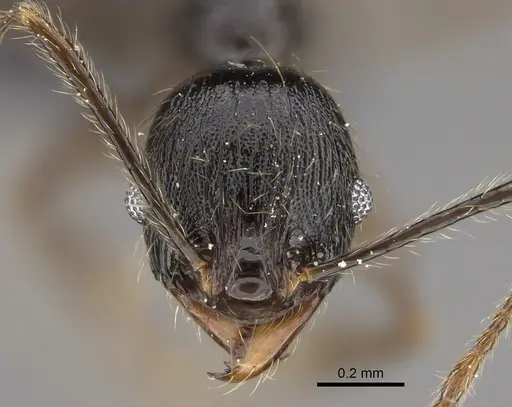
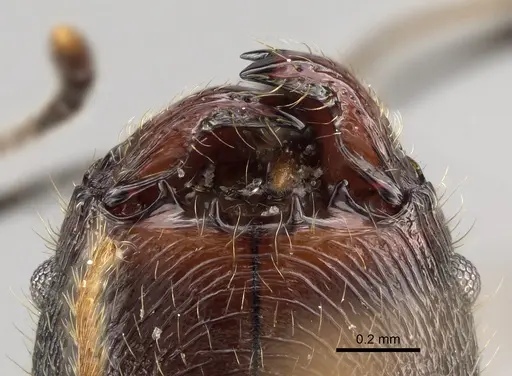
This species shows typical Pheidole dimorphism with distinct major and minor workers. Major workers have a sub-oval head that slightly widens posteriorly, with very dense pilosity on the sides, and a entirely black body. Minor workers are much smaller with a black head and mesosoma but yellowish-brown gaster, legs, and antennae. Body size data is unavailable, as only head lengths are provided in the research. The species can be distinguished from related species by smooth areas posterolateral from eyes and predominantly smooth promesonotal dorsum [1].
Natural Habitat and Distribution
Pheidole mainty is known only from northern Madagascar, specifically the Parc National de Marojejy area in the Antsiranana prefecture. The type locality is at 2100m elevation, indicating adaptation to cooler, montane conditions. The habitat is montane shrubland, and nests are found under rootmats on stones, suggesting a preference for humid, shaded microhabitats. The species is part of a group limited to the northernmost parts of the island [1].
Keeping Pheidole mainty in Captivity
Since this is a newly described species with no established captive husbandry, keepers should approach care cautiously. Based on the natural habitat, these ants likely prefer cooler temperatures than typical tropical ants, aim for the low-to-mid 20s Celsius range and avoid overheating [1]. The rootmat nesting preference suggests they need consistent humidity but not saturation. Start with standard Pheidole setup: a test tube for founding colonies, transitioning to a formicarium as the colony grows. Monitor for stress signs such as workers clustering away from heat sources. Because no captive breeding data exists, this species is best suited for experienced keepers who can document their observations [1].
Feeding and Diet
Feeding requirements are unconfirmed for this species. As a Pheidole member, they likely have a typical omnivorous diet similar to other members of the genus, accepting protein sources like small insects and seeds, plus sugar sources. Start with standard ant foods: protein (like fruit flies or small crickets) and sugar water or honey. Observe acceptance and adjust accordingly. Because this is an unstudied species, keep feeding simple and clean to avoid mold issues in the nest.
Frequently Asked Questions
How long does it take for Pheidole mainty to go from egg to worker?
The egg-to-worker timeline is unconfirmed for this species, no scientific data exists. Based on typical Pheidole development patterns, estimate 6-10 weeks at optimal temperature. This is a rough estimate only, as actual development time depends on temperature, humidity, and colony health.
What temperature do Pheidole mainty ants need?
Temperature requirements are not directly studied. The high-elevation origin (2100m in montane Madagascar) suggests they prefer cooler conditions than typical tropical ants. Start around 20-24°C and observe colony behavior [1]. If workers cluster near heat sources, increase slightly, if they avoid heated areas, reduce temperature.
Are Pheidole mainty ants good for beginners?
This species is not recommended for beginners. It was only described in 2020 and has no established captive husbandry guidelines. All care recommendations are based on inference from habitat and genus patterns, not documented success in captivity. Experienced keepers who can document their observations are better suited for this species.
How big do Pheidole mainty colonies get?
Colony size is unknown, no scientific data exists on maximum colony size. Based on typical Pheidole patterns, colonies likely reach several hundred to a few thousand workers over time, but this is an estimate only.
Can I keep multiple Pheidole mainty queens together?
Colony structure is unconfirmed, we don't know if this species is monogyne (single queen) or polygyne (multiple queens). Most Pheidole species are monogyne, but combining unrelated queens is not recommended until more is known about their natural colony structure.
What do Pheidole mainty ants eat?
Diet is unconfirmed for this species. Based on typical Pheidole behavior, they likely accept protein (small insects) and seeds, plus sugar sources. Start with standard ant foods and observe acceptance. Keep portions small to avoid mold in the nest.
Where is Pheidole mainty found in the wild?
This species is known only from northern Madagascar, specifically Parc National de Marojejy at 2100m elevation. They live in montane shrubland and nest under rootmats on stones [1].
Is Pheidole mainty a difficult species to keep?
Difficulty level is hard due to no captive care data. The main challenge is that this is a newly described species with no established husbandry, requiring keepers to develop their own care protocols through observation and experimentation.
When do Pheidole mainty nuptial flights happen?
Nuptial flight timing is unconfirmed, no scientific data exists. The type specimen was collected in February, which may provide a rough indication, but collection dates do not reliably predict flight timing [1].
Report an Issue
The current care sheet is based fully on literature. See inconsistencies, or something that's incorrect? Please , it will be resolved after review from an admin. Contributing to the blogs tab also helps providing information, to make us be able to further improve the caresheets. Thank you for your support!
References

この飼育シートのライセンスは: CC BY-SA 4.0 .
コミュニティブログ
文献
分布マップを読み込み中...製品情報を読み込み中...