
Parasyscia kodecorum
- 学名
- Parasyscia kodecorum
- 亜科
- Dorylinae
- 命名者
- Brown, 1975
- 分布
- 0 か国で発見
紹介
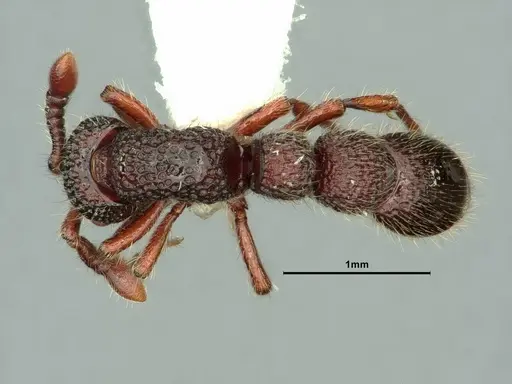
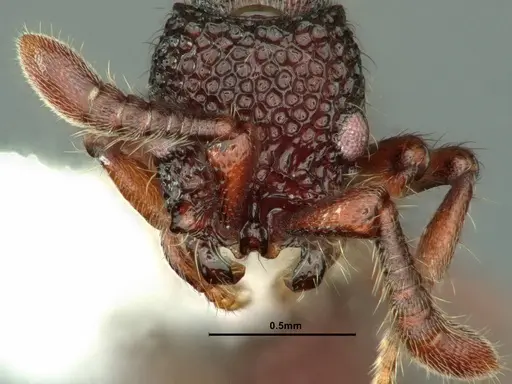
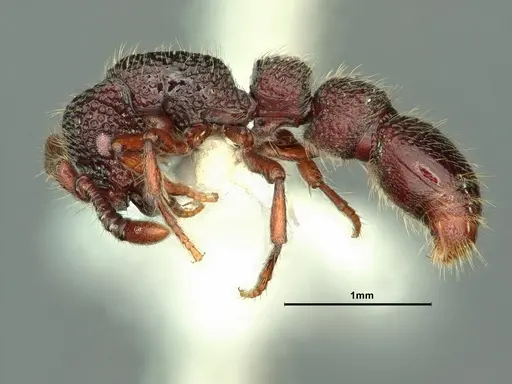
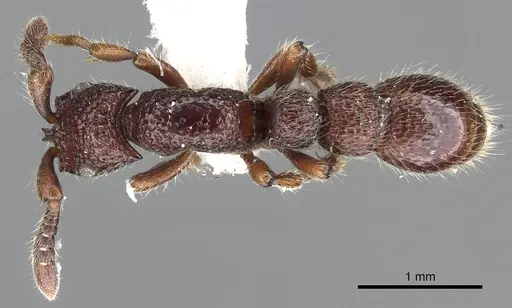
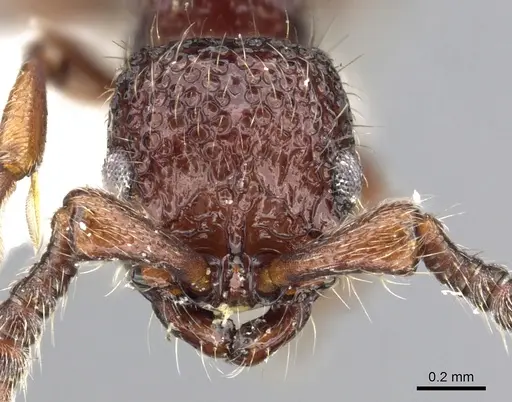
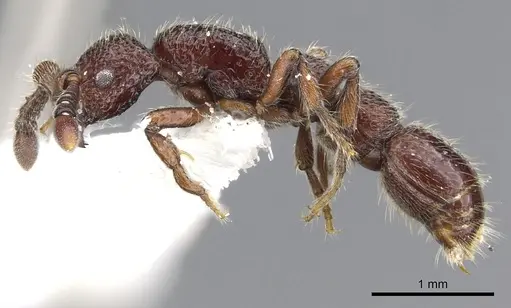
Parasyscia kodecorum is a small army ant species from Borneo. Workers measure 3.7-4.3mm total length . They have thick 11-segmented antennae, relatively large eyes, and coarse partly open sculpture . The species is dark reddish brown with lighter reddish legs . It is known only from Southeast Kalimantan, Indonesia, where it nests in hollow rotten sticks embedded in leaf litter of mature lowland rainforest .
Quick Summary
- Difficulty: Hard
- Origin & Habitat: Borneo, Indonesia and Malaysia in the Indomalaya region. Nests in hollow rotten sticks embedded in leaf litter of mature lowland rainforest [3][1].
- Colony Type: Unconfirmed, no specific data available on queen number or social structure.
- Size & Growth:
- Queen: Unknown, queen caste has not been described
- Worker: 3.7-4.3mm total length [1]
- Colony: Unknown, no colony size data available
- Growth: Unknown
- Development: Unknown, no direct measurements. Based on tropical conditions, development may take several weeks, but this is unconfirmed. (Development timeline is uncertain, observe colony activity for clues.)
- Antkeeping:
- Temperature: Keep warm, roughly 24-28°C, inferred from lowland rainforest origin [1]. Adjust based on colony activity.
- Humidity: Keep nest substrate consistently moist but not waterlogged, based on natural habitat in damp leaf litter [1].
- Diapause: Unknown, tropical species may not require diapause, but seasonal behavior is unconfirmed.
- Nesting: Provide a naturalistic setup with damp substrate and decaying wood, mimicking natural nesting in rotten sticks [1]. Y-tong or plaster nests can work if humidity is maintained.
- Behavior: Behavior is not well documented. As army ants, they are likely predatory on small invertebrates. Escape risk is moderate due to small size (under 5mm). Monitor colony activity to assess risk.
- Common Issues: high humidity maintenance is critical to prevent desiccation., feeding preferences are unknown, offer small live prey and monitor acceptance., colony structure is unconfirmed, so social conditions may be suboptimal., development timeline is uncertain, patience is required.
Natural History and Distribution
Parasyscia kodecorum is known only from Borneo, specifically Southeast Kalimantan in Indonesian Borneo. The original type series was collected in June 1972 from a nest in a hollow, rotten stick embedded in leaf litter within mature lowland rainforest [3][1]. This habitat is typical of many Dorylinae army ants that prefer humid, sheltered microenvironments. The species was named after the Korea Development Company (Kodeco) whose timber tract included the collection site. Only the worker caste has been described, queen and male castes remain unknown [1].
Identification and Distinctive Features
This species is a typical Parasyscia but can be distinguished by unique characteristics. It has unusually thick antennae with only 11 segments, while most Parasyscia have 12 [2]. The three ring segments following the pedicel are extremely short [2]. It has broad facial scrobal impressions and relatively large eyes for the genus [2][1]. Arc-shaped scrobes on the head are distinctive and shared with P. simeuluensis but absent in other Asian congeners [2]. Workers are dark reddish brown with lighter legs [1].
Housing and Nesting Preferences
In the wild, P. kodecorum nests in hollow rotten sticks within leaf litter. For captive care, replicate these conditions using a naturalistic setup with damp substrate and decaying wood material [1]. Alternatively, a Y-tong or plaster nest with moisture provision can work, provided humidity is maintained. Keep the nest substrate consistently moist but not waterlogged, and include small hiding structures. Avoid letting the nest dry out.
Feeding and Diet
As a Dorylinae army ant, P. kodecorum is likely predatory on small invertebrates. In captivity, offer small live prey such as flightless fruit flies, small crickets, mealworms, and springtails. Acceptance of sugar sources is uncertain, offer occasionally but do not rely on them as primary food. Remove uneaten prey after 24-48 hours to prevent mold.
Temperature and Humidity Requirements
Being from lowland Borneo rainforest, this species requires warm and humid conditions. Aim for temperatures of 24-28°C, inferred from habitat [1]. Humidity should be high, keep nest substrate moist but not waterlogged [1]. Good ventilation is important to prevent mold while maintaining humidity.
Challenges and Considerations
This species is rare in the antkeeping hobby with almost no captive husbandry information. Main challenges include maintaining high humidity, determining accepted foods through trial and error, and patience with unknown development timeline. Queen and colony structure are unconfirmed, so social conditions may be suboptimal. This species is best for experienced keepers who enjoy experimentation.
Frequently Asked Questions
How long does it take for Parasyscia kodecorum to go from egg to worker?
The exact development timeline is unknown, no specific data exists. Based on tropical conditions, development may take several weeks, but this is unconfirmed. Be patient and observe colony activity.
What do Parasyscia kodecorum ants eat?
As army ants, they are likely predatory. Offer small live prey like flightless fruit flies, small crickets, mealworms, and springtails. Acceptance of sugar sources is uncertain.
What temperature do Parasyscia kodecorum ants need?
Keep them warm at 24-28°C, inferred from their lowland Borneo rainforest origin [1].
What humidity level do Parasyscia kodecorum ants need?
High humidity is essential, keep nest substrate consistently moist but not waterlogged, based on their natural habitat [1].
Do Parasyscia kodecorum ants need hibernation?
Probably not. Being a tropical species, they likely do not require diapause, but this is unconfirmed.
How big do Parasyscia kodecorum colonies get?
The maximum colony size is unknown, no colony size data exists for this species.
Can I keep multiple Parasyscia kodecorum queens together?
This is unknown. Colony structure has not been documented for this species.
Are Parasyscia kodecorum ants good for beginners?
No. This is not a recommended species for beginners due to limited husbandry information and high humidity requirements.
What size are Parasyscia kodecorum workers?
Workers are small, measuring 3.7-4.3mm total length [1].
Where is Parasyscia kodecorum found in the wild?
Only from Borneo, specifically Southeast Kalimantan in Indonesian Borneo. They nest in hollow rotten sticks within leaf litter [3][1].
What kind of nest should I use for Parasyscia kodecorum?
A naturalistic setup with damp soil and decaying wood material works best to mimic their natural habitat. Alternatively, a Y-tong or plaster nest can work if humidity is maintained [1].
Report an Issue
The current care sheet is based fully on literature. See inconsistencies, or something that's incorrect? Please , it will be resolved after review from an admin. Contributing to the blogs tab also helps providing information, to make us be able to further improve the caresheets. Thank you for your support!
References

この飼育シートのライセンスは: CC BY-SA 4.0 .
コミュニティブログ
文献
分布マップを読み込み中...製品情報を読み込み中...