
Nylanderia ogasawarensis
- 学名
- Nylanderia ogasawarensis
- 族
- Lasiini
- 亜科
- Formicinae
- 命名者
- Terayama, 1999
- 分布
- 0 か国で発見
紹介
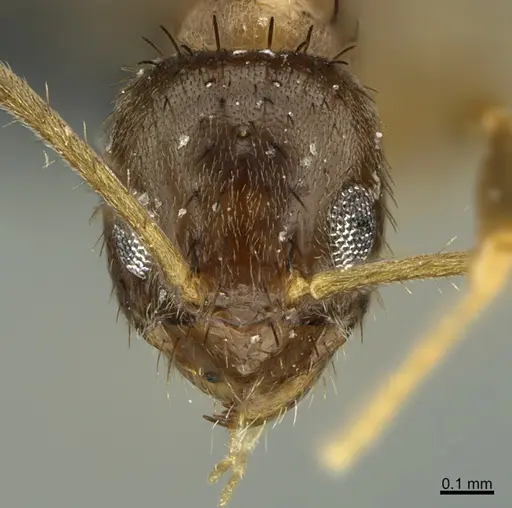
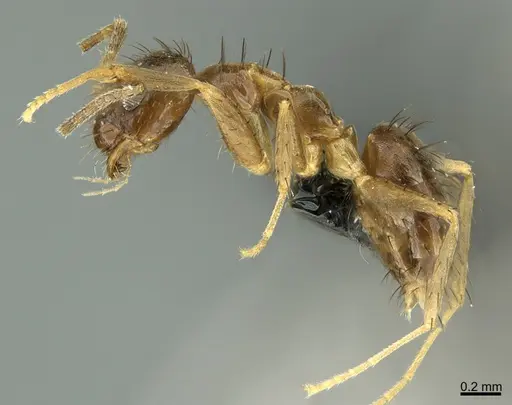
Nylanderia ogasawarensis is a tiny ant species native to the Ogasawara and Volcano Islands of Japan. Workers measure 2 mm in total length, with yellowish brown head and mesosoma, and dark brown gaster . They have distinctive erect hairs: two pairs on the pronotum and two pairs on the mesonotum, with no hairs on the propodeum . This species inhabits grasslands and forests, nesting in soil, leaf litter, and rotting wood . Due to limited captive data, care requirements are largely inferred from its natural habitat. The tiny size makes escape prevention critical, and warm, humid conditions are likely needed based on its subtropical origin.
Quick Summary
- Difficulty: Hard due to limited species-specific data
- Origin & Habitat: Ogasawara Islands and Volcano Islands, Japan. Found in grasslands and forests, nesting in soil, leaf litter, and rotting wood [1].
- Colony Type: Unconfirmed colony structure. Specific data on queen number is lacking.
- Size & Growth:
- Queen: Unknown, not documented in available literature
- Worker: 2 mm [1]
- Colony: Unknown, no colony size data available
- Growth: Unknown, no development data available
- Development: Unknown, no species-specific data. Based on related Nylanderia species, estimated 6-8 weeks at optimal temperature, but this is unconfirmed. (Development may vary with temperature and care conditions.)
- Antkeeping:
- Temperature: Based on subtropical origin, keep between 22-28°C. Start at 24-26°C and adjust based on colony behavior [1].
- Humidity: Keep nest substrate consistently moist but not waterlogged, based on natural habitat in leaf litter and rotting wood [1].
- Diapause: Unknown for this species, no data available.
- Nesting: Natural nesting occurs in soil, leaf litter, and rotting wood [1]. In captivity, use small test tube setups or Y-tong nests with moist substrate.
- Behavior: Behavior is not well documented. Related Nylanderia species are known for rapid movement, but specific data for this species is lacking. Their tiny 2mm size means escape prevention is essential.
- Common Issues: escape risk is high due to tiny 2mm size, ensure fine mesh barriers, improper humidity can cause brood death, keep substrate moist, temperature extremes can stress the colony, maintain stable 22-28°C, wild-caught colonies may carry parasites, quarantine if possible
Origin and Natural Habitat
Nylanderia ogasawarensis is endemic to the Ogasawara (Bonin) Islands and Volcano Islands in Japan, located in the Subtropical zone south of mainland Japan [1]. In the wild, these ants inhabit grasslands and forests, establishing nests in soil, leaf litter, and rotting wood [1]. This nesting preference indicates they thrive in humid, shaded microhabitats with access to decaying organic matter.
Identification and Appearance
Workers are tiny at 2 mm in total length, making them one of the smaller ant species you might keep. The head and mesosoma are yellowish brown, while the gaster is noticeably darker [1]. They have distinctive erect hairs: the pronotal dorsum has two pairs of long erect hairs plus three pairs of shorter hairs, and the mesonotal dorsum has two pairs of long erect hairs. Notably, the propodeal dorsum lacks hairs entirely [1]. This hair pattern helps distinguish them from similar species like Nylanderia amia.
Housing and Nest Setup
Given their tiny 2mm size and natural nesting habits in soil, leaf litter, and rotting wood [1], use small-scale setups. A test tube setup with a water reservoir works well for founding colonies, or a small Y-tong nest with chambers scaled to their size. Fill with moist substrate to mimic natural sites. Ensure excellent escape prevention due to their small size, use fine mesh on ventilation holes and check lid seals regularly.
Feeding and Diet
Specific dietary data for this species is not available in the research [1]. Based on related Nylanderia species, they are omnivorous and feed on honeydew, small insects, and nectar. As a small ant with 2mm workers, offer tiny prey items like flightless fruit flies or pinhead crickets, along with sugar water or honey water. Remove uneaten prey after 24 hours to prevent mold.
Temperature and Humidity
Being from subtropical Japanese islands [1], keep temperatures between 22-28°C. Start around 24-26°C and observe your colony, if workers cluster near warmth, increase slightly, if they avoid heated areas, reduce temperature. For humidity, keep the nest substrate damp to the touch, as their natural habitat in leaf litter and rotting wood is consistently moist but not waterlogged [1].
Colony Development and Growth
No specific development timeline exists for this species. Based on related Nylanderia species and their small 2mm size, development from egg to worker may take approximately 6-8 weeks at optimal temperature, but this is unconfirmed. Growth rate is unknown, but small ants typically develop faster than large species. Be patient with this species, as undocumented species often show slower colony growth.
Frequently Asked Questions
How long does it take for Nylanderia ogasawarensis to produce first workers?
The egg-to-worker timeline is unconfirmed for this species. Based on related Nylanderia species and their small 2mm size, expect approximately 6-8 weeks at optimal temperature (around 24-26°C). This is an estimate only, actual development time may vary.
What do Nylanderia ogasawarensis ants eat?
Specific dietary data is lacking, but related Nylanderia species are omnivorous. Offer small live prey like flightless fruit flies, pinhead crickets, or small mealworms. Provide constant access to sugar water or honey water. Remove uneaten prey after 24 hours.
What size colony does Nylanderia ogasawarensis reach?
Colony size data is not available for this species. Related Nylanderia species can form large colonies, but specific maximums for Nylanderia ogasawarensis are unknown.
What temperature should I keep Nylanderia ogasawarensis at?
Based on their subtropical island origin [1], aim for 22-28°C. Start around 24-26°C and adjust based on colony behavior. If workers cluster near warmth, increase slightly, if they avoid heated areas, reduce.
Is Nylanderia ogasawarensis a good species for beginners?
This species is not recommended for beginners due to lack of species-specific care data. Its tiny 2mm size also makes escape prevention challenging. Consider starting with better-documented species like Lasius or Tetramorium before attempting this ant.
Do Nylanderia ogasawarensis need hibernation?
Diapause requirements are unconfirmed for this species. Being from subtropical Japanese islands, they may need a mild winter rest period at cooler temperatures (15-18°C) for several months, similar to other Japanese ants from similar latitudes.
Can I keep multiple Nylanderia ogasawarensis queens together?
Colony structure (monogyne vs polygyne) is unconfirmed for this species. Related Nylanderia species are typically polygynous (multiple queens), but combining unrelated foundress queens is not recommended unless you observe them accepting each other. Monitor closely for aggression.
How do I house Nylanderia ogasawarensis?
Use small-scale setups appropriate for their 2mm worker size. A test tube setup with moist cotton works well for founding colonies. For established colonies, a small Y-tong nest or naturalistic setup with fine substrate and small chambers scaled to their tiny size is appropriate. Excellent escape prevention is critical due to their small size.
Why are my Nylanderia ogasawarensis dying?
Common causes include: escape (their tiny size allows them through small gaps), improper humidity (too dry causes brood death), temperature stress (avoid extremes), and parasites from wild-caught colonies. Ensure excellent escape prevention, maintain consistent moisture, and keep temperatures stable in the 22-28°C range.
Report an Issue
The current care sheet is based fully on literature. See inconsistencies, or something that's incorrect? Please , it will be resolved after review from an admin. Contributing to the blogs tab also helps providing information, to make us be able to further improve the caresheets. Thank you for your support!
References

この飼育シートのライセンスは: CC BY-SA 4.0 .
コミュニティブログ
CASENT0188909
AntWebで見る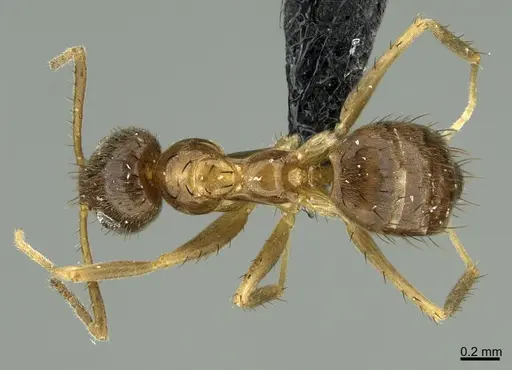
文献
分布マップを読み込み中...製品情報を読み込み中...