
Neivamyrmex guyanensis
- 学名
- Neivamyrmex guyanensis
- 亜科
- Dorylinae
- 命名者
- Santschi, 1916
- 分布
- 0 か国で発見
紹介
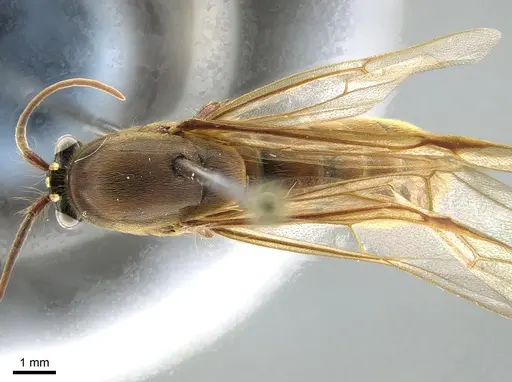
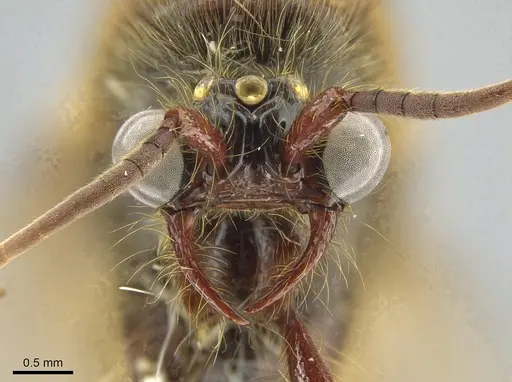
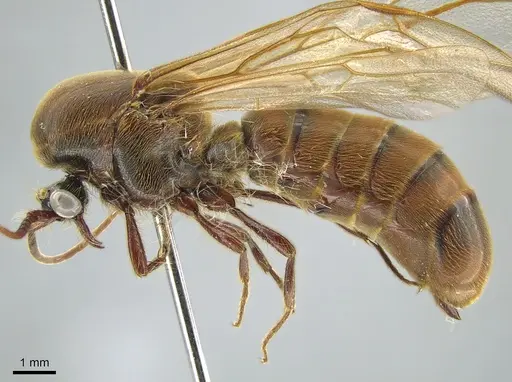
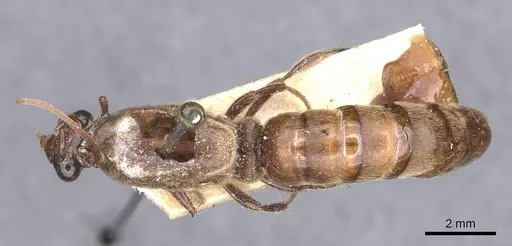
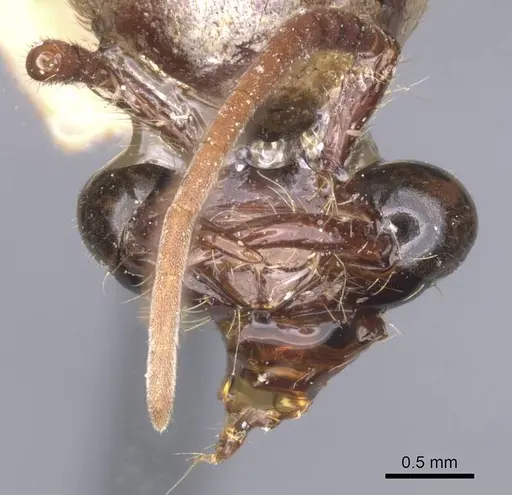
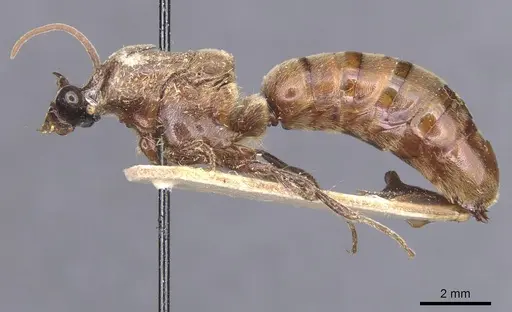
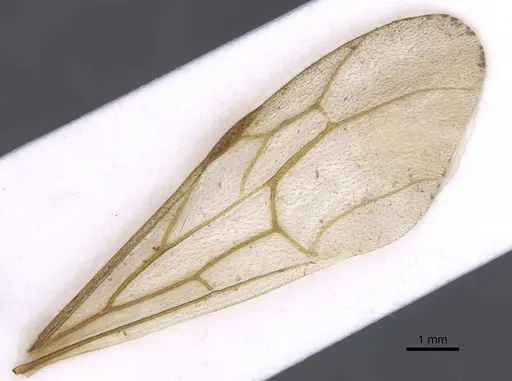
Neivamyrmex guyanensis is a Neotropical army ant known only from male specimens collected in Panama, French Guiana, Colombia, Guyana, Suriname, and Venezuela . Males are the reproductive caste in ants, and this species represents a significant knowledge gap in ant taxonomy - no workers or queens have ever been described, making captive keeping impossible. The species was originally described as a variety of Eciton latiscapum by Santschi in 1916 and later elevated to full species status by Borgmeier in 1955 . As a member of the Dorylinae subfamily, this species belongs to the army ant group, but without worker descriptions, any biological details remain speculative.
Quick Summary
- Difficulty: Expert
- Origin & Habitat: Neotropical humid forests of Panama, French Guiana, Colombia, Guyana, Suriname, and Venezuela [1][2]. First recorded in Venezuela from humid forest zones [1].
- Colony Type: Unknown, the species is only known from male specimens. No queen or worker morphology has been described, so colony structure cannot be determined.
- Size & Growth:
- Queen: Unknown, no queens have been described [2]
- Worker: Unknown, no workers have been described [2]
- Colony: Unknown
- Growth: Unknown
- Development: Unknown, development has not been studied (No brood development data exists for this species. Even genus-level estimates would be speculative given the complete absence of worker descriptions.)
- Antkeeping:
- Temperature: Unknown, no thermal studies exist for this species. Related Neotropical army ants typically prefer warm, humid conditions, but this cannot be confirmed for N. guyanensis.
- Humidity: Unknown, no humidity data exists. The species has been collected from humid forest zones in Venezuela [1], suggesting high humidity preferences like other Neotropical army ants.
- Diapause: Unknown, no seasonal behavior data exists for this species.
- Nesting: Unknown, no natural nesting observations exist. Army ants are typically nomadic and do not maintain permanent nests.
- Behavior: Unknown, no behavioral observations exist for this species. Army ants (Neivamyrmex) are generally predatory, nomadic, and form large colonies, but these traits cannot be confirmed for N. guyanensis specifically. Escape risk cannot be assessed without worker size data.
- Common Issues: this species cannot be kept in captivity, no workers or queens have ever been described, making collection and identification impossible., even if workers were found, army ant taxonomy is extremely complex and identification by non-specialists is nearly impossible., wild collection in the Neotropics requires permits and expertise, this is not a beginner-friendly species even if it were available., the complete lack of biological data means no care guidelines can be developed.
Why This Species Cannot Be Kept
Neivamyrmex guyanensis represents one of the most poorly documented ant species in the Dorylinae subfamily. The entire scientific knowledge of this species consists of male specimens collected from various Neotropical locations. No workers, no queens, and no colony samples have ever been described or documented [1][2]. This means there is no morphological basis for identification, no biological data for care guidelines, and no way to obtain this species for captive keeping even if someone had access to the Neotropical region. The males themselves were collected using specialized entomological methods and likely represent only a fraction of the actual colony structure.
Taxonomic Status and Knowledge Gaps
This species was originally described by Santschi in 1916 as Eciton (Acamatus) latiscapum var. guyanensis from French Guiana. It was later elevated to full species status by Borgmeier in 1955 [2]. The holotype male remains the primary specimen upon which all knowledge of this species is based. The synonym Neivamyrmex latiscapus nocua was later determined to be the same species [2]. This male-only description is unusual but not unprecedented in army ant taxonomy, where some species are known only from reproductive castes. However, this does not help antkeepers, without workers, we cannot identify the species in the field, cannot study their biology, and certainly cannot develop captive care protocols.
Related Species and What We Might Expect
While N. guyanensis itself is undocumented in captivity, other Neivamyrmex species have been studied. The genus Neivamyrmex contains over 150 species of New World army ants, all predatory and nomadic. They typically form large colonies, raid columns, and have complex colony structures with single or multiple queens. However, extrapolating from related species to N. guyanensis would be irresponsible, we cannot assume this species follows typical genus patterns when even basic morphology is unknown. If you are interested in keeping army ants, consider better-documented Neivamyrmex species or the more commonly kept Eciton species, though all army ants present significant challenges in captivity.
Frequently Asked Questions
Can I keep Neivamyrmex guyanensis ants?
No. This species cannot be kept because no workers or queens have ever been described. Without workers, identification is impossible, and no biological data exists to guide captive care.
Where does Neivamyrmex guyanensis live?
The species is known from Panama, French Guiana, Colombia, Guyana, Suriname, and Venezuela, primarily in humid forest zones [1][2].
What do Neivamyrmex guyanensis ants eat?
Unknown, no feeding observations exist for this species. Other army ants are predatory and eat insects and other arthropods, but this cannot be confirmed for N. guyanensis.
How big do Neivamyrmex guyanensis colonies get?
Unknown, no colony size data exists. Other army ants can have colonies with thousands of workers, but this cannot be confirmed for this species.
What is the difficulty level for keeping Neivamyrmex guyanensis?
This species is not keepable. The complete absence of worker descriptions makes identification and captive care impossible.
Can I find Neivamyrmex guyanensis in the wild?
The species has been recorded in Panama, French Guiana, Colombia, Guyana, Suriname, and Venezuela, but only from male specimens collected by researchers. Even professional entomologists have not located worker colonies. This is not a species that hobbyists can realistically find or identify.
Do Neivamyrmex guyanensis queens exist?
Unknown, no queens have ever been described or documented for this species. Only male specimens exist in museum collections.
What temperature do Neivamyrmex guyanensis ants need?
Unknown, no temperature data exists. The species has been collected from humid forest zones in Venezuela, suggesting preferences for warm, humid conditions, but this is speculative.
Does Neivamyrmex guyanensis need hibernation?
Unknown, no seasonal behavior data exists. As a Neotropical species from humid forests, it likely does not require hibernation, but this cannot be confirmed.
Report an Issue
The current care sheet is based fully on literature. See inconsistencies, or something that's incorrect? Please , it will be resolved after review from an admin. Contributing to the blogs tab also helps providing information, to make us be able to further improve the caresheets. Thank you for your support!
References

この飼育シートのライセンスは: CC BY-SA 4.0 .
コミュニティブログ
文献
分布マップを読み込み中...製品情報を読み込み中...