
Myrmica villosa
- 学名
- Myrmica villosa
- 族
- Myrmicini
- 亜科
- Myrmicinae
- 命名者
- Radchenko & Elmes, 1999
- 分布
- 0 か国で発見
紹介
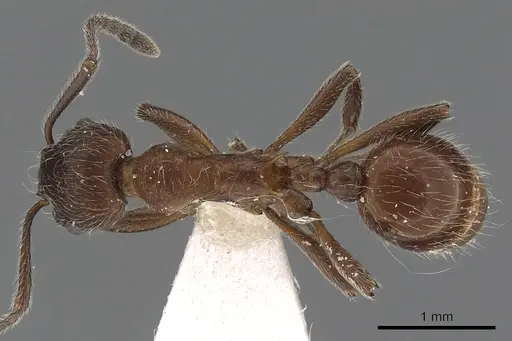
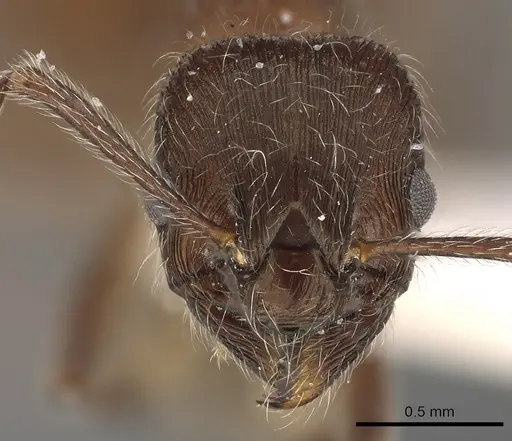
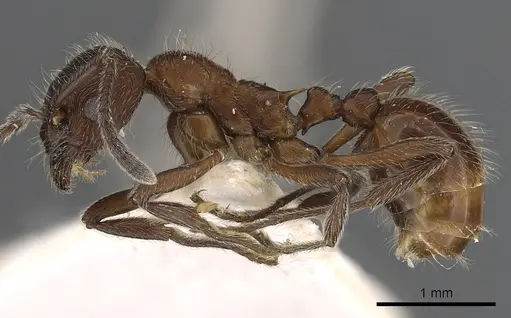
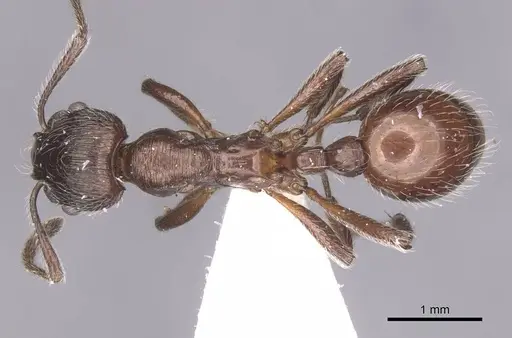
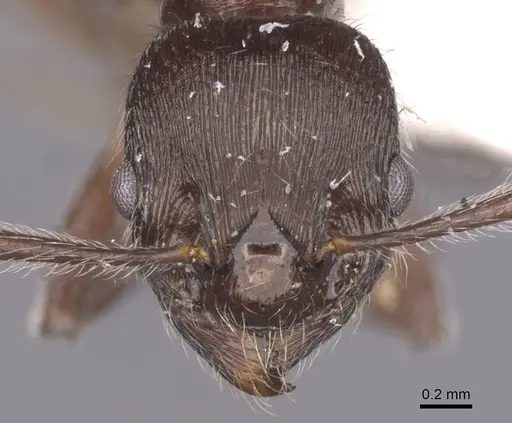
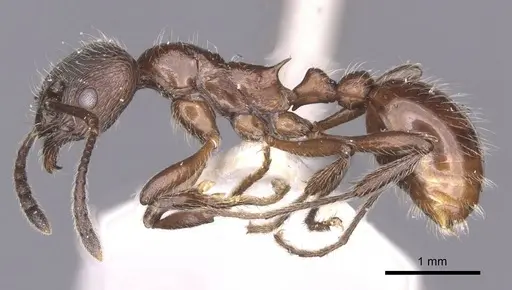
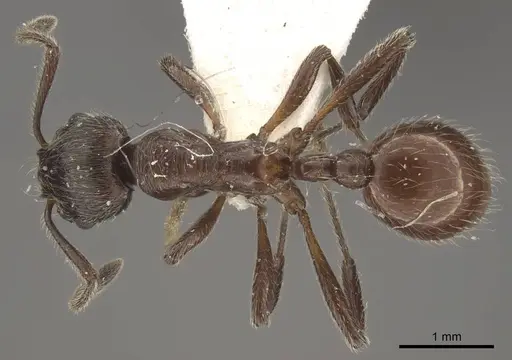
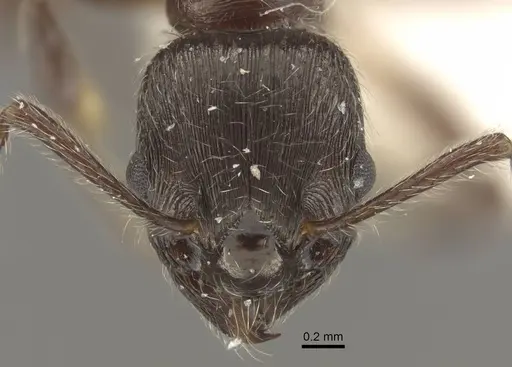
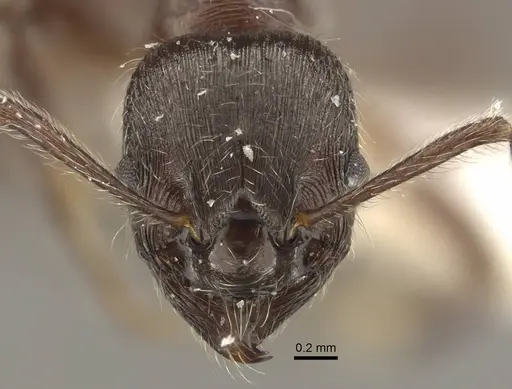
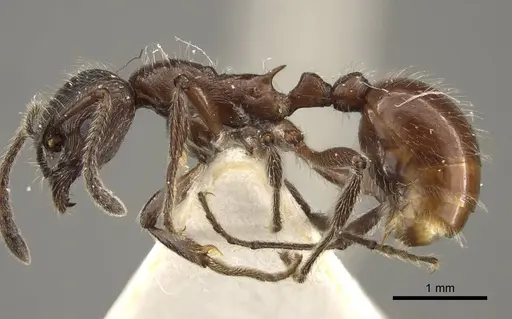
Myrmica villosa is a small ant species belonging to the pachei species-group. Workers and queens are distinguished by their dense, long, thin, curved body hairs and longer leg hairs, giving them a shaggy appearance - which is how they got their scientific name (villosa means 'shaggy' in Latin). They have a lighter brownish-red color on the mesosoma, waist, and gaster compared to their close relative Myrmica pachei, and uniquely possess only transversal striations on their mesosomal dorsum among the pachei-group species. This is an extremely rare ant, known only from the high Himalayas of Bhutan at 3300 meters elevation - one of the highest altitude Myrmica species documented. Males have never been collected .
Quick Summary
- Difficulty: Expert
- Origin & Habitat: Endemic to Bhutan in the Himalayan region, found only at the type locality at 3300 meters above sea level [2][1]. The high-altitude Himalayan habitat suggests cold, montane conditions with likely seasonal temperature extremes.
- Colony Type: Unconfirmed, no field observations of wild colonies exist.
- Size & Growth:
- Queen: Size data unavailable, no measurements exist for this species
- Worker: Size data unavailable, no measurements exist for this species
- Colony: Unknown, no colony size data exists
- Growth: Unknown
- Development: Unconfirmed, no development data exists for this species (No direct development data exists for this species.)
- Antkeeping:
- Temperature: Keep cool, aim for 15-20°C range. This species comes from 3300m altitude in the Himalayas where temperatures are cold year-round. Do not overheat.
- Humidity: Provide a humidity gradient, keep nest substrate consistently moist but not waterlogged.
- Diapause: Likely required, high-altitude Himalayan ants experience cold winters. Provide a hibernation period at 5-10°C for 3-4 months during winter months.
- Nesting: No captive nesting data exists. In nature, likely nests in soil or under stones in cool, shaded montane locations.
- Behavior: No behavioral observations have been documented in captivity or in the wild beyond the original type series collection. Based on typical Myrmica genus behavior, they may sting when disturbed.
- Common Issues: this species has never been kept in captivity, no established care protocols exist, extremely limited distribution means wild-caught colonies are virtually impossible to obtain, high-altitude origin makes them poorly suited to typical room temperatures, no male specimens have ever been collected, captive breeding may be impossible
Species Overview and Identification
Myrmica villosa is one of the rarest and most poorly known ant species in the Myrmica genus. It was described by Radchenko and Elmes in 1999 from a series collected in Bhutan at 3300 meters elevation, making it one of the highest altitude Myrmica species known [1]. The species belongs to the pachei species-group, which is defined by having only two original species: Myrmica pachei and Myrmica villosa [4]. The key identifying features include dense, long, thin, curved hairs covering the body (hence the name 'villosa' meaning shaggy), longer hairs on the legs, and a lighter brownish-red coloration on the mesosoma, waist, and gaster. Unlike other pachei-group species, M. villosa has only transversal striations on its mesosomal dorsum. Males have never been collected, leaving significant gaps in our understanding of their reproductive biology [1][3].
Natural History and Habitat
This species is known only from the type locality in Bhutan at approximately 3300 meters above mean sea level [2][1]. This extremely high-altitude Himalayan habitat experiences cool temperatures year-round, with significant seasonal variation. The area likely receives moisture from monsoons during summer months but experiences cold, potentially snowy winters. Virtually nothing is known about their foraging behavior, diet, colony size, or social structure in the wild. The type series was collected in June, suggesting summer is an active period. No other Myrmica villosa specimens have been documented since the original collection in 1972,making this one of the rarest ant species in the world [5][3].
Temperature and Cooling Requirements
This is perhaps the most critical aspect of keeping Myrmica villosa. Coming from 3300m elevation in the Himalayas, they are adapted to cool conditions and will likely not tolerate typical room temperatures commonly used for other ant species. Aim for a temperature range of 15-20°C, which is significantly cooler than most ant species require. A heating cable is not recommended, instead, keep them in a cool room or provide gentle cooling if needed. During summer months, you may need to actively cool the colony. In winter, provide a proper hibernation period at 5-10°C for 3-4 months to simulate the natural seasonal cycle they would experience at high altitude. This species is NOT suitable for beginners or those who keep their ants at room temperature. [2][1]
Feeding and Diet
No direct observations exist of what Myrmica villosa eats in the wild. Based on typical Myrmica genus behavior, they are likely omnivorous, feeding on honeydew, small insects, and nectar. Offer sugar water or honey as a constant energy source, and provide small protein sources like fruit flies, small mealworms, or other tiny arthropods. Given their likely cold-active nature, metabolism may be slower, offer food less frequently than you would for tropical species and remove uneaten food promptly to prevent mold.
Challenges and Ethical Considerations
Myrmica villosa presents extraordinary challenges for antkeepers. First, this species has never been documented in the antkeeping hobby, there are no established care protocols, no captive colonies, and no breeders working with this species. Second, the extreme high-altitude habitat makes them poorly adapted to typical captive conditions. Third, the species is a true Bhutan endemic with an extremely limited range, wild collection would be both ethically questionable and practically impossible [5]. Fourth, since males have never been collected, obtaining a reproducing colony may be impossible even if foundress queens could be obtained. This species is best appreciated as fascinating natural history rather than a realistic captive project. Consider working with more common Himalayan Myrmica species instead.
Frequently Asked Questions
Can I keep Myrmica villosa as a pet ant?
This species is not recommended for antkeeping. It has never been kept in captivity, comes from extreme high-altitude conditions that are difficult to replicate, and is virtually impossible to obtain since it has only been collected once in 1972. Consider more common Myrmica species instead.
What temperature does Myrmica villosa need?
Keep them cool, around 15-20°C. This is significantly cooler than most ant species require. They come from 3300m altitude in the Himalayas where temperatures are cold year-round.
How big do Myrmica villosa colonies get?
Unknown, no colony size data exists. The type series only includes workers and queens, with no information about maximum colony size.
Do Myrmica villosa ants sting?
Most Myrmica species can sting, and this species likely has that ability. However, no documented sting records exist for this specific species.
Where is Myrmica villosa found?
Only in Bhutan at approximately 3300 meters elevation. It is one of the rarest ant species known, with no specimens collected since the original type series in 1972.
How long does it take for Myrmica villosa to develop from egg to worker?
Unconfirmed, no development data exists for this species.
Is Myrmica villosa good for beginners?
No, this is an expert-level species that has never been kept in captivity. The care requirements (cool temperatures, unknown diet, no established protocols) make it completely unsuitable for beginners. Even experienced antkeepers would struggle with this species.
Does Myrmica villosa need hibernation?
Likely yes, given their high-altitude Himalayan origin, they almost certainly require a winter hibernation period. Provide 3-4 months at 5-10°C during winter months.
Can I breed Myrmica villosa in captivity?
Likely not. Males have never been collected, meaning the reproductive biology is completely unknown and captive breeding would be extremely difficult even if founding queens could be obtained.
What makes Myrmica villosa special?
It is one of the rarest ant species in the world, known only from a single collection in Bhutan at 3300m elevation. It belongs to the pachei species-group (one of only two species defining the group), has uniquely shaggy hair, and represents an extreme high-altitude specialist that has never been studied in the wild since 1972.
Report an Issue
The current care sheet is based fully on literature. See inconsistencies, or something that's incorrect? Please , it will be resolved after review from an admin. Contributing to the blogs tab also helps providing information, to make us be able to further improve the caresheets. Thank you for your support!
References

この飼育シートのライセンスは: CC BY-SA 4.0 .
コミュニティブログ
文献
分布マップを読み込み中...製品情報を読み込み中...