
Myrmica ereptrix
- 学名
- Myrmica ereptrix
- 族
- Myrmicini
- 亜科
- Myrmicinae
- 命名者
- Bolton, 1988
- 分布
- 0 か国で発見
紹介
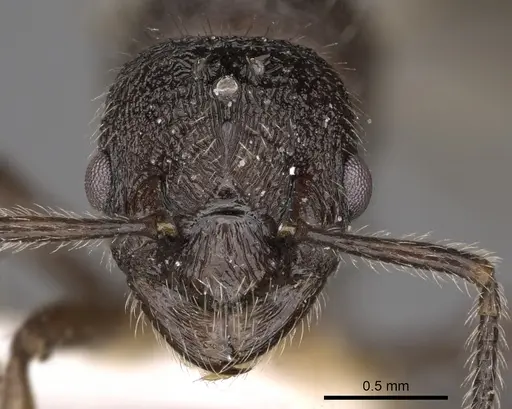
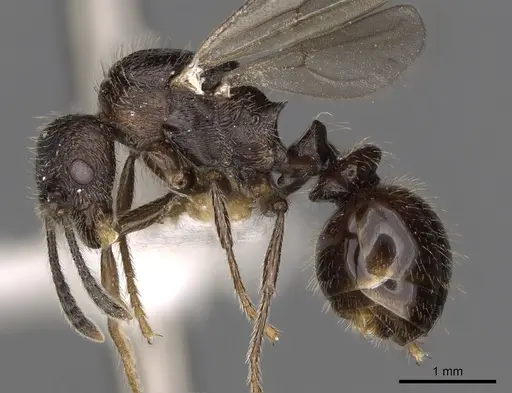
Myrmica ereptrix is an extremely rare social parasite known from only a single queen specimen collected in the Picea forests of Kashmir, India at 2800 meters elevation . The species name 'ereptrix' means 'thief' in Latin, chosen because researchers recognized it as almost certainly a social parasite living in the nest of another Myrmica species . The queen has distinctive features including an extremely wide petiole and postpetiole with large ventral lobes, and lacks spurs on the middle tibiae - all classic adaptations of inquiline parasites . This is one of the rarest and least-known Myrmica species in existence, with no documented workers, males, or captive colonies ever found.
Quick Summary
- Difficulty: Expert
- Origin & Habitat: Kashmir, India, Picea (spruce) forest at 2800m altitude [1][2]. Endemic to the Himalayan region.
- Colony Type: Permanent social parasite (inquiline). Only queens are known, males and workers have never been documented. The queen lives permanently in the nest of its host species, Myrmica aimonissabaudiae [3].
- Size & Growth:
- Queen: 6.1 mm total length [1].
- Worker: Size data unavailable, workers have never been found [3].
- Colony: Unknown, only a single queen has ever been documented [1].
- Growth: Unknown
- Development: Unknown, no colonies have ever been studied [3]. (This species is a permanent social parasite and cannot form colonies independently. It requires a host colony to survive.)
- Antkeeping:
- Temperature: Unknown, no captive data exists. Based on Himalayan elevation and host species, likely cool-adapted similar to other Himalayan Myrmica.
- Humidity: Unknown, no captive data exists.
- Diapause: Likely requires hibernation based on high-altitude Himalayan origin, but this is unconfirmed.
- Nesting: This species cannot be kept independently. As an inquiline parasite, it would require an established colony of its host species Myrmica aimonissabaudiae to survive, and even then successful maintenance has never been documented.
- Behavior: No behavioral observations exist. As an inquiline parasite, the queen lives permanently within the host colony, relying on host workers to feed and care for her and her brood [3]. The extremely modified body structure (wide petiole/postpetiole, reduced middle tibial spurs) is characteristic of permanent social parasites that have evolved to integrate into host colonies.
- Common Issues: this species has never been kept in captivity, there is no established care protocol., only a single queen specimen exists in scientific collections, making any captive attempt unprecedented., as an inquiline parasite, it cannot survive without a host Myrmica colony and would require maintaining both species., no workers or males have ever been found, so colony establishment would be impossible even if housing were possible., the extremely limited distribution and rarity makes finding any specimens for captive purposes essentially impossible.
Why This Species Cannot Be Kept
Myrmica ereptrix is one of the rarest ant species in the world and cannot be maintained in captivity. This is not a matter of difficulty, it is fundamentally impossible with current knowledge. Only a single queen has ever been documented in scientific literature, collected in 1986 from a Picea forest in Kashmir [1]. No workers, no males, and no colonies have ever been found or studied [3]. As a permanent social parasite (inquiline), this species cannot survive independently. It lives its entire life within the nest of its host species, Myrmica aimonissabaudiae, relying on host workers for food and care [3]. Even if you could obtain both the parasite and the host species, maintaining an inquiline relationship in captivity has never been successfully documented for any Myrmica species.
Taxonomy and Discovery
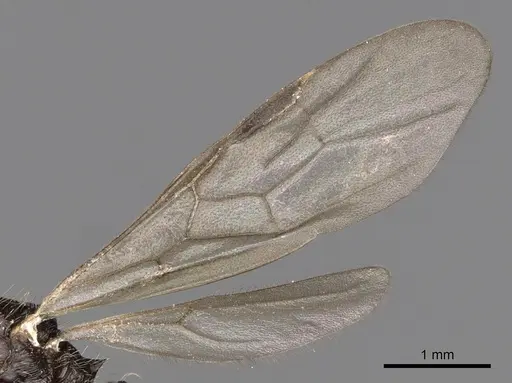
Myrmica ereptrix was described by Barry Bolton in 1988 based on a single dealate queen collected by P.H. Williams on July 20,1986,at Gulmarg in Kashmir, India [1]. The queen was found mounted on the same pin as two workers from its host colony, Myrmica rugosa (later corrected to Myrmica aimonissabaudiae) [1][3]. The species was originally placed in the rugosa species-group but was transferred to the smythiesii group in 2016 based on morphological analysis [3]. The extremely modified body, particularly the bizarrely wide petiole and postpetiole with large ventral lobes, immediately separated it from other Myrmica species and indicated the 'bizarre inquiline syndrome' characteristic of permanent social parasites [1].
Identification and Morphology
The queen of Myrmica ereptrix can be identified by several distinctive features. The most striking is the extremely wide petiole and postpetiole, both with well-developed large ventral lobes, this is the most exaggerated version of this trait among Himalayan Myrmica parasites [3]. The middle tibiae completely lack spurs, while the hind tibiae have narrow but conspicuous pectinate spurs [1]. The head has longitudinal divergent rugae on the dorsum, with reticulation present only on the vertex and temples [3]. The propodeal spines are pointed and distinctly divergent. The body color is reddish-brown in the queen [3]. These modifications are classic adaptations that allow inquiline queens to integrate into host colonies without being attacked.
Distribution and Habitat
Myrmica ereptrix is known only from the type locality in Jammu and Kashmir, India, at approximately 2800 meters elevation [4][2]. The single known specimen was collected from a Picea (spruce) forest, indicating a cool, high-altitude habitat [1][2]. The species is endemic to India and represents one of the rarest Myrmica species in the Himalayan region [5]. Nothing is known about its seasonal biology, nuptial flight timing, or any other aspect of its natural history beyond the single specimen collection event.
Frequently Asked Questions
Can I keep Myrmica ereptrix as a pet ant?
No. This species has never been kept in captivity and cannot be maintained. Only a single queen has ever been documented in scientific history. As a permanent social parasite, it requires a host colony to survive and would need both species to be maintained together, something that has never been attempted or documented.
Where can I find Myrmica ereptrix?
This species is essentially impossible to find. It is known from only a single specimen collected in 1986 in Kashmir, India. No additional specimens have been found despite targeted surveys in the Himalayan region. Even professional myrmecologists have not located additional colonies.
What does Myrmica ereptrix eat?
Unknown. As an inquiline parasite, it would be fed by host workers rather than foraging itself. No observations of feeding behavior exist. Even if you could maintain both parasite and host, the specific trophallaxis (food-sharing) relationship has never been studied.
How do I start a colony of Myrmica ereptrix?
You cannot. Starting a colony would require obtaining both the parasite queen and an established colony of its host species Myrmica aimonissabaudiae, then successfully introducing the parasite, an unprecedented challenge with no documented success for any Myrmica inquiline species.
Is Myrmica ereptrix endangered?
It is listed as Vulnerable on the IUCN Red List, reflecting its extreme rarity and limited known distribution. However, the true conservation status is essentially unknown due to the lack of any population data.
Do Myrmica ereptrix queens have workers?
No workers have ever been documented. This is typical for inquiline parasites, they rely entirely on host workers rather than producing their own. The queen would lay eggs that are cared for by host workers, producing only reproductive castes (new queens and males) that leave to find new host colonies.
What is the difference between Myrmica ereptrix and other Myrmica ants?
Myrmica ereptrix is a permanent social parasite (inquiline) while most Myrmica species are independent colony-formers. It cannot survive without a host colony, has extremely modified body structures for integration into host nests, and has never been found with workers. This makes it fundamentally different from keeping any other Myrmica species.
Can I catch a Myrmica ereptrix queen during nuptial flights?
No. Nuptial flights have never been observed or documented for this species. Males are completely unknown to science. The timing, location, and behavior of reproduction remains entirely unstudied.
Report an Issue
The current care sheet is based fully on literature. See inconsistencies, or something that's incorrect? Please , it will be resolved after review from an admin. Contributing to the blogs tab also helps providing information, to make us be able to further improve the caresheets. Thank you for your support!
References

この飼育シートのライセンスは: CC BY-SA 4.0 .
コミュニティブログ
CASENT0900296
AntWebで見る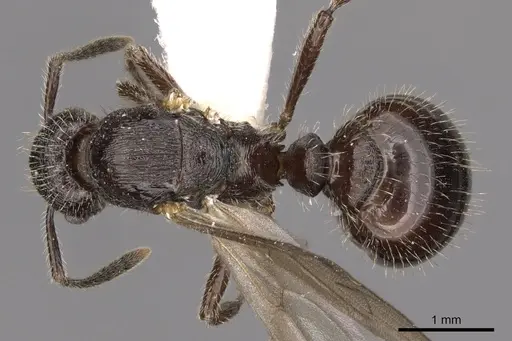
文献
分布マップを読み込み中...製品情報を読み込み中...