
Monomorium speluncarum
- 学名
- Monomorium speluncarum
- 族
- Solenopsidini
- 亜科
- Myrmicinae
- 命名者
- Santschi, 1914
- 分布
- 0 か国で発見
紹介
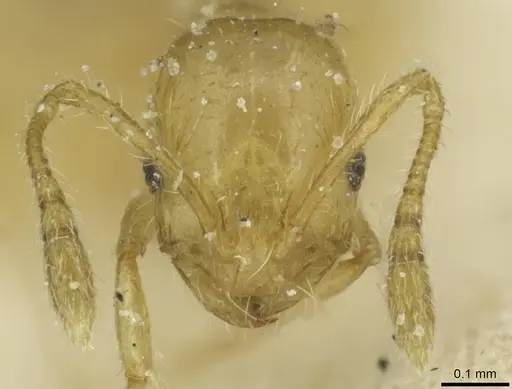
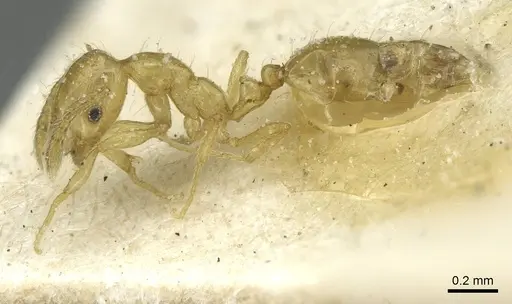
Monomorium speluncarum is a tiny ant, with workers measuring 1.5–1.7 mm in total length, making it one of the smallest known species in the genus . Workers are uniformly pale yellow with a smooth, featureless body and relatively long antennal scapes that reach the occipital margin when laid back . This species belongs to the Monomorium monomorium species group, specifically the schultzei complex, and is distinguished by its minute (pinhole-like) propodeal spiracle combined with a broad, deeply cross-ribbed metanotal groove . The species was originally collected from the entrance of a cave in coastal Kenya (Shimoni), with a single additional record from Tanzania where workers were found foraging on a tree (Heywoodia lucens) . What makes M. speluncarum particularly interesting is its extreme rarity – it is known from only a handful of specimens collected at a few scattered locations in East Africa. This is a species that most antkeepers will never encounter in the hobby, as it has never been documented in captive husbandry. The cave entrance origin suggests it may prefer shaded, relatively stable microclimates with some humidity. Its tiny size and limited distribution make it a challenging species to study, let alone keep.
Quick Summary
- Difficulty: Unknown, Insufficient Data
- Origin & Habitat: Coastal Kenya (Shimoni) and Tanzania (Mkomazi Game Reserve). Originally collected from the entrance of a cave, suggesting shaded, humid microhabitats with stable conditions [1][2].
- Colony Type: Unknown – colony structure has not been documented. Based on related Monomorium species, likely single-queen colonies, but this is unconfirmed.
- Size & Growth:
- Queen: Unknown – queen has not been described in scientific literature
- Worker: 1.5–1.7 mm [1][2]
- Colony: Unknown – likely small based on the extreme rarity of specimens
- Growth: Unknown
- Development: Unknown – no development data exists for this species. Based on typical Monomorium patterns and their tiny size, development may be relatively fast (4–8 weeks at optimal temperature), but this is purely speculative. (Development timeline is unconfirmed. Related tiny Monomorium species typically develop quickly, but specific data for M. speluncarum does not exist.)
- Antkeeping:
- Temperature: Likely moderate temperatures (20–26°C) based on its coastal East African origin. The cave entrance origin suggests it may prefer stable conditions without extreme temperature swings. Start around 22–25°C and observe colony activity.
- Humidity: Likely requires moderate to high humidity given the cave entrance collection site. Keep the nest substrate consistently moist but not waterlogged, with some drier areas available for the ants to self-regulate.
- Diapause: Unknown – no data on overwintering requirements. Kenya and Tanzania are tropical/subtropical, so a true diapause may not be required. However, a slight seasonal slowdown during cooler months may occur.
- Nesting: No captive nesting data exists. The type specimen was collected from a cave entrance, suggesting it may nest in protected microhabitats with stable humidity. Based on related species, likely accepts small test tubes or small plaster or 3D‑printed nests with appropriate humidity. Given the tiny worker size (1.5–1.7 mm), chambers and passages must be very small.
- Behavior: Behavior is unstudied. Based on related Monomorium species, these are likely generalist foragers that search for small prey and honeydew. The extremely small size (1.5–1.7 mm workers) means escape prevention is critical – they can squeeze through remarkably tiny gaps. Aggression levels are unknown but likely low given the tiny size. Foraging appears to occur on vegetation (trees) based on the Tanzania finding [2].
- Common Issues: extreme rarity makes this species essentially unavailable to antkeepers, tiny size requires excellent escape prevention – standard test tube setups may need additional barriers, no captive husbandry information exists – all care recommendations are speculative, colony size is unknown but likely small, making colonies fragile, no information on queen founding behavior or development timeline exists
Species Discovery and Rarity
Monomorium speluncarum was first described by Santschi in 1914 from specimens collected at Shimoni, a coastal location in Kenya [1]. The type series came from the entrance of cave A, collected by Charles Alluaud and René Jeannel during an expedition to East Africa [1]. For decades, this species remained known only from the original type collection. In 2020,a small number of workers were discovered in Tanzania's Mkomazi Game Reserve – this represented the first record of the species from Tanzania and only the second known collection site overall [2]. The workers were found foraging on Heywoodia lucens, a tree in the coastal forest environment [2]. This species is exceptionally rare in both natural habitat and scientific collections, with only a handful of specimens ever documented.
Identification and Distinguishing Features
105), reaching the occipital margin when laid straight back [1].
Natural Habitat and Distribution
This species is known from only two locations in East Africa: the original type locality in coastal Kenya (Shimoni) and a single site in Tanzania's Mkomazi Game Reserve [1][2]. The Shimoni collection site was specifically described as 'entrance of cave A' – this suggests a shaded, humid microhabitat with relatively stable temperature conditions [1]. The Tanzania specimens were found foraging on a tree (Heywoodia lucens) at height, indicating this species does forage in vegetation [2]. The coastal region of Kenya and Tanzania experiences a warm, humid tropical climate. The cave entrance origin is particularly interesting as it suggests this species may prefer microhabitats with reduced light exposure and stable moisture levels. The apparent rarity of this species could reflect either genuinely low population numbers or highly specialized habitat requirements that make it difficult to detect.
Keeping Monomorium speluncarum – Speculative Care Guide
Since Monomorium speluncarum has never been documented in captive ant keeping, all care recommendations must be considered highly speculative. Based on the species' origin (cave entrance in coastal Kenya) and its extremely small size, the following approach would be reasonable to attempt: Use a small test tube setup or small plaster or 3D‑printed nest with chambers scaled to the tiny 1.5–1.7 mm worker size. Maintain moderate to high humidity – the cave entrance origin suggests they prefer damp conditions. Temperature should be in the low‑to‑mid 20s Celsius (around 22–25°C), avoiding extremes. Given the Tanzania finding of workers foraging in trees, providing some vertical foraging space may be beneficial. Feed small prey items appropriate to their tiny size – fruit flies, springtails, or other very small arthropods. Sugar water or honey diluted with water would likely be accepted. Escape prevention is critical due to their minute size – standard barriers may need reinforcement. However, it cannot be stressed enough that no established husbandry protocol exists for this species, and success would require careful observation and experimentation.
Frequently Asked Questions
Can I keep Monomorium speluncarum as a pet ant?
This species is essentially unavailable to antkeepers. It is known from only a handful of specimens collected at two locations in East Africa and has never been documented in the ant-keeping hobby. There is no established care protocol, and wild colonies would be extremely difficult to locate and collect.
How big do Monomorium speluncarum colonies get?
Colony size is unknown. Based on the extreme rarity of specimens and the tiny worker size, colonies are likely small – probably under 100 workers. This is speculative, as no colony has ever been documented.
What do Monomorium speluncarum ants eat?
Diet is unconfirmed. Based on related Monomorium species, they likely forage for small insects, honeydew, and nectar. The Tanzania specimens were found on a tree, suggesting they may forage in vegetation. In captivity, small live prey (fruit flies, springtails) and sugar sources (honey water, sugar water) would be reasonable to offer.
What temperature do Monomorium speluncarum ants need?
Optimal temperature is unknown. Based on their coastal East African origin, moderate temperatures around 22–25°C would be a reasonable starting point. The cave entrance origin suggests they prefer stable conditions without major temperature fluctuations.
How long does it take for Monomorium speluncarum to develop from egg to worker?
Development timeline is completely unknown – no research exists on the biology of this species. Related tiny Monomorium species typically develop relatively quickly (4–8 weeks at warm temperatures), but this is purely speculative for M. speluncarum.
Do Monomorium speluncarum need hibernation?
Diapause requirements are unknown. Kenya and Tanzania are tropical/subtropical regions without cold winters, so a true hibernation period is likely not required. A slight seasonal slowdown during cooler months may occur naturally.
Is Monomorium speluncarum aggressive?
Aggression levels are unstudied. Based on related Monomorium species and their extremely tiny size, they are likely non‑aggressive and would flee from threats rather than engage. Their small colony size would also limit defensive capability.
What makes Monomorium speluncarum different from other Monomorium species?
M. speluncarum is one of the smallest known Monomorium species (1.5–1.7 mm workers) and has a unique combination of minute propodeal spiracle and broad, cross‑ribbed metanotal groove [1]. It is also exceptionally rare, known from only two locations in East Africa [1][2].
Can I keep multiple Monomorium speluncarum queens together?
Colony structure is completely unstudied. Whether this species is single‑queen (monogyne) or multi‑queen (polygyne) is unknown. Combining unrelated queens is not recommended given the complete lack of information on their founding behavior.
Report an Issue
The current care sheet is based fully on literature. See inconsistencies, or something that's incorrect? Please , it will be resolved after review from an admin. Contributing to the blogs tab also helps providing information, to make us be able to further improve the caresheets. Thank you for your support!
References

この飼育シートのライセンスは: CC BY-SA 4.0 .
コミュニティブログ
CASENT0913855
AntWebで見る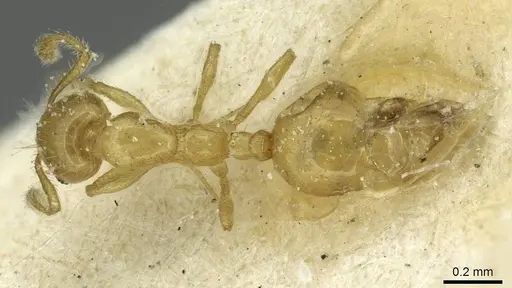
文献
分布マップを読み込み中...製品情報を読み込み中...