
Monomorium lindbergi
- 学名
- Monomorium lindbergi
- 族
- Solenopsidini
- 亜科
- Myrmicinae
- 命名者
- Pisarski, 1967
- 分布
- 0 か国で発見
紹介
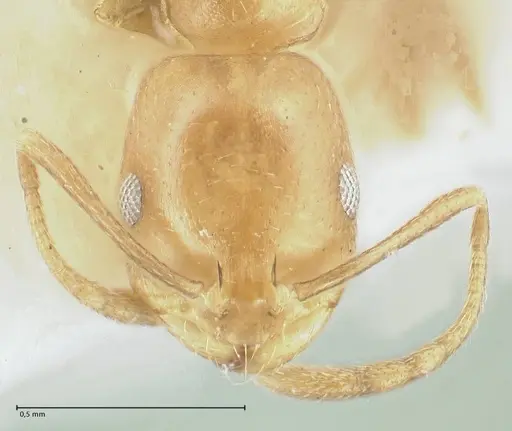
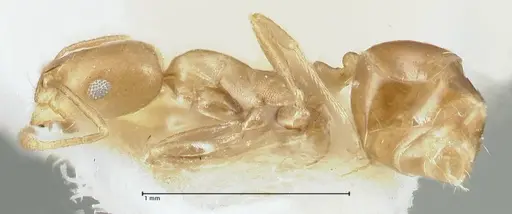
Monomorium lindbergi is a small brown ant species originally described from Afghanistan in 1967. Workers are brown with notably large eyes and feature a simple pair of hairs on the pronotum and first gastric tergite. This species has been documented in the Palaearctic region, specifically Afghanistan and northwestern China, where it was collected in salt desert habitat. The species remains poorly studied in the scientific literature, with limited information available on its biology and colony structure.
Quick Summary
- Difficulty: Hard
- Origin & Habitat: Palaearctic region, Afghanistan and northwestern China. Found in salt desert habitat in China and dry areas in Afghanistan at elevations ranging from 450-820m [1][2].
- Colony Type: Unconfirmed, colony structure has not been documented in scientific literature.
- Size & Growth:
- Queen: size data unavailable
- Worker: size data unavailable, workers described from type series but exact measurements not provided [1][2]
- Colony: Unknown, no colony size data available
- Growth: Unknown, no development data available
- Development: Unknown, no development studies exist for this species (Development timeline cannot be estimated with confidence due to lack of direct research.)
- Antkeeping:
- Temperature: Likely tolerates a wide range given its native habitat in Afghanistan and northern China, which experiences both hot summers and cold winters. Based on related species and habitat, room temperature (18-24°C) is likely suitable.
- Humidity: Low to moderate, native to salt desert and dry Afghan habitats. Keep substrate moderately dry with a small moist area available.
- Diapause: Likely required, the species originates from temperate regions with distinct seasons. Expect a winter rest period of 2-3 months at reduced temperatures (10-15°C).
- Nesting: Based on habitat data suggesting dry, desert-like conditions, this species likely prefers well-drained nesting sites. A test tube setup with a dry cotton section works as a starting point, or a Y-tong/plaster nest with minimal moisture.
- Behavior: Not well documented. Based on genus typical behavior, workers are likely active foragers that search for food both on the ground and may climb. Large eyes suggest some visual or light-related behavior. Escape risk is moderate, Monomorium workers are small but not among the tiniest ants. Use standard barrier methods. Temperament is likely non-aggressive, as is typical for the genus. This species has a sting but is too small to cause significant pain to humans.
- Common Issues: lack of documented care information makes proper husbandry challenging, winter diapause requirements are inferred but not confirmed, observe colony behavior, small size means escape prevention should be taken seriously despite moderate escape risk, no confirmed diet preferences, start with standard ant foods and observe acceptance, wild-caught colonies may have unknown parasites or health issues
Distribution and Habitat
Monomorium lindbergi is known from two main geographic areas: Afghanistan and northwestern China. The type specimens were collected from multiple locations in northern Afghanistan, including Tang Sayed (between Aibak and Tachqourgan, approximately 60km southeast of Mazar Chérif at 450m elevation), Qalat, and Asiabad at around 820m elevation [2]. In China, the species has been recorded from Fukang in Xinjiang, collected in August 1991 from a salt desert habitat [1]. This distribution across the Palaearctic region suggests the species is adapted to relatively harsh, dry environments with extreme temperatures, both hot summers and cold winters.
Identification and Distinguishing Features
Monomorium lindbergi can be identified by its brown coloration and notably large eyes. Workers have a simple pair of hairs on the pronotum (the first thoracic segment) and on the first gastric tergite (the first abdominal segment). The Chinese specimens showed slightly larger eyes and a more rectangular head shape compared to the original Afghan descriptions, but were otherwise consistent with Pisarski's original description [1]. This species is one of the larger Monomorium species in the region, though exact measurements are not provided in available literature.
Keeping Monomorium lindbergi in Captivity
Due to the lack of specific research on this species, keepers must rely on inference from related species and habitat data. The salt desert habitat in China and dry Afghan locations suggest this ant prefers relatively dry conditions. Keep the nest substrate moderately dry with only a small area providing moisture. Temperature can be room temperature (18-24°C), which should cover the species' tolerance range. A thermal gradient allowing the ants to choose their preferred temperature is ideal. For founding colonies, a standard test tube setup works well, keep it in a dark, quiet location and do not disturb the queen until workers emerge. Diapause is likely required given the temperate origin of this species, provide a 2-3 month winter rest period at 10-15°C.
Feeding and Diet
The specific diet of Monomorium lindbergi has not been documented. Based on typical Monomorium behavior, these ants are likely generalist feeders that accept both sugar sources and protein. In the wild, they probably forage for nectar, honeydew, and small insects. For captive colonies, offer sugar water or honey as a constant energy source, and protein sources such as small insects (fruit flies, pinhead crickets, mealworms) regularly. Start with small amounts and observe what the colony accepts. Remove uneaten food after 24-48 hours to prevent mold. Since this species has not been widely kept in captivity, be prepared to experiment with food acceptance.
Frequently Asked Questions
How do I care for Monomorium lindbergi ants?
Care information for this species is extremely limited due to lack of scientific research. Based on habitat data suggesting dry, desert-like conditions in its native range (Afghanistan and northwestern China), keep the nest moderately dry with minimal moisture. Room temperature (18-24°C) is likely suitable. Expect a winter diapause period of 2-3 months at reduced temperatures.
What do Monomorium lindbergi ants eat?
Their exact diet is unknown. Based on typical Monomorium behavior, they likely accept sugar sources (honey, sugar water) and protein (small insects). Start with standard ant foods and observe what your colony accepts. Remove uneaten food promptly.
Do Monomorium lindbergi ants need hibernation?
Likely yes, the species originates from temperate regions (Afghanistan and northern China) with distinct seasons. Provide a winter rest period of 2-3 months at temperatures around 10-15°C. Reduce feeding during this time.
How big do Monomorium lindbergi colonies get?
Colony size is unknown, no scientific data exists on maximum colony size for this species.
Is Monomorium lindbergi good for beginners?
This species is not recommended for beginners due to the complete lack of documented care information. The species is extremely rare in the antkeeping hobby, and no established care protocols exist. Beginners should start with better-documented species like Lasius niger, Camponotus species, or other Monomorium species with available care guides.
What is the colony structure of Monomorium lindbergi?
Colony structure (monogyne vs polygyne) has not been documented in scientific literature. The species has not been studied in enough detail to determine how many queens establish colonies.
How long does it take for Monomorium lindbergi to develop from egg to worker?
Development time is unknown, no research exists on the egg-to-worker timeline for this species.
Can I keep multiple Monomorium lindbergi queens together?
This has not been documented. Combining unrelated queens of this species is not recommended since we lack information on their founding behavior. In most Monomorium species, single-queen colonies are typical.
Where is Monomorium lindbergi found?
This species is known from Afghanistan and northwestern China (Xinjiang region). It inhabits dry, relatively harsh environments including salt desert habitat in China and elevated dry areas in Afghanistan at 450-820m elevation.
Report an Issue
The current care sheet is based fully on literature. See inconsistencies, or something that's incorrect? Please , it will be resolved after review from an admin. Contributing to the blogs tab also helps providing information, to make us be able to further improve the caresheets. Thank you for your support!
References

この飼育シートのライセンスは: CC BY-SA 4.0 .
コミュニティブログ
FOCOL1848
AntWebで見る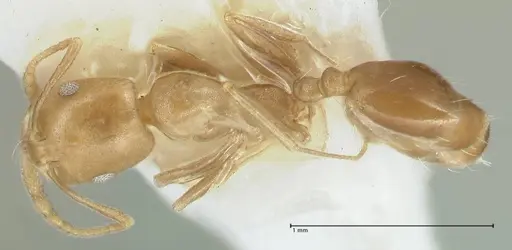
文献
分布マップを読み込み中...製品情報を読み込み中...