
Monomorium advena
- 学名
- Monomorium advena
- 族
- Solenopsidini
- 亜科
- Myrmicinae
- 命名者
- Brown & Wilson, 1957
- 分布
- 0 か国で発見
紹介
Monomorium advena is a small dark ant species endemic to the mountainous regions of Israel and Lebanon. Workers are tiny ants with the characteristic two-segmented waist (petiole and postpetiole) common to the genus Monomorium. This species is unusual in that it has only ergatoid queens - wingless reproductive females that develop from worker larvae rather than typical winged queens . Originally described under the name Epixenus andrei, it was initially thought to be a social parasite of Monomorium venustum, but research confirmed they form independent colonies with their own worker force . Found in Upper Galilee, northern Coastal Plain, Judean Hills, and Golan Heights .
Quick Summary
- Difficulty: Medium
- Origin & Habitat: Endemic to the northern mountains of Israel and Lebanon, specifically found in Upper Galilee, the northern Coastal Plain, Judean Hills, and Golan Heights [3]. They inhabit dry, rocky Mediterranean terrain at higher elevations.
- Colony Type: Ergatoid queen system, colonies are led by wingless ergatoid queens rather than typical winged queens. The species forms single-queen colonies. Ergatoid replacement reproductives may be present within established colonies [1].
- Size & Growth:
- Queen: size data unavailable, ergatoid queens are smaller than typical winged queens but no specific measurements exist in literature
- Worker: size data unavailable, no documented measurements in research literature
- Colony: Unknown, likely small colonies based on typical Monomorium patterns
- Growth: Moderate
- Development: unconfirmed, inferred from related Monomorium species (Development timeline is not specifically documented for this species)
- Antkeeping:
- Temperature: Keep at room temperature around 20-24°C. The mountainous origin suggests they can tolerate cooler conditions than typical tropical ants.
- Humidity: Low to moderate, they come from dry Mediterranean highlands. Keep nest substrate relatively dry with occasional misting, avoiding constant moisture.
- Diapause: Likely yes, given their temperate mountain origin, they probably need a winter rest period. A 2-3 month diapause at 10-15°C is recommended.
- Nesting: Natural nesting occurs in soil under stones in rocky terrain. In captivity, a test tube setup works well for founding colonies. For established colonies, a small formicarium with dry to moderately moist substrate and narrow chambers scaled to their tiny size is appropriate.
- Behavior: These are small ants with a functional sting. As members of the subfamily Myrmicinae and tribe Solenopsidini, they possess a stinger that can inject venom composed of piperidine alkaloids. However, due to their tiny size, the sting is mild and unlikely to penetrate human skin effectively. Workers are docile and not particularly aggressive. Escape prevention is critical due to their tiny size, they can squeeze through remarkably small gaps. Use fine mesh and tight-fitting lids.
- Common Issues: escape prevention is critical due to their very small size, they easily slip through standard barriers, limited distribution means wild colonies are rarely available, captive propagation is challenging, ergatoid queens may have lower fecundity than typical winged queens, slowing colony growth, winter diapause is likely required but specific timing and conditions are unconfirmed, dry habitat requirements mean overwatering is a common mistake that can kill colonies
Housing and Nest Setup
Monomorium advena is a tiny ant that requires appropriately scaled housing. For founding colonies, a standard test tube setup works well, fill the tube one-third with water, plug with cotton, and wrap the upper portion with dark material to create a claustraphobic environment. The small chamber size mimics their natural nesting in soil crevices under stones. Once the colony reaches 20-30 workers, you can transition to a small formicarium. Choose nests with narrow tunnels and small chambers, these ants feel secure in tight spaces and may abandon overly large, open areas. A small outworld for foraging completes the setup. Escape prevention cannot be overstated: their tiny size allows them to squeeze through gaps that seem impossible. Use fluon on test tube rims and ensure all connections are sealed with fine mesh. [2][3]
Feeding and Diet
Like most Monomorium species, M. advena is omnivorous with a preference for sugar sources and protein. Offer sugar water, honey, or diluted jam as a constant energy source. For protein, provide small prey items like fruit flies, pinhead crickets, or mealworm pieces. Given their tiny worker size, prey should be appropriately small, they cannot tackle large insects. In the wild, they likely forage for small arthropods and tend aphids for honeydew. Feed every 2-3 days, removing uneaten protein after 24 hours to prevent mold. Sugar water can be provided continuously via a cotton wick or small container. Observe worker activity, increased foraging indicates hunger or colony growth demands.
Temperature and Seasonal Care
This species originates from the cool, mountainous regions of Israel and Lebanon, so they prefer temperatures on the cooler side compared to many tropical ant species. Keep the nest area at approximately 20-24°C, with room temperature typically being suitable. Unlike many ants, they do not require strong heating, in fact, excessive heat can be harmful. You can create a gentle temperature gradient by placing part of the nest near a low-level heat source, allowing workers to self-regulate. During winter, provide a diapause period of 2-3 months at 10-15°C. This simulates their natural seasonal cycle in the mountainous Mediterranean climate. Reduce feeding during diapause and keep the colony in a cool, dark location like an unheated garage or basement. [2][3]
Understanding Ergatoid Queens
Monomorium advena is unusual in that it has only ergatoid queens, wingless females that develop from worker larvae rather than the typical winged queens seen in most ant species [1]. This means you will not see nuptial flights with winged reproductives. Instead, new ergatoid queens develop inside the colony and may replace the founding queen if she dies. When establishing a colony from a wild-caught queen, you may receive an ergatoid rather than a large winged queen. These queens are significantly smaller than typical queens of other species, which may affect their egg-laying rate and colony growth speed. The ergatoid system is a key identifying characteristic of this species and influences how you should approach colony founding and growth expectations.
Colony Growth Expectations
Growth rates for M. advena are not well-documented in scientific literature, but based on related Monomorium species, you can expect moderate development. The first workers (nanitics) typically appear several weeks after founding, though this is an estimate since specific development data for this species is lacking. Ergatoid queens may produce fewer eggs than typical winged queens, so initial colony growth may be slower than species with larger queens. A healthy founding colony should reach 30-50 workers within the first year under good conditions. Patience is key, small colonies in arid-adapted species often grow more slowly than tropical counterparts. Avoid the temptation to overfeed, as excess food mold kills colonies more quickly than mild hunger.
Frequently Asked Questions
How long does it take for Monomorium advena to produce first workers?
The egg-to-worker timeline is unconfirmed for this specific species. Factors like temperature and nutrition can affect development, cooler temperatures slow development while protein-rich diets speed it up.
Can I keep multiple Monomorium advena queens together?
This is not recommended. While the species has ergatoid (wingless) queens, they function within single-queen colony structures. Combining unrelated foundress queens has not been studied and would likely result in fighting. Let each queen found her own colony separately.
What do Monomorium advena eat?
They are omnivorous like most Monomorium species. Offer sugar water or honey as a constant energy source and small protein prey like fruit flies, micro crickets, or mealworm pieces every 2-3 days. Prey should be appropriately sized for their tiny workers.
Do Monomorium advena need hibernation?
Yes, a winter diapause is likely required given their origin in the temperate mountains of Israel and Lebanon. Provide 2-3 months at 10-15°C during winter. Reduce feeding and keep the colony in a cool, dark location.
Are Monomorium advena good for beginners?
They are rated as medium difficulty. While small and docile, their escape prevention requirements and specific temperature needs make them better suited for keepers who have already successfully kept at least one other ant species. Their rarity also makes them a more advanced choice.
Why are my Monomorium advena escaping?
Their tiny size allows them to squeeze through impossibly small gaps. Use fluon on all tube rims, ensure connections are sealed with fine mesh (0.5mm or smaller), and check for any cracks or gaps in your setup. Regular inspection is essential.
Where is Monomorium advena found in the wild?
They are endemic to the northern mountains of Israel and Lebanon, specifically in Upper Galilee, the northern Coastal Plain, Judean Hills, and Golan Heights. This restricted distribution makes them a rare species in the antkeeping hobby.
When will my colony reach maturity?
Colony maturity is reached when the colony produces new reproductives. For M. advena, this likely takes 1-2 years given their small colony size and ergatoid queen system. Growth is slower than many common ant species due to the smaller queen size and likely lower fecundity.
Report an Issue
The current care sheet is based fully on literature. See inconsistencies, or something that's incorrect? Please , it will be resolved after review from an admin. Contributing to the blogs tab also helps providing information, to make us be able to further improve the caresheets. Thank you for your support!
References

この飼育シートのライセンスは: CC BY-SA 4.0 .
コミュニティブログ
CASENT0904613
AntWebで見る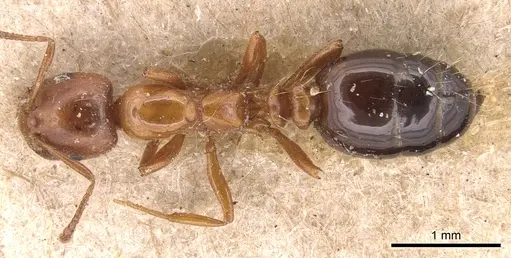
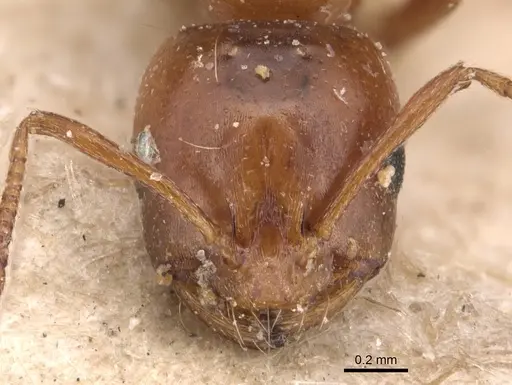
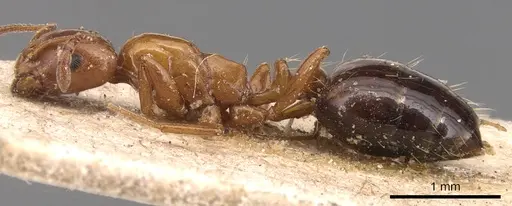
文献
分布マップを読み込み中...製品情報を読み込み中...