
Metapone africana
- 学名
- Metapone africana
- 族
- Crematogastrini
- 亜科
- Myrmicinae
- 命名者
- Taylor & Alpert, 2016
- 分布
- 0 か国で発見
紹介
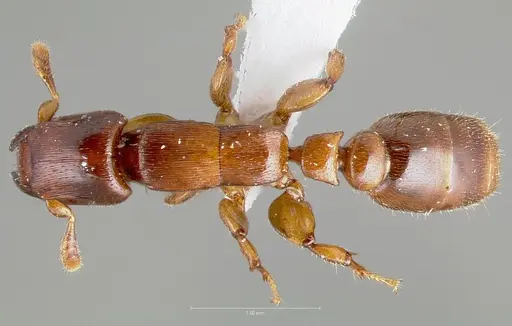
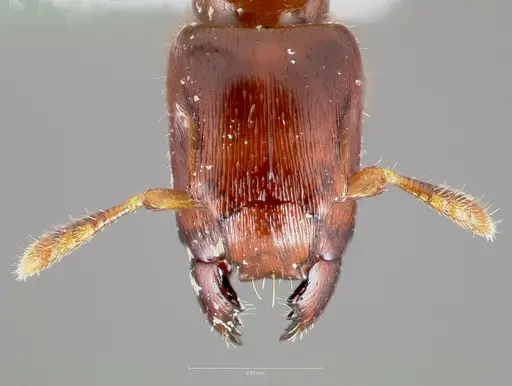
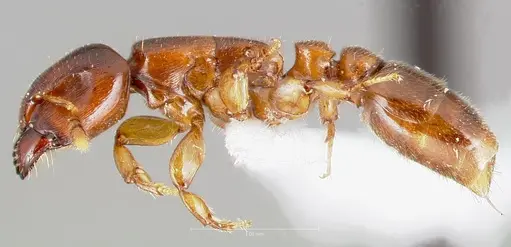
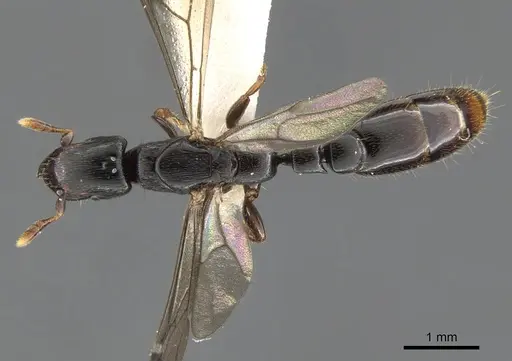
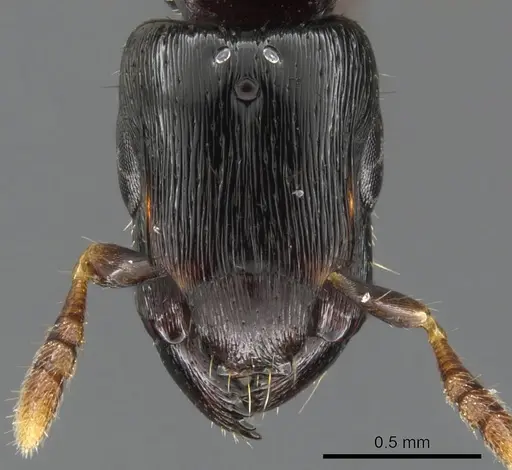
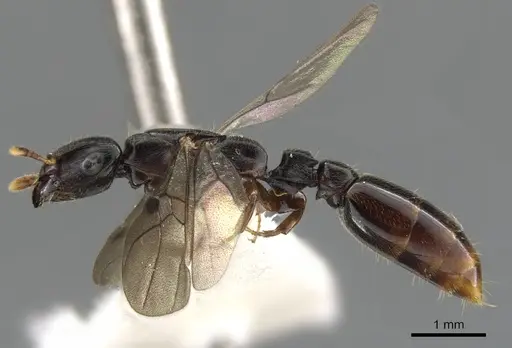
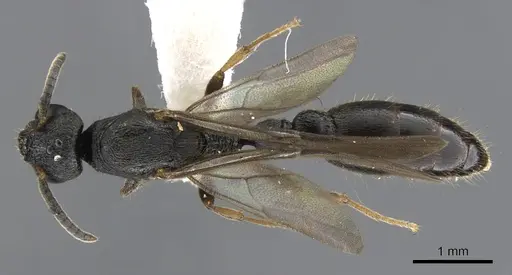
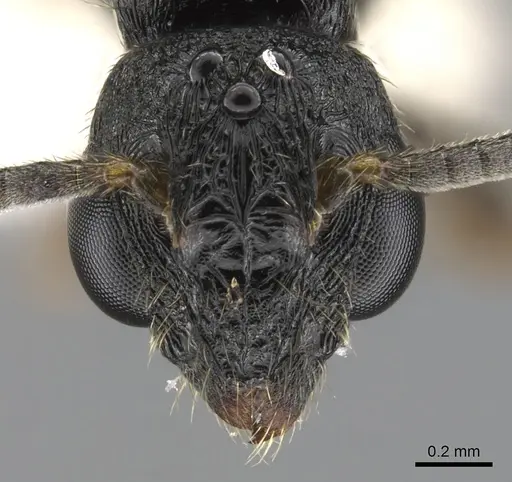
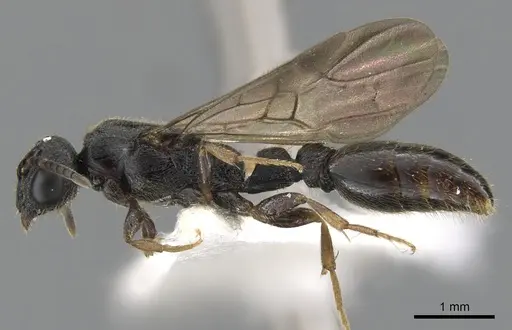
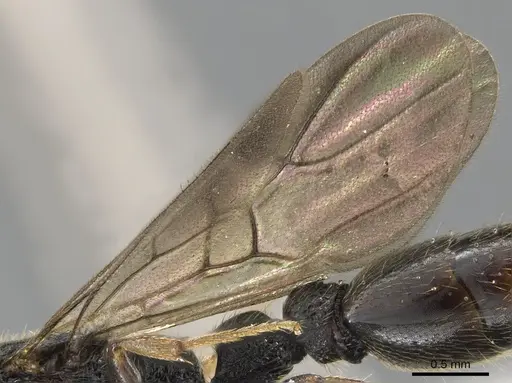
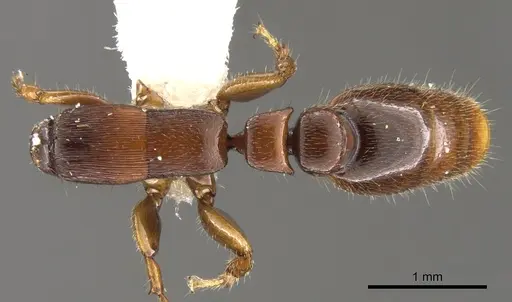
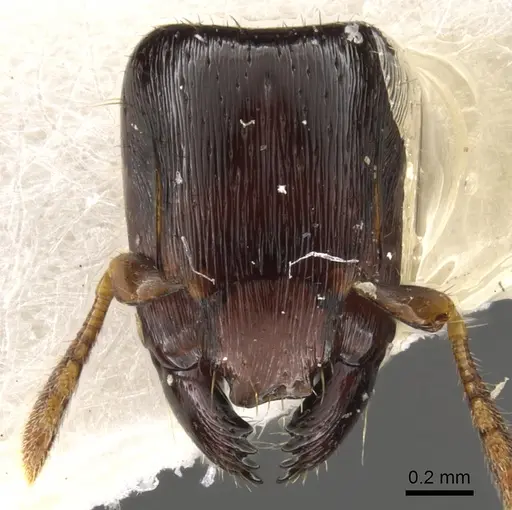
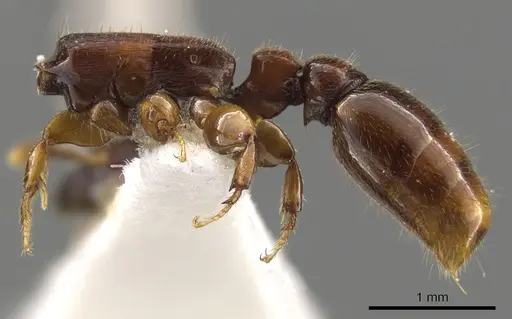
Metapone africana is a rare myrmicine ant from the rainforests of Gabon, West Africa. Workers are small at 3.9-4.3mm total length, with a smooth clypeus lacking median denticles and a petiole about as wide as long . They have vestigial eyes, appearing as tiny dark spots beneath the exoskeleton, indicating adaptation to life in complete darkness inside rotten wood . This species was described in 2016 and is known only from a few specimens collected in Gabon .
Quick Summary
- Difficulty: Expert
- Origin & Habitat: Gabon, West Africa, found in tropical rainforest at around 600m elevation, nesting inside rotten logs [1][2]
- Colony Type: Colony structure is unconfirmed, only a single queen and workers have been collected. Based on limited specimens, likely single-queen colonies [1].
- Size & Growth:
- Queen: Size data unavailable, no total length measurements for queens in the research
- Worker: 3.9-4.3mm [1]
- Colony: Unknown, only a handful of workers collected in the wild
- Growth: Likely slow to moderate based on genus patterns, but no direct data
- Development: Unknown, estimated 8-12 weeks based on typical Myrmicinae development in tropical conditions (No direct data exists for this species. Estimates are inferred from related genera.)
- Antkeeping:
- Temperature: Keep warm around 24-28°C, based on tropical rainforest habitat [1]
- Humidity: High humidity required, keep nest substrate consistently moist but not waterlogged, based on rotten wood habitat [1]
- Diapause: No, tropical species from Gabon likely do not require hibernation
- Nesting: Provide dark, humid nests with rotten wood or moist wood-based material, matching their natural habitat [1]
- Behavior: Behavior is unstudied, but based on vestigial eyes and wood-nesting, they are likely docile and non-aggressive. Primary defense is smearing venom with a modified stinger, typical of Myrmicinae Crematogastrini. Workers are small, so escape prevention with fine mesh is important [1].
- Common Issues: very limited distribution means wild colonies are rarely available, this species is not commonly kept, no captive husbandry information exists, keepers must experiment with conditions, tropical humidity requirements can be challenging to maintain consistently, slow colony growth may frustrate beginners expecting rapid development, rotten wood nests can mold if ventilation is poor or conditions too wet
Discovery and Taxonomy
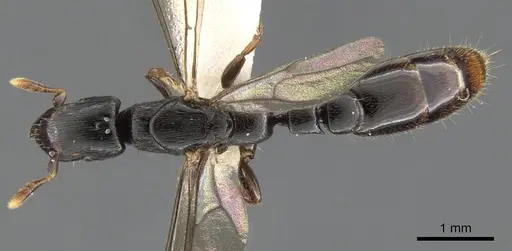
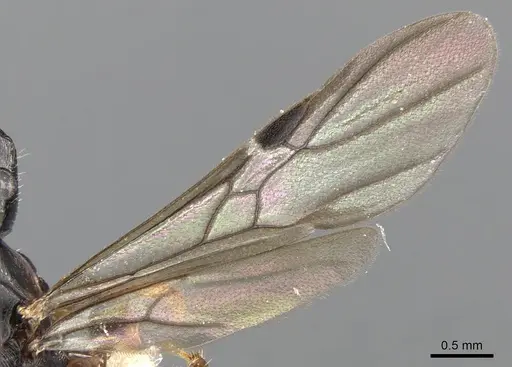
Metapone africana was described in 2016 by Taylor and Alpert, based on specimens from Gabon [1]. The genus Metapone is found in Old World tropics, and this species is known only from two locations in Gabon's rainforests [1]. The original description included worker, queen, and male specimens, but colony structure remains unconfirmed [1].
Unique Physical Features
Workers have vestigial eyes, appearing as tiny dark spots beneath the exoskeleton, with no functional surface structure [1]. They measure 3.9-4.3mm total length, with a smooth clypeus and petiole about as wide as long [1]. These features indicate adaptation to dark, subterranean life in rotten wood.
Natural Habitat and Nesting
In the wild, this species nests inside rotten wood in Gabon's rainforests at around 600m elevation [1]. For captivity, provide dark, humid conditions with moist wood-based nest material to replicate their natural habitat [1].
Feeding and Diet
Diet is unstudied. Based on related myrmicine ants, they likely accept small insects, honeydew, and sugar sources. Offer small protein like fruit flies and sugar water, observing what they accept.
Challenges and Care Considerations
This is an expert-level species due to rarity and lack of captive data. Maintain high humidity without mold, provide dark conditions, and be patient with slow growth. Wild-caught colonies are the only option, and year-round warmth is needed.
Frequently Asked Questions
How long does it take for Metapone africana to go from egg to worker?
No direct data. Estimated 8-12 weeks based on typical Myrmicinae development in tropical conditions.
What do Metapone africana ants eat?
Diet is unstudied. Likely accept small insects and sugar sources, based on related species.
Are Metapone africana ants aggressive?
No specific data, but likely docile due to small size and blind nature [1].
Do Metapone africana ants need hibernation?
No, tropical species from Gabon do not require hibernation.
What size colony does Metapone africana reach?
Unknown, likely small colonies based on limited wild specimens [1].
Can I keep Metapone africana in a test tube setup?
A test tube could work for founding, but a naturalistic setup with damp wood is better long-term.
Why does Metapone africana have no eyes?
Vestigial eyes are an adaptation to life in dark rotten logs, where vision is unnecessary [1].
Where is Metapone africana found in the wild?
Only in Gabon, West Africa, in tropical rainforest at around 600m elevation, from rotten wood [1][2].
Is Metapone africana a good species for beginners?
No, it is expert-level due to rarity, lack of husbandry data, and specific requirements.
How do I set up a nest for Metapone africana?
Provide a dark, humid nest with moist wood material, such as Y-tong with wood shavings or naturalistic setup [1].
Report an Issue
The current care sheet is based fully on literature. See inconsistencies, or something that's incorrect? Please , it will be resolved after review from an admin. Contributing to the blogs tab also helps providing information, to make us be able to further improve the caresheets. Thank you for your support!
References

この飼育シートのライセンスは: CC BY-SA 4.0 .
コミュニティブログ
文献
分布マップを読み込み中...製品情報を読み込み中...