
Messor excursionis
- 学名
- Messor excursionis
- 族
- Stenammini
- 亜科
- Myrmicinae
- 命名者
- Ruzsky, 1905
- 分布
- 0 か国で発見
紹介
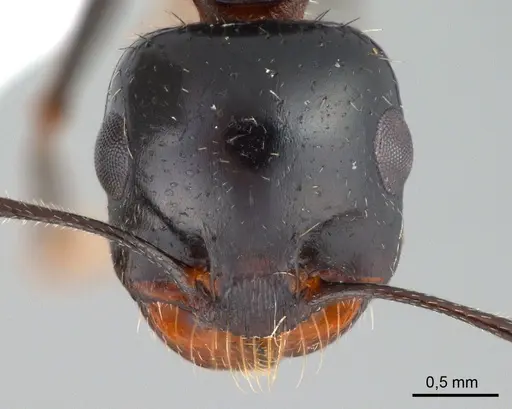
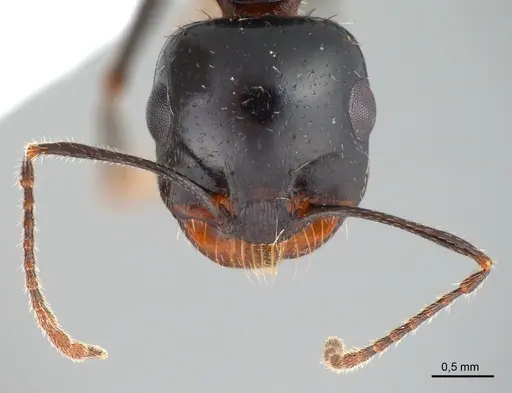
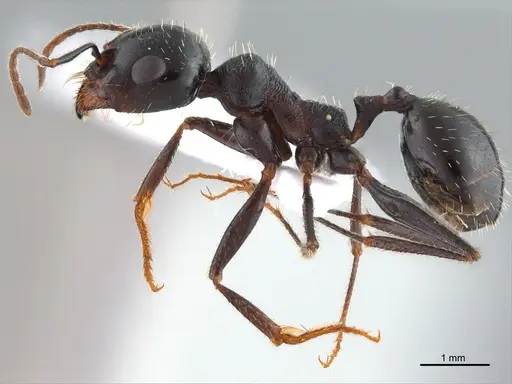
Messor excursionis is a medium-sized harvester ant native to arid and semi-arid regions of Central Asia, including China, Iran, Kazakhstan, Kyrgyzstan, Mongolia, and Turkmenistan . Workers measure 5.5-7.5 mm for major workers, with a distinct polymorphism where majors have larger heads and mandibles for seed processing . The species is black to dark brown with a smooth body surface and primarily collects and stores seeds as food. It inhabits desert and semidesert habitats at elevations from 1092 to 1850 m and is considered rare, restricted to specific phytogeographical regions like the Gobi Altai .
Quick Summary
- Difficulty: Medium
- Origin & Habitat: Central Asia, desert and semidesert regions of Kazakhstan, Mongolia (Gobi Altai), Iran, Kyrgyzstan, Turkmenistan, and western China at elevations of 1092-1850 m [4][3][2].
- Colony Type: Unconfirmed, no specific literature on queen number or social structure for this species.
- Size & Growth:
- Queen: Size data unavailable, no total length measurements in literature. Based on Messor genus patterns, likely around 8-10 mm.
- Worker: 5.5-7.5 mm for major workers [3]. Minor worker size is not specified in the context.
- Colony: Estimated to reach several thousand workers over time, based on related Messor species.
- Growth: Moderate
- Development: Estimated 6-10 weeks based on typical Messor genus development at optimal temperatures. (Development time is temperature-dependent, warmer conditions within acceptable range accelerate development.)
- Antkeeping:
- Temperature: Keep warm and stable, roughly 24-28°C, with a gradient for self-regulation. Adapted to desert conditions.
- Humidity: Keep nest substrate mostly dry with occasional moist areas, as they are desert-adapted [3][2].
- Diapause: Yes, based on temperate Central Asian range, winter diapause is likely required. Reduce temperature to 10-15°C for 2-3 months during winter.
- Nesting: Prefers dry, sandy substrates for seed storage. Y-tong (AAC) or plaster nests work well.
- Behavior: Generally peaceful but defensive when nest is threatened. Workers forage for seeds and use major workers to crack them open [3]. Not aggressive toward humans, escape risk is moderate for medium-sized ants.
- Common Issues: mold growth from excess humidity can kill the colony., seed storage spoilage from damp or old seeds can harm the colony., overheating above 30°C can be fatal, avoid direct sunlight., winter mortality from improper diapause conditions., colony stagnation from poor nutrition or insufficient seed variety.
Housing and Nest Setup
You can use standard formicarium setups like Y-tong (AAC) nests or plaster nests with chambers scaled to their size. Provide dry conditions, these are desert ants that struggle with excess moisture. Fill the outworld with a thin layer of sand or fine gravel to allow natural seed-harvesting behavior [3]. Include a water tube for drinking, but avoid saturating the nest material. Escape prevention is straightforward with standard barriers for medium-sized ants.
Feeding and Diet
As seed harvesters, offer a variety of seeds like grass, millet, poppy, and small sunflower seeds. Major workers crack larger seeds with their mandibles [3]. Occasionally supplement with small protein sources like crushed insects for colony growth. Sugar water or honey can be offered but is not required. Remove uneaten seeds that show signs of mold.
Temperature and Seasonal Care
Maintain nest temperatures between 24-28°C for optimal activity. A heating cable on one side creates a useful gradient. During winter, gradually reduce temperature to 10-15°C for 2-3 months to induce dormancy, which is essential for colony health. Keep the hibernation area dry to prevent moisture-related mortality.
Colony Development
A newly mated queen may seal herself in a chamber and lay eggs without foraging, founding behavior is unconfirmed. After several weeks, eggs hatch into larvae, and first workers emerge to begin foraging. Growth is moderate, colonies can reach several hundred workers within 1-2 years under good conditions. Major workers appear once the colony has dozens of workers. Colonies can live for many years with a healthy queen.
Behavior and Foraging
Workers forage for seeds during warmer hours, carrying them back to the nest. Seeds are stored and processed by major workers [3]. This species shows typical Messor behavior of maintaining midden piles outside the nest. They are not aggressive and typically retreat when disturbed. Workers live for several months, and the colony maintains a steady age structure.
Frequently Asked Questions
How long does it take for Messor excursionis to get first workers?
Expect first workers to emerge 6-10 weeks after egg laying, assuming temperatures around 25°C. This timeline varies with temperature, warmer conditions speed development.
Can I keep multiple Messor excursionis queens together?
This is unconfirmed, but based on typical Messor patterns, colonies are likely single-queen. Combining unrelated queens may result in fighting.
Do Messor excursionis ants need hibernation?
Yes, based on their temperate Central Asian range, winter diapause is likely required. Reduce temperatures to 10-15°C for 2-3 months during winter.
What do Messor excursionis eat?
They are seed harvesters, offer various seeds like grass, millet, and small sunflower seeds. Occasionally supplement with small insects for protein [3].
Are Messor excursionis good for beginners?
They are intermediate-level due to specific dry conditions and potential diapause needs. Harder than common pet trade species but easier than tropical ants.
How big do Messor excursionis colonies get?
Estimated to reach several thousand workers over several years, based on related Messor species.
Do Messor excursionis ants sting?
They have a stinger but rarely use it. These ants are docile and not aggressive toward humans.
When should I move my Messor excursionis to a formicarium?
Keep founding colonies in a test tube setup until they have 20-30 workers, then transfer to a proper formicarium with a foraging area.
Why is my Messor excursionis colony not growing?
Common causes include insufficient protein, temperatures too low, improper humidity, or lack of winter dormancy. Adjust factors accordingly.
Report an Issue
The current care sheet is based fully on literature. See inconsistencies, or something that's incorrect? Please , it will be resolved after review from an admin. Contributing to the blogs tab also helps providing information, to make us be able to further improve the caresheets. Thank you for your support!
References

この飼育シートのライセンスは: CC BY-SA 4.0 .
コミュニティブログ
ANTWEB1008072
AntWebで見る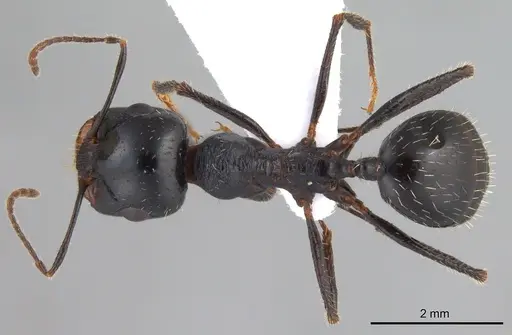
文献
分布マップを読み込み中...製品情報を読み込み中...