
Messor crawleyi
- 学名
- Messor crawleyi
- 族
- Stenammini
- 亜科
- Myrmicinae
- 命名者
- Santschi, 1928
- 分布
- 0 か国で発見
紹介
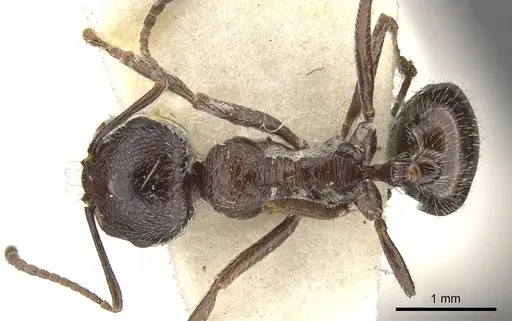
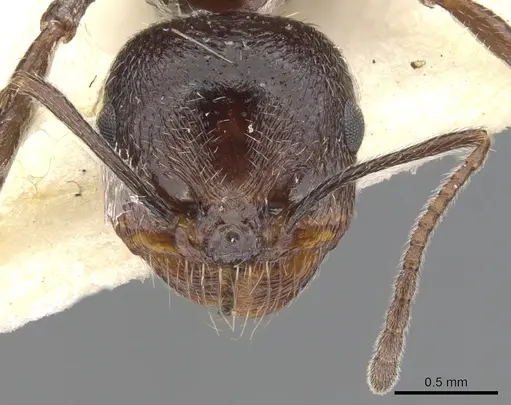
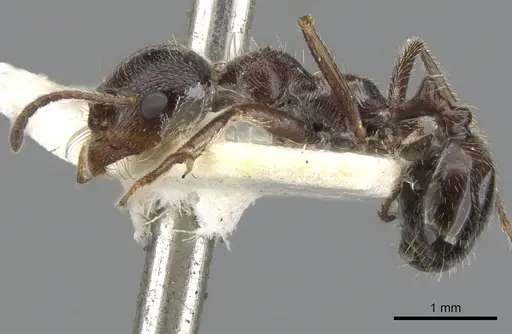
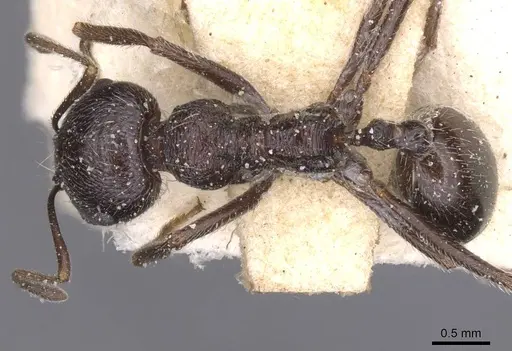
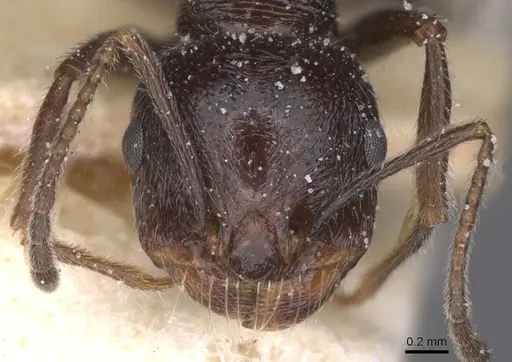
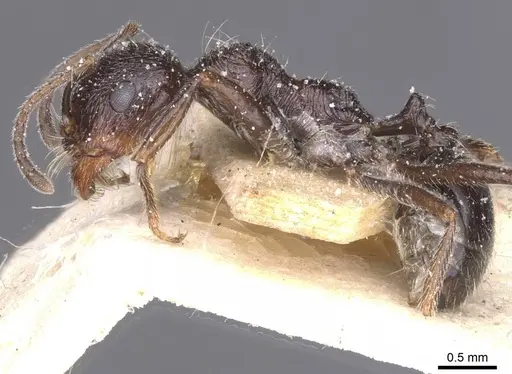
Messor crawleyi is a small brown harvester ant native to Egypt and Saudi Arabia . This species is characterized by large eyes, a sharply angled propodeum (the section between thorax and abdomen), and a well-developed psammophore - a brush of hairs around the mouth used for carrying sand and seeds. The head and body show distinctive striations (grooved patterns), while the abdomen is smooth and glossy. Workers are polymorphic with major workers being larger and capable of cracking harder seeds. These ants are seed-harvesting specialists that collect and store grains to feed their colony .
Quick Summary
- Difficulty: Easy
- Origin & Habitat: Egypt and Saudi Arabia, arid desert and semi-arid regions with sandy soils in the Palearctic biogeographic region [1][2].
- Colony Type: Monogyne (single-queen colonies). Like other Messor species, colonies establish with one founding queen who seals herself inside a chamber to raise the first workers alone.
- Size & Growth:
- Queen: Estimated 7-9mm, inferred from Messor genus patterns for medium-sized species
- Worker: Approximately 4-6mm, inferred from Messor genus patterns for this small species
- Colony: Several thousand workers at maturity, inferred from typical Messor colony development
- Growth: Moderate
- Development: Estimated 6-10 weeks based on related Messor species at optimal temperature (Development time varies with temperature, warmer conditions within acceptable range accelerate development)
- Antkeeping:
- Temperature: Keep at 24-30°C. These are desert ants that tolerate heat well. A heating cable on one side of the nest creates a gradient they can self-regulate.
- Humidity: Low to moderate, aim for 30-50% humidity. These are desert-adapted ants that prefer dry conditions. Keep the nest substrate relatively dry with only a small water tube for drinking access.
- Diapause: Likely a short winter rest period during cooler months, corresponding to their temperate/desert range. Reduce temperature to 15-18°C during this period.
- Nesting: Y-tong (AAC) or plaster nests work well for this species. They prefer compact chambers over large open spaces. A naturalistic setup with sand substrate also mimics their natural desert habitat. Avoid overly humid setups.
- Behavior: Generally peaceful and not aggressive toward keepers. Like other Messor ants, they are granivorous, they collect seeds and store them in the nest as food. Workers are polymorphic, with larger major workers capable of cracking harder seeds. They are active foragers that venture out to gather seeds and may form trails to food sources. Escape risk is moderate, use standard barrier methods but they are not particularly adept climbers.
- Common Issues: seed storage can lead to mold if humidity is too high, keep nesting area dry, desert species prone to fungal problems in overly humid setups, colonies may decline if not given enough seed variety in their diet, major workers are slow-moving and can be targets for predators if kept outdoors, test tube setups work but monitor for condensation buildup which they dislike
Nest Preferences and Housing
Messor crawleyi does well in Y-tong (AAC) or plaster nests with compact chambers scaled to their size. They prefer dry to moderately humid conditions, this is critical for their health. A naturalistic setup with a sand-filled chamber also works well and mimics their natural desert habitat. The psammophore (hair brush around their mouth) indicates they are adapted to working in sandy substrates, so providing some loose sand in the outworld allows them to engage in natural behaviors. Avoid setups with excessive moisture or poor ventilation, as these desert ants are prone to fungal problems in damp conditions. A small water tube should be provided for drinking access, but the nest itself should remain relatively dry.
Feeding and Diet
As a Messor species, M. crawleyi is primarily granivorous, they collect and store seeds as their main food source. Offer a variety of seeds including grass seeds, millet, and small grains. Major workers (larger ants) can crack larger seeds, while minor workers handle smaller seeds. You can also offer occasional protein sources like small insects or protein jelly, but seeds should form the bulk of their diet. Unlike some ants that need constant sugar water, Messor species get most of their carbohydrates from seeds. Provide a seed dish in the outworld and watch them carry seeds back to the nest for storage. Fresh water should always be available.
Temperature and Seasonal Care
Keep your colony at 24-30°C, these desert ants tolerate heat well and this range supports active foraging and brood development. A heating cable placed on one side of the nest creates a temperature gradient that allows the ants to self-regulate. During winter (roughly November-February in the Northern Hemisphere), reduce temperature to 15-18°C to simulate their natural seasonal cycle. This winter rest period is important for colony health and may trigger reproductive behavior in spring. Do not cool them abruptly, reduce temperature gradually over 1-2 weeks. They can tolerate brief temperature drops but should not be exposed to freezing temperatures.
Behavior and Colony Dynamics
Messor crawleyi colonies grow through a typical cycle: a claustral founding queen seals herself in a chamber, lays eggs, and raises the first workers (nanitics) entirely on her stored fat reserves. Once workers emerge, they take over foraging and nest maintenance while the queen focuses on egg-laying. Colonies are monogyne, meaning only one queen per nest. Workers are polymorphic, larger major workers develop over time and handle seed-cracking duties while smaller minors handle general tasks. The species is not aggressive and rarely bites. They are primarily active during cooler parts of the day in their natural habitat, so in captivity they may be most active when the temperature is at the lower end of their range.
Frequently Asked Questions
How long does it take for Messor crawleyi to raise first workers?
Expect first workers (nanitics) to emerge in 6-10 weeks after the queen lays eggs, assuming temperatures around 25-28°C. This timeline is based on related Messor species, the exact duration for M. crawleyi specifically has not been documented. The queen will remain sealed in her chamber until her first workers emerge.
What do Messor crawleyi ants eat?
They are seed harvesters, offer a variety of small seeds like grass seeds, millet, and commercial ant mixes. Seeds should be the primary food. You can occasionally offer small insects or protein jelly for variety, but this is not required. Fresh water must always be available.
Can I keep Messor crawleyi in a test tube setup?
Yes, test tubes work for founding colonies. Use a small water tube with a cotton plug for humidity, but keep the main chamber dry. Once the colony reaches 20-30 workers, consider moving to a Y-tong or naturalistic setup for better space and easier feeding.
Do Messor crawleyi ants need hibernation?
Yes, they benefit from a winter rest period of 2-3 months. Reduce temperature to 15-18°C from late fall through winter. This mimics their natural seasonal cycle in Egypt and Saudi Arabia and helps maintain colony health.
How big do Messor crawleyi colonies get?
Based on typical Messor species, colonies likely reach several thousand workers at maturity. Growth is moderate, expect 1-2 years to reach significant numbers under good conditions.
Are Messor crawleyi ants good for beginners?
Yes, this is a good beginner species. They are forgiving of minor temperature fluctuations, don't require high humidity, and their seed-based diet is easy to provide. The main things to watch are avoiding excessive humidity and providing proper winter cooling.
Do Messor crawleyi ants sting?
They have a stinger but are not aggressive and rarely use it. These ants are peaceful toward keepers and pose no real danger. If threatened, they may bite, but the bite is mild.
When should I move my Messor crawleyi colony to a formicarium?
Move from a test tube setup once the colony reaches 20-30 workers and you see seed storage behavior. A Y-tong or naturalistic setup with sand works well. They prefer compact chambers rather than large open spaces.
Why are my Messor crawleyi ants dying?
The most common causes are excessive humidity (leading to fungal growth) and poor diet variety. Ensure the nest area stays relatively dry, provide a variety of seeds, and always have fresh water available. Also verify temperature is in the 24-30°C range.
Can I keep multiple Messor crawleyi queens together?
No, this is a monogyne species with a single queen per colony. Combining unrelated queens will result in fighting. Only keep one queen per colony setup.
Report an Issue
The current care sheet is based fully on literature. See inconsistencies, or something that's incorrect? Please , it will be resolved after review from an admin. Contributing to the blogs tab also helps providing information, to make us be able to further improve the caresheets. Thank you for your support!
References

この飼育シートのライセンスは: CC BY-SA 4.0 .
コミュニティブログ
文献
分布マップを読み込み中...製品情報を読み込み中...