
Messor collingwoodi
- 学名
- Messor collingwoodi
- 族
- Stenammini
- 亜科
- Myrmicinae
- 命名者
- Bolton, 1982
- 分布
- 0 か国で発見
紹介
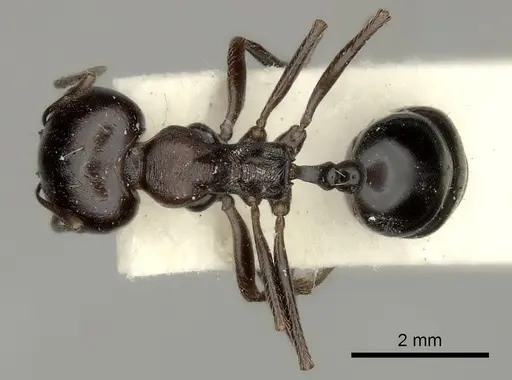
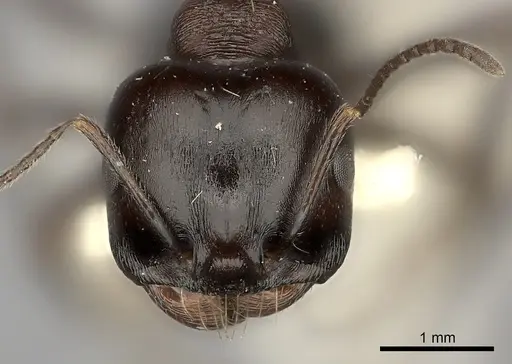
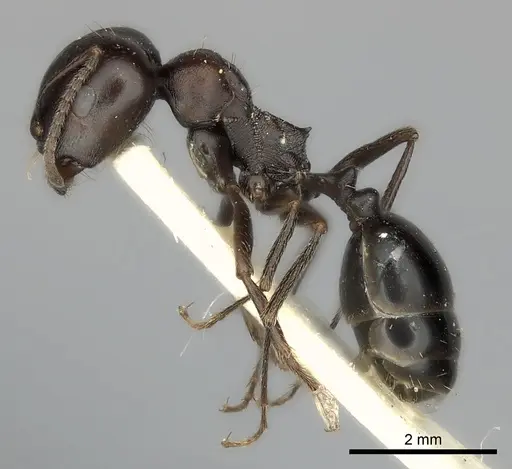
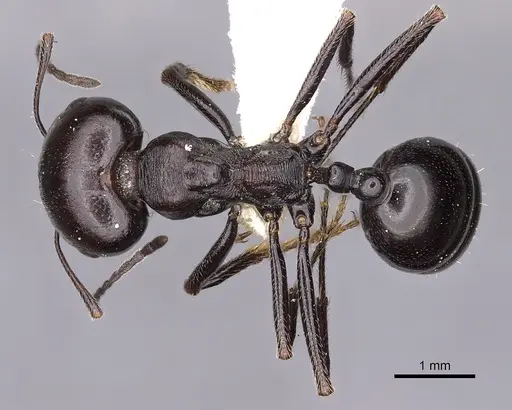
Messor collingwoodi is a medium to large harvester ant native to the Sahel region of West Africa, specifically Mali and Niger . Workers are uniformly dark blackish brown, with a sculptured head, persistent propodeal spines, and a nearly hairless first gastral tergite . The psammophore is strongly developed, typical of desert-dwelling harvester ants . Only the worker caste is known - queens and males have not been described in scientific literature . This species is part of the aegyptiacus-group and is distinguished from similar Messor by its combination of propodeal hairs and spines plus extensive head sculpturing .
Quick Summary
- Difficulty: Unknown
- Origin & Habitat: Sahel region of West Africa (Mali, Niger) in arid to semi-arid savanna and desert fringe areas [1]
- Colony Type: Unconfirmed, no data on queen number or social structure
- Size & Growth:
- Queen: Size data unavailable, no measurements described
- Worker: Size data unavailable, only head width measurements exist, which are not full body size
- Colony: Unknown, no colony size data for this species
- Growth: Unknown
- Development: Unknown, no development data available (No direct data, all care is inferred from genus patterns with hedging)
- Antkeeping:
- Temperature: Keep warm, roughly 22-28°C, based on Sahel habitat [1]. Provide a gentle gradient if possible.
- Humidity: Keep relatively dry, provide a small water tube but avoid damp substrate, based on arid habitat [1].
- Diapause: Unknown, no data on seasonal cycles, based on genus patterns, some Messor species require winter rest, but this is unconfirmed for M. collingwoodi.
- Nesting: Use Y-tong (AAC) or plaster nests with fine sand or soil substrate for seed storage, inferred from genus behavior [1].
- Behavior: Not directly studied. Based on genus patterns, workers are likely seed-harvesting and moderately defensive. Escape risk is moderate due to medium size, use standard barriers.
- Common Issues: no biological data exists, all care is inferred from genus patterns with hedging, queen and colony structure unconfirmed, cannot verify founding type or social structure, hibernation requirements are unknown, no documentation, growth rate and development timeline are unknown, wild-caught colonies may be difficult to obtain since only workers are known
Identification and Appearance
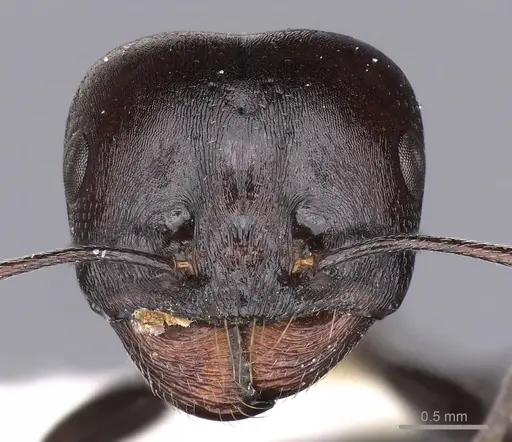
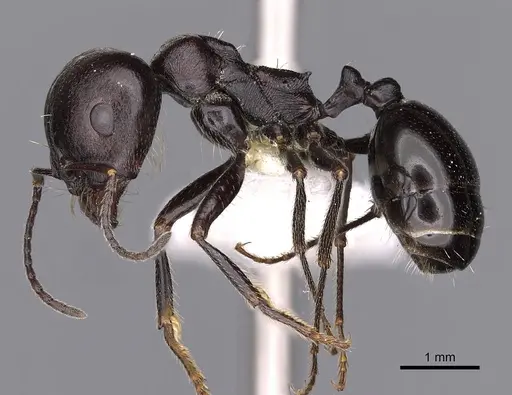
Messor collingwoodi workers are medium to large ants, uniformly very dark blackish brown. The head is extensively sculptured with fine reticulate-punctate texture and longitudinal rugulae along the midline [1]. The propodeum bears a pair of short, triangular spines that are somewhat downcurved [1]. The first gastral tergite is essentially hairless, a key identifying feature [1]. A strongly developed psammophore, a brush of J-shaped hairs, is present on the underside of the head, used for carrying sand and seeds [1]. Eyes are fairly large, about 0.20-0.22 times head width, but this is head measurement, not full body size [1].
Distribution and Habitat
Messor collingwoodi is known only from the Sahel region of West Africa, specifically Mali and Niger [1]. The type locality is Azanyares in Niger, collected in March 1979 [1]. This region has arid to semi-arid conditions with distinct wet and dry seasons [1]. The species is part of the aegyptiacus-group, adapted to similar arid environments [1].
Nest Preferences and Housing
No specific nesting observations exist for this species. Based on genus Messor patterns, these ants naturally nest in soil with underground chambers [1]. For captivity, use Y-tong (AAC) or plaster nests with some vertical space [1]. Include a section with fine sand or soil for seed storage, mimicking natural granary behavior [1]. Provide a small water tube but keep substrate relatively dry [1]. Moderate ventilation prevents mold while maintaining slightly humid air.
Feeding and Diet
Messor ants are primarily granivores, collecting and storing seeds as their main food source [1]. In captivity, offer small seeds like grass seeds, millet, or commercial ant seed mixes [1]. Supplement with tiny protein pieces occasionally, but seeds should form the bulk of their diet [1]. Provide a shallow foraging area for seed collection and a constant supply of fresh water [1].
Temperature and Seasonal Care
As a Sahel species, Messor collingwoodi requires warm conditions, roughly 22-28°C [1]. A heating cable can create a gentle temperature gradient [1]. Diapause is unconfirmed, based on genus patterns, some Messor species need a winter rest at 10-15°C for 3-4 months, but this is not documented for M. collingwoodi [1].
Behavior and Colony Dynamics
No specific behavioral observations exist for this species. Based on genus patterns, workers are active foragers that collect seeds and defend the nest vigorously if threatened [1]. Workers communicate chemically and may use tandem-running to recruit nestmates [1]. Escape prevention should be moderate, use standard barriers like fluon on test tube rims [1].
Frequently Asked Questions
How long does it take for Messor collingwoodi to produce first workers?
The egg-to-worker timeline is unknown for this species. No direct development data exists [1].
What do Messor collingwoodi ants eat?
As harvester ants, they primarily eat seeds. Offer small seeds like grass seeds or millet, and provide fresh water [1].
Do Messor collingwoodi ants need hibernation?
Hibernation requirements are unknown. Based on genus patterns, some Messor species need winter rest, but this is unconfirmed for M. collingwoodi [1].
What size colony does Messor collingwoodi reach?
Colony size is unknown for this species. No data on maximum worker count [1].
Can I keep Messor collingwoodi in a test tube?
A test tube setup can work for a founding queen and early colony, but move to a proper nest once the colony grows, as they need space for seed storage [1].
Is Messor collingwoodi good for beginners?
Difficulty is unknown since this species has no captive history. Based on genus, it may be moderate due to specific seed-based dietary needs [1].
Do Messor collingwoodi ants sting?
Stinging behavior is not documented for this species. Most Messor ants can sting but are not particularly aggressive [1].
Where can I get a Messor collingwoodi queen?
This species is extremely rare in the hobby. Only workers have been described, no queens are known [1]. Wild collection in Mali/Niger presents significant challenges [1].
What temperature should I keep Messor collingwoodi at?
Aim for 22-28°C in the nest area, based on Sahel habitat [1].
Why are my Messor collingwoodi dying?
Without specific data, common issues include temperature too cold, substrate too wet, insufficient seed variety, or stress from disturbance [1].
Report an Issue
The current care sheet is based fully on literature. See inconsistencies, or something that's incorrect? Please , it will be resolved after review from an admin. Contributing to the blogs tab also helps providing information, to make us be able to further improve the caresheets. Thank you for your support!
References

この飼育シートのライセンスは: CC BY-SA 4.0 .
コミュニティブログ
文献
分布マップを読み込み中...製品情報を読み込み中...