
Meranoplus duyfkeni
- 学名
- Meranoplus duyfkeni
- 族
- Crematogastrini
- 亜科
- Myrmicinae
- 命名者
- Forel, 1915
- 分布
- 0 か国で発見
紹介
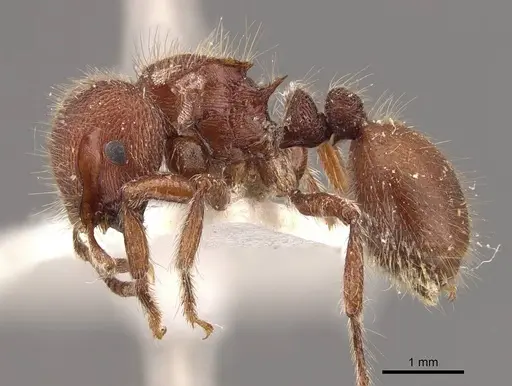
Meranoplus duyfkeni is a medium-sized myrmicine ant native to north-western Australia, specifically the Kimberley District of Western Australia. Workers measure 6.15-7.15mm in total length and have a distinctive appearance with a unique translucently flanged promesonotal shield featuring projections on the mesonotal hind margin directed posteriorly . The body is concolorous brown to fuscous. This species belongs to the Meranoplus orientalis species group and nests in the ground . This ant is notable for its granivorous diet, meaning it collects and consumes seeds as a primary food source . This is relatively unusual among Australian Myrmicinae. The genus Meranoplus is known for their distinctive shield-like pronotum structure, and this species exemplifies that characteristic with its uniquely flanged promesonotal shield that conceals the lateral sides of the mesosoma.
Quick Summary
- Difficulty: Unknown, no captive care data available
- Origin & Habitat: Restricted to north-western Australia, specifically the Kimberley District of Western Australia. Nests in the ground in arid to semi-arid tropical regions [1].
- Colony Type: Colony structure is unconfirmed. Only limited specimen data exists, no published information on queen number or colony size in wild colonies.
- Size & Growth:
- Queen: Unconfirmed, only a single paralectotype queen exists in type material, but measurements not detailed in original description [1].
- Worker: 6.15-7.15 mm total length [1]
- Colony: Unknown, no colony size data available
- Growth: Unknown, no development data available
- Development: Unconfirmed, no development studies exist for this species (Development time is unknown for this species.)
- Antkeeping:
- Temperature: Unconfirmed, likely tolerates warm conditions typical of tropical northern Australia. Start around 24-28°C and observe colony activity. Provide a temperature gradient allowing workers to self-regulate.
- Humidity: Likely prefers dry to moderate conditions given the arid Kimberley region. Allow nest substrate to dry partially between waterings. Avoid overly damp conditions.
- Diapause: Unconfirmed, northern Australian species may have reduced activity during dry season rather than true winter diapause. Observe colony behavior for seasonal slowdowns.
- Nesting: Ground-nesting species. In captivity, a standard formicarium with soil or sand substrate works well. Provide deep enough substrate for nest construction. A naturalistic setup with a digging medium allows natural tunneling behavior.
- Behavior: Granivorous diet, these ants collect and process seeds, a relatively uncommon trait among Myrmicinae. Workers are moderate-sized and likely forage individually or in small groups. Escape risk is moderate due to their 6-7mm size, standard barrier methods should suffice. This species belongs to the subfamily Myrmicinae, which uses a smear defense mechanism where venom is wiped onto enemies rather than piercing flesh.
- Common Issues: no captive care information exists, this species has never been kept in captivity, granivorous diet may require specialized seed offerings not readily accepted, wild-caught colonies may carry parasites or fail to adapt to captive conditions, limited distribution means specimens are rarely available, founding behavior is unconfirmed
Species Identification and Appearance
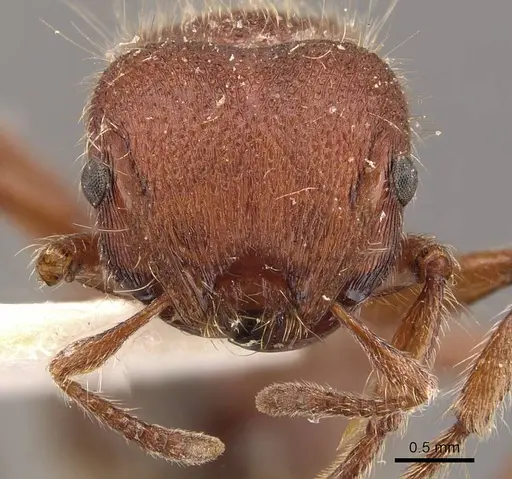
Meranoplus duyfkeni is a distinctive medium-sized ant measuring 6.15-7.15mm in total length. The most diagnostic feature is the unique translucently flanged promesonotal shield with projections on the mesonotal hind margin directed posteriorly. The head is wider than long, with evenly rounded preoccipital corners and a concave rear margin. The promesonotum is trapezoid and wider than long, with a narrow translucent margin that conceals the lateral sides of the mesosoma. Workers have propodeal spines of medium length that are acute, straight, and distinctly diverging when viewed from above. The body coloration is concolorous brown to fuscous. The mandibles have four teeth, and the clypeus is bluntly bidentate. [1]
Distribution and Habitat
This species is restricted to north-western Australia, specifically the Kimberley District of Western Australia. The Kimberley region is characterized by a tropical to semi-arid climate with distinct wet and dry seasons. These ants nest in the ground, and the region experiences high temperatures for much of the year. The habitat consists of savanna and woodland ecosystems with seasonal rainfall. No specific microhabitat details have been documented in the scientific literature. [1]
Diet and Foraging
Meranoplus duyfkeni is granivorous, meaning it collects and consumes seeds as a primary food source [1]. This is a relatively unusual trait among Australian Myrmicinae, as most species in this subfamily are omnivorous or predatory. In captivity, you should offer a variety of small seeds alongside protein sources. Suitable seed options might include grass seeds, millet, or commercial ant seed mixes. However, since this species has never been kept in captivity, acceptance of captive food sources is entirely speculative. Offer small live insects as protein supplements, and sugar water or honey as an energy source. Observe carefully to determine what the colony accepts.
Captive Care Considerations
No captive husbandry information exists for this species, Meranoplus duyfkeni has never been documented as being kept in ant collections. This makes providing specific care advice impossible. If you obtain a colony, you will essentially be pioneering captive husbandry for this species. Start with standard Myrmicinae care: a formicarium with soil or sand substrate, moderate warmth, and allow the nest to partially dry between waterings. Offer seeds, protein, and sugar sources and observe preferences. Document your findings carefully as they would be valuable contributions to antkeeping knowledge.
Taxonomic History
Meranoplus duyfkeni was originally described by Forel in 1915 as a subspecies of Meranoplus diversus. It was later elevated to species status by Taylor in 1990. The lectotype worker was designated by Schödl in 2007 during a comprehensive revision of Australian Meranoplus species. The type material consists of workers and a single queen collected from the Kimberley District of Western Australia by collector E. Mjöberg. The species belongs to the Meranoplus orientalis species group, which contains two species. [1]
Frequently Asked Questions
Can I keep Meranoplus duyfkeni in captivity?
No information exists on captive husbandry for this species, it has never been documented as being kept in ant collections. While nothing prevents attempting to keep them, you would be pioneering all aspects of their care.
What do Meranoplus duyfkeni ants eat?
This species is granivorous, meaning it primarily eats seeds [1]. In captivity, you could offer small seeds, protein sources like fruit flies or small insects, and sugar water. Acceptance of captive foods is unconfirmed.
How big do Meranoplus duyfkeni colonies get?
Unknown, no colony size data has been published.
Where is Meranoplus duyfkeni found?
This species is restricted to the Kimberley District in north-western Western Australia [1].
Do Meranoplus duyfkeni ants sting?
Meranoplus species belong to the Myrmicinae subfamily which uses a smear defense mechanism, venom is wiped onto enemies rather than piercing flesh. The sting severity for this specific species is unstudied.
How long does it take for Meranoplus duyfkeni to develop from egg to worker?
Unconfirmed, no development studies exist for this species.
What temperature should I keep Meranoplus duyfkeni at?
Unconfirmed, no captive data exists. Based on their tropical Australian distribution, aim for 24-28°C and provide a temperature gradient so workers can self-regulate.
Is Meranoplus duyfkeni good for beginners?
No, this species has never been kept in captivity and has no documented care requirements. It would be an expert-level species for those interested in pioneering new species in the hobby.
Do Meranoplus duyfkeni queens need to forage during founding?
Unconfirmed, founding behavior has not been documented for this species.
Can I keep multiple Meranoplus duyfkeni queens together?
Unknown, no published data exists on colony structure for this species. Without data, combining unrelated queens is not recommended.
Report an Issue
The current care sheet is based fully on literature. See inconsistencies, or something that's incorrect? Please , it will be resolved after review from an admin. Contributing to the blogs tab also helps providing information, to make us be able to further improve the caresheets. Thank you for your support!
References

この飼育シートのライセンスは: CC BY-SA 4.0 .
コミュニティブログ
CASENT0908938
AntWebで見る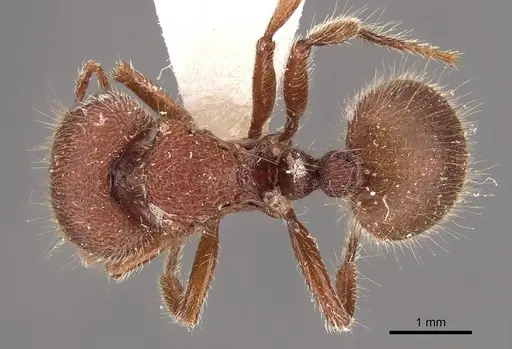
文献
分布マップを読み込み中...製品情報を読み込み中...