
Leptogenys lattkei
- 学名
- Leptogenys lattkei
- 族
- Ponerini
- 亜科
- Ponerinae
- 命名者
- Bharti & Wachkoo, 2013
- 分布
- 0 か国で発見
紹介
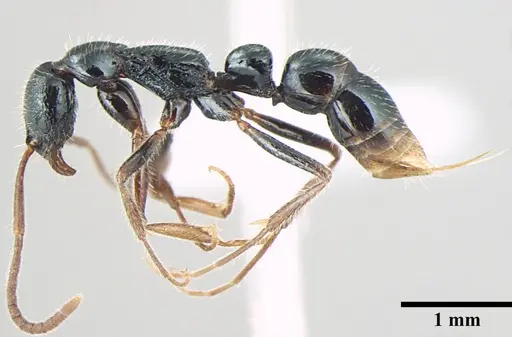
Leptogenys lattkei is a medium-sized predatory ant endemic to the Himalayas in northern India. Workers measure 5.45-5.68mm in total length with a distinctive black body, brown antennae, mandibles, legs, and gastral apex. They have a slender build with a subquadrate petiole and long antennae that extend beyond the head. This species was discovered nesting in soil along stone embankments in the Shivalik range at 940m elevation, with workers foraging during evening hours . The original description includes an ergatogyne (wingless queen), indicating the species has replacement reproductives. The species was named in honor of ant taxonomist John E. Lattke for his contributions to the genus Leptogenys.
Quick Summary
- Difficulty: Medium
- Origin & Habitat: Endemic to the Shivalik range of the Northwest Himalayas in Himachal Pradesh, India, at approximately 940m elevation. Found in a largely leaf-litter-free area surrounded by tea gardens and pine forests. Nests in soil on stone embankments along roadsides [1][2].
- Colony Type: Colony structure is not well documented. The original description includes both workers and an ergatogyne (wingless queen), indicating the species has replacement reproductives that can take over egg-laying duties [1]. Based on typical Leptogenys patterns, single-queen colonies are likely.
- Size & Growth:
- Queen: Ergratogyne measurements not provided in original description [1]
- Worker: 5.45-5.68mm [1]
- Colony: Unknown, no colony size data available
- Growth: Unknown, no development data available for this species
- Development: Unknown, development has not been studied for this species (Development timeline is unconfirmed. Specific timing for L. lattkei has not been documented.)
- Antkeeping:
- Temperature: Based on the Himalayan origin (Himachal Pradesh at 940m elevation), this species likely prefers moderate temperatures. Aim for 20-25°C with a gentle gradient. Avoid extreme heat, the temperate mountain habitat suggests they are not heat-tolerant.
- Humidity: Moderate to high humidity likely preferred. The stone embankment nesting location suggests they tolerate some dryness but need access to moisture. Keep nest substrate slightly moist but not waterlogged.
- Diapause: Likely yes, Himalayan origin suggests a winter rest period is needed. Expect 2-3 months at 10-15°C during winter months, similar to other temperate Ponerinae.
- Nesting: In nature they nest in soil, often under stones or in stone embankments. In captivity, a naturalistic setup with soil or a Y-tong/plaster nest with some moisture works well. Provide a damp substrate area and a drier retreat space.
- Behavior: Leptogenys are predatory ants that hunt insects and other small invertebrates. Workers are active foragers, and this species was collected during evening hours, suggesting crepuscular or nocturnal activity patterns. They possess a stinger, being a Ponerinae ant, they have a functional sting for defense. They are likely more defensive than typical house ants due to their predatory nature. Escape prevention should be moderate, workers at 5.5mm are not tiny but can still climb smooth surfaces.
- Common Issues: predatory diet requirements, they need regular protein in the form of live insects, slow colony growth, Ponerinae colonies often grow more slowly than Myrmicinae, temperature sensitivity, being from a temperate Himalayan region, they may not tolerate overheating well, limited availability, this is a rarely kept species with limited captive breeding, humidity balance, getting the right moisture level without causing mold can be challenging
Origin and Natural Habitat
Leptogenys lattkei is endemic to the Shivalik range of the Northwest Himalayas in Himachal Pradesh, India, found at approximately 940 meters above sea level [1][2]. The type locality at Andretta is largely devoid of leaf litter, with surrounding habitat consisting mainly of tea gardens and pine forests. Workers were found nesting in soil on a stone embankment along a roadside, and foraging workers were collected during evening hours [1]. This suggests they are adapted to moderate elevations with some human-modified landscapes (tea gardens) nearby. The evening activity pattern indicates they may be crepuscular or partially nocturnal foragers.
Appearance and Identification
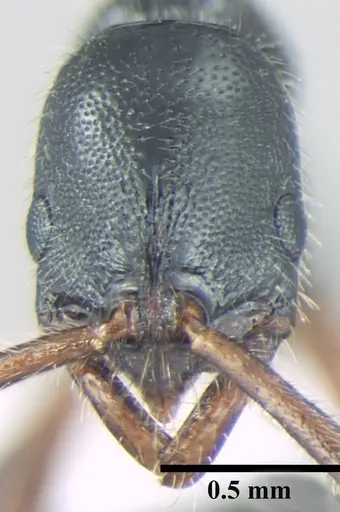
Workers measure 5.45-5.68mm in total length, making them medium-sized ants [1]. The body is mostly black with brown antennae, mandibles, legs, and the tip of the abdomen (gastral apex) [1]. They have a distinctive slender build with a subrectangular head that is wider anteriorly than posteriorly. The antennae are relatively long, the scape (first antennal segment) extends beyond the back of the head by about one-fifth of its length [1]. The petiole (the narrow waist segment) is subquadrate in side view and trapezoidal from above, longer than it is wide, this helps distinguish them from similar species like Leptogenys jeanettei which has a broader-than-long petiole [1]. The body has abundant erect hairs but no flat-lying pubescence, giving them a somewhat fuzzy appearance [1].
Feeding and Diet
As a Leptogenys species, this ant is predatory on small invertebrates. Leptogenys ants are known hunters that typically prey on isopods (woodlice), myriapods (centipedes/millipedes), and other soft-bodied insects [3]. In captivity, you should offer a diet based on live small insects such as fruit flies, small crickets, mealworms, and other appropriately-sized protein sources. They likely accept dead prey as well once the colony is established, but live prey triggers their hunting instincts. Sugar sources may be accepted occasionally, but protein-rich foods should form the primary diet. Feed protein 2-3 times per week, adjusting based on colony size and consumption rate.
Temperature and Seasonal Care
Based on the Himalayan origin in Himachal Pradesh at 940m elevation, this species is adapted to temperate conditions with distinct seasons. Keep the nest at 20-25°C during the active season, this range supports normal colony activity and brood development. During winter, they will likely require a diapause (hibernation) period of 2-3 months at temperatures around 10-15°C. This mimics their natural seasonal cycle in the mountains. Avoid temperatures above 28-30°C, as they are not heat-tolerant like tropical species. A heating cable on one side of the nest can create a temperature gradient, allowing ants to self-regulate. Monitor colony behavior, if workers cluster consistently in cooler areas, reduce heat.
Nesting Requirements
In the wild, Leptogenys lattkei nests in soil, often associated with stone embankments or under stones [1]. For captive care, a naturalistic setup with a soil-filled container or a formicarium with soil substrate works well. The substrate should be kept slightly moist but never waterlogged, aim for damp soil that holds its shape when pressed but does not drip. Provide a gradient with some areas slightly drier so ants can choose their preferred moisture level. A Y-tong (AAC) nest or plaster nest with a water reservoir can also work, provided humidity is maintained. Since they were found at a roadside embankment, they likely tolerate some disturbance and do not require completely dark conditions.
Behavior and Temperament
Leptogenys ants are known for their active foraging behavior and can be more defensive than many common ant species. Workers are efficient hunters that search for prey actively rather than simply collecting honeydew [3]. The evening collection time suggests they may be more active during cooler parts of the day. They possess a stinger, being a Ponerinae ant, they have a functional sting for defense. They are not aggressive toward humans but will defend their nest if threatened. For captive colonies, provide an outworld (foraging area) connected to the nest so workers can hunt and explore. Escape prevention should be moderate, while not tiny, they can climb smooth surfaces, so apply barrier gel or fluon to container edges.
Frequently Asked Questions
How long does it take for Leptogenys lattkei to produce first workers?
The exact development timeline is unknown, this species has not been studied in captivity. Development time will depend on temperature conditions, with warmer temperatures generally speeding up development.
What do Leptogenys lattkei ants eat?
They are predatory ants that need live or dead insects as their primary food source. Offer small live prey like fruit flies, small crickets, mealworms, or other appropriately-sized insects. They may accept dead prey after the colony is established. Protein should be offered 2-3 times per week. Sugar water or honey may be occasionally accepted but should not replace protein foods.
What temperature do Leptogenys lattkei ants need?
Keep them at 20-25°C during the active season. They are adapted to temperate Himalayan conditions and do not tolerate high heat. Avoid temperatures above 28-30°C. During winter, provide a diapause period of 2-3 months at 10-15°C.
Are Leptogenys lattkei good for beginners?
This species is rated as Medium difficulty. While not the most challenging ant to keep, they require more attention to temperature and diet than beginner-friendly species. The main challenges are their predatory diet (requiring regular live insect feedings) and the need for a winter diapause period. If you are comfortable with these requirements and have kept other ants successfully, they can be a rewarding species.
Do Leptogenys lattkei need hibernation?
Yes, likely required. Being from the Himalayan region at 940m elevation, they are adapted to seasonal temperature changes. Provide a winter rest period of 2-3 months at 10-15°C during winter months. This helps maintain natural colony cycles and supports long-term colony health.
How big do Leptogenys lattkei colonies get?
Colony size data is not available for this species. Growth rate is expected to be moderate, Ponerinae colonies typically grow more slowly than many Myrmicinae species.
Can I keep multiple Leptogenys lattkei queens together?
This has not been documented for this specific species. The presence of an ergatogyne (wingless queen) suggests the species has replacement reproductives, but colony structure (single vs multiple queen) is unconfirmed. Based on typical Leptogenys behavior, single-queen colonies are most common. Combining unrelated queens is not recommended as they may fight.
What type of nest should I use for Leptogenys lattkei?
A naturalistic setup with soil substrate works best since they nest in soil in the wild. A Y-tong (AAC) nest or plaster nest with a moisture reservoir can also work. Keep the substrate slightly moist but not waterlogged. Provide a gradient with some drier areas.
Where is Leptogenys lattkei found in the wild?
This species is endemic to the Shivalik range of the Northwest Himalayas in Himachal Pradesh, India, at approximately 940 meters elevation. The type locality is Andretta, near tea gardens and pine forests. They nest in soil on stone embankments along roadsides.
Report an Issue
The current care sheet is based fully on literature. See inconsistencies, or something that's incorrect? Please , it will be resolved after review from an admin. Contributing to the blogs tab also helps providing information, to make us be able to further improve the caresheets. Thank you for your support!
References

この飼育シートのライセンスは: CC BY-SA 4.0 .
コミュニティブログ
ANTWEB1008007
AntWebで見る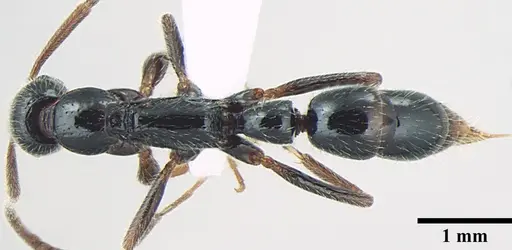
文献
分布マップを読み込み中...製品情報を読み込み中...